
Meiji Ken is a Shinsaibashi yoshoku address selected for Tabelog 100 - Yoshoku - WEST - 2025, with omurice, curry and Japanese-style Western cooking at everyday Osaka pricing. The appeal is cultural as much as culinary: a long-running house restaurant format where department-store-era Western dishes remain part of the city’s casual dining grammar.
Pearl is the En Primeur Club membership app — saves, bookings, and concierge access live there. Same editors, same standards.
- Address
- 1 Chome-5-32 Shinsaibashisuji, Chuo Ward, Osaka, 542-0085, Japan
- Phone
- +81 6-6271-6761
- Website
- meijiken1925.tkc.best-hp.jp
 Saves & bookings on Pearl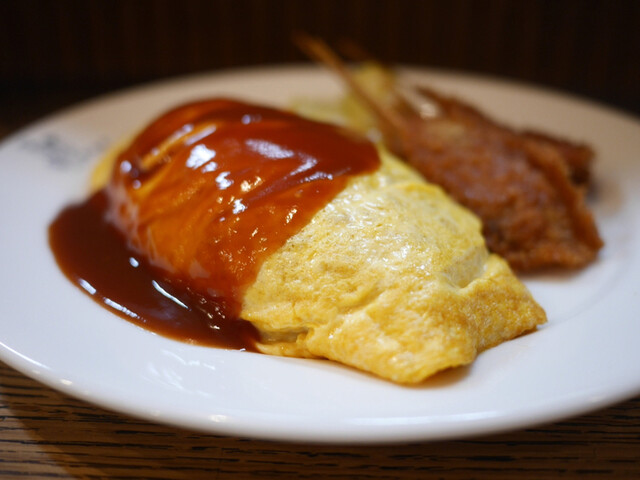
Shinsaibashi does not ease diners into appetite. The arcade compresses fashion, commuters, tourists, confectionery counters and quick-turn lunch rooms into one commercial current, and yoshoku fits that rhythm naturally. This is Western food as Japan absorbed it: omelette rice, curry, cutlets, hayashi rice and set plates, less European fidelity than urban comfort, speed and repetition. Meiji Ken sits inside that lineage, a house restaurant in a district where old Osaka habits survive beside new retail noise.
Yoshoku is cuisine as translation. Born from the Meiji-era encounter with Western cooking, it became local through rice, sauces, frying technique and lunch-counter pragmatism. In Osaka, the form has particular logic. The city prizes clarity and value; the better yoshoku rooms need no ceremony. A plate must read quickly, satisfy cleanly and feel familiar enough that regulars understand it before the first bite.
Yoshoku in Shinsaibashi: Western dishes rewritten in Osaka grammar
The point is not novelty. Omurice, curry and kushi-katsu-adjacent frying sit in the same civic family as Osaka’s other workday staples: broad appeal, quick recognition and high tolerance for repetition. That makes the genre easy to underestimate. At a serious yoshoku address, discipline lies in balance, not spectacle: egg against rice, sauce against fat, sweetness against salt, portion against pace.
Meiji Ken’s public identity is anchored in yoshoku, omurice and curry, with omelette rice named as its signature dish. Omurice is one of Japan’s clearest examples of imported technique becoming domestic memory. The idea may start with omelette and rice, but the cultural meaning is closer to a diner classic: family-friendly, efficient, nostalgic without being museum food. Its selection for Tabelog 100 - Yoshoku - WEST - 2025 places it in a regional shortlist for this genre rather than Osaka’s tasting-menu economy.
That distinction helps travelers read the city accurately. Osaka is not only counter sushi, kappo rooms and premium beef. It is also everyday specialism, where a restaurant becomes worth crossing town for because it handles a familiar dish consistently over decades. The Tabelog listing also notes prior Tabelog 100 selections in 2022 and 2020, signaling continuity in a category where fashion changes less loudly than in ramen or cocktail bars.
Why the low-price yoshoku tier matters more than it looks
Price changes the lens. Osaka has many restaurants where the bill signals ambition before the food arrives; comparison venues such as Kita Mura occupy a far higher spend bracket, while Japanese-format rooms such as Sui Okazaki suit another occasion. Yoshoku at this level asks a different question: how much cultural value can a city hold in a casual meal?
In Shinsaibashi, the answer is considerable. A low-price yoshoku room with 110 seats, including counter and table seating, functions differently from a small chef’s counter. It serves families, friends, solo diners and shoppers without demanding fine-dining behavior. That scale also says something about Osaka’s appetite for practical institutions. This is not the language of scarcity; it is access, habit and repeat use.
The format also helps visitors: it explains local taste without specialized vocabulary. Curry, omurice and fried beef preparations are familiar enough to approach, but Japanese handling of sauce, rice and texture makes the meal specific to place. Yoshoku can be more revealing than another premium omakase booking. It shows what Westernization became after a century of daily use.
The drinks list is equally unfussy, spanning sake, shochu and wine. That mix suits Japanese dining categories that refuse rigid Western pairing rules. A yoshoku table can carry rice, demi-glace-style sauces, curry spice and fried food, then move between Japanese spirits and wine without anxiety. The pleasure is not doctrinal correctness; it is the ease with which the cuisine made outside influences ordinary.
How to place it in an Osaka itinerary
For a dining day built around the city’s range rather than one luxury reservation, this stop does useful work. It pairs naturally with casual Osaka eating, from pork buns at 551 Horai (551蓬莱) to bakery culture at 52CHO-ME BAKERY and cafe pacing at .cafe. For a different imported-food thread, 99 Pizza Napoletana Gourmet and a canto (Italian) show how Osaka handles Italy at another register.
Reservations are unavailable, so the decision is timing and appetite more than access strategy. The restaurant closes Wednesdays and runs separate lunch and dinner services on operating days, making it better as a planned Shinsaibashi meal than a late-night fallback. Credit cards are not accepted, QR payment is listed through PayPay, and the room is casual, with children welcome, take-out available and no private rooms. Those details reinforce the point: this is an everyday institution, not a dressed-up special-occasion machine.
It also fits a wider city plan. Travelers mapping restaurants should start with Our full Osaka restaurants guide, then build the rest of the trip around Our full Osaka hotels guide, Our full Osaka bars guide, Our full Osaka wineries guide and Our full Osaka experiences guide. For readers comparing Japanese comfort formats beyond Osaka, useful contrasts include [Curry Senmon Ten] Maruyama Kyoju. in Sapporo, [ki:] in Kyoto.know in Kumamoto, (Shoku) Vietnam in Kawasaki, -Grilled beef Sukiyaki- KAMAKURA TANUKIAN 鎌倉 たぬき庵 in Kamakura. 鮪と炭火焼き うお炭 秋葉原店 in Tokyo, Jōdo Saké Bar in Los Angeles and Onigiri Time in Pasadena.
The editorial case is simple: Meiji Ken gives Osaka visitors a clear reading of yoshoku as living culture, not retro decoration. Award recognition supplies a credible signal, but the stronger reason is the category itself. Omurice and curry, handled in a Shinsaibashi room built for regular use, explain a side of Japanese dining that luxury itineraries often skip.
Pricing, Compared
Comparable venues at a glance for context.
| Venue | Cuisine | Price | Notes |
|---|---|---|---|
| Meiji KenThis venue — the venue you are viewing | Not listed | $ | Not listed |
| Curry Shop MASARA | Kita, Japanese European-style curry shop | $ | Not listed |
| Okonomiyaki Kiji Honten | Kita, Osaka okonomiyaki & modan-yaki | $ | Not listed |
| GARuRu KO-RI | Not listed | $ | Kita, Kakigori (Japanese shaved ice) specialty shop |
| Zouya | Not listed | $ | Nishinari, Classic Osaka okonomiyaki & yakisoba |
| Menya Ikkei | Ibaraki, Ramen shop | $ | Not listed |
Recognition history
Dated appearances from independent guides and award organizations, with the underlying list record or original source where available.
Tabelog 100 #2 · No. 2
Tabelog · Tabelog 100 - Yoshoku - WEST - 2025
Continue exploring
More in Osaka
Restaurants in Osaka
Browse all →




Bars in Osaka
Browse all →


Hotels in Osaka
Browse all →



Wineries in Osaka
Browse all →
At a Glance
- Classic
- Lively
- Well Known
- Family
- Casual Hangout
- Group Dining
- Solo
- After Work
- Open Kitchen
- Historic Building
- Standalone
- Street Scene
Current opening hours
- Monday
- 11 AM–3 PM, 5–8 PM
- Tuesday
- 11 AM–3 PM, 5–8 PM
- Wednesday
- Closed
- Thursday
- 11 AM–3 PM, 5–8 PM
- Friday
- 11 AM–3 PM, 5–8 PM
- Saturday
- 11 AM–3 PM, 5–8 PM
- Sunday
- 11 AM–3 PM, 5–8 PM
Hours can change for holidays and private events. Last verified .
Bustling, old-school yoshoku house with a live counter kitchen on the first floor and large, simple dining rooms upstairs, feeling nostalgically retro rather than modern.