On Boulevard Raimbaldi, Meat house occupies a stretch of Nice that sits between the city's tourist centre and its working neighbourhood character. The address alone signals a meat-focused kitchen operating outside the Niçoise seafood default, positioning it as a deliberate counterpoint to the olive oil and anchovy traditions of the Cours Saleya end of town. For visitors tracking the full range of Nice's dining options, it represents the carnivore corner of a city that rarely advertises one.
Pearl is the En Primeur Club membership app — saves, bookings, and concierge access live there. Same editors, same standards.
- Address
- 27 Bd Raimbaldi, 06000 Nice, France
- Phone
- +33766521900
- Website
- instagram.com
- Directions
- Get directions
 Saves & bookings on Pearl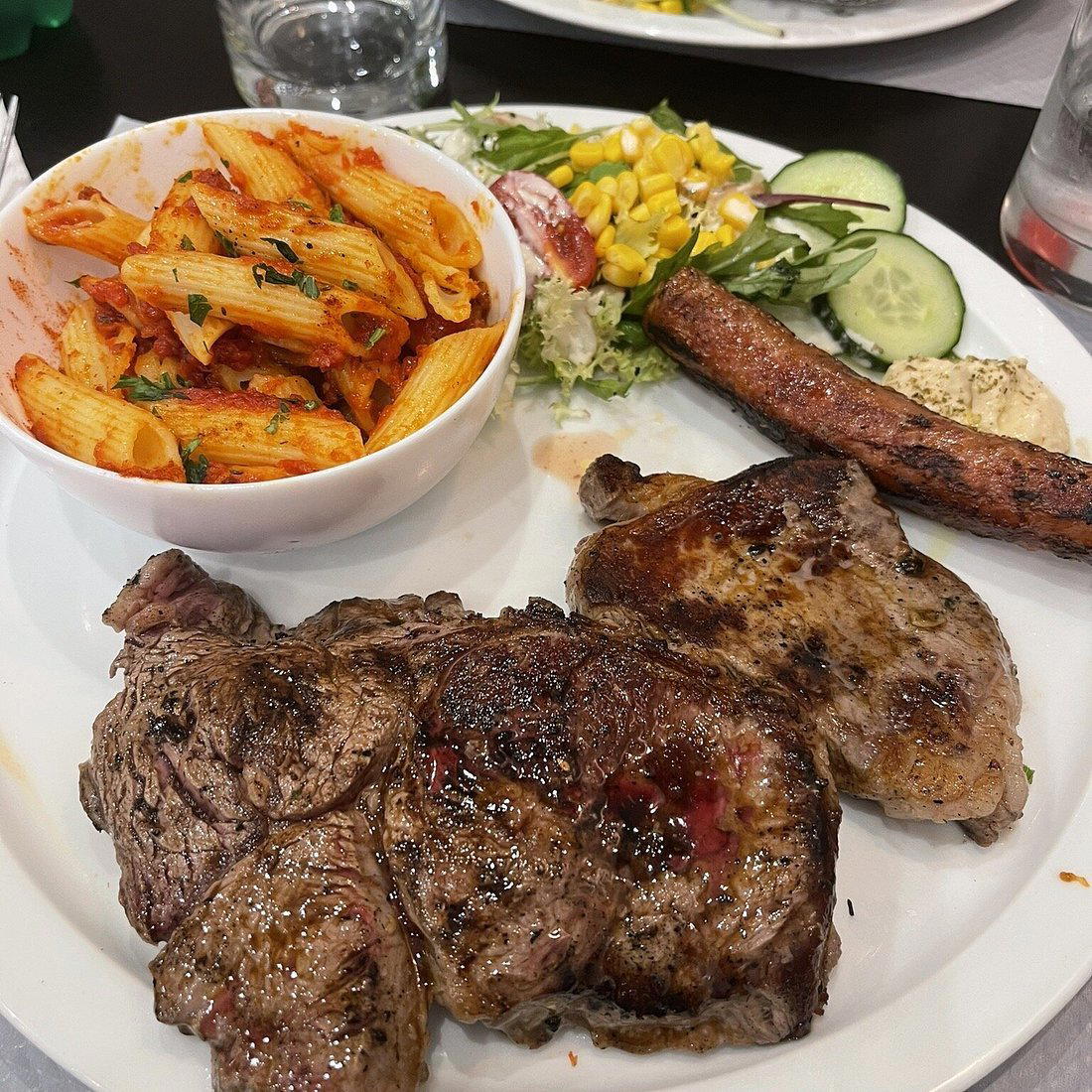
Boulevard Raimbaldi and the Meat Counter Tradition in Nice
Walk north from the Old Town along Boulevard Raimbaldi and the character of Nice shifts quickly. The tourist-facing souvenir shops and socca counters give way to a denser, more residential rhythm: patisseries serving the morning commute, boucheries with handwritten chalkboards, and a general sense that the neighbourhood is feeding itself rather than performing for visitors. It is in this stretch that Meat house occupies its address at number 27. Nice's dining identity is overwhelmingly framed around the Mediterranean pantry: olive oil, anchovies, pissaladière, bouillabaisse echoing up from the coast. A meat-focused address on a working boulevard is a deliberate counterpoint to that default, and the contrast is worth understanding before you book.
France has a deeply codified meat culture, and it does not belong only to Paris or Lyon. The traditions of the boucherie, the entrecôte au poivre, the côte de boeuf for two, these run through the entire country's restaurant vocabulary. Nice, however, tends to lead with its coastal and Provençal identity when presenting itself to outside diners. The Niçoise canon, codified by figures like Jacques Médecin and maintained by places such as L'Aromate, leans Mediterranean and vegetable-forward. Against that context, a dedicated meat house on Raimbaldi is filling a specific gap in what the city's restaurant offer presents to visitors.
Technique Meets Product: The Wider French Meat Kitchen
The editorial angle worth applying to any serious meat-focused kitchen in France is the intersection of technical discipline and raw material quality. France's butchery tradition is among the more structured in Europe: breed selection, ageing protocols, and the division of carcass into cuts that other traditions simply do not name are all embedded in how French professional kitchens approach beef, lamb, and pork. That infrastructure matters when a restaurant decides to make meat its primary subject.
At the regional level, the Côte d'Azur sources from productive hinterlands. The Alpes-Maritimes department, which Nice anchors, sits at the edge of an agricultural zone that extends toward Provence and the Alpine foothills. Lamb from Sisteron, the pre-salé traditions of the French coast, and Charolais beef routes from further inland all feed into what a serious kitchen on this stretch of the Riviera can access. The question for any meat-focused address is whether it is treating those supply lines as a foundation for something technically interesting, or simply grilling to order. That distinction is what separates a steakhouse from a kitchen with a point of view.
For regional and national comparison, the application of classical French technique to strong raw materials defines some of the country's most discussed restaurants. Bras in Laguiole has built an entire reputation on Aubrac terroir, treating the plateau's produce as both ingredient and argument. Flocons de Sel in Megève applies Alpine precision to mountain products. Further afield, Mirazur in Menton, just along the coast, has demonstrated that Riviera sourcing can support internationally recognised cooking when technique is applied at the right level. These are not direct comparisons to Meat house, but they frame the ceiling of what is possible when French kitchens take product origin seriously.
Nice's Wider Restaurant Tier and Where Meat House Sits
Nice's fine dining bracket is anchored by a cluster of modern French addresses. Flaveur and Les Agitateurs operate in the creative modern tier at the €€€€ price point, as does ONICE. Le Chantecler represents the city's formal hotel dining tradition. These addresses collectively define the upper register of what Nice offers in the contemporary French idiom.
A meat-focused neighbourhood address on Raimbaldi sits in a different register, closer in feel to a brasserie de quartier with a specific protein focus than to the tasting-menu format that dominates the city's recognised dining tier. That is not a criticism. Particularly useful restaurants in any city often occupy the middle ground between destination dining and anonymous utility, giving regulars a reliable kitchen and visitors a way to eat well without the ceremony. Whether the restaurant operates at that middle register or closer to the serious end of its category is the key practical question, and one that the limited available data does not fully answer.
What the address and name signal clearly is a kitchen that has chosen a lane and committed to it. In a city where the dominant narrative is Mediterranean and seafood-led, that decision has its own logic. Paris has its steak frites institutions; Lyon has its bouchons and their offal traditions, documented at length in venues like Paul Bocuse - L'Auberge du Pont de Collonges; Strasbourg, via Au Crocodile, has its Alsatian choucroute and game traditions. Nice's meat chapter is shorter, and an address that attempts to write it occupies useful territory.
Visitors building a broader picture of what serious French meat cooking can look like might also consider Alléno Paris au Pavillon Ledoyen for its sauce-led approach to protein, or AM par Alexandre Mazzia in Marseille for a Mediterranean interpretation of what a kitchen can do when it resists genre categorisation. Both sit above the category comparison in ambition and price, but they illustrate how far the French meat and sauce tradition can extend when technique is at the centre of the project. For New York comparisons at the technical end, Le Bernardin and Atomix demonstrate how ingredient-focused kitchens build identity through precision rather than spectacle, which is the same argument any serious the restaurant is implicitly making.
Planning Your Visit
The restaurant is at 27 Boulevard Raimbaldi, 06000 Nice, a few minutes north of the Old Town on foot. The boulevard is accessible from central Nice without difficulty, and the walk from Place Garibaldi or the northern edge of Vieux-Nice takes under ten minutes. No phone, website, or current booking details are available, so one practical approach is to present yourself directly. Hours, pricing, and current menu format should be confirmed on arrival. The Assiette Champenoise in Reims and Auberge de l'Ill in Illhaeusern round out the national frame for readers interested in how France's regional dining traditions differ from the Riviera model.
Credentials Lens
Comparable venues nearby, for context on price, style, and recognition.
| Venue | Cuisine | Price | Notes |
|---|---|---|---|
| Meat houseThis venue — the venue you are viewing | Halal Meat Grill | $$ | Not listed |
| Little Hanoï | Authentic Vietnamese | $$ | Cœur de Nice |
| L'Autobus | Traditional Niçoise French | $$ | Hauts de Nice |
| Poco Loco | Mexican | $$ | Cœur de Nice |
| Chez Palmyre | Authentic Niçoise Bistro | $$ | Nice Historique |
| Babel Babel | Modern Mediterranean with Levantine Influences | $$$ | Nice Historique |
Continue exploring
More in Nice
Restaurants in Nice
Browse all →
Bars in Nice
Browse all →
Hotels in Nice
Browse all →

At a Glance
- Casual
- Lively
- Casual Hangout
- Family
- Group Dining
- Standalone
Casual, welcoming atmosphere with a focus on quality meat preparation and family-friendly dining.