Our verdict
On a quiet street in central Nice, Poco Loco sits within the city's mid-range dining scene, where global technique meets the Ligurian-inflected produce of the Côte d'Azur. The address at 2 Rue Dalpozzo places it a short walk from the old town, within reach of the covered markets that supply the region's most locally grounded kitchens. It occupies a different tier from Nice's Michelin-decorated rooms, offering a more accessible point of entry into the city's food culture.

Pearl is the En Primeur Club membership app, where members save venues, book tables and use the concierge.

Where the Côte d'Azur Meets the Street
Rue Dalpozzo is not a street that announces itself. Running parallel to the grander avenues that feed into Nice's commercial centre, it is the kind of address that rewards those who walk rather than search by reputation alone. The neighbourhood sits between the old town's socca stands and the more composed dining rooms clustered around Place Masséna, which makes it a natural landing point for kitchens that want proximity to the Cours Saleya market without the tourist markup that comes with a direct view of it. Poco Loco at number 2 occupies this middle ground, both geographically and in terms of what it asks of its neighbourhood: a street-level room that draws from the produce culture of the surrounding region without positioning itself as a destination dining event.
That positioning matters in Nice more than it does in most French cities. The dining scene here splits sharply between the heavy-investment Michelin tier, where rooms like Flaveur and L'Aromate operate at €€€€ price points with full tasting formats, and a lower-key neighbourhood tier that serves the city's working population rather than its hotel guests. Poco Loco belongs to the latter category. The relevant comparison is not Le Chantecler or Les Agitateurs, but the informal rooms scattered through the Liberation and Musiciens quarters that serve a regular clientele with consistent, ingredient-led cooking.
Local Produce, Broader Technique
The editorial angle that defines so much of Nice's most interesting cooking is not purely regional. The city has always been a crossroads, its food shaped as much by Genoese and Piedmontese influence as by French Provençal tradition. What has changed in recent years is the arrival of kitchens trained in techniques from further afield, whether Nordic preservation methods, Japanese knife discipline, or South American acidic counterpoints, that then apply those methods to the produce already available in the local markets. This is the pattern visible at the higher end of the Nice scene, at ONICE and in the creative menus at Flaveur, and it filters down into the less formal tier as well.
What the Cours Saleya and the covered Marché du Libération offer any kitchen in this city is a raw material base that most European cities would envy: violet artichokes from the hills above the bay, courgette flowers from farms in the arrière-pays, fresh anchovies from the Ligurian coast, and a consistent supply of fragrant herbs that carry a different register from those grown further north. The question for any Nice kitchen is not whether to use this material but how much technique to apply to it. The higher the technique, the further the price point tends to move from the neighbourhood baseline. Poco Loco, by positioning itself at street level on Rue Dalpozzo, implicitly keeps the ratio closer to product than to process.
That approach connects to a broader French tradition of letting regional specificity carry the weight of a menu. It is the same logic at work in the more celebrated registers of French cooking, from the deeply terroir-anchored tasting menus at Bras in Laguiole to the Alsatian ingredient fidelity of Auberge de l'Ill and the product-first philosophy that Flocons de Sel in Megève applies to Alpine larder. At the most formal end of French cooking, venues like Paul Bocuse in Collonges-au-Mont-d'Or and Troisgros in Ouches have made regional identity the foundation of institutional reputation. The neighbourhood room on Rue Dalpozzo is not playing in that league, but it draws from the same logic.
Nice's Dining Scene in Context
Nice occupies a singular position in French gastronomy. It sits close enough to Mirazur in Menton, the three-Michelin-star room that held the number one position on the World's 50 Best list, that Côte d'Azur cooking carries genuine international weight. That proximity creates a gravitational pull: it attracts serious cooks, serious diners, and serious produce networks. It also creates a stratification problem. The gap between a destination like Mirazur and the informal rooms of the city itself is significant, both in price and in the kind of attention they attract.
What fills that gap in Nice is a collection of mid-tier addresses that are harder to navigate without local knowledge. The neighbourhood around Rue Dalpozzo, running through the 1st and 6th arrondissements, contains several of these rooms. They are generally off the main tourist circuit, they serve at accessible prices, and they rely on regulars rather than reservation platforms for their core business. The pattern is similar to what has developed around the backstreets of Marseille's 6th and 7th arrondissements, where AM par Alexandre Mazzia has raised the overall reputation of southern French cooking, creating a halo effect that benefits informal rooms operating at a different price point.
For context on how technique can translate across price tiers in French cities, it is worth noting how kitchens like Assiette Champenoise in Reims and Au Crocodile in Strasbourg have anchored regional dining scenes in ways that raise the ambient standard of cooking across categories. In Nice, that anchoring effect comes partly from the proximity to the Riviera's produce and partly from the influx of trained cooks who find the city's cost structure workable compared to Paris. The result is a neighbourhood dining culture that punches harder than its price points suggest.
For those comparing Nice's creative tier internationally, the shift toward product-led menus with global technique has parallels in cities like New York, where Le Bernardin built its reputation on restraint in the treatment of primary ingredients, and where Atomix applies Korean technique to a rigorous ingredient brief. The logic travels across latitudes: the leading cooking tends to emerge when technique serves product rather than obscures it.
Planning Your Visit
Poco Loco is at 2 Rue Dalpozzo in the 06000 postal district of Nice, walkable from the Place Masséna tram stop and roughly ten minutes from the old town on foot. Given that the venue's website, phone, and booking details are not publicly listed through the standard platforms at the time of writing, the practical approach is to visit directly or to ask your hotel concierge to make contact on arrival. This is common practice for smaller neighbourhood rooms in Nice that operate without a dedicated reservations infrastructure. Visiting in the shoulder season, between late September and early November or from late March through May, gives access to the most interesting produce from the surrounding region without the August crowds that compress capacity across the city. For a broader orientation to what the city offers across price points and dining formats, the EP Club Nice restaurants guide maps the full range, from destination tasting menus to neighbourhood rooms like this one. Those wanting to understand the higher end of the Nice scene before contextualising it should also read our coverage of Alléno Paris au Pavillon Ledoyen, which represents the formal French cooking tradition at its most technically ambitious.
Frequently asked questions
What dish is Poco Loco famous for?
What is the ideal way to book Poco Loco?
What is the standout thing about Poco Loco?
Do they accommodate allergies at Poco Loco?
Should I splurge on Poco Loco?
Is Poco Loco a good choice for a first meal after arriving in Nice?
A Tight Comparison
Comparable venues nearby, for context on price, style, and recognition.
| Venue | Cuisine | Price | Notes |
|---|---|---|---|
| Poco LocoThis venue (the venue you are viewing) | Mexican | $20–30 | Not listed |
| Bocca Mar | Mediterranean Beach Tapas | $20–30 | Cœur de Nice, Mediterranean Beach Tapas |
| Delhi Belhi | Traditional Indian | $30–50 | Nice Historique, Traditional Indian |
| Little Hanoï | Authentic Vietnamese | $20–30 | Cœur de Nice, Authentic Vietnamese |
| Lavomatique | Modern French Small Plates | $30–50 | Nice Historique, Modern French Small Plates |
| Chez Félix | Traditional Niçoise Cuisine | $10–20 | Nice Historique, Traditional Niçoise Cuisine |
Continue exploring
More in Nice
Restaurants in Nice
All restaurants in Nice →
Bars in Nice
All bars in Nice →

Details
- Lively
- Family
- Group Dining
- Casual Hangout
- Late Night
- Terrace
- Craft Cocktails
- A La Carte
- Family Style
- Margaritas
- Vegetarian Friendly
Current opening hours
- Monday
- 6:30–10:30 PM
- Tuesday
- Closed
- Wednesday
- 12–2 PM, 6:30–10:30 PM
- Thursday
- 12–2 PM, 6:30–10:30 PM
- Friday
- 12–2 PM, 6:30–10:30 PM
- Saturday
- 12–2 PM, 6:30–10:30 PM
- Sunday
- Closed
Hours can change for holidays and private events. Hours as of .
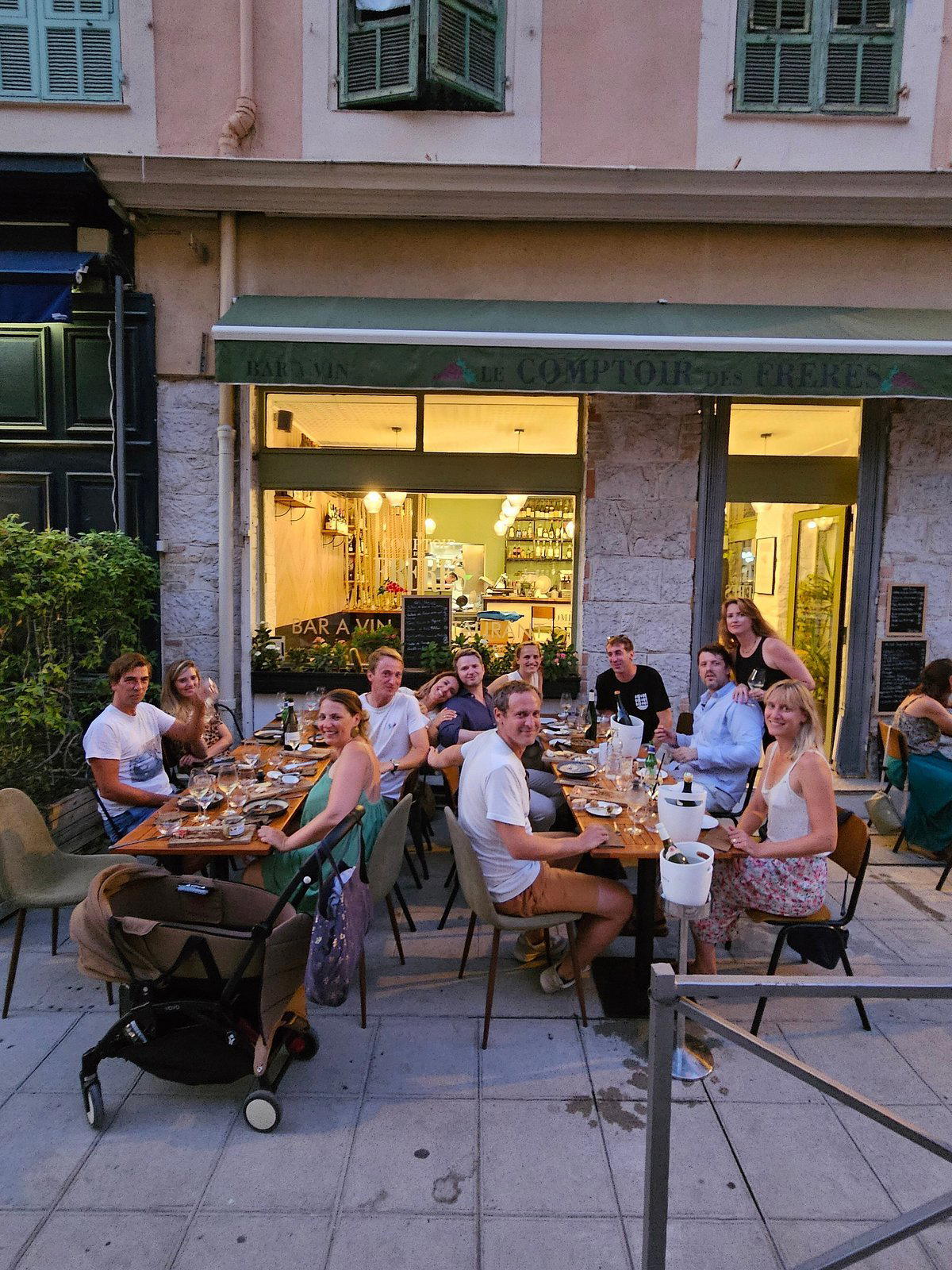
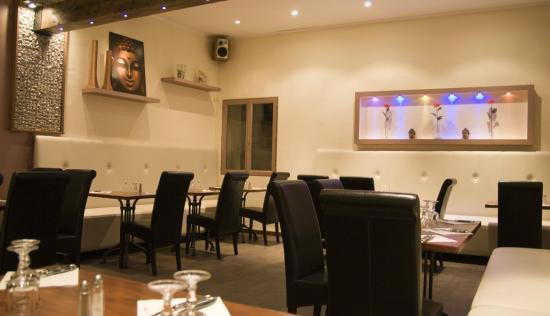
Decorated with bold colors and lively energy; lively atmosphere with good service, though some guests note heat from open grills near certain tables.