
Tabelog 100 #1
Our verdict
Matsushima places Tokyo Chinese cooking in a small-room, reputation-led register rather than the banquet format many visitors expect. Its selection for Tabelog Chinese TOKYO “Tabelog 100” 2026 and earlier 2023 recognition put it in the city’s critical conversation, while the Yoyogi-Uehara setting keeps the experience closer to a neighbourhood dining room than a hotel dining salon.

Pearl is the En Primeur Club membership app, where members save venues, book tables and use the concierge.
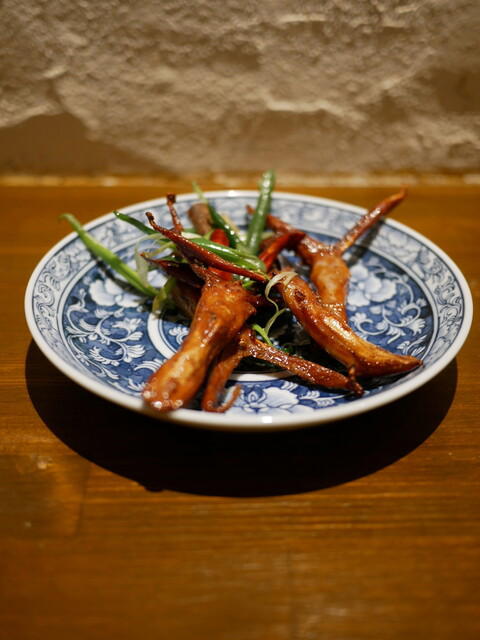
Tokyo changes the temperature of a meal before the first course arrives. Away from the most obvious visitor circuits, the city can move at a quieter rhythm, with a dining culture built around repeat guests, category specialists, and restaurants that do not need street-level theatre to make their case. In that context, Matsushima reads as part of Tokyo’s reputation-led Chinese scene: serious enough to earn Tabelog Hyakumeiten recognition in 2026, but best approached for close attention rather than broad, catch-all dining.
Chinese cooking in Tokyo spans formal dining rooms, specialist restaurants, and more personal interpretations that translate technique through local expectations around pacing and seasonality. The category rewards precision over spectacle and makes service format, timing, and ingredient discipline matter as much as luxury cues. Matsushima’s recognition by Tabelog in the Chinese cuisine category places it inside that conversation, not as a generic stop, but as one of the city’s Chinese restaurants that reviewers and regular diners have kept in view.
Tokyo Chinese cooking, scaled down to a serious restaurant choice
The context matters because it changes the contract. A meal here belongs to the more focused end of Tokyo dining, closer in spirit to the city’s category-led restaurants than to a one-size-fits-all destination. That focus suits a city where Chinese cooking often competes not only with other Chinese restaurants, but with sushi counters, yakitori rooms, and French-Japanese tasting menus for the same diners’ attention.
Tokyo adds a useful layer to the comparison. Nearby in the wider city conversation, sio represents a contemporary French register, Kiwa sits in a serious dining bracket, and Il Pregio brings Italian into the same broader Tokyo orbit. Matsushima gives the city a different register: Chinese cuisine with enough critical traction to appear on a Tabelog list, but without needing the familiar luxury grammar that often defines destination dining in Tokyo.
The Tabelog Hyakumeiten signal should be read carefully. It is not a Michelin star, and it is not a global ranking. In Japan, however, Tabelog’s genre-specific recognition carries weight because it reflects a dense local reviewing culture and separates restaurants by category and geography. A 2026 appearance indicates attention within Tokyo’s Chinese field, which is more useful for a traveller than a vague reputation claim. It says the restaurant belongs in a planned dining itinerary rather than a casual last-minute search.
Why the recognition matters more than the address
Tokyo rewards specialists. The city’s stronger dining rooms often work by narrowing the frame: a cuisine, a set rhythm, and a clear point of view. Chinese restaurants can be harder for visitors to parse because the category covers everything from casual counters to luxury dining. Awards and list inclusion help separate serious cooking from convenience dining, especially in a city where signage and online presence may be restrained.
Matsushima’s position is also a useful corrective to the idea that Tokyo’s destination meals cluster only around the most familiar luxury corridors. Tokyo has its own dining logic: selective, layered, and often dependent on people making a deliberate trip rather than relying on passing foot traffic. That makes the meal feel less like a trophy reservation and more like participation in a local circuit of well-followed restaurants.
For travellers building a Tokyo dining week, the restaurant works well as a counterpoint. Pair sushi, tempura, or yakitori with one serious Chinese meal and the city’s range becomes clearer. The broader EP Club Tokyo restaurant edit includes many kinds of unnamed Tokyo dining rooms, from casual specialists and counter-led formats to contemporary restaurants and neighbourhood addresses. Read beside those, Matsushima helps show how Tokyo’s dining strength lies in category depth rather than a single prestige style.
How to place it in a Tokyo itinerary
The sharper move is to treat this as a planned evening in Tokyo, not an add-on after sightseeing. Matsushima sits outside any need for a landmark-led pitch, so the appeal is the shift in pace: a restaurant whose reputation comes through category recognition rather than broad international branding. For diners comparing formats, that distinction matters. A large Chinese dining room may offer ceremony; a focused Chinese restaurant in Tokyo often offers a different kind of clarity.
The practical read is simple: this is a Tokyo Chinese restaurant with 2026 Tabelog Hyakumeiten recognition, a listed dinner budget of JPY 10,000 - JPY 14,999, and a Tabelog score of 3.69. Beyond those basics, the safer planning move is to confirm current booking rules, opening days, payment details, dietary requests, and party size directly with the restaurant before fixing an itinerary.
Tokyo planning should stay category-aware. Use the full Tokyo restaurants guide to map dinner priorities, then cross-check the city through the full Tokyo hotels guide, the full Tokyo bars guide, the full Tokyo wineries guide, and the full Tokyo experiences guide. For a wider Japan-and-beyond comparison, the same restaurant lens can stretch from other unnamed dining rooms in Japan to international restaurants abroad, but Matsushima’s usefulness here is specifically as a Tokyo Chinese reference point.
The editorial case is reputation with restraint. Matsushima is not trying to solve every version of Chinese dining in Tokyo. Its appeal is narrower and more useful: a Tokyo restaurant recognised within Tabelog’s 2026 Chinese category, suited to diners who want the city’s serious Chinese register without defaulting to a generic checklist meal.
Just the Basics
Comparable venues at similar price and category levels.
| Venue | Cuisine | Price | Awards | Notes |
|---|---|---|---|---|
| MatsushimaThis venue (the venue you are viewing) | Modern regional Chinese (Yunnan-influenced) | $100–150 | Tabelog 100 #1 | Not listed |
| Shiomachi | Tokyo Omakase Seafood | $150–200 | Michelin Plate | Izakaya |
| haritts Uehara ten | Donut Cafe | Not listed | Tabelog 100 #99 | JPY 1,000 - JPY 1,999 - JPY 999 View spending breakdown |
| sio | Modern French-Japanese Fusion | $200–300 | Michelin Plate · Black Pearl 1 Diamond | French, Contemporary |
| Kiwa | Seasonal Tempura & Japanese Omakase | $150–200 | Tabelog 100 #60 | JPY 20,000 - JPY 29,999 |
| Il Pregio | Modern Sensory Italian | $100–150 | Tabelog 100 #64 | Italian |
Recognition history
Dated appearances from independent guides and award organizations, with the underlying list record or original source where available.
Tabelog 100 #1 · No. 1
Tabelog · Tabelog 100 - Chinese cuisine - TOKYO - 2026
Continue exploring
More in Tokyo
Restaurants in Tokyo
All restaurants in Tokyo →




Bars in Tokyo
All bars in Tokyo →








Details
- Cozy
- Modern
- Intimate
- Elegant
- Date Night
- Special Occasion
- Business Dinner
- Group Dining
- After Work
- Chefs Counter
- Standalone
- Design Destination
- Extensive Wine List
- Byob
- A La Carte
- Counter Dining
- Wine
Current opening hours
- Monday
- 6–11 PM
- Tuesday
- 6–11 PM
- Wednesday
- Closed
- Thursday
- 6–11 PM
- Friday
- 6–11 PM
- Saturday
- 6–11 PM
- Sunday
- 6–11 PM
Hours can change for holidays and private events. Hours as of .
A small, stylish basement hideout with a relaxed, intimate feel, counter and table seating, and a calm non‑smoking atmosphere suited to leisurely dinners and wine.