Matsumoto

Our verdict
Matsumoto on South Western Avenue has climbed Opinionated About Dining's North America rankings three consecutive years, reaching #391 in 2024. Chef Naruki Matsumoto runs lunch and dinner service Tuesday through Saturday, with Sunday closed. The format sits within Los Angeles's serious omakase tier, where seasonal fish procurement and counter discipline define the experience.

Pearl is the En Primeur Club membership app, where members save venues, book tables and use the concierge.
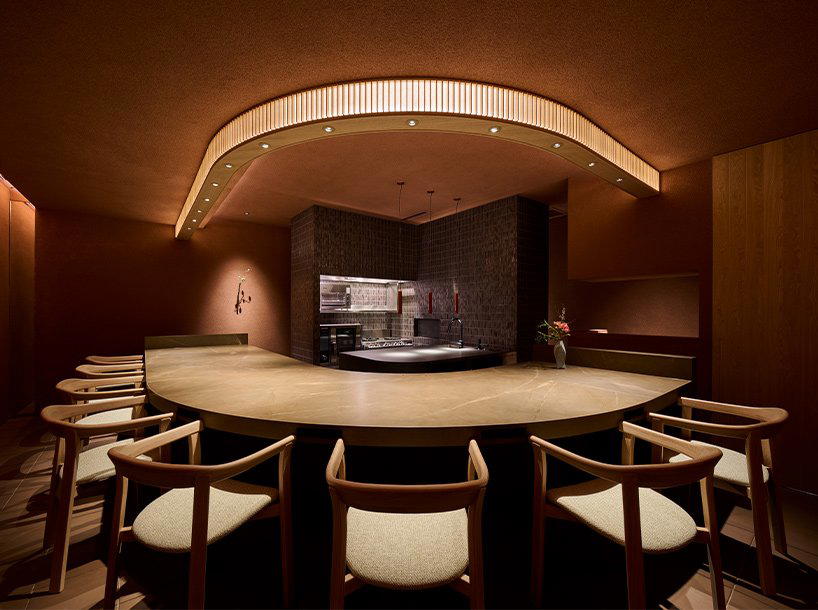
A Counter on Western, Operating on Its Own Clock
South Western Avenue is not where most visitors expect to find serious omakase. The stretch of Koreatown that houses Matsumoto, Suite 102 at 700 S Western, sits well outside the restaurant corridors that draw destination diners in Los Angeles. That address is part of what defines the experience before you even sit down. The counters that have earned sustained critical attention in this city often occupy spaces that require some commitment to reach, and Matsumoto's position in a mid-block suite reinforces a pattern common to the upper tier of LA's Japanese dining scene: the room works for the food, not the other way around.
The city's omakase market has deepened considerably over the past decade. What was once a fairly thin band of high-end sushi counters has expanded and stratified, with a lower entry tier operating alongside a smaller group of counters that draw national critical recognition. Matsumoto sits in that second group. Opinionated About Dining, which surveys serious eaters across North America and functions as one of the few credible ranking systems for non-Michelin markets, listed Matsumoto as Recommended in 2023, then ranked it #391 in 2024 and #396 in 2025 on its Leading Restaurants in North America list.
Seasonality as the Organising Principle
Japanese omakase, at its most disciplined, is a calendar exercise. The chef's job is to track what the season offers and build the sequence around it, which means the counter you visit in February bears a meaningful structural resemblance to the one in August, but the fish will be different, the temperatures will be different, and the progression will read differently. This is not a rhetorical point about freshness, it is the entire logic of the format. The leading omakase counters in Tokyo, including Harutaka, operate on the assumption that the guest is there to eat what the market produced that week, not to order from a fixed catalogue.
Matsumoto operates within that same tradition. The seasonal logic matters here because LA's fish procurement networks have matured significantly. The city now has access to high-grade Japanese-style cuts, including domestic bluefin and imported selections, through import chains that have become more reliable over the past several years. A counter with the kind of critical standing Matsumoto holds would be sourcing accordingly, which means the calendar still governs what appears in front of you. Spring brings different fat content in fish than autumn. Winter yellowtail and winter tuna are categorically different products from their summer counterparts. Visiting in January versus June is not an interchangeable decision.
This is also why the Tuesday-through-Saturday schedule matters more than it might first appear. The kitchen runs lunch service from noon to 2 pm and dinner from 6 to 10 pm, Monday through Friday, with Saturday dinner only and Sunday closed entirely. That compression, particularly the Saturday lunch gap and the full Sunday closure, is consistent with a procurement and prep rhythm that prioritises quality over seat count. Counters running seven days are making a different trade-off than those that close midweek. Matsumoto's schedule reflects the latter logic.
Where Matsumoto Sits in the LA Sushi Conversation
Los Angeles has a longer serious sushi history than most American cities. Echigo on Santa Monica Boulevard established a template for disciplined nigiri in the city before omakase became a widespread format. Go's Mart in Canoga Park built a loyal following operating at the edge of the Valley, demonstrating that geography was not an obstacle for committed diners. Hamasaku has maintained a consistent West Side presence. Sushi Inaba and Inaba have both contributed to the city's maturing understanding of what serious Japanese counter dining can look like outside of Tokyo. Internationally, the conversation about omakase standards increasingly includes properties like Sushi Shikon in Hong Kong, which operates at the most formal tier of the format.
Within that broader context, Matsumoto's OAD trajectory is notable because the list measures repeat engagement from experienced eaters rather than first-impression scores. A counter that climbs from Recommended to a ranked position over three years is demonstrating consistency, not a single strong showing.
Chef Naruki Matsumoto gives the counter its name and its operating identity, which in the omakase format means the chef's sourcing relationships, seasonal priorities, and pacing decisions are the product. That is the nature of the format: unlike a larger restaurant where multiple cooks and departments shape the output, the counter is a direct expression of one set of decisions, repeated across service. At the comparable tier, counters at the top of national lists, sitting alongside The French Laundry in Napa, Single Thread Farm in Healdsburg, or Emeril's in New Orleans on the same ranking architecture, the chef's presence across service is assumed rather than exceptional.
Planning the Visit
Matsumoto runs two services daily Tuesday through Friday: lunch from noon to 2 pm and dinner from 6 to 10 pm. Saturday is dinner only. The counter is closed Sunday. The address, 700 S Western Avenue, Suite 102, Los Angeles, CA 90005, places it in Koreatown, which has its own dense food culture and parking patterns distinct from Westside neighbourhoods. Arriving with time to orient to the suite layout is worth building into the plan. Booking method and pricing are not publicly listed, which is consistent with counters at this tier that operate through direct reservation or tightly managed third-party platforms.
For context on what else the city offers across cuisine types and formats, see our full Los Angeles restaurants guide. For accommodation near the counter, our Los Angeles hotels guide covers properties across the city's main areas. The city's bar and drinks scene is covered in our Los Angeles bars guide, with further reading in our wineries guide and our experiences guide.
Quick reference: 700 S Western Ave Suite 102, LA 90005. Lunch Mon–Fri noon–2 pm; dinner Mon–Fri 6–10 pm; Saturday dinner only; Sunday closed. OAD North America ranked #396 (2025).
Frequently asked questions
Where is Matsumoto in Los Angeles?
Matsumoto is located at 700 S Western Ave Suite 102, Los Angeles, CA 90005, Los Angeles.
Is Matsumoto award-winning?
Matsumoto has received recognition including: Opinionated About Dining Top Restaurants in North America Ranked #396 (2025); Opinionated About Dining Top Restaurants in North America Ranked #391 (2024); Opinionated About Dining Top Restaurants in North America Recommended (2023).
What's the best thing to order at Matsumoto?
Matsumoto operates as a set omakase counter, so there is no à la carte selection to navigate. Chef Naruki Matsumoto sequences the meal around seasonal procurement, meaning what arrives on the counter is determined by what the market offers that week. The practical move is to book a seat and let the progression unfold rather than arrive with a specific dish in mind.
When can I go to Matsumoto?
Hours at Matsumoto: Hours: Monday 12–2 pm, 6–10 pm Tuesday 12–2 pm, 6–10 pm Wednesday 12–2 pm, 6–10 pm Thursday 12–2 pm, 6–10 pm Friday 12–2 pm, 6–10 pm Saturday 6–10 pm Sunday Closed.
Is Matsumoto chef-led?
The chef associated with Matsumoto is Naruki Matsumoto.
What's the signature at Matsumoto?
In omakase, the counter's identity is the format itself rather than a single repeating dish. At Matsumoto, that identity is expressed through seasonally organised nigiri, with Chef Naruki Matsumoto building each service around the current catch and produce. Opinionated About Dining has ranked the restaurant in its Top Restaurants in North America list three consecutive years, 2023, 2024, and 2025, which speaks to consistency as the counter's defining credential.
Cost Snapshot
A compact comparison to help you place this venue among nearby peers.
| Venue | Cuisine | Price | Awards | Notes |
|---|---|---|---|---|
| MatsumotoThis venue (the venue you are viewing) | Traditional Japanese Omakase | Not listed | Not listed | Not listed |
| Kato | Modern Taiwanese Fine Dining | $300–500 | 2 Michelin Stars · World's 50 Best #49 | New Taiwanese, Asian |
| Hayato | Traditional Japanese Kaiseki | $300–500 | 2 Michelin Stars · La Liste Top Restaurants | Japanese |
| Vespertine | Avant-Garde Tasting Menu | $200–300 | 2 Michelin Stars · La Liste Top Restaurants | Progressive, Contemporary |
| Camphor | Modern French with Southeast Asian influences | $150–200 | Michelin Plate · World Best Burgers World's 101 Best Burgers #15 | French-Asian, French |
| Gwen | Contemporary American Steakhouse | $50–100 | Michelin Plate · Wine Spectator Best of Award of Excellence | New American, Steakhouse |
Recognition history
Dated appearances from independent guides and award organizations, with the underlying list record or original source where available.
Opinionated About Dining Top Restaurants in North America Recommended
Opinionated About Dining
Full recognition history (4 entries)
Opinionated About Dining Top Restaurants in North America Ranked #396
Opinionated About Dining
Opinionated About Dining Top Restaurants in North America Ranked #391
Opinionated About Dining
Opinionated About Dining Top Restaurants in North America Recommended
Opinionated About Dining
Continue exploring
More in Los Angeles
Restaurants in Los Angeles
All restaurants in Los Angeles →
Bars in Los Angeles
All bars in Los Angeles →
Hotels in Los Angeles
All hotels in Los Angeles →
Wineries in Los Angeles
All wineries in Los Angeles →
Details
- Intimate
- Elegant
- Date Night
- Special Occasion
- Chefs Counter
- Open Kitchen
- Sake Program
- Omakase
- Counter Dining
- A La Carte
- Sake Program
Current opening hours
- Monday
- 11:30 AM–2 PM, 6–10 PM
- Tuesday
- 11:30 AM–2 PM, 6–10 PM
- Wednesday
- 11:30 AM–2 PM, 6–10 PM
- Thursday
- 11:30 AM–2 PM, 6–10 PM
- Friday
- 11:30 AM–2 PM, 6–10 PM
- Saturday
- 6–10 PM
- Sunday
- Closed
Hours can change for holidays and private events. Hours as of .
Traditional Japanese with clean, simple, unpretentious decor in a small strip mall setting.