Google: 4.7 · 148 reviews
Sushi Inaba


A six-seat Michelin-starred omakase counter operating within the larger Inaba Japanese Restaurant on Beverly Boulevard. Chef Yasuhiro Hirano builds each sequence around micro-seasonal and aged seafood, with technique that earned a 2025 Michelin star and a 31st-place ranking on the LA Times 101 Best Restaurants list in 2024. Reservations are highly competitive; booking several weeks ahead is advisable.
 Discover on Pearl
Pearl is the En Primeur Club membership app — saves, bookings, and concierge access live there. Same editors, same standards.
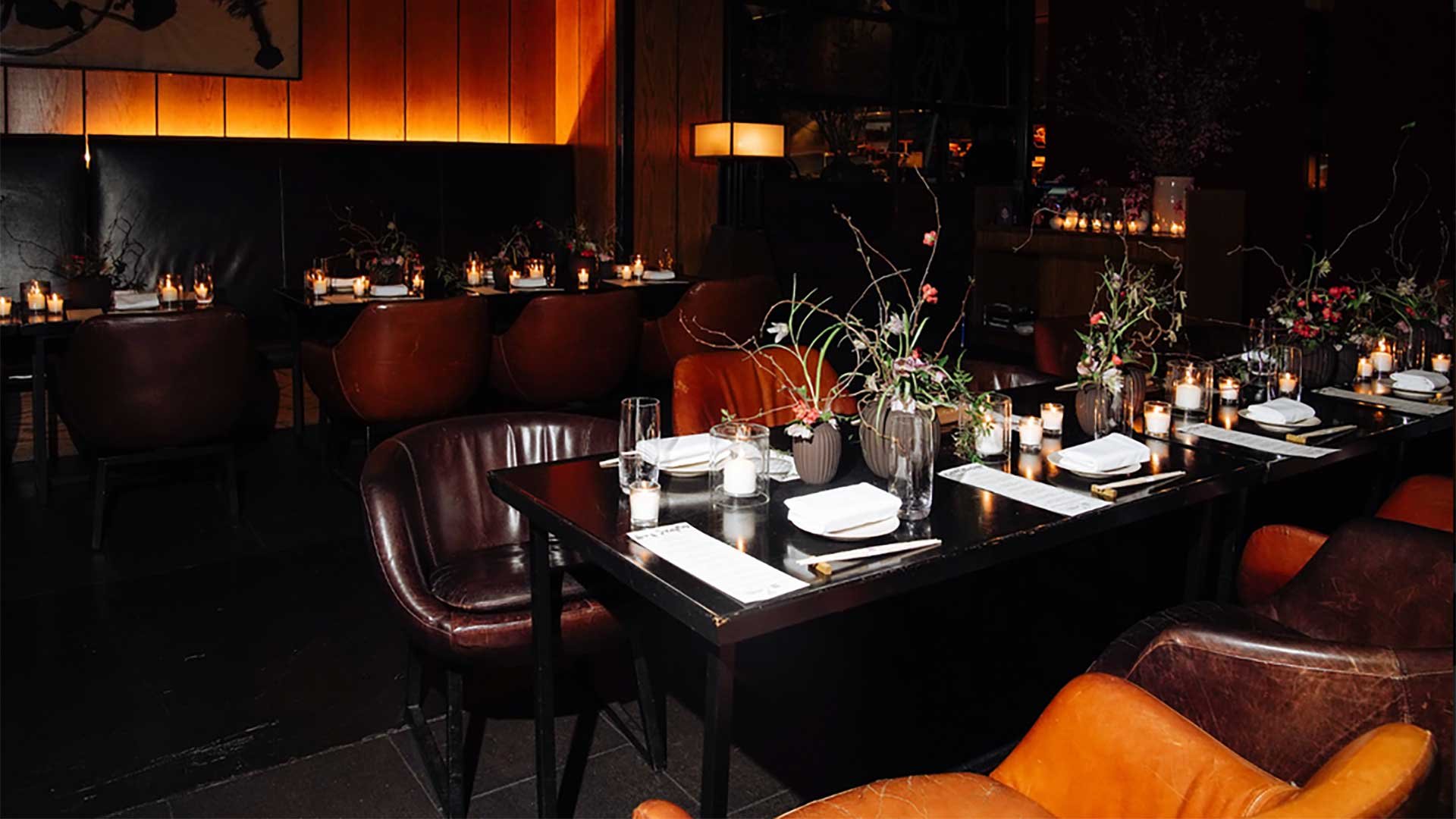
The Six-Seat Counter on Beverly Boulevard
Los Angeles has spent the better part of a decade building a credible omakase tier, one that now competes meaningfully with the counter culture of Tokyo and New York. At the leading of that tier sits a small cohort of Michelin-recognised rooms where the format itself — chef-controlled, sequence-driven, trust-dependent — becomes the primary proposition. Sushi Inaba, operating a six-seat counter inside the larger Inaba Japanese Restaurant at 3954 Beverly Blvd, occupies that bracket. It holds a Michelin star (confirmed for both 2024 and 2025) and ranked 31st on the LA Times 101 Best Restaurants list in 2024, placing it firmly among the city's most closely watched Japanese rooms.
What the Omakase Contract Asks of You
The omakase format is, at its core, a negotiation of authority. You surrender the menu entirely to the chef, and in exchange you receive sequencing, pacing, and ingredient decisions that you could not have made for yourself. That contract works leading when the chef has a defined point of view and the technical discipline to execute it. At Sushi Inaba, Chef Yasuhiro Hirano's approach is built around micro-seasonal and often aged seafood, a methodology that diverges from the purely fresh-fish orthodoxy that dominates the mid-range sushi market. Aging seafood correctly requires knowledge of chemistry, temperature, and timing that takes years to calibrate, and when it goes wrong, the results are immediately apparent to any experienced diner. The fact that Hirano's work has drawn sustained Michelin attention suggests that the calibration is sound.
For the diner, surrendering to this particular counter means accepting that the sequence will be built around what Hirano believes is at its peak in any given week. The commitment is to his judgment, not to a fixed menu that can be previewed or anticipated. That is a different kind of dining from what most of Los Angeles's restaurant market offers, including at the $$$$ tier where venues like Hayato, Kato, and Camphor each offer their own version of chef-controlled progression. What distinguishes the sushi omakase specifically is the speed of the decision cycle: each piece arrives in quick succession, and the conversation between diner and chef is compressed into gestures, pacing adjustments, and the occasional prompt about preference.
Technique on the Plate
The LA Times' 2024 coverage of Sushi Inaba provides some of the clearest available detail on what Hirano's technique actually produces. His iwashi maki is described as resembling a pane of stained glass , sardine divided into sections with shiso-wrapped chives and pickled ginger at the centre. The shiso amplifies the brightness of the vinegar-cured fish while the pickled ginger carries sweet heat. This is an opening bite that is simultaneously whimsical and technically precise, which is a difficult register to sustain across a full omakase sequence.
His rice, the foundation on which all sushi judgment ultimately rests, is seasoned with two types of red vinegar, producing what the same source describes as a pleasant sharpness. Komochi konbu, herring eggs on kelp, is soaked in dashi for multiple days until each egg carries the smoky, marine character of the stock. A small dab of what Hirano calls "guts sauce" , made from cooking down the innards of pike mackerel with soy sauce , is served over a slice of raw sanma. The result is described as bitter and livery, a flavour profile that demands confidence from both the chef serving it and the diner receiving it. These are not concessions to mass palatability. They are the specific choices of a practitioner who has decided what he finds interesting and is presenting that position directly.
In the broader context of LA's sushi scene, this kind of ingredient-level specificity places Sushi Inaba in a small peer group. Comparisons within the city include Echigo, Hamasaku, Go's Mart, and Kusano, each occupying a distinct position in the spectrum from traditional Edomae to more playful contemporary formats. Internationally, the counter-first omakase tradition that Hirano draws from has its most rigorous expressions at places like Harutaka in Tokyo and Sushi Shikon in Hong Kong, both of which operate within the same Michelin-validated, reservation-scarce tier.
The Room and the Chef's Register
The physical space inside the Inaba restaurant is framed in blond wood and designed with the austerity that traditional Japanese counter dining typically demands. Minimal, spare, and calibrated to focus attention on the food rather than the room. Six seats means that the chef is never far from any diner, and the sequence can be adjusted in real time without the logistical overhead of a larger counter.
Hirano's personal register at the counter is worth noting precisely because it modulates that austerity. He is, by multiple accounts, quick to compliment a guest's taste in sake or comment on a hat he likes. The formality of the space and the informality of the host do not cancel each other out , they create a specific kind of ease that is harder to engineer than it looks. The detail that he occasionally plays guitar after the tamago course, including a reported rendition of Taylor Swift's "Shake It Off," has become part of the counter's mythology, and it signals something real about the atmosphere: this is a serious technical enterprise that does not take itself too seriously as a performance of seriousness.
That balance is not incidental. The omakase format can easily tip into theatrical solemnity that makes the diner feel they are attending a ritual rather than eating dinner. Hirano appears to have resolved that tension in a direction that serves the guest's comfort without undermining the food's authority. It is a tone that the high-end restaurant world more broadly has spent years trying to calibrate , present at Michelin-starred rooms from Le Bernardin in New York to Lazy Bear in San Francisco and Alinea in Chicago , but the sushi counter format achieves it in a compressed, direct way that larger tasting-menu restaurants cannot replicate.
Planning Your Visit
Reservations at Sushi Inaba are described as highly competitive. The six-seat counter structure means that availability is limited by design, and the combination of Michelin recognition and strong Google review scores (4.8 from 136 reviews) has sustained demand well ahead of supply. Anyone expecting to book close to their intended date will likely be disappointed; planning several weeks out is a more realistic approach.
The counter is open Tuesday through Friday for lunch (11:30am to 2:15pm) and dinner (5:30pm to 9pm), and Saturday and Sunday for lunch (11:30am to 2pm) and dinner (5pm to 8:30pm). The restaurant is closed on Mondays. The address is 3954 Beverly Blvd, Los Angeles, CA 90004, in a stretch of Beverly Boulevard that sits between Koreatown and the eastern edge of the Fairfax district. The $$$$ price tier places it alongside the city's other high-commitment omakase and tasting-menu experiences, including Hayato and Vespertine, and in the national conversation the range is comparable to what guests pay at The French Laundry in Napa, Single Thread Farm in Healdsburg, or Emeril's in New Orleans for a comparable level of recognition and format ambition.
For broader trip planning, see our full Los Angeles restaurants guide, our full Los Angeles hotels guide, our full Los Angeles bars guide, our full Los Angeles wineries guide, and our full Los Angeles experiences guide.
Nearby-ish Comparables
A quick snapshot of similar venues for side-by-side context.
| Venue | Cuisine | Price | Notes |
|---|---|---|---|
| Sushi Inaba | Sushi | $$$$ | This venue |
| Kato | New Taiwanese, Asian | $$$$ | New Taiwanese, Asian, $$$$ |
| Hayato | Japanese | $$$$ | Japanese, $$$$ |
| Vespertine | Progressive, Contemporary | $$$$ | Progressive, Contemporary, $$$$ |
| Camphor | French-Asian, French | $$$$ | French-Asian, French, $$$$ |
| Gwen | New American, Steakhouse | $$$$ | New American, Steakhouse, $$$$ |
Continue exploring
More in Los Angeles
More from Chef Yasu Hirano
Browse all →
Restaurants in Los Angeles
Browse all →
Bars in Los Angeles
Browse all →
Hotels in Los Angeles
Browse all →
Wineries in Los Angeles
Browse all →
At a Glance
- Intimate
- Elegant
- Sophisticated
- Special Occasion
- Date Night
- Chefs Counter
- Sake Program
- Sustainable Seafood
Cozy, unpretentious secret-clubhouse atmosphere with focus on the sushi counter and chef interaction, lacking pretension typical of high-end omakase.