Marres Kitchen
Marres Kitchen occupies a cultural address on Capucijnenstraat in Maastricht's historic centre, where the kitchen operates inside the same building as a contemporary arts house. The restaurant sits within a city that takes its food seriously, drawing comparisons to neighbours like Beluga Loves You and Au Coin des Bons Enfants, and signals a dining approach where cultural context and the plate are inseparable.
Pearl is the En Primeur Club membership app — saves, bookings, and concierge access live there. Same editors, same standards.
- Address
- Capucijnenstraat 98, 6211 RT Maastricht, Netherlands
- Phone
- +31613333583
- Website
- marres.org
- Directions
- Get directions
 Saves & bookings on Pearl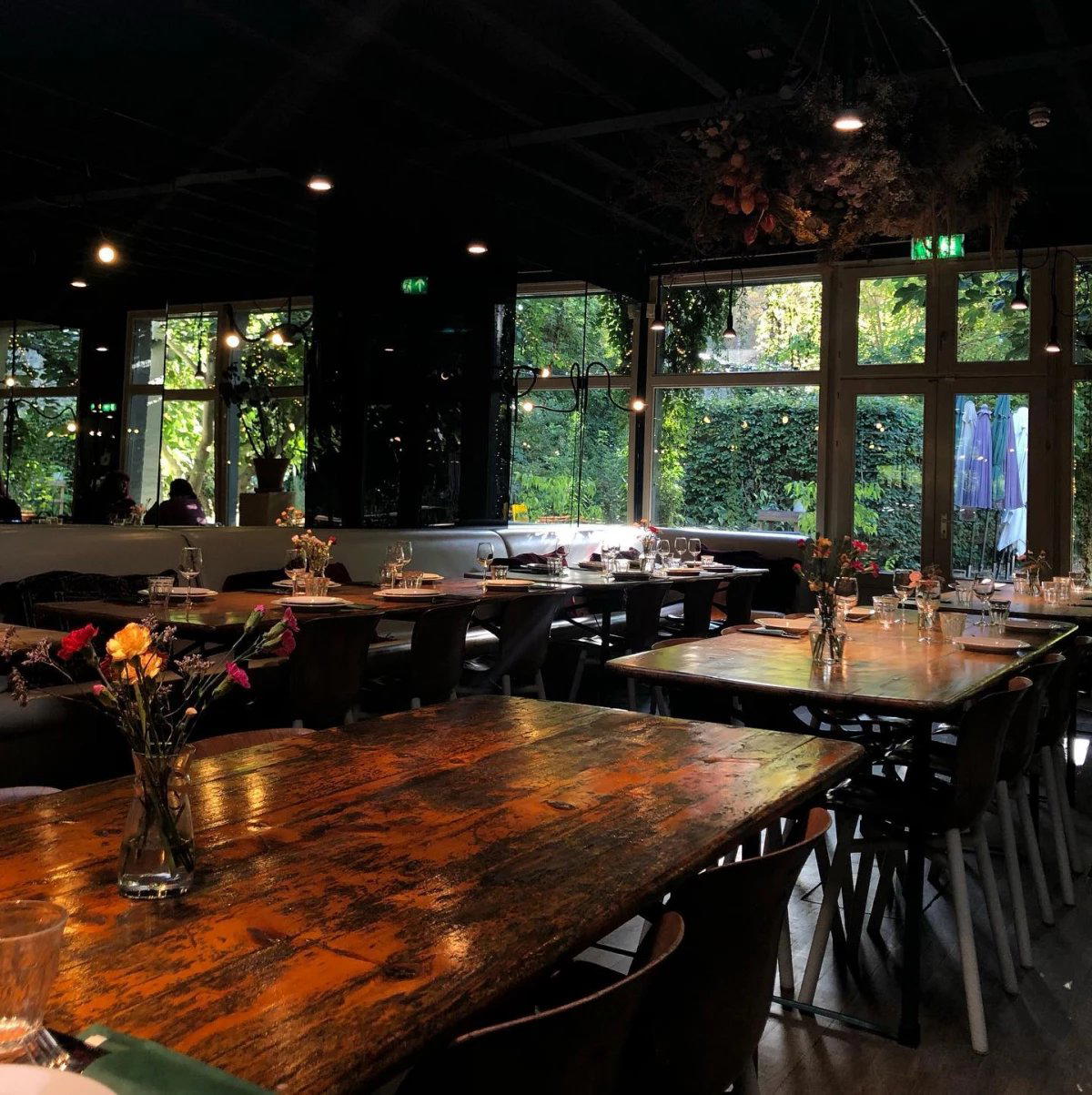
A Kitchen Inside a Cultural Institution
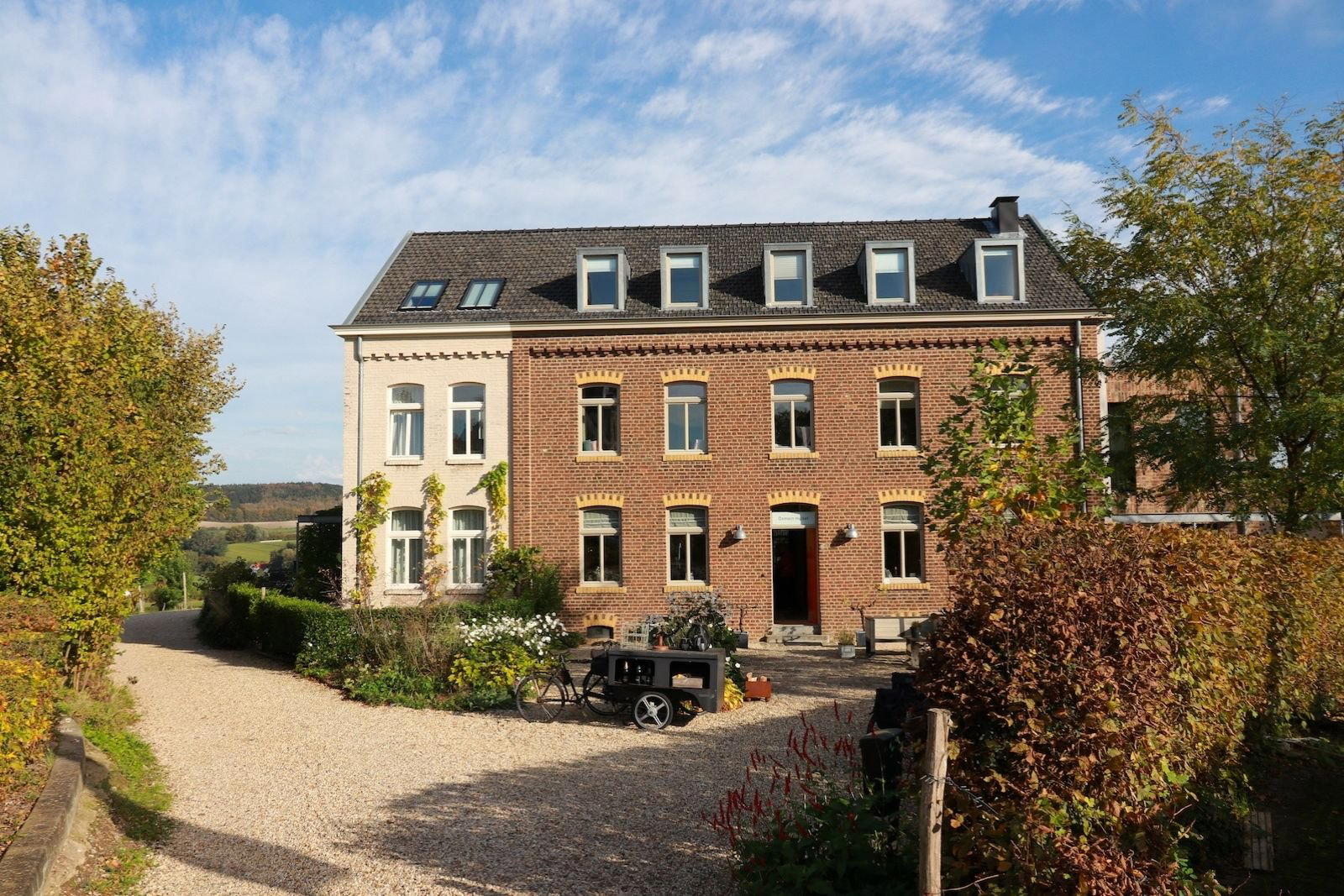
Maastricht, with its limestone architecture, Belgian border proximity, and long tradition of cross-cultural exchange, produces conditions where a kitchen embedded inside a contemporary arts house feels less like a concept and more like a natural consequence. Marres Kitchen sits at Capucijnenstraat 98 in Maastricht, serving Mediterranean with Middle Eastern Influences inside the Marres House for Contemporary Art. Approaching it, you move through a courtyard garden rather than a restaurant entrance. The building announces itself before the food does.
That framing matters for anyone trying to calibrate expectations. This is not a destination restaurant in the sense that Beluga Loves You or Au Coin des Bons Enfants are destination restaurants, where the meal is the singular object of the evening. At Marres Kitchen, the meal is in dialogue with whatever else the building is doing, a current exhibition, a lecture series, a seasonal programme in the garden. The dining room carries the character of that broader institution: considered, unhurried, and more interested in conversation than performance.
Where Local Produce Meets Imported Method
The editorial angle that defines Maastricht's more interesting kitchens is the tension between the region's agricultural depth and the global technical languages that chefs trained in France, Scandinavia, or Asia bring back to South Limburg. This is a province with serious raw materials: game from the Ardennes hills a short drive south, dairy and vegetables from the Meuse valley, river fish, and a wine-growing tradition in the Mergelland that most Dutch visitors still overlook. The question each kitchen answers differently is how much to foreground those materials and how much to subordinate them to technique.
Marres Kitchen operates at the intersection of those two positions. The kitchen's alignment with the cultural programme around it suggests a preference for approaches that are legible and rooted rather than technically opaque. That places it in a different register from Studio, which leans into Asian-influenced technique, or Tout à Fait, which operates more squarely within the modern French idiom. The kitchens at this tier across the Netherlands, from De Nieuwe Winkel in Nijmegen to De Lindehof in Nuenen, increasingly treat local sourcing not as a marketing position but as a technical constraint that produces interesting results. A kitchen limited to what the region offers in a given season thinks differently about fermentation, preservation, and preparation than one with global supply lines.
South Limburg in spring and early summer is particularly well-supplied: asparagus from the sandy soils near Venlo, strawberries, early herbs, and the first of the season's lamb. Autumn shifts toward game, root vegetables, and foraged material from the surrounding forests. A kitchen connected to that rhythm, as the restaurant's position within a culturally engaged institution suggests, tends to produce menus that read differently in March than they do in October. Visiting with a seasonal intention, rather than treating the restaurant as an any-time option, tends to return more.
Maastricht's Fine Dining Geography
Understanding where the restaurant sits in Maastricht's overall dining map helps calibrate the visit. The city punches above its population weight in restaurants per capita, partly because of its proximity to Belgium and Germany (both countries whose residents make regular trips across the border specifically to eat), and partly because of its university population and steady art-tourism draw. The upper bracket is anchored by long-standing €€€€ addresses: Beluga Loves You with its creative format, Au Coin des Bons Enfants with its classical French orientation, Studio with its Asian inflections. At the more accessible end, Bar Beurre operates at €€ with a French bistro sensibility that makes it the city's easiest recommendation for a lower-commitment evening.
The restaurant occupies a position that is harder to slot neatly into that hierarchy. Its identity is tied to an institution rather than to a chef's personal programme, which gives it a different kind of longevity and a different set of risks. Institutionally anchored restaurants can outlast any individual in the kitchen, but they can also drift when curatorial energy shifts. The parallel in the Dutch fine dining conversation, where kitchens like De Librije in Zwolle or Aan de Poel in Amstelveen are defined by a sustained chef presence, suggests that the restaurant-as-cultural-programme model is the less common path in the Netherlands, which makes the restaurant an interesting case regardless of where you ultimately place it.
For visitors coming from outside the Netherlands and building a broader itinerary, the city sits within range of Brut172 in Reijmerstok, which operates just south of Maastricht with a different energy. Internationally calibrated diners who have spent time at Le Bernardin in New York City or Atomix will find Maastricht's dining register quieter and more grounded, but not less serious. The ambition here is different, not lesser.
Planning the Visit
Capucijnenstraat 98 is walkable from Maastricht's city centre and from the main train station in under fifteen minutes. The building's garden terrace is the obvious reason to visit during late spring and summer, when Maastricht's outdoor dining window is at its leading, evenings are long and the courtyard setting is among the more distinctive in the city. Current hours are Tuesday through Sunday, 12 to 5 PM and 6 to 11 PM, with Monday closed; reservations are recommended.
- muhamarah
- baba ghanoush
- spaghetti alle vongole
- braised figs in red wine sauce
- dorade
- lamb shoulder
Peers Worth Knowing
Comparable venues nearby, for context on price, style, and recognition.
| Venue | Cuisine | Price | Notes |
|---|---|---|---|
| Marres KitchenThis venue — the venue you are viewing | Mediterranean with Middle Eastern Influences | $$ | Not listed |
| Taverna La Vaca | Mediterranean Tapas | $$ | Jekerkwartier |
| Pakhoes | Classic French-Belgian | $$$ | Wyck |
| Spencer's | Modern French Farm-to-Table | $$$ | historic centre |
| Le Fernand | French Bistro | $$ | Jeker Quarter |
| Wen Chow | Authentic Cantonese | $$ | Wyck |
Continue exploring
More in Maastricht
Restaurants in Maastricht
Browse all →
Bars in Maastricht
Browse all →
Hotels in Maastricht
Browse all →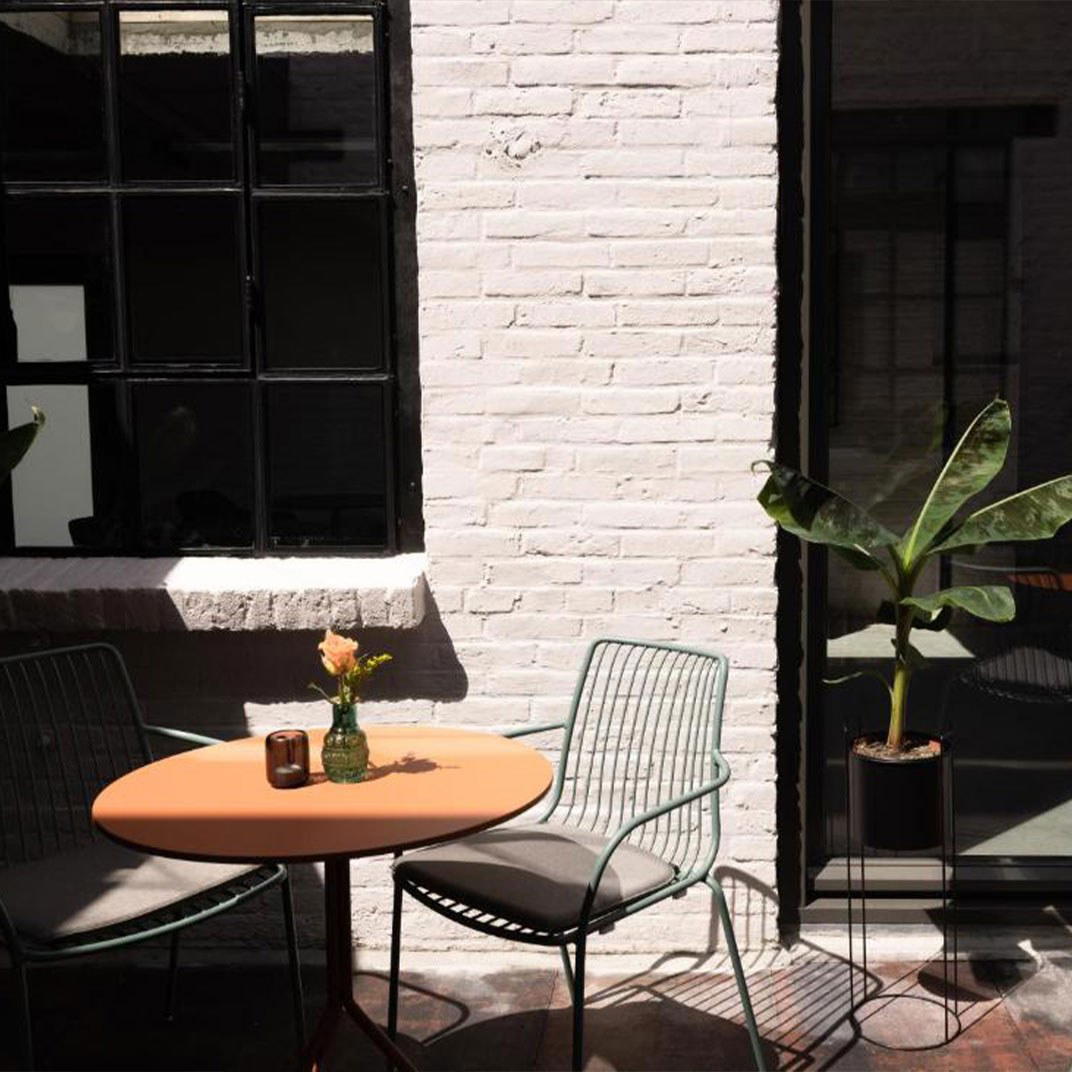
Wineries in Maastricht
Browse all →
At a Glance
- Scenic
- Cozy
- Bohemian
- Casual Hangout
- Date Night
- Solo
- Garden
- Courtyard
- Historic Building
- Standalone
- Beer Program
- Local Sourcing
- Farm To Table
- Garden
Current opening hours
- Monday
- Closed
- Tuesday
- 12–5 PM, 6–11 PM
- Wednesday
- 12–5 PM, 6–11 PM
- Thursday
- 12–5 PM, 6–11 PM
- Friday
- 12–5 PM, 6–11 PM
- Saturday
- 12–5 PM, 6–11 PM
- Sunday
- 12–5 PM, 6–11 PM
Hours can change for holidays and private events. Last verified .
Relaxed and atmospheric with long picnic tables, designer chairs, and abundant greenery; cozy interior with mirrors; peaceful courtyard setting tucked away from commercial streets.