Mama's International Tamales
On a residential stretch of 7th Street in the Westlake district, Mama's International Tamales has served one of Los Angeles's most specific Mexican regional menus for decades. The format is counter-service and cash-driven, rooted in the tamale traditions that define this corner of the city's immigrant food corridor. For visitors mapping the depth of LA's Mexican dining scene, it belongs alongside the neighbourhood's longer-running institutions.
Pearl is the En Primeur Club membership app — saves, bookings, and concierge access live there. Same editors, same standards.
- Address
- 2124 7th St, Los Angeles, CA 90057
- Phone
- +1 213 487 7474
- Directions
- Get directions
 Saves & bookings on Pearl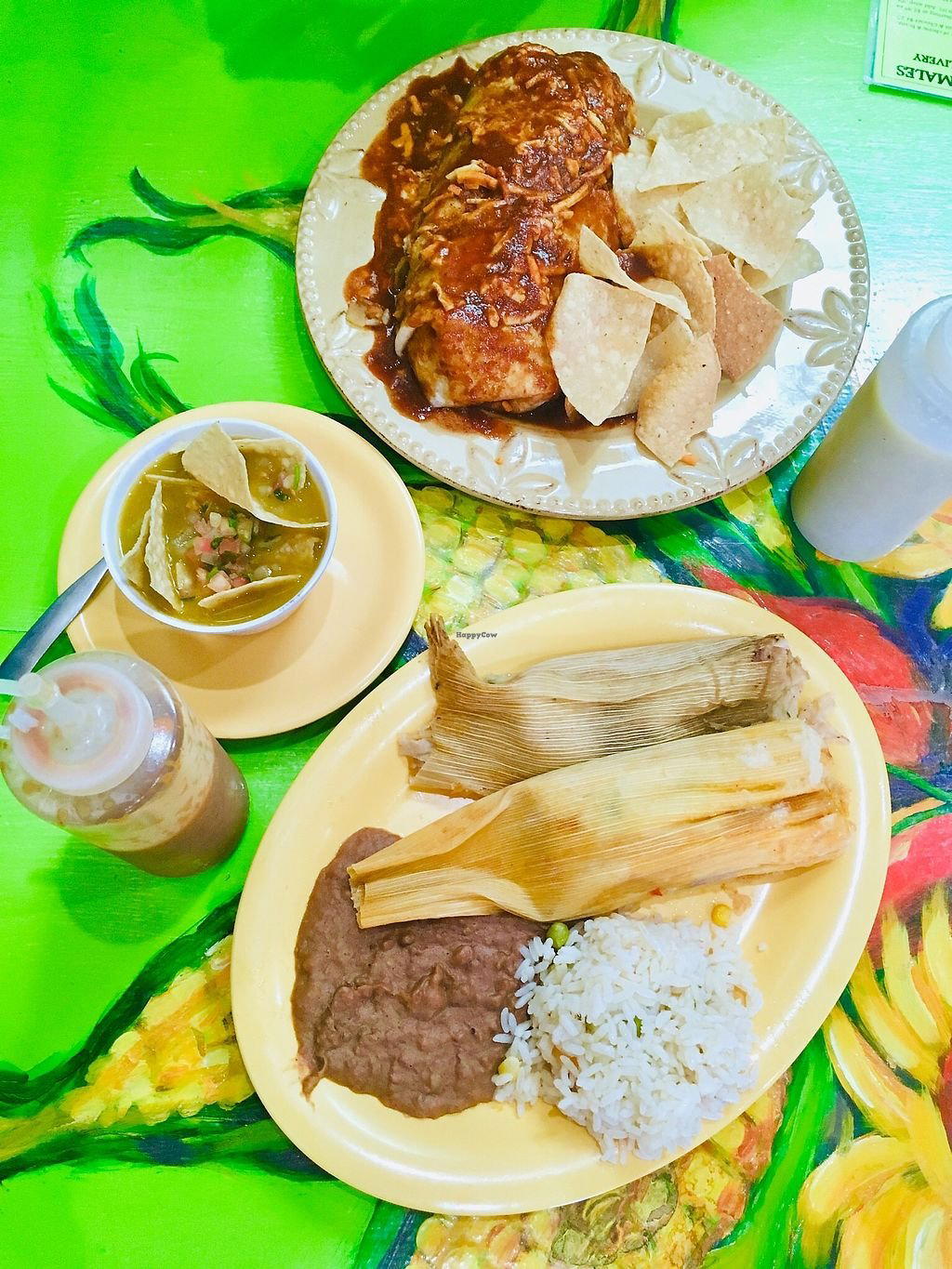
Where Westlake's Food Corridor Holds Its Ground
The blocks surrounding MacArthur Park on the west side of Downtown Los Angeles represent one of the city's most consistently overlooked concentrations of Central American and Mexican food. While dining media has spent the past decade orbiting tasting-menu counters in Arts District lofts, venues like Kato, Hayato, and Somni drawing national attention, the Westlake district has continued doing what it has always done: feeding a densely populated working neighbourhood with food that answers to immigrant tradition rather than trend cycles. Mama's International Tamales, at 2124 7th Street, is a restaurant in Los Angeles serving Vegan Salvadoran Tamales at about $15 per person. The approach is counter-service. The product is tamales. The surrounding context is a part of the city that rarely appears on curated dining lists but carries more historical continuity than almost anywhere else in Los Angeles.
Approaching the address, the visual language is nothing like the designed restaurant frontages in Silver Lake or West Hollywood. This is a commercial strip block in a dense urban neighbourhood, the kind of storefront that signals a regulars-first operation rather than a discovery-oriented one. That physical context matters when assessing what the place represents and what has, and hasn't, changed over time.
Tamales as a Regional Tradition, Not a Novelty
In Mexican food culture, the tamale is one of the oldest preparation formats on the continent, with regional variations that span from Oaxacan black mole versions wrapped in banana leaf to the masa-heavy red chile versions associated with central Mexico. In Los Angeles, the tamale has a specific local history tied to street vending, immigrant home kitchens, and the Christmas season, when demand spikes citywide and home production becomes a multi-generational family event. The commercial tamale operation, selling year-round at counter level, occupies a distinct space in that tradition. It requires consistency at volume, which tends to separate operators who understand masa hydration and filling ratios from those who treat the format casually.
The 'international' framing in the name signals an intention to present tamales beyond any single regional tradition, a positioning that distinguishes this kind of operation from a strictly regional Mexican specialist. What can be said is that the ambition embedded in the name reflects a broader pattern in LA's Mexican food scene, where immigrant operators have long synthesized multiple regional traditions under one roof rather than committing to the narrow geographic authenticity that higher-end Mexican restaurants often perform.
The Evolution Argument: Staying Put as a Statement
In a city where restaurant concepts pivot constantly, adjusting price points, rebranding formats, chasing the next neighbourhood with rising foot traffic, the operations that hold their position across decades make a different kind of argument. The Westlake district has absorbed gentrification pressure at its edges, and the food businesses that have survived there without relocating or repositioning have done so by maintaining a customer base that values continuity over novelty. Mama's International Tamales belongs to that category of venue where longevity is itself the primary credential.
This is a different kind of trust signal than the one deployed by, say, Providence or Osteria Mozza, where critical recognition provides external validation. At the counter-service level of Westlake's food corridor, the credential is neighbourhood durability: the fact that a place has maintained a regular customer base through multiple economic cycles, demographic shifts, and the general churn of commercial strips in dense urban areas. In that sense, the evolution story here is less about reinvention and more about resistance to change as a form of integrity.
Across the United States, counter-service Mexican and Central American operations have faced consistent pressure from the growing institutionalization of fast-casual Mexican formats, national chains that offer a version of the same product at engineered consistency and higher marketing spend. The independents that survive tend to do so through specific product quality and deep local loyalty, not through differentiation via design or chef credentials. The venues at the other end of the American dining spectrum, The French Laundry in Napa, Le Bernardin in New York City, Blue Hill at Stone Barns in Tarrytown, operate in a completely different tier of the trust-signal economy. At street and counter level, the operating logic is closer to places like Emeril's in New Orleans in spirit, rooted in a local food culture, but without the formalization that comes with scale and celebrity.
Placing This in the Broader LA Mexican Food Conversation
Los Angeles has a Mexican food scene that operates across five or six distinct registers simultaneously. At the high end, there are ambitious tasting-menu operations applying formal technique to Mexican regional ingredients. At the mid-level, there are long-standing family-run restaurants serving regional specialties in dining-room formats. And at the street and counter level, there are operations like this one, where the product is specific, the overhead is low, and the customer relationship is transactional in the leading sense, you know what you're getting, the operator knows what you want, and the exchange is efficient. This tier of LA dining rarely receives the same editorial treatment as venues covered in Smyth-adjacent conversations or the farm-to-table registers of Single Thread Farm in Healdsburg or Addison in San Diego, but it anchors the food culture of neighbourhoods that those venues rarely serve.
Booking and Cost Snapshot
Comparable venues nearby, for context on price, style, and recognition.
| Venue | Cuisine | Price | Notes |
|---|---|---|---|
| Mama's International TamalesThis venue — the venue you are viewing | Westlake, Vegan Salvadoran Tamales | $ | Not listed |
| Los 5 Puntos | Not listed | $ | Boyle Heights, Authentic Mexican Taqueria |
| Taco Nazo | La Habra, Baja-Style Mexican Taqueria | $ | Not listed |
| Lauritas Mexican Food | Not listed | $ | Harbor Gateway North, Authentic Mexican Tacos & Catering |
| Mitla Cafe | Not listed | $$ | San Bernardino, Traditional Mexican Taqueria |
| Yuca's | Los Feliz, Yucatecan Mexican Taqueria | $ | Not listed |
Continue exploring
More in Los Angeles
Restaurants in Los Angeles
Browse all →
Bars in Los Angeles
Browse all →

Hotels in Los Angeles
Browse all →


Wineries in Los Angeles
Browse all →
At a Glance
- Cozy
- Rustic
- Lively
- Casual Hangout
- Family
- Standalone
Current opening hours
- Monday
- Closed
- Tuesday
- Closed
- Wednesday
- 10:30 AM–4 PM
- Thursday
- 10:30 AM–4 PM
- Friday
- 10:30 AM–4 PM
- Saturday
- 10:30 AM–4 PM
- Sunday
- 10:30 AM–4 PM
Hours can change for holidays and private events. Last verified .
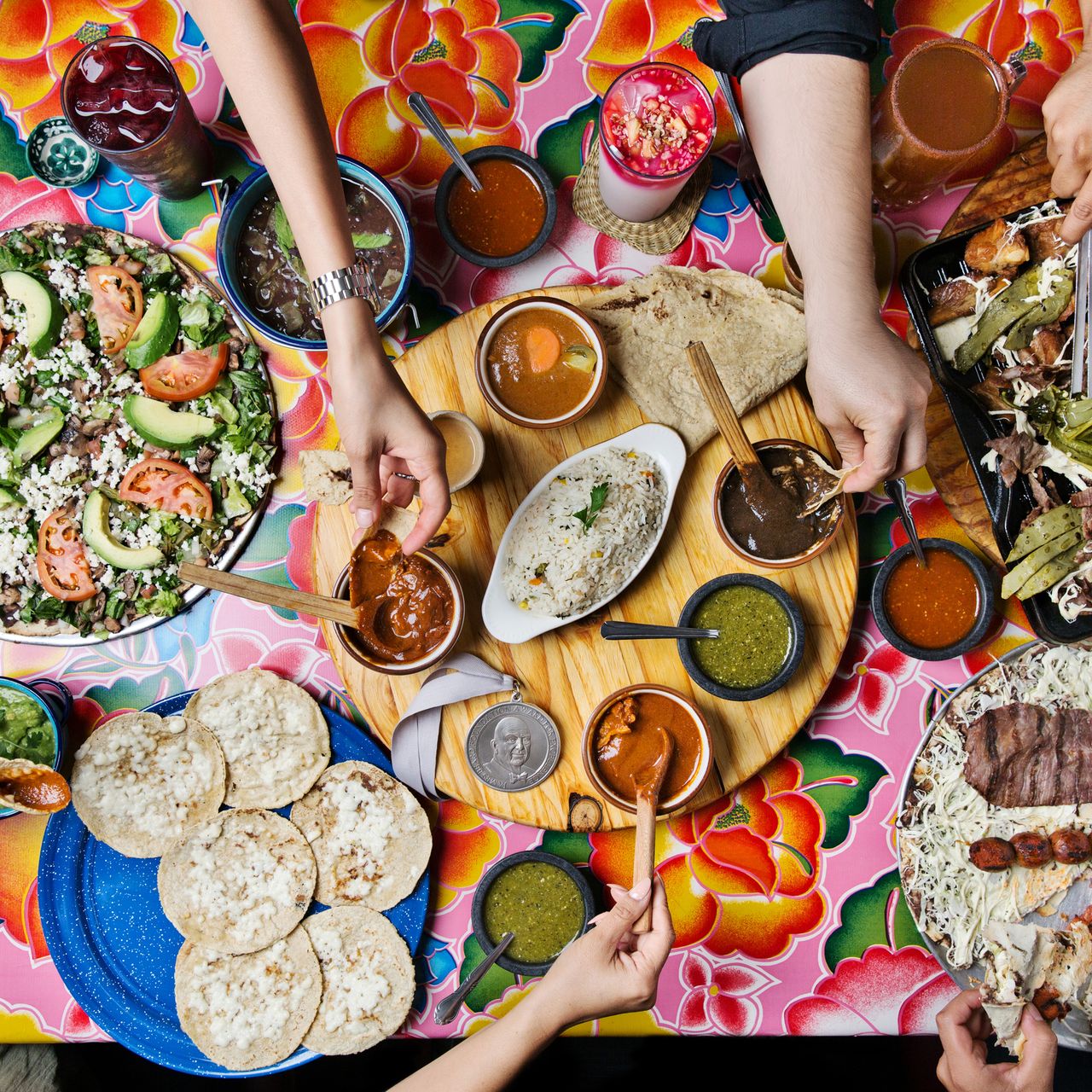
Cozy with lively, colorful Mexican-style painted tables and chairs, offering a friendly family vibe.