Yuca's

A Los Feliz institution since 1965, Yuca's has served Yucatán-rooted Mexican cooking from a modest Hillhurst Avenue hut for six decades, earning James Beard recognition that places it among the most storied casual counters in the American Southwest. The menu is tight, the format is no-frills, and the cooking speaks to a tradition that long precedes the city's current taco obsession.
Pearl is the En Primeur Club membership app — saves, bookings, and concierge access live there. Same editors, same standards.
- Address
- 2056 Hillhurst Ave, Los Angeles, CA 90027
- Phone
- +13236621214
- Website
- yucasla.com
- Directions
- Get directions
 Saves & bookings on Pearl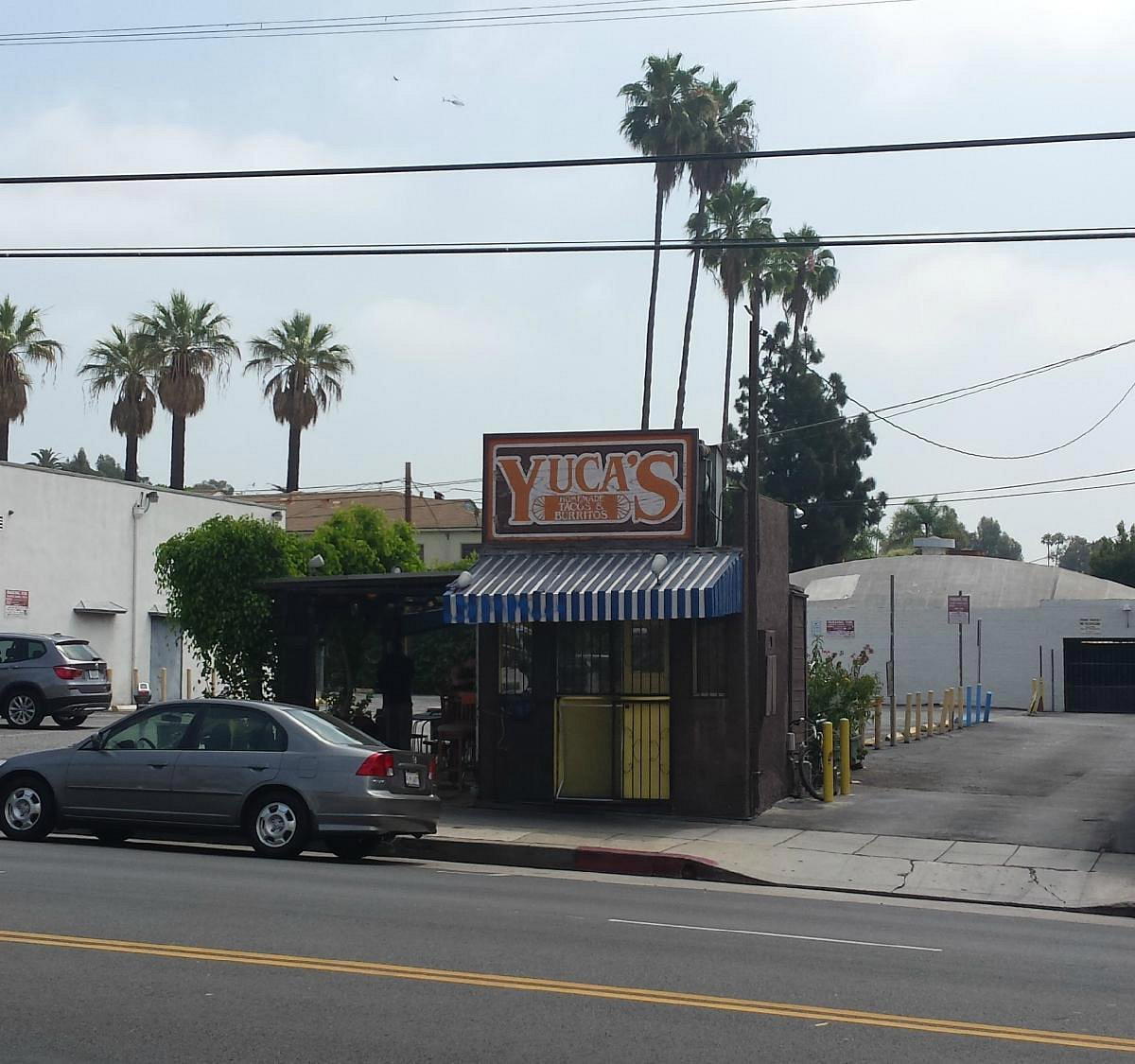
Six Decades of Yucatán in Los Angeles
Los Angeles has spent the past decade reappraising its Mexican food heritage with considerable fanfare, but Yuca's on Hillhurst Avenue has not required any reappraisal. Operating from the same compact structure in Los Feliz since 1965, the spot predates the Eastside food corridors, the taqueria-as-destination trend, and the broader American moment in which regional Mexican cooking became a subject of critical attention. That longevity, in a city that cycles through openings at speed, is itself a form of argument.
The cultural roots matter here. Yuca's is not positioned around the Jalisco-dominant, Tex-Mex-adjacent register that shaped North American taco culture through most of the twentieth century. The cooking draws from the Yucatán Peninsula, a Mexican region with a culinary tradition distinct enough to constitute its own chapter: slow-cooked cochinita pibil, achiote-rubbed preparations, and flavour profiles shaped by Mayan cooking methods rather than the ranching culture of northern Mexico. In Los Angeles, which has historically received far more immigration from Jalisco, Oaxaca, and Michoacán than from the Yucatán, that specificity remains relatively rare at street level.
The James Beard Dimension
The James Beard Foundation awarded Yuca's its America's Classic designation, a category created specifically for places that represent regional American cooking with long community roots and consistent execution. The America's Classic award operates on different criteria than the Beard's chef-focused prizes: it recognises institutions rather than individuals, and it tends to identify venues that have maintained a culinary identity across decades without drifting toward trend or market pressure.
Contrast with Los Angeles's other Beard-recognised tables is instructive. The city holds serious representation at the upper end of the dining spectrum: Providence operates in the territory of contemporary fine dining with sustained Michelin recognition, Kato has built a reputation for New Taiwanese cooking at a tasting-menu format, and Somni occupies the molecular and avant-garde tier. Yuca's sits at the opposite end of almost every axis: format, price, and scale. What the America's Classic designation signals is that sustained cultural authority does not require any of those things.
Los Feliz and the Hillhurst Context
Address is worth reading. Hillhurst Avenue in Los Feliz is a corridor that has shifted considerably since 1965, moving from a working-class residential strip to a neighbourhood that now supports wine bars, chef-driven brunch spots, and the kind of independent retail that signals gentrification in its later stages. Yuca's has remained in place across that shift, occupying a hut-scale footprint that would have been unremarkable in the 1960s and is now almost architecturally anomalous among its neighbours.
That physical continuity functions as a kind of cultural document. The spot did not move to a larger space, did not rebrand for a different clientele, and did not add a full-service dining room when the neighbourhood's income demographics changed around it. For a city in which the hospitality sector tends to track real estate pressure closely, that represents a meaningful form of institutional commitment.
Los Angeles rewards this kind of deep-rooted specificity in scattered pockets across its geography. For readers building a broader picture of the city's food culture, our full Los Angeles restaurants guide maps the range from counters like Yuca's through to the tasting-menu tier represented by venues like Hayato and Osteria Mozza.
The Cooking Tradition Behind the Counter
Yucatecan cuisine occupies a distinctive position in Mexican gastronomy. The peninsula's relative geographic isolation historically meant less cultural and culinary mixing with central Mexico's post-colonial food culture. The result is a kitchen tradition that retained more of its pre-Columbian base: achiote (annatto) as a primary colouring and flavouring agent, citrus-based marinades with sour orange prominent, slow pit-cooking methods (the pib, or underground oven, gives cochinita pibil its name), and a spice profile that differs markedly from the chile-heavy registers more familiar in North American Mexican cooking.
At a broader level, the American Southwest's taco culture has always been more varied than its fast-casual representation suggests. The Yucatán tradition, the Oaxacan tradition (with its mole complexity and tlayuda format), the Sonoran tradition (flour tortillas, beef-forward), and the Mexico City street tradition (quesillo-filled blue-corn quesadillas) represent genuinely distinct culinary lineages. Yuca's operates within one of the more underrepresented of those lineages in Los Angeles, which is part of why the America's Classic designation landed where it did.
Placing Yuca's in the National Frame
The America's Classic category is a useful lens for comparing across American cities. Institutions like Emeril's in New Orleans represent a different model of longevity, one built around a named chef's profile and scaled accordingly. Yuca's represents the counter-tradition: a venue whose authority derives entirely from the consistency and cultural rootedness of the cooking rather than from a celebrity or destination-dining format. That model appears across the country, from long-running family counters in the South to regional institutions in the Midwest and Southwest.
For context on how fine-dining institutions build equivalent durability at higher price points, The French Laundry in Napa, Le Bernardin in New York City, and Alinea in Chicago each represent a different answer to the same question: what does it take to hold cultural relevance across multiple decades? Yuca's answer involves none of the infrastructure those venues employ. The contrast is the point.
Other American institutions recognised for long-running excellence in their regions include Bacchanalia in Atlanta, Blue Hill at Stone Barns in Tarrytown, Addison in San Diego, The Inn at Little Washington, Lazy Bear in San Francisco, Single Thread Farm in Healdsburg, and Atomix in New York City. Yuca's operates in entirely different territory from all of them, but the question of how to maintain a distinct culinary identity across decades connects them.
Internationally, the challenge of maintaining a founding culinary tradition against commercial pressure shows up in very different contexts: 8 1/2 Otto e Mezzo Bombana in Hong Kong represents a European fine-dining tradition transplanted and sustained in a high-competition Asian market. Yuca's represents a Yucatecan tradition sustained in a neighbourhood that has changed around it. The mechanisms differ; the cultural function is comparable.
Know Before You Go
Know Before You Go
- Address: 2056 Hillhurst Ave, Los Angeles, CA 90027
- Neighbourhood: Los Feliz
- Format: Counter-service hut; no full table service
- Recognition: James Beard America's Classic award
- Operating since: 1965
- Booking: Walk-in format; no reservations
- Parking: Street parking on Hillhurst; limited during peak lunch hours
Recognition history
Dated appearances from independent guides and award organizations, with the underlying list record or original source where available.
James Beard Award America's Classics
James Beard Award
Continue exploring
More in Los Angeles
Restaurants in Los Angeles
Browse all →
Bars in Los Angeles
Browse all →

Hotels in Los Angeles
Browse all →
Wineries in Los Angeles
Browse all →
At a Glance
- Rustic
- Well Known
- Casual Hangout
- Standalone
Current opening hours
- Monday
- 11 AM–5:30 PM
- Tuesday
- 11 AM–5:30 PM
- Wednesday
- 11 AM–5:30 PM
- Thursday
- 11 AM–5:30 PM
- Friday
- 11 AM–5:30 PM
- Saturday
- 11 AM–5:30 PM
- Sunday
- Closed
Hours can change for holidays and private events. Last verified .
Casual, no-frills taco hut with a charming, unpretentious parking lot dining setup.
Know Before You Go
- Getting there
- 2056 Hillhurst Ave, Los Angeles, CA 90027