
1 Michelin Star
Our verdict
At 111 Galerie de Valois, Martino Ruggieri has planted his most ambitious project inside the Palais Royal arcades, a setting that frames his Italian-rooted, boundary-pushing cooking in one of Paris's most architecturally charged addresses. The menu reads like free-verse poetry, and the food follows suit: sea urchin paired with foie gras, calf's sweetbread against dulse seaweed, bold sauces that refuse to defer to classical convention.

Pearl is the En Primeur Club membership app, where members save venues, book tables and use the concierge.
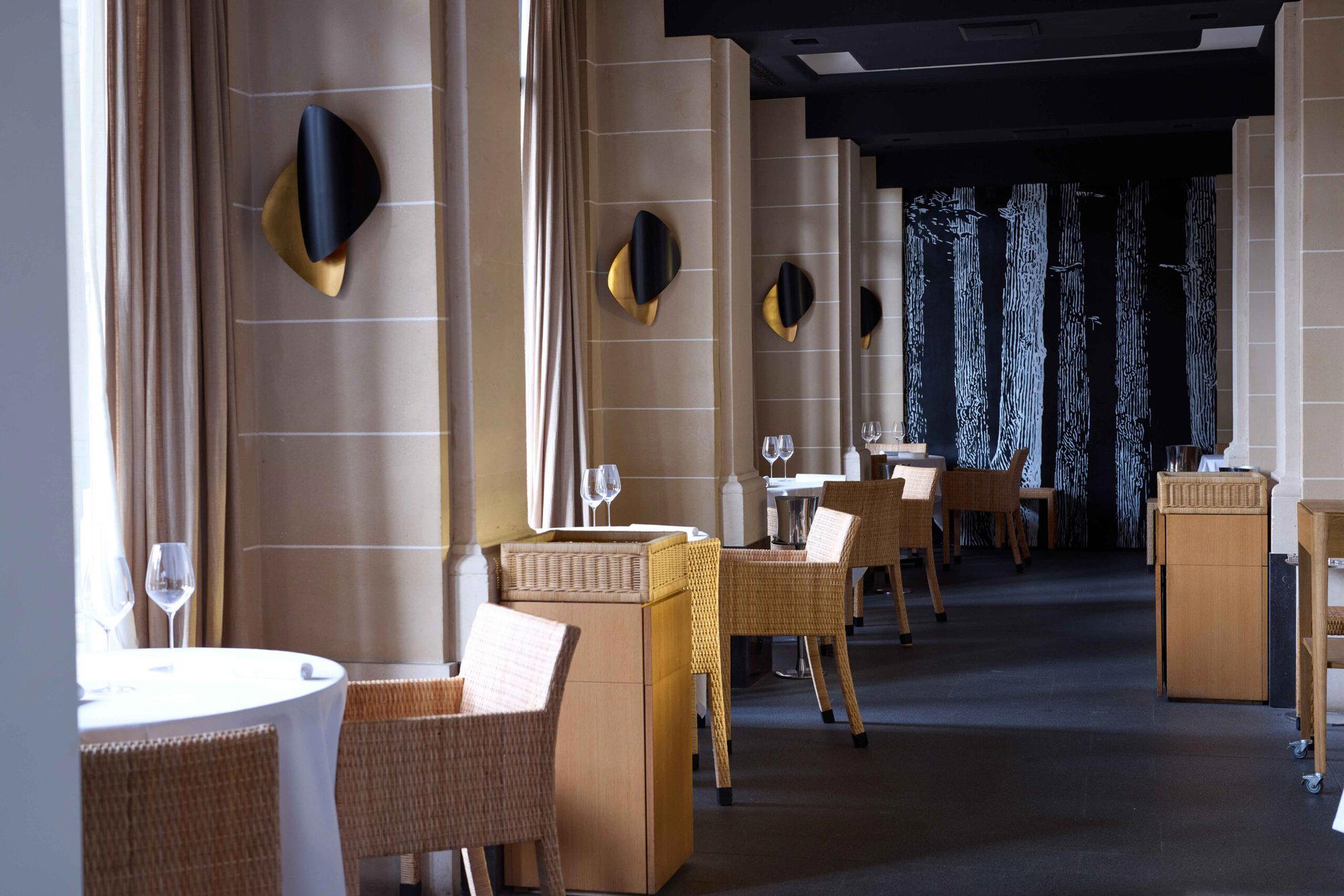
The Palais Royal as a Culinary Address
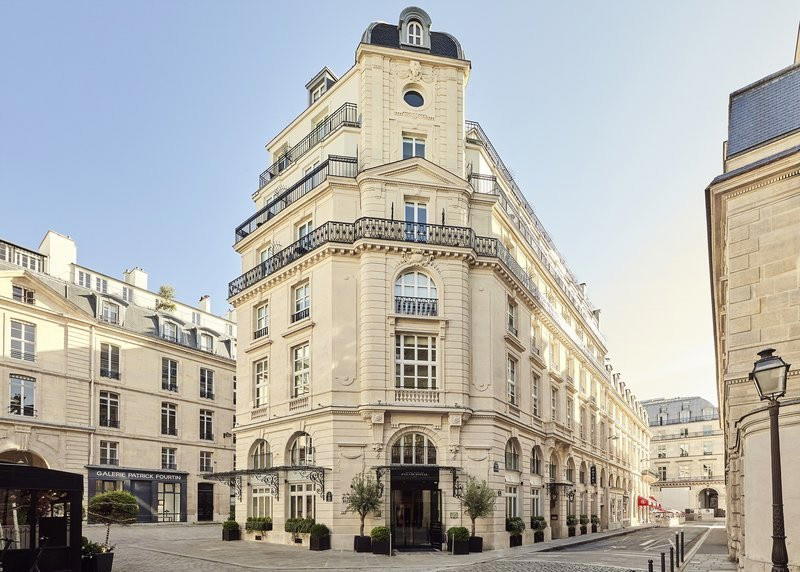
The arcades of the Palais Royal have always attracted a particular kind of ambition. Colette had her shop here. The grands cafés of the pre-Revolutionary period lined these galleries. Today the address draws a different calibre of creative enterprise, and at 111 Galerie de Valois, Martino Ruggieri has taken on one of Paris's most charged dining rooms. The setting is not incidental context; it is part of the argument the restaurant makes. Eating under these stone vaults, with the gardens just beyond, situates the meal inside a very specific Parisian idea of what serious cooking can be.
Paris's leading creative tier has shifted over the past decade. Houses like Alléno Paris au Pavillon Ledoyen and Arpège anchored the category when the conversation was still largely about formal French tradition being stretched from within. Newer arrivals have complicated the picture: Kei introduced a Japanese precision into the French framework, while Le Cinq at the Four Seasons George V maintains the grandest version of palatial French service.
What the Menu Announces
The decision to head each dish with a free-verse poem rather than a conventional list of ingredients is not affectation. It reflects how the kitchen actually thinks. Titles like "White," "Beasts and Abysses," and "Delicacy" signal that the combinations on the plate follow an associative logic rather than a classical one. Sea urchin paired with foie gras is a combination that works on iodine meeting richness, salt cutting fat; bacon and almonds use smokiness and nuttiness as structural counterparts; calf's sweetbread with dulse seaweed places land protein against oceanic brine. These pairings are deliberate provocations, testing whether flavour logic holds when tradition is removed as a crutch.
This approach places Ruggieri in a clear lineage of chefs who treat the kitchen as a workshop rather than an archive. Bras in Laguiole built a grammar of terroir-led improvisation from its plateau setting. Mirazur in Menton draws on coastal and garden sources to generate combinations outside classical French categories. Ruggieri's version of this operates from an Italian sensibility transplanted to Paris: bold sauces, a comfort with fat and brine in the same composition, and a tolerance for flavour intensity that sits closer to Rome or Naples than to the Loire.
The Team Dynamic at the Counter
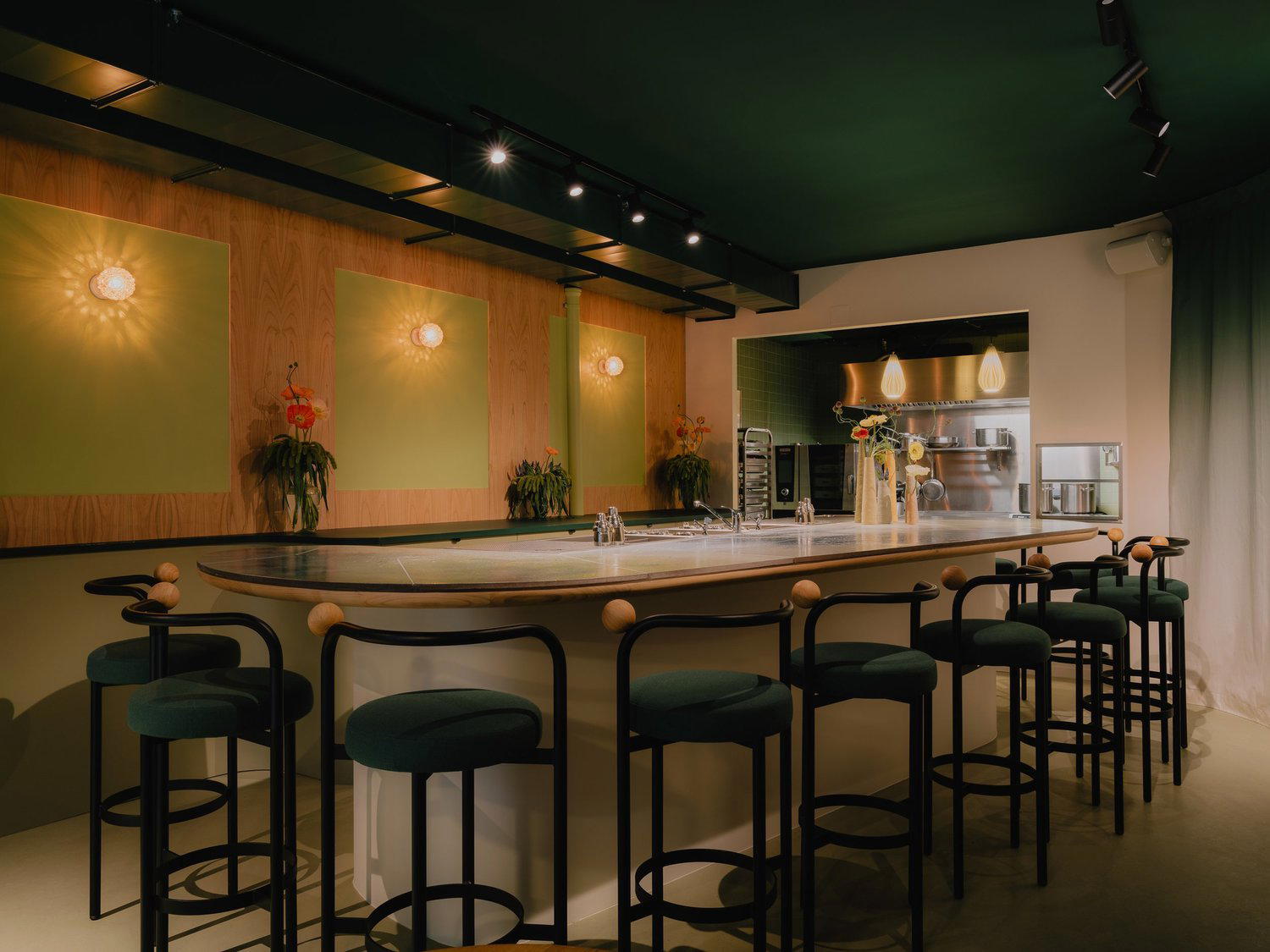
The editorial angle on a restaurant like this is easily reduced to the chef's biography, but what actually sustains a creative kitchen at this level is the discipline across the whole team. The described "culinary workshop" model requires a front-of-house fluent enough in the menu's conceptual architecture to translate free-verse poem titles into something a diner can follow and trust. When a dish is called "Strength," the table team carries the interpretive weight that a written description would otherwise provide. This is a specific skill set, and it changes the character of a meal significantly when it is done well compared with venues where service is decorative rather than explanatory.
Similarly, the sommelier's role in a menu built around combinations like sea urchin and foie gras is not direct. Classical wine pairings assume classical flavour logic; a kitchen working associatively forces the cellar to work associatively too. The Palais Royal address gives the programme a certain authority, but the coherence of the experience depends on whether the full team is working from the same conceptual brief. In Paris's leading creative tier, this is the variable that separates a meal that feels unified from one that feels like a sequence of impressive courses without connective tissue.
For comparison, L'Ambroisie on the Place des Vosges represents the other pole: a room where service and cuisine have been calibrated together over decades into something almost ceremonial. Troisgros in Ouches built its team culture across generations of the same family. At Maison Ruggieri, the workshop framing suggests a younger, more experimental energy, which carries its own kind of coherence if the front-of-house is genuinely embedded in it.
Context in the Broader French Fine-Dining Map
Understanding where Maison Ruggieri sits requires a brief tour of what French fine dining has become. Auberge de l'Ill in Illhaeusern and Paul Bocuse in Collonges-au-Mont-d'Or represent the monument tier: houses where the weight of the name and the continuity of a tradition are central to why you go. Flocons de Sel in Megève operates in the luxury Alpine register, where place and product converge. Ruggieri's project is something different: a creative workshop in a Paris monument setting, where the institutional character of the address is in deliberate tension with the kitchen's appetite for disruption.
Italian-born chefs working in Paris occupy a distinct niche. The French kitchen's classical infrastructure, from sauce technique to service format, remains the frame, but the Italian sensibility introduces a different relationship with acidity, fat, and flavour intensity. This is not fusion in the lazy sense; it is two serious culinary traditions operating simultaneously, sometimes in harmony and sometimes in productive friction. Ruggieri's menu, as described, leans into that friction rather than resolving it into something comfortable.
Planning a Visit
Maison Ruggieri Palais Royal is at 111 Galerie de Valois, accessed through the Palais Royal arcades in the 1st arrondissement. The nearest Métro stations are Palais Royal-Musée du Louvre on lines 1 and 7. Given the creative, workshop-led format and the attention the restaurant has received since opening, reservations should be secured well in advance; the limited capacity of a creative counter-style programme typically means demand outpaces availability at short notice. Those building a wider Paris itinerary can consult our full Paris restaurants guide, as well as our Paris hotels guide, our Paris bars guide, our Paris wineries guide, and our Paris experiences guide for broader planning context.
Frequently asked questions
What is Maison Ruggieri Palais Royal known for?
The restaurant is recognised for Martino Ruggieri's Italian-rooted creative cooking in one of Paris's most architecturally significant settings. The kitchen is associated with bold combinations, such as sea urchin with foie gras and calf's sweetbread with dulse seaweed, and with a menu structure that uses free-verse poetry to frame each dish rather than conventional ingredient lists. The Palais Royal address places it in the upper tier of Paris creative dining, alongside houses like Alléno Paris au Pavillon Ledoyen and Arpège, though its Italian sensibility and workshop ethos give it a distinct position within that cohort.
at Maison Ruggieri Palais Royal?
The menu's poetic framing suggests a tasting format is the intended way to experience the full arc of the cuisine. For parallel reference points in bold, boundary-testing French-adjacent cooking, Le Bernardin in New York and Emeril's in New Orleans offer comparative context for how serious kitchens handle the balance between technique and flavour intensity.
Is Maison Ruggieri Palais Royal reservation-only?
Given the format and the attention the restaurant has received since establishing itself at the Palais Royal, advance reservations are strongly advisable. Creative workshop restaurants at this level in Paris, including peers like Kei and Le Cinq, typically require booking several weeks ahead. Specific booking policies and current availability should be confirmed directly with the restaurant.
Cuisine and Awards Snapshot
Comparable venues nearby, for context on price, style, and recognition.
| Venue | Cuisine | Price | Awards | Notes |
|---|---|---|---|---|
| Maison Ruggieri Palais RoyalThis venue (the venue you are viewing) | Creative French Fine Dining | $200–300 | 1 Michelin Star | Not listed |
| Prévelle | Modern Plant-Centric French | $150–200 | 1 Michelin Star | 7th arrondissement |
| Zostera | Creative French Seafood Fine Dining | $100–150 | 1 Michelin Star · Wine Spectator Best of Award of Excellence | 16th arrondissement |
| L'Envolée - La Demeure Montaigne | Seasonal French Bistronomique | $100–150 | Michelin Plate | 8th arrondissement |
| Nolinski | Traditional French Bourgeois Brasserie | $50–100 | Michelin Plate | Palais-Royal |
| Chenapan | Modern French with Asian Fusion | $100–150 | Michelin Plate | 9th arrondissement (SoPi) |
Recognition history
Dated appearances from independent guides and award organizations, with the underlying list record or original source where available.
Michelin 1 Star
Michelin
Continue exploring
More in Paris
Restaurants in Paris
All restaurants in Paris →
Bars in Paris
All bars in Paris →
Details
- Elegant
- Sophisticated
- Classic
- Special Occasion
- Date Night
- Historic Building
- Garden
- Street Scene
- Tasting Menu
Current opening hours
- Monday
- 7:30–10 PM
- Tuesday
- 12:30–2 PM, 7:30–10 PM
- Wednesday
- 12:30–2 PM, 7:30–10 PM
- Thursday
- 12:30–2 PM, 7:30–10 PM
- Friday
- 12:30–2 PM, 7:30–10 PM
- Saturday
- Closed
- Sunday
- Closed
Hours can change for holidays and private events. Hours as of .
Pleasant and elegant atmosphere in a swish historic location with views into the gardens.