Mahlzeit Döner Kebap House
On Duisburger Strasse in Düsseldorf's Pempelfort district, Mahlzeit Döner Kebap House occupies a position familiar to anyone tracking the city's fast-casual street food circuit: a neighbourhood döner spot where the format is well-established and the sourcing decisions carry more weight than the shopfront. It sits in a city where Turkish-German food culture runs deep and competition is constant.
Pearl is the En Primeur Club membership app — saves, bookings, and concierge access live there. Same editors, same standards.
- Address
- Duisburger Str. 50, 40477 Düsseldorf, Germany
- Phone
- +4921149767030
- Directions
- Get directions
 Saves & bookings on Pearl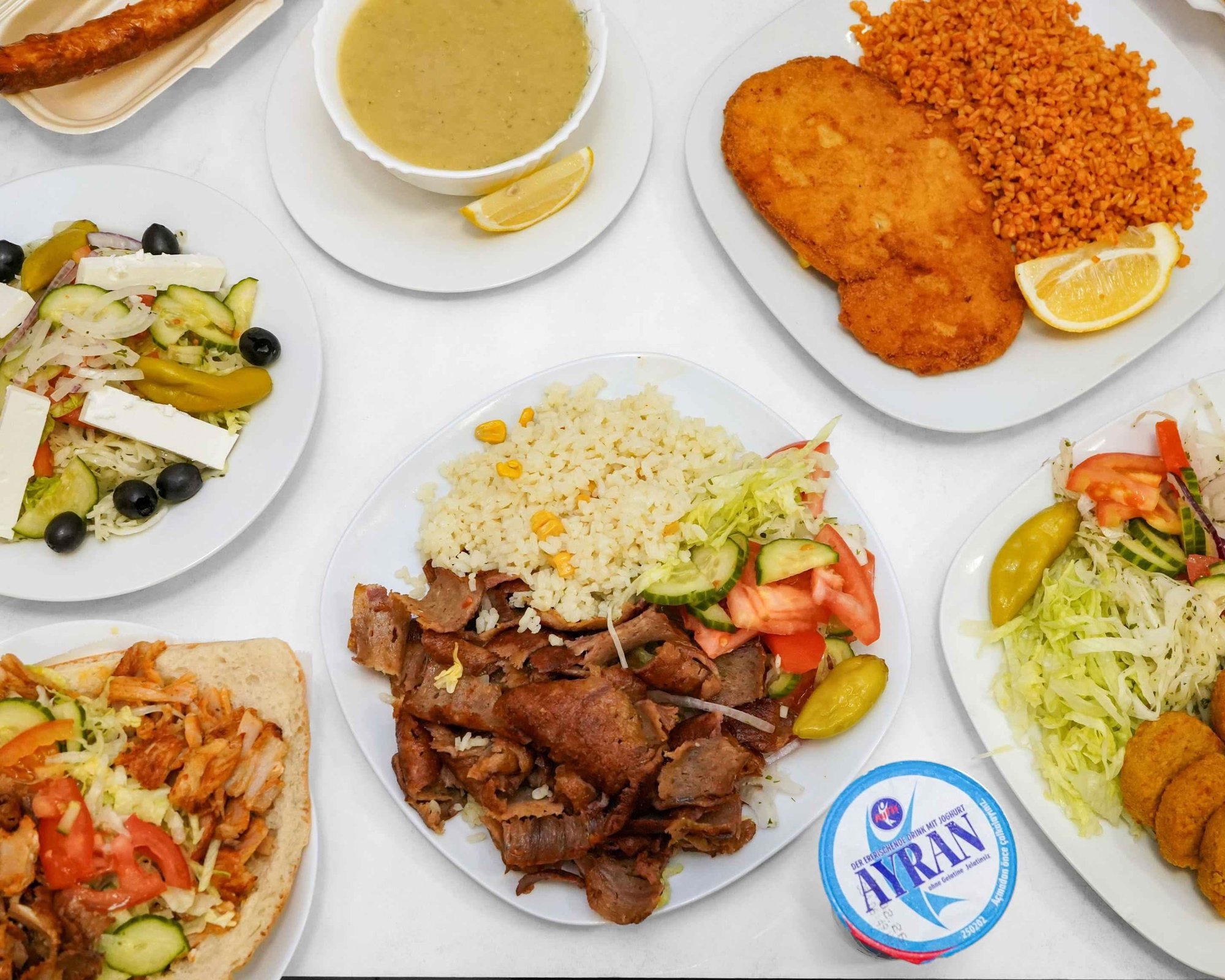
Pempelfort and the Street Food Tier That Actually Feeds the City
Düsseldorf's reputation in international dining circles tends to cluster around its Japanese restaurant density along Immermannstrasse, its Rhine-facing fine dining rooms, and the kind of multi-Michelin ambition you find further afield at places like Aqua in Wolfsburg or Vendôme in Bergisch Gladbach. But the tier that actually feeds the city day to day is something different: a dense network of döner counters, imbiss stalls, and fast-casual spots distributed across residential neighbourhoods, running parallel to the fine dining conversation without intersecting it.
Pempelfort sits just north of the Altstadt, a neighbourhood of wide streets, older apartment blocks, and the kind of local commerce that serves residents rather than tourists. Mahlzeit Döner Kebap House at Duisburger Strasse 50 operates in this register. The address places it on a connector road between Pempelfort proper and the southern edge of Derendorf, in a stretch where the dining options reflect the neighbourhood's mixed residential character rather than any particular culinary scene. You are not here because a critic sent you. You are here because the döner format, at its functional leading, is one of the most efficient expressions of what happens when Turkish grill tradition lands in a German city and becomes something of its own.
What the Döner Format Actually Involves
The döner kebap as eaten in German cities is a distinct object from its Turkish antecedents. The German iteration, which took hold in Berlin in the early 1970s and spread through the country over the following decades, wraps spiced and stacked rotisserie meat inside a half loaf of fresh bread, layered with raw cabbage, tomato, onion, and sauce. The bread format matters: the round, slightly chewy Fladenbrot used in German döner houses is baked to absorb fat from the meat without collapsing, which is a different engineering brief from pita. The result is a handheld meal that functions as lunch, late-night food, or a standing meal eaten at the counter without ceremony.
The ingredient decisions in this format carry more weight than the format's casual presentation suggests. The meat column on the spit is a blend, typically veal and beef or chicken depending on the counter, seasoned before stacking, and the quality of both the blend and the seasoning shows clearly once the bread soaks the drippings. Sourcing at this tier is rarely documented publicly, but the difference between a döner built from lower-grade commodity meat and one using a more carefully composed blend is immediately legible in flavour and texture. Germany's Turkish-German food infrastructure, built over fifty years of migration and supply chain development, means that the raw materials are widely available at multiple quality points. Which point a given counter chooses is where the practical differentiation lies.
For broader context on how this street food tier sits within Düsseldorf's wider dining picture, the full Düsseldorf restaurants guide covers the city's range from neighbourhood counters through to destination dining.
The Competitive Set on Duisburger Strasse
Within the döner category in Düsseldorf, the competitive set is local and immediate. Alanya Döner operates in the same format tier within the city. The differences between counters at this level tend to be narrow and specific: bread freshness, spit rotation frequency, sauce balance, and whether the vegetable components arrive cold and crisp or have been sitting. These are not abstract quality signals. They are the variables that regular customers track and that determine whether a döner house becomes a neighbourhood fixture or turns over quickly.
Mahlzeit sits in a part of Pempelfort where the immediate alternatives include a range of fast-casual formats beyond the döner category. 3h's burger and chicken addresses the same midday and evening demand window. Arca Alacati and Anfora pull from a different part of the neighbourhood dining spectrum. And for something outside the fast-casual register entirely, Amuni Wein- und Käsebar represents a sharp departure in format and price point, showing the range of what the district holds within a short radius.
Sourcing and the Döner Supply Chain
The ingredient sourcing angle in the döner category is worth pausing on, because it is often underexamined relative to the format's cultural visibility. The core variables are the meat blend specification, the bread supplier, and the freshness discipline on vegetables and sauces. In cities with established Turkish-German food infrastructure like Düsseldorf, the supply options are mature. Wholesale meat suppliers serving döner counters have been operating in the German market for decades, and there is a meaningful spread between the lowest-cost commodity supply and the mid-tier suppliers who offer more consistent blend quality and better traceability.
What this means practically is that a döner counter's quality profile is mostly set by procurement choices made before any customer walks in. The cook controls rotation speed and the cut angle on the spit, both of which affect how much crisp exterior versus soft interior arrives in the bread. But the flavour foundation is the blend, the seasoning, and the bread contract. These are the structural decisions. For a neighbourhood spot on Duisburger Strasse, these decisions are being made in the context of a local market where price discipline is real and margin on a single döner is thin.
For comparison with how sourcing philosophy operates at a different scale and price tier in German dining, the work at Schwarzwaldstube in Baiersbronn or Schanz in Piesport illustrates how ingredient provenance functions as a primary editorial and commercial signal at the fine dining level. The contrast is instructive rather than hierarchical. JAN in Munich, CODA Dessert Dining in Berlin, Victor's Fine Dining by Christian Bau in Perl, Waldhotel Sonnora in Dreis, Restaurant Haerlin in Hamburg, and ES:SENZ in Grassau each represent the end of the spectrum where sourcing is documented, named, and built into the price. The döner counter operates on entirely different economics, but the sourcing decision is no less determinative of the outcome on the plate.
Beyond Germany, the sourcing conversation takes different forms in contexts like Le Bernardin in New York City or Atomix in New York City, where provenance documentation is part of the guest experience itself rather than a background operational decision.
Know Before You Go
| Address | Duisburger Str. 50, 40477 Düsseldorf, Germany |
|---|---|
| Neighbourhood | Pempelfort, Düsseldorf |
| Format | Döner counter, fast-casual |
| Booking | Walk-in format; no reservation required |
| Phone | Not publicly listed |
| Website | Not available |
| Price range | Not confirmed; typical for neighbourhood döner counter |
| Hours | Not confirmed; verify locally before visiting |
How Mahlzeit Döner Kebap House Düsseldorf compares with similar nearby venues.
| Venue | Cuisine | Price |
|---|---|---|
| Rubens | Austrian | €€ |
Continue exploring
More in Düsseldorf
Restaurants in Düsseldorf
Browse all →
Bars in Düsseldorf
Browse all →
Hotels in Düsseldorf
Browse all →
Wineries in Düsseldorf
Browse all →
At a Glance
- Neutral
- Casual Hangout
Current opening hours
- Monday
- 11 AM–10 PM
- Tuesday
- 11 AM–10 PM
- Wednesday
- 11 AM–10 PM
- Thursday
- 11 AM–10 PM
- Friday
- 11 AM–10 PM
- Saturday
- 11 AM–10 PM
- Sunday
- Closed
Hours can change for holidays and private events. Last verified .
Neutral ambience in a pleasant little snack bar.
Know Before You Go
- Getting there
- Duisburger Str. 50, 40477 Düsseldorf, Germany