.png)
Twice awarded a Michelin Plate (2024 and 2025), Mì Quảng 1A on Hải Phòng Street serves Da Nang's most scrutinised bowl of mì quảng at prices that remain firmly in street-food territory. The address has become a reference point for understanding how Central Vietnamese noodle culture translates into a single, disciplined dish format. Book a seat early; the room fills fast.
 Discover on Pearl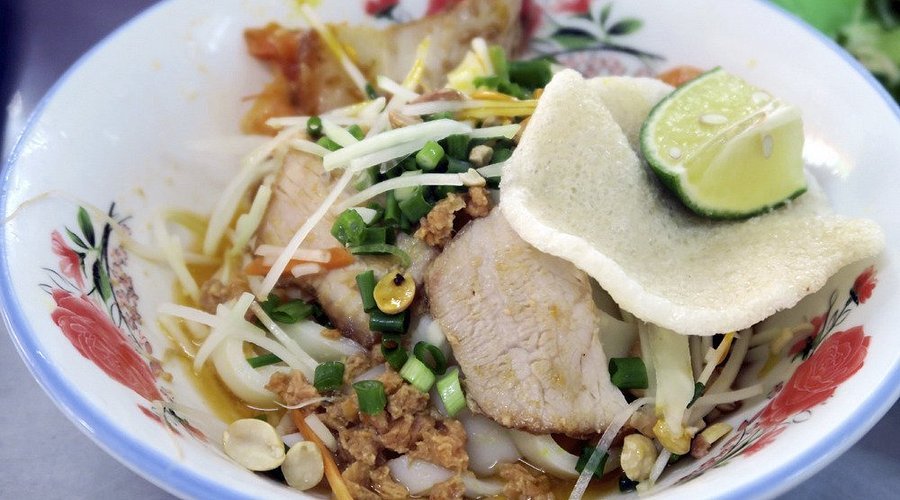
A Bowl That Defines a City's Noodle Identity
On Hải Phòng Street in Hải Châu district, the morning rush at mì quảng counters follows a pattern that holds across Da Nang: plastic stools, condensation on glasses of iced tea, and bowls that arrive within minutes of sitting down. The dish itself is not broth-heavy in the way that Vietnamese noodle soups from further north tend to be. Mì quảng uses only a shallow pour of turmeric-tinted broth, just enough to coat the wide rice noodles, with the composition relying on toppings and texture rather than depth of liquid. That structural choice distinguishes Central Vietnamese noodle culture from the broth-forward traditions of Hanoi or Hue, and it is precisely that architecture that Mì Quảng 1A has been recognised for twice by Michelin's inspectors, earning a Plate in both 2024 and 2025.
What the Michelin Plate Means in This Context
The Michelin Plate designation, awarded to restaurants that inspectors consider to serve food of good quality, occupies a different tier from the star system but carries weight in a category where formal recognition has historically been sparse. Da Nang's street-food and noodle scene has not attracted the same level of international critical attention as Ho Chi Minh City, where venues like Anan Saigon operate in a more internationally visible register. The consecutive Plate awards at Mì Quảng 1A are notable precisely because they apply to a single-dish format at the lowest price tier, signalling that Michelin's inspectors are treating ingredient sourcing, preparation consistency, and format fidelity as the relevant criteria here, not tasting-menu ambition. For context on how Michelin applies this logic to noodle specialists across Asia, the same dynamic plays out at counters like A Niang Mian Guan in Shanghai and A Bing Bao Shan Mian in Hangzhou, where regional noodle traditions earn formal recognition on the basis of technical execution rather than format complexity.
The Architecture of Mì Quảng
Understanding what Mì Quảng 1A is serving requires a brief account of the dish itself. Mì quảng is a Quảng Nam province preparation that spread into Da Nang as the city grew, and its defining structural principle is proportion rather than abundance. The wide, flat rice noodles, cut thicker than bún but less dense than bánh canh, sit in a shallow pool of reduced broth flavoured with annatto or turmeric. Toppings typically include some combination of pork, shrimp, or quail egg, layered above the noodles rather than submerged beneath broth. A handful of rice crackers, added at the table, provides a dry crunch that works against the soft noodle texture. Fresh herbs, banana blossom, and bean sprouts arrive separately, with the expectation that the diner assembles the final bowl. That assembly logic makes mì quảng more interactive than a pho or bún bò order, where the balance is largely fixed at the kitchen stage. The dish rewards attentive eating rather than passive consumption.
At the ₫ price point, Mì Quảng 1A sits alongside Da Nang's other specialist single-dish counters, including Bún Chả Cá 109 and Bún Bò Bà Rơi (Hai Chau), all of which operate on the same premise: a single anchor dish, executed with enough consistency to justify repeat visits from locals who eat it multiple times a week. The Michelin recognition separates Mì Quảng 1A from that peer group in terms of external validation, but the pricing and format remain unchanged. That is its own kind of editorial statement about what the recognition means.
How the Address Fits the Neighbourhood
Hải Phòng Street is one of Da Nang's more commercially active central corridors, running through Hải Châu district in a part of the city that sees a mix of resident foot traffic and visitors arriving from the beachside hotel strip to the east. The address at number 5 is not tucked away; it sits in open view and benefits from the volume that comes with a well-trafficked street location. Google review data shows 1,883 reviews at an average score of 4.0, a figure that reflects a broad base of returning local diners rather than a spike of tourist responses. That pattern, high volume with a stable mid-range score, tends to characterise neighbourhood specialists where regulars hold the rating steady against occasional visitors expecting something different from what the venue actually is.
For visitors building a broader itinerary around Da Nang's street food, the city's noodle scene extends beyond mì quảng. Bún Bò Huế Bà Thương handles the Hue-style spiced beef noodle format, while Bà Diệu on Tran Tong Street and Bà Đông each offer their own angles on the local morning-bowl tradition. For a broader map of the city's dining options across price tiers, our full Da Nang restaurants guide covers the range from street counters to venues like La Maison 1888 at the opposite end of the price spectrum. If you are planning a longer stay, our Da Nang hotels guide, bars guide, and experiences guide cover the rest of the city's offer.
For readers tracking how single-dish noodle specialists earn Michelin recognition across the region, the comparison set is instructive. A Kun Mian in Taichung, Ajisai in Taichung, A Xin Xian Lao in Fuzhou, and Baan Chik Pork Noodles in Udon Thani all operate in the same tradition of regional noodle formats receiving formal recognition without format change. Vietnam's presence in that group, anchored here by Mì Quảng 1A and by recognised addresses in Hanoi such as Hibana by Koki at a very different price register, reflects how broadly Michelin has moved into Southeast Asian street-level dining over the past three annual cycles.
Planning Your Visit
The address is 5 Hải Phòng, Thạch Thang, Hải Châu, Da Nang. No booking infrastructure is listed, which is consistent with the counter-service model standard at this price tier; the approach is to arrive early, particularly on weekday mornings when local demand peaks. The ₫ price point means a full bowl sits comfortably within the range of any budget. No dress code applies. For current opening hours, direct enquiry at the venue is the most reliable route, as no official hours are published online. Visitors to Da Nang's broader food scene can find complementary coverage across our Da Nang wineries guide for completeness, though the city's primary drinking culture skews toward beer and local spirits rather than wine.
What Should I Eat at Mì Quảng 1A?
The answer is direct: order the mì quảng, which is the only dish the venue is structured around. The Michelin Plate recognition in 2024 and 2025 applies specifically to that preparation. When the bowl arrives, add the accompanying herbs, bean sprouts, and banana blossom to your own taste, then break the rice crackers over the leading before eating. The crackers dissolve quickly once in contact with the broth, so timing matters. The shallow broth-to-noodle ratio means the dish cools more slowly than a full-soup format, but eating promptly remains the convention at counters of this type across Central Vietnam.
Quick Comparison
A small peer set for context; details vary by what’s recorded in our database.
| Venue | Cuisine | Price | Awards | Notes |
|---|---|---|---|---|
| Mì Quảng 1A | Noodles | ₫ | Michelin Plate (2025); Michelin Plate (2024) | This venue |
| La Maison 1888 | French Contemporary | ₫₫₫₫ | Michelin 1 Star | French Contemporary, ₫₫₫₫ |
| Ăn Thôi | Vietnamese | ₫ | Vietnamese, ₫ | |
| Bé Ni 2 | Seafood | ₫₫ | Seafood, ₫₫ | |
| Bún Bò Bà Rơi (Hai Chau) | Noodles | ₫ | Noodles, ₫ | |
| Cô Chủ Nhỏ | Street Food | ₫ | Street Food, ₫ |
Need a table?
Our members enjoy priority alerts and concierge-led booking support for the world's most difficult tables.
Get Exclusive Access