Luigi Lepore

At Luigi Lepore, Southern Italy’s sunlit abundance is distilled into contemporary haute cuisine with poise and precision. In an intimate, design-forward setting, Chef Lepore translates Calabrian terroir into finely tuned tasting menus that balance purity of flavor with elegant craft. Expect ethereal pastas, line-caught seafood, and heritage meats polished by time-honored techniques and modern finesse, all complemented by a sommelier-led cellar spotlighting Italy’s great houses and thoughtful boutique producers. Service unfolds with quiet choreography, attentive, intuitive, and effortlessly discreet, creating a cocoon of calm where each course arrives as a small revelation. For travelers who collect singular tables, Luigi Lepore is a destination: a place where the Mediterranean’s warmth, fragrance, and rhythm are refined into a memorable, sense-stirring experience.
Pearl is the En Primeur Club membership app — saves, bookings, and concierge access live there. Same editors, same standards.
- Address
- Via Ubaldo De Medici, 50, 88046 Lamezia Terme CZ, Italy
- Phone
- +39 0968 380000
- Website
- luigilepore.it
- Directions
- Get directions
 Saves & bookings on Pearl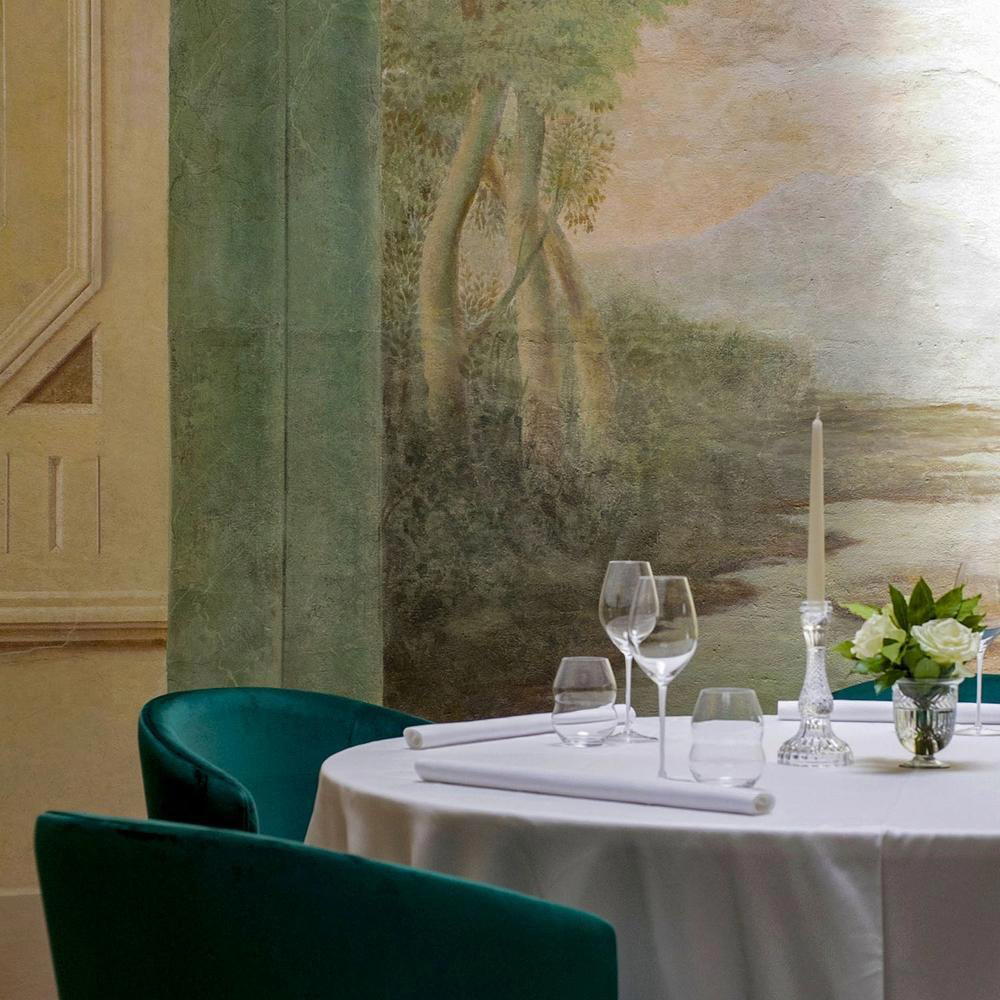
A 19th-Century Palazzo, a Nearly Invisible Door, and Why That Matters
Finding Luigi Lepore requires a deliberate choice. The entrance on Via Ubaldo De Medici, set into the facade of a 19th-century palazzo in Nicastro, the historic centre of Lamezia Terme, offers almost no street-level signal of what lies behind it. No illuminated signage, no queue of guests. Step through and the shift is immediate: a dining room of modern elegance with a Scandinavian restraint to its lines, spare and deliberate in a building that carries four centuries of Calabrian history in its walls. That tension between old structure and stripped-back interior is the first editorial statement the restaurant makes, and it frames everything that follows.
This is not incidental atmosphere. Southern Italy's creative fine dining has long operated in the shadow of northern Italian institutions, from Osteria Francescana in Modena to Le Calandre in Rubano to Piazza Duomo in Alba. The Michelin map of Italy tilts heavily northward, which makes a one-star award in Calabria, earned in 2024, carry a particular weight. It signals that the region's produce and culinary intelligence are being taken seriously at a national level.
Calabrian Ingredients in a Contemporary Frame
Calabria occupies a specific position in Italian food culture. The region's larder runs to preserved chillies, bergamot citrus, swordfish from the Strait of Messina, nduja, licorice from Rossano, and a tradition of bitter-forward flavour that distinguishes its cooking from the richer, cream-led registers of Emilia-Romagna or the olive oil simplicity of Puglia. These are not fashionable ingredients adopted for novelty; they are products with documented provenance and long local use.
What defines the cooking at Luigi Lepore, according to its Michelin recognition, is a precise transformation of these regional raw materials into contemporary dishes that hold a deliberate balance of bitter and acidic notes, with citrus fruit threaded through in a way that reads as both local and technically controlled. This is the kind of flavour grammar that French training tends to sharpen. Calabria's formative influence and the kitchen's precise use of acidity and bitterness put the cooking inside a culinary tradition that treats those elements as structural tools rather than accidental outcomes. For context, the broader movement of Italian chefs trained abroad and then returning to work with southern ingredients has produced some of the country's most discussed tables, including Reale in Castel di Sangro and Uliassi in Senigallia, where regional specificity and international technique share the same plate.
Luigi Lepore sits inside that broader pattern: a chef who left, learned, and returned with enough technical vocabulary to read local produce differently. That arc is not distinctive to Italy, but in Calabria, where the culinary infrastructure supporting fine dining is thinner than in Lombardy or Piedmont, the decision to return to Lamezia Terme specifically carries weight. The city is not a gastronomic destination in the way that Modena or Alba is. The table at this palazzo is, in that sense, a deliberate act of regional commitment.
The Menu Structure and What It Signals
There is no à la carte. The format is three tasting menus: Origini at five courses, and A Mano Libera in either a seven or nine-course version. That structure is itself a statement about how the kitchen wants to tell its story. Tasting-only formats at this price tier, which sits at €€€ on a scale where comparable creative Italian restaurants such as Enrico Bartolini in Milan or Enoteca Pinchiorri in Florence operate at €€€€, give the kitchen full control over sequence and contrast. The difference between a five-course and a nine-course progression is not simply more food; it is a fundamentally different architectural experience, where the later courses can carry more weight because the earlier ones have built context.
The menu names are worth registering. Origini, meaning origins, positions the shorter menu as a distillation of where the cooking comes from, the Calabrian base. A Mano Libera, meaning freehand, signals latitude and experimentation. These are not marketing labels; they are invitations to understand what register of the kitchen you are entering on a given evening.
Lamezia Terme has one other restaurant in the conversation for serious dining: Abbruzzino Oltre, which also holds Michelin recognition in the city. That two kitchens of this ambition operate in the same mid-sized Calabrian city reflects a broader regional shift rather than coincidence. See our full Lamezia Terme restaurants guide for a wider view of what the city's dining circuit currently offers.
Front of House and the Character of Service
In Italy's more formal starred dining rooms, the distance between table and kitchen can feel institutional. At Luigi Lepore, the front of house is managed by Stefania Lepore, the chef's sister, who introduces each dish personally. This has a practical effect on the pace of a meal. The descriptions become acts of translation rather than recitation, connecting the sourcing logic and flavour intention of each course to the person sitting across from it. At a small restaurant in a palazzo in Calabria, that directness is not a stylistic flourish; it is how information moves from kitchen to table when there is no front-of-house hierarchy to dilute it.
The warmth that Michelin's inspectors noted in their citation is a meaningful data point. At this price tier, service quality is not separable from the overall judgement of a restaurant. Warmth and precision coexisting in a small dining room is harder to sustain than either quality alone.
Planning a Visit
The restaurant opens Wednesday through Friday from 7:30 PM to 10:30 PM, with Saturday running a lunch service from 12:30 PM to 2:00 PM alongside the evening sitting, and Sunday offering lunch from 12:30 PM to 2:30 PM. Monday and Tuesday are closed. The limited weekly schedule means availability is genuinely constrained. For international travellers, Lamezia Terme International Airport is the logical entry point, with direct connections to several European hubs, making the city more accessible than its position in the southern Italian interior might suggest. The restaurant sits in Nicastro, the historic upper town, which is a short distance from the airport and the newer commercial areas of Lamezia Terme.
Price tier at €€€ positions this kitchen well below the €€€€ bracket occupied by Italy's most celebrated tasting-menu addresses, including Dal Pescatore in Runate or Atelier Moessmer Norbert Niederkofler in Brunico, which makes it an interesting proposition for travellers calibrating value against Michelin recognition.9 across 169 ratings, a figure that suggests consistent execution rather than isolated strong nights.
For those tracing Italy's creative fine dining circuit more broadly, Quattro Passi in Marina del Cantone, Alléno Paris au Pavillon Ledoyen, and JAN in Munich represent adjacent creative traditions worth holding alongside this one.
Price and Recognition
Comparable venues nearby, for context on price, style, and recognition.
| Venue | Cuisine | Price | Awards | Notes |
|---|---|---|---|---|
| Luigi LeporeThis venue — the venue you are viewing | Nicastro, Modern Calabrian Fine Dining | $$$$ | Michelin 1 Star | Not listed |
| Abbruzzino Oltre | Not listed | $$$$ | Michelin 1 Star | historic center, Contemporary Calabrian Fine Dining |
| Don Alfonso 1890 San Barbato | Not listed | $$$$ | Michelin 1 Star | Lavello, Modern Mediterranean Fine Dining |
| Le Monzù | Via Tragara, Contemporary Italian | $$$$ | Michelin 1 Star | Not listed |
| Crocifisso | Upper Noto, Modern Sicilian Fine Dining | $$$$ | Michelin 1 Star | Not listed |
| Volta del Fuenti by Michele De Blasio | Not listed | $$$$ | Michelin 1 Star | Vietri sul Mare, Modern Campanian Fine Dining |
Recognition history
Dated appearances from independent guides and award organizations, with the underlying list record or original source where available.
Michelin 1 Star
Michelin
Michelin 1 Star
Michelin
Continue exploring
More in Lamezia Terme
Restaurants in Lamezia Terme
Browse all →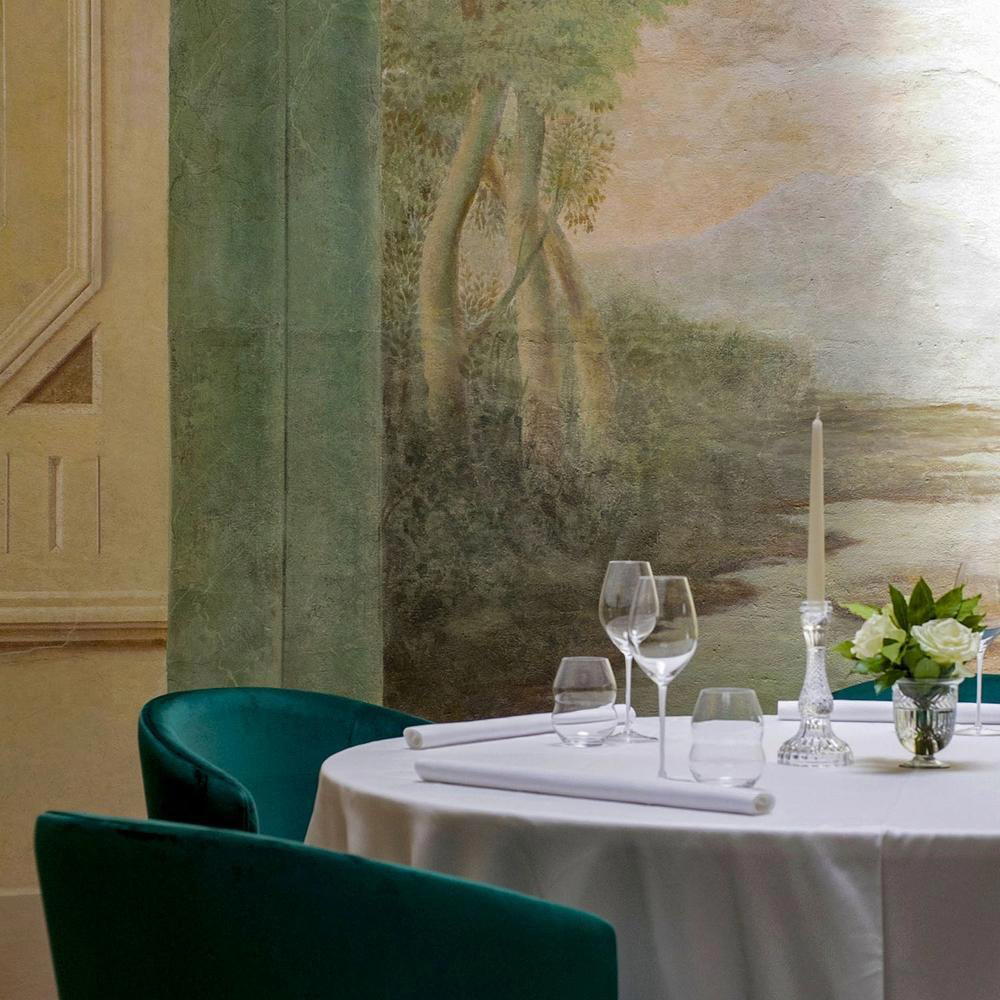
Hotels in Lamezia Terme
Browse all →
Wineries in Lamezia Terme
Browse all →
At a Glance
- Elegant
- Intimate
- Modern
- Sophisticated
- Minimalist
- Special Occasion
- Date Night
- Historic Building
- Extensive Wine List
- Sommelier Led
- Local Sourcing
Current opening hours
- Monday
- Closed
- Tuesday
- Closed
- Wednesday
- 7:30–10:30 PM
- Thursday
- 7:30–10:30 PM
- Friday
- 7:30–10:30 PM
- Saturday
- 12:30–2 PM, 7:30–10:30 PM
- Sunday
- 12:30–2:30 PM
Hours can change for holidays and private events. Last verified .
Minimalist yet inviting design with warm lighting, natural textures, and a hushed, refined atmosphere in a historic palazzo.