
Michelin Selected
Capovaticano Resort Thalasso & Spa occupies a clifftop position on the Calabrian coast near Tropea, earning Michelin Selected status in 2025. The property sits within a broader tier of destination resorts that trade on dramatic topography and thalassotherapy facilities rather than urban convenience. For travellers willing to commit to southern Italy's less-trafficked Tyrrhenian shore, it represents a considered alternative to the more saturated Amalfi and Sicilian circuits.

Pearl is the En Primeur Club membership app — saves, bookings, and concierge access live there. Same editors, same standards.
- Address
- Località Tono, 89866 San Nicolò di, Ricadi VV, Italy
- Phone
- +39 0963 665760
- Website
- capovaticanoresort.it
- Directions
- Get directions
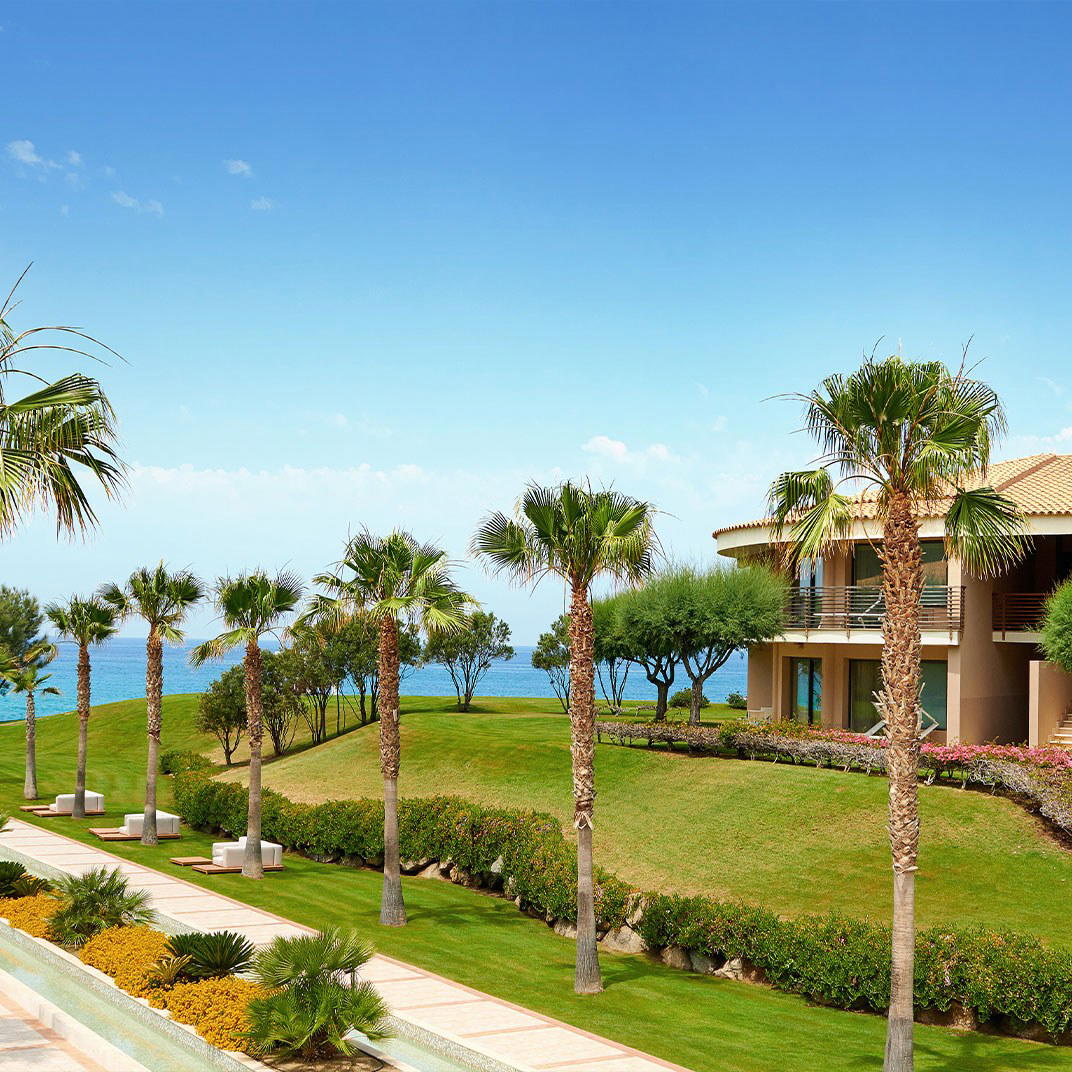
Clifftop Calabria: Where the Tyrrhenian Shore Shapes the Stay
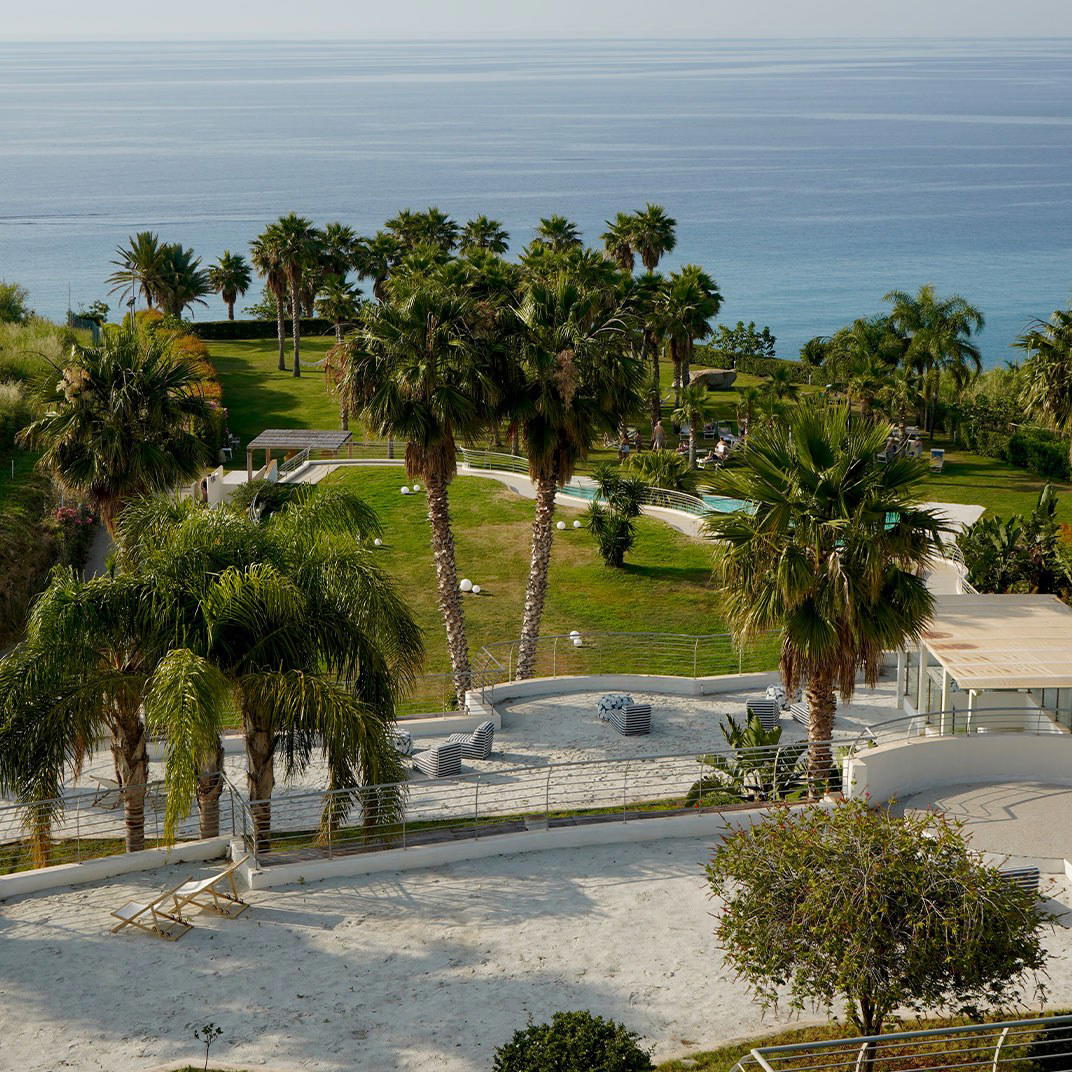
Approach Capovaticano from the inland road and the resort announces itself through absence before presence: the land simply drops away, and the Tyrrhenian opens in a sweep of deep blue that extends, on clear days, toward the Aeolian Islands on the horizon. This is the defining spatial logic of properties in Calabria's Capo Vaticano promontory zone. Unlike the terraced cliffs of the Amalfi Coast, where hotels such as Borgo Santandrea and Il San Pietro di Positano are partly defined by their proximity to a working coastal road, Capovaticano Resort sits within a more isolated arc of limestone headland, where the visual field is largely uncluttered by the infrastructure of mass tourism.
That topographic fact matters for how the property reads architecturally. Resort design on the southern Tyrrhenian tends toward two poles: whitewashed Mediterranean volumes that defer to the landscape, or low-rise terrace structures built specifically to frame the water view from every room angle. Capovaticano Resort belongs to the latter tradition, with a layout that extends laterally across the promontory rather than stacking vertically. The result is a property whose architecture is less about any single dramatic facade and more about the cumulative experience of moving through terraced levels toward the sea.
Design Logic on the Southern Tyrrhenian
In southern Italian resort design, the organizing principle is almost always the relationship between built mass and open water. Properties that get this right — and the tradition runs through some of Italy's most admired addresses, from JK Place Capri to Il Pellicano on the Tuscan coast — tend to treat the seaward elevation as the primary architectural gesture, while interior spaces are cooler, more restrained, and deliberately secondary. Capovaticano Resort follows that convention. The thalassotherapy facilities, which draw seawater for treatment programs in a format well established along the Calabrian and Sicilian coasts, are integrated into the lower levels of the complex, positioning wellness infrastructure as an extension of the coastal environment rather than an interior amenity tacked on as an afterthought.
Thalassotherapy as a hospitality category has seen renewed attention across Mediterranean resort circuits in recent years, partly because it provides a programmatic distinction that pure-beach resorts cannot easily replicate. A property with a functioning thalasso center occupies a different competitive position than one whose spa is simply an indoor pool with treatment rooms. For guests whose primary reason to visit is the sea-therapy program, the architecture and the offering are genuinely continuous.
Tropea and the Wider Calabrian Context
Tropea itself sits roughly 15 kilometres northeast of Capo Vaticano along the coast, and its profile has changed considerably over the past decade. The hilltop town, suspended above a series of sandy bays on tufa cliffs, was for most of the twentieth century a domestic Italian summer destination with limited international profile. It now draws a broader European audience, partly through food media attention on the local red onion, which has Protected Designation of Origin status and appears across Calabrian cooking in forms that range from raw accompaniment to slow-cooked preserve. For guests at Capovaticano Resort, Tropea is accessible as a day excursion. Our full Tropea restaurants guide covers the coastal dining options worth making the short drive for.
Two other Tropea-area hotels position themselves in adjacent tiers: Infinity Resort Tropea and Villa Paola both draw from the same geographic draw, though with different facility footprints. What distinguishes Capovaticano Resort within this local set is the thalasso program's scale, which tends to attract guests planning longer stays oriented around the spa schedule rather than pure beach access.
Where It Sits in Italian Resort Geography
The Michelin Selected designation, awarded in the 2025 hotels list, places Capovaticano Resort in the same recognition tier as a large number of Italy's quality-screened independent properties, a cohort that includes everything from small agriturismo to full-service coastal resorts. The distinction signals a baseline of quality assessment rather than a position at the top of a competitive ranking. For context, properties carrying heavier Michelin hotel distinctions in Italy include Passalacqua on Lake Como and Borgo Egnazia in Puglia, both of which operate in a different category of scale and recognition. The Selected designation for Capovaticano Resort is more usefully read as a quality filter than a prestige marker.
Calabria as a whole sits in a different register from the more internationally established Italian resort circuits. Compared to Tuscany properties like Rosewood Castiglion Del Bosco, or the northern lake properties represented by Grand Hotel Tremezzo or Il Sereno, southern Calabrian properties carry lower international name recognition, which is precisely their structural advantage for a specific type of traveller. The trade-off is less polished infrastructure off-property, longer transfer times from major airports, and a hospitality industry that is still building its international service vocabulary. The gain is a coastline that is measurably less congested during peak summer weeks, and water quality across the promontory's beaches that regularly ranks among Italy's highest in annual environmental assessments.
Getting There and Planning the Visit
The nearest airports with meaningful flight connections are Lamezia Terme (roughly 60 kilometres north) and Reggio Calabria to the south. Both serve domestic Italian routes and a limited number of European connections, with Lamezia carrying the broader schedule. The drive from Lamezia via the A2 autostrada and then coastal roads takes approximately 50 to 60 minutes under normal conditions, though summer weekends on the final approach roads to the Capo Vaticano promontory can extend that significantly. The resort's location at Località Tono, Frazione San Nicolò places it on the promontory's quieter western exposure. Guests arriving without a car will need a private transfer, as public transport connections to the promontory are thin. The season runs from spring through early autumn; the thalasso program extends the viable stay window beyond what a pure beach resort would offer, making late May and September particularly well-suited for guests who want the facilities without July and August's peak occupancy.
Side-by-Side Snapshot
Comparable venues nearby, for context on price, style, and recognition.
| Venue | Cuisine | Price | Awards | Notes |
|---|---|---|---|---|
| Capovaticano Resort Thalasso & SpaThis venue — the venue you are viewing | Contemporary minimalist resort blending modern architecture with natural Calabrian landscape | Not listed | Michelin Selected | Not listed |
| Infinity Resort Tropea | Modern cliffside resort integrated with natural coastal landscape | $100–200 | Michelin Selected | Parghelia |
| Villa Paola | Restored 16th-century convent blending historic charm with modern luxury | $300–500 | Michelin Selected | Contrada Paola |
| Villa Gelsomino Exclusive House | Historic 19th-century boutique villa with aristocratic interiors. | $1–100 | Michelin Selected | Santa Margherita Ligure |
| Zash Country Boutique hotel & SPA | Contemporary minimalist design hotel housed in a restored 1930s manor and former winery, blending modern architecture with historic Sicilian elements. | Not listed | Michelin Selected | Riposto |
| Schwarzer Adler | Concept Living | Concept living apartment hotel fusing historic roots with modern luxury. | Not listed | Michelin Selected | Vipiteno main square |
Recognition history
Dated appearances from independent guides and award organizations, with the underlying list record or original source where available.
Michelin Selected
Michelin

Details
- Quiet
- Elegant
- Scenic
- Sophisticated
- Minimalist
- Romantic Getaway
- Wellness Retreat
- Family Vacation
- Honeymoon
- Beachfront
- Panoramic View
- Destination Spa
- Spa
- Pool
- Fitness Center
- Private Beach
- Tennis Court
- Wi Fi
- Room Service
- Concierge
- Restaurant
- Beach Access
- Waterfront
- Garden
- Wheelchair Accessible
- Elevator
- Step Free Entrance
- Accessible Parking
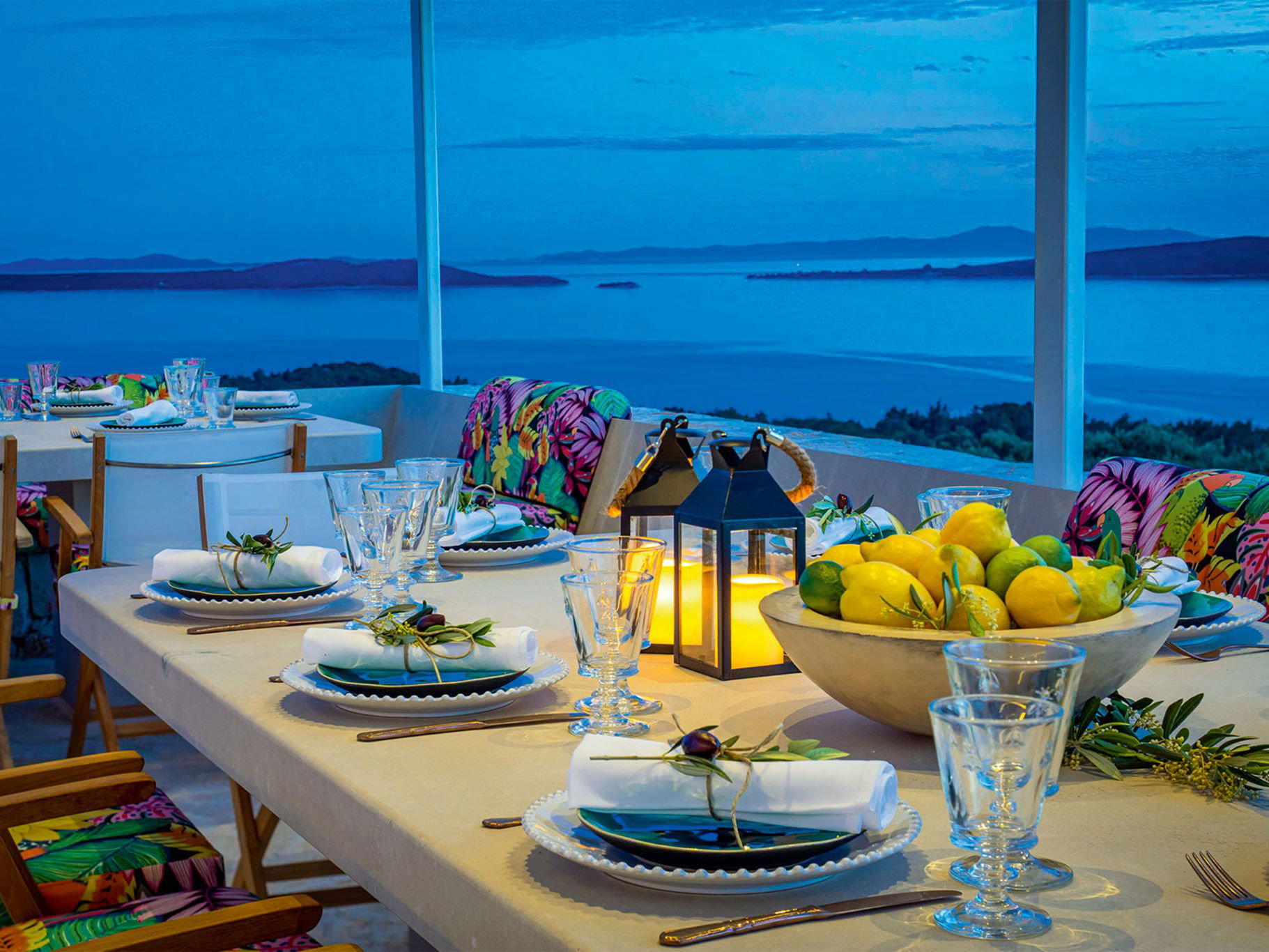
Modern minimalist design inspiring serenity with spacious bright rooms featuring large terraces overlooking the sea.