Lost Coyote
Our verdict
Lost Coyote sits on Esplanade Avenue at the edge of the Tremé, one of New Orleans' oldest and most architecturally layered neighbourhoods. The address places it within a dining corridor that runs between French Quarter institution and Creole residential character. Details on format, cuisine, and chef are limited, but the location alone signals a particular kind of New Orleans experience.

Pearl is the En Primeur Club membership app, where members save venues, book tables and use the concierge.
The menu
What to order
- Shrimp boulettes
- Muffaletta crunchwrap
- Crawfish roll
Esplanade Avenue and the Architecture of the In-Between
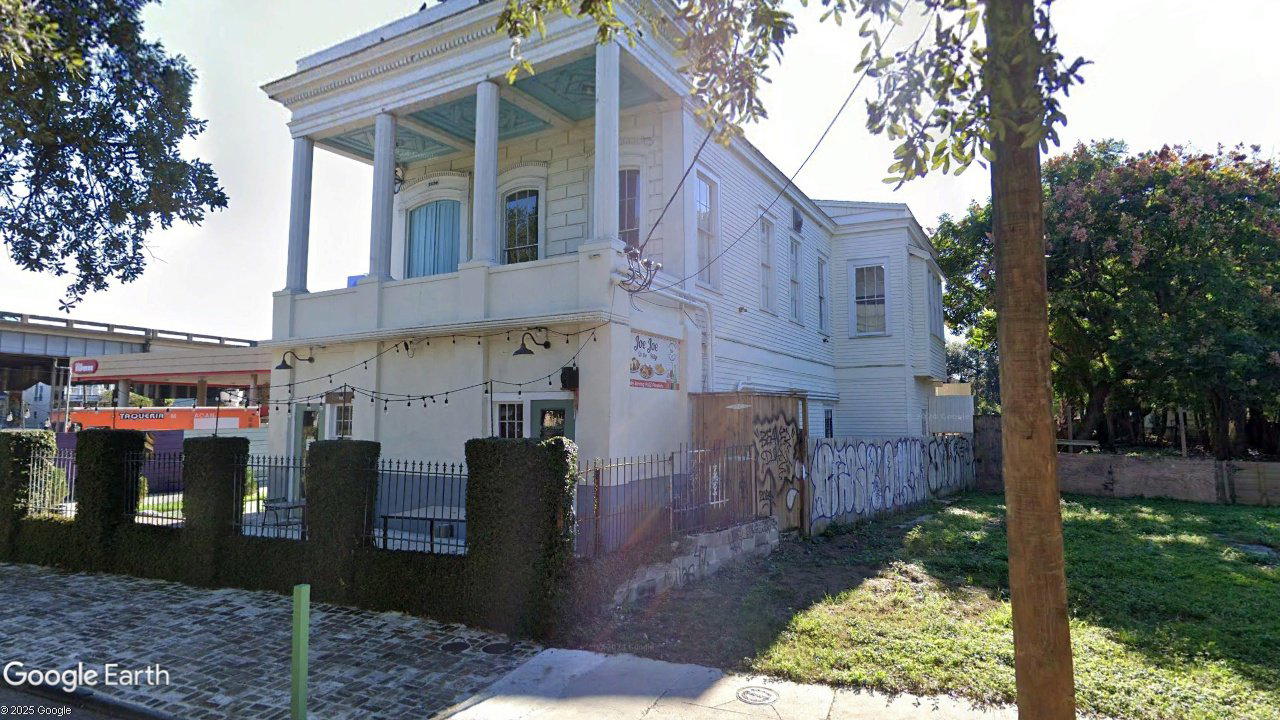
Esplanade Avenue occupies a particular kind of civic space in New Orleans: wide, canopied by live oaks, and historically positioned as the boundary between the French Quarter's commercial density and the Tremé's quieter, more residential grain. The address at 1614 Esplanade Ave places Lost Coyote squarely inside that transition zone, a stretch of the city where Greek Revival shotgun houses sit beside Creole cottages, and where the built environment itself carries more historical information per block than most American cities manage per neighbourhood. Dining rooms along this corridor tend to inherit the physical character of the structures around them: high ceilings, deep porches, rooms that open outward in warm months and contract inward when the city finally cools.
That physical context matters when assessing what a space like Lost Coyote might offer. In New Orleans, the container is rarely incidental. The city's dining culture has long been shaped by the buildings its restaurants occupy, from the courtyard geometry of French Quarter townhouses to the double-gallery structures of Magazine Street. Esplanade sits in a different register: more domestic in scale, less trafficked by tourists, and defined by a neighbourhood character that resists easy categorisation. A venue at this address operates within those conditions whether it chooses to or not.
The Tremé Context: What the Neighbourhood Establishes
The Tremé is routinely cited as one of the oldest African American neighbourhoods in the United States, and its cultural density has always outpaced its dining profile. That imbalance has shifted incrementally over the past decade, as a cohort of independent operators has found in the Tremé's lower rents and residential scale a more sustainable model than the French Quarter's foot-traffic economics. The dining that has taken root here tends toward the independent and format-flexible, a contrast to the institution-anchored model represented by Emeril's uptown or the white-tablecloth Creole tradition carried by Commander's Palace further along St. Charles.
Lost Coyote's name offers a mild departure from the French and Creole lexicon that dominates New Orleans dining nomenclature, suggesting either a deliberate stylistic distance from that tradition or an approach that folds other culinary references into the city's existing grammar.
Interior Architecture as Editorial Argument
In the broader context of New Orleans dining, the physical design of a room increasingly functions as a positioning statement. The city's premium tier has split between two models: the historically preserved interior, where original plasterwork, cypress floors, and period millwork do most of the atmospheric work, and the deliberately designed space, where a more interventionist approach imports aesthetic reference points from outside the city's vernacular. Saint-Germain and Re Santi e Leoni represent the contemporary end of that spectrum, while Bayona and similar French Quarter addresses lean into the inherited character of their buildings.
An Esplanade Avenue address at the edge of the Tremé suggests proximity to the former model: buildings along this corridor tend to retain their structural bones, and operators who move into them often find that the architecture sets the agenda. Whether Lost Coyote works with that material or against it would be the central spatial question for any visitor paying attention to how room and menu relate to each other. The city's most interesting dining rooms treat the building as a collaborator, not a backdrop.
The New Orleans dining market currently sustains several distinct tiers. At the decorated upper end, Saint-Germain operates at a price point commensurate with its Michelin recognition, while Zasu and comparable American Contemporary addresses occupy the mid-premium bracket. Below that, the independent neighbourhood model, one that prioritises accessibility and repeat local custom over destination dining economics, constitutes a significant share of what makes New Orleans interesting to eat in. Nationally, the premium restaurant tier that includes Le Bernardin in New York, Alinea in Chicago, The French Laundry in Napa, and Providence in Los Angeles operates under a different set of assumptions than the neighbourhood-integrated model that New Orleans does particularly well.
What the address suggests is proximity to the neighbourhood end of the spectrum, where the economics of Esplanade Avenue have historically supported independent operators running on local regulars rather than visitor volume. That model, when it works, produces some of the city's most consistent dining, precisely because the room and the offer are calibrated to people who return weekly rather than once a trip.
Planning a Visit
Lost Coyote sits at 1614 Esplanade Ave, a short distance from the upper edge of the French Quarter and within walking range of the Tremé's core. For destinations further afield in the same culinary tier, Blue Hill at Stone Barns in Tarrytown, Single Thread Farm in Healdsburg, Addison in San Diego, Bacchanalia in Atlanta, The Inn at Little Washington, Lazy Bear in San Francisco, Atomix in New York City, and 8 1/2 Otto e Mezzo Bombana in Hong Kong each represent the kind of format discipline and room-menu coherence that serious diners tend to seek out. New Orleans offers its own version of that discipline, calibrated to a city whose hospitality culture runs deeper than its restaurant listings suggest. Our full New Orleans restaurants guide maps the wider scene across neighbourhoods and price points.
Frequently asked questions
Where is Lost Coyote in New Orleans?
Lost Coyote is located at 1614 Esplanade Ave, New Orleans, LA 70116, New Orleans.
Is Lost Coyote a good choice for a first night out in New Orleans near the French Quarter and Tremé?
For visitors arriving near the upper French Quarter, 1614 Esplanade Ave is within walking range of both the Quarter's edge and the Tremé's core, making Lost Coyote a practical first stop that does not require crossing into the heavily touristed interior. The address puts you closer to where New Orleans musicians, chefs, and long-term residents actually spend time than most spots within the same distance of Canal Street.
What's the signature dish at Lost Coyote?
Lost Coyote's specific menu has not been formally documented in published editorial sources.
How far ahead should I plan for Lost Coyote?
No published booking lead times exist for Lost Coyote at this stage. Esplanade Avenue venues in this part of New Orleans tend to fill on weekends, particularly when Tremé events or French Quarter activity spills over. Contacting the venue directly at 1614 Esplanade Ave ahead of your intended date is the safest approach.
What's the standout thing about Lost Coyote?
Location does real work here. Sitting at 1614 Esplanade Ave places Lost Coyote precisely on the civic boundary between the French Quarter and the Tremé, one of the oldest African American neighbourhoods in the United States. That address is not incidental, it situates the venue inside a stretch of New Orleans that carries more cultural density per block than most of the city.
Cuisine Lens
Comparable venues nearby, for context on price, style, and recognition.
| Venue | Cuisine | Price | Notes |
|---|---|---|---|
| Lost CoyoteThis venue (the venue you are viewing) | Modern American with New Orleans influences | Not listed | Not listed |
| Napoleon House | New Orleans Creole & Cajun | $20–30 | French Quarter |
| Brewery Saint X | American Brew Pub | Not listed | Central Business District |
| The High Hat Cafe | Southern Delta & Louisiana Comfort Food | $20–30 | Freret |
| Cowbell | American Gastropub Burgers | Not listed | Carrollton |
| Satsuma Cafe | Fresh Organic Cafe | $10–20 | Bywater |