Longhorn Cafe
Our verdict
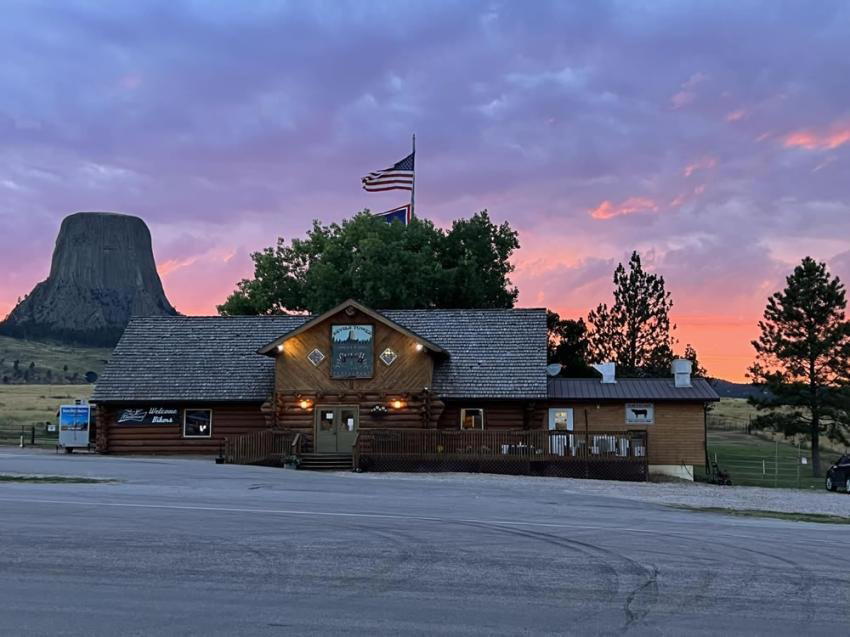
Longhorn Cafe sits in Devils Tower, Wyoming, a small community defined by the monolithic volcanic butte that draws visitors from across the country. Dining here means eating within reach of one of the American West's most geologically dramatic backdrops, where the regional tradition of straightforward, ranch-country cooking meets the practical needs of travelers making the pilgrimage to the monument. A grounding stop before or after the climb.

Pearl is the En Primeur Club membership app — saves, bookings, and concierge access live there. Same editors, same standards.
- Address
- Devils Tower, WY 82714
- Directions
- Get directions
The menu
What to order
- Prime Rib
- Buffalo Ribeye
- Steak Tips
Eating at the Edge of the Monument
The landscape around Devils Tower, Wyoming, does most of the work before you even sit down. The butte — a 1,267-foot column of phonolite porphyry that rises abruptly from the Belle Fourche River valley — sets a particular register for everything in its vicinity: unhurried, matter-of-fact, oriented toward the physical rather than the performative. Dining in this part of Crook County follows that register. The communities clustered near the monument are small, the visitor traffic is seasonal, and the food culture is rooted in the ranch traditions of the northern Great Plains rather than in any metropolitan dining trend. Longhorn Cafe occupies that context.
This corner of Wyoming sits at the convergence of Black Hills tourism and working cattle country. The culinary identity of the region is shaped by what the land produces, beef, game, and the kind of pantry that comes from communities accustomed to distance from major supply chains. That self-sufficiency has long defined how people eat out here, and it remains legible in the casual, practical dining that characterizes the small establishments serving the monument's roughly half-million annual visitors.
The Regional Sourcing Context That Shapes the Plate
Wyoming's position in American food geography is specific. The state is one of the leading beef-producing regions in the country, and the cattle ranches of Crook County and neighboring Johnson and Weston counties have supplied local tables with a directness that urban farm-to-table programs spend considerable effort trying to replicate. For a café operating in this environment, proximity to source is less a marketing stance than a structural reality of supply. What arrives on the plate in a small Wyoming town often travels a fraction of the distance that the same cut would cover reaching a restaurant in Denver or Chicago.
That matters for how you read the menu at a place like Longhorn Cafe. The sourcing conversation that animates places like Blue Hill at Stone Barns in Tarrytown or Single Thread Farm in Healdsburg is, in the rural West, simply the ordinary condition of a regional food economy that never fully industrialized at the local level. The conversation around ingredient provenance at destination restaurants like The French Laundry in Napa or Lazy Bear in San Francisco reflects an urban recovery of something that rural communities in Wyoming have maintained by default.
The broader American dining culture has spent two decades building formal programs around what the Wyoming ranch economy has always done: raise animals on open range, slaughter locally, and supply nearby tables. Places like Bacchanalia in Atlanta and Brutø in Denver have built reputations on that sourcing discipline. In the Devils Tower corridor, the discipline is ambient, less celebrated but structurally present.
What Defines Small-Town Café Dining in the American West
The café format that serves monument communities across Wyoming, South Dakota, and Montana follows a consistent logic: broad menus built for range, accessible price points, and portions sized for people who have been outdoors. This is not the format of Alinea in Chicago or Atomix in New York City, where the dining format is itself an argument about what eating should be. It is the format of a community that treats a meal as refueling and gathering rather than as theater.
That distinction is worth naming because it changes what you should be evaluating when you stop here.
Places like Frasca Food and Wine in Boulder, Causa in Washington, D.C., or ITAMAE in Miami are making arguments about culinary tradition, regional identity, and technical ambition through their menus. A roadside café near Devils Tower makes a different argument: that eating well doesn't require ceremony, and that the land already provides.
Visiting Devils Tower: Planning the Stop
Devils Tower National Monument draws the majority of its visitors between May and September, when the access road off US-14 is fully operational and the trailhead parking functions at capacity during peak morning hours. Anyone planning a meal at the small cluster of establishments near the monument entrance, including Longhorn Cafe, should account for that seasonal compression. Midweek visits in June and September tend to carry lighter crowds than weekend arrivals in July and August, when the monument approaches its peak season volume.
The Devils Tower area is genuinely remote by the standards of the Mountain West. The nearest city of meaningful size is Rapid City, South Dakota, roughly 60 miles to the northeast via US-14 and I-90. Gillette, Wyoming, lies approximately 60 miles to the southwest. This means that whatever you eat near the monument, you're eating it within a supply context shaped by that distance, and that a local café operating here is doing something logistically meaningful by providing a hot, consistent meal to visitors who may have driven two or more hours to reach the site. For a broader sense of dining options in the area, our full Devils Tower restaurants guide covers the range of choices available in the monument corridor.
For travelers building a larger itinerary across the northern Rocky Mountain and Black Hills region, the Devils Tower stop pairs naturally with the Badlands, the Black Hills' culinary offerings in Rapid City and Deadwood, and the ranch-country dining of northeastern Wyoming. It is not a destination dining stop in the sense that Emeril's in New Orleans or 8½ Otto e Mezzo Bombana in Hong Kong anchor a meal-focused itinerary. It is a practical and satisfying stop in a region where the monument is the draw and the meal is the grounding.
Frequently asked questions
Is Longhorn Cafe good for families?
Devils Tower draws a broad visitor mix, and café-format dining in small Wyoming gateway towns is built around exactly that crowd. Wide menus, straightforward service, and accessible portions are standard to the format. Longhorn Cafe sits in Devils Tower, WY, serving a community where monument traffic shapes the daily customer base from May through September.
What's the vibe at Longhorn Cafe?
This is a working Western café in a town defined by a national monument, not a destination restaurant. Expect counter-and-booth informality, quick turnaround, and a room oriented around travelers coming off the Devils Tower access road from US-14. The setting does the atmospheric lifting before anyone sits down.
At-a-Glance Comparison
| Venue | Cuisine | Price | Awards | Notes |
|---|---|---|---|---|
| Longhorn CafeThis venue — the venue you are viewing | American Steakhouse | $20–30 | Not listed | Not listed |
| Le Bernardin | French Seafood Fine Dining | $300–500 | 3 Michelin Stars · World's 50 Best #13 | French, Seafood |
| Atomix | Modern Korean Tasting Menu | $300–500 | 2 Michelin Stars · World's 50 Best #7 | Modern Korean, Korean |
| Lazy Bear | Modern American Tasting Menu | Not listed | 2 Michelin Stars · World's 50 Best #25 | Progressive American, Contemporary |
| Alinea | Avant-Garde Molecular Gastronomy | $300–500 | 2 Michelin Stars · World's 50 Best #37 | Progressive American, Creative |
| Atelier Crenn | Contemporary French Fine Dining | $300–500 | 3 Michelin Stars · World's 50 Best #44 | Modern French, Contemporary |
Details
- Rustic
- Cozy
- Family
- Casual Hangout
- Historic Building
- Beer Program
- A La Carte
- Beer Program
Smokefree Western ambiance with eight TVs for sports and a relaxed gathering spot.