In the old Sino-Portuguese quarter of Takua Pa, Lok-Un occupies a shophouse along one of southern Thailand's most historically layered streets. The cooking draws on the deep-rooted culinary traditions of Phang Nga province, where Chinese immigrant techniques, Muslim fishing-village pantries, and local jungle produce have been layering for generations. For visitors arriving from the resort corridors of Phuket, it reads as a genuine regional counter-argument.
Pearl is the En Primeur Club membership app — saves, bookings, and concierge access live there. Same editors, same standards.
- Address
- 85 à¸à¸à¸ ศรีà¹à¸¡à¸·à¸à¸ Takua Pa, Takua Pa District, Phang Nga 82110, Thailand
- Phone
- +66878959604
- Directions
- Get directions
 Saves & bookings on Pearl
Where Shophouse Cooking Meets Phang Nga's Oldest Pantry
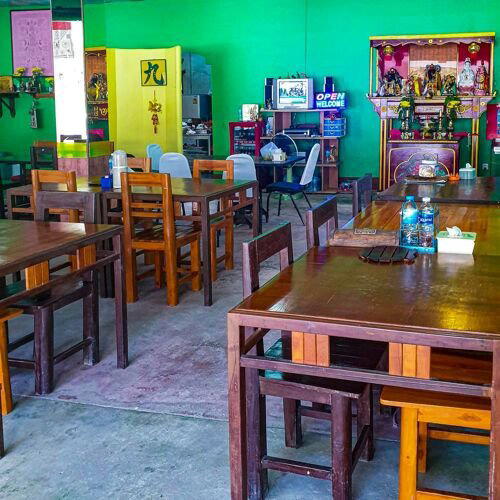
Takua Pa's central street, Srimeung Road, the spine of a Sino-Portuguese trading town that predates Phuket's tourist economy by centuries, operates at a pace most of southern Thailand has long since abandoned. Timber-fronted shophouses lean into each other along the strip, their facades in faded ochre and green, their interiors still arranged for the business of daily life rather than hospitality product design. Lok-Un sits within this fabric, at 85 Srimeung Road in Takua Pa District, Phang Nga. The address is not incidental: the building type and the neighbourhood context are part of what the meal means.
Southern Thailand's food culture is frequently collapsed into a single idea when seen from the outside, spicy, coconut-heavy, coast-facing. The reality inside Phang Nga province is more layered. The region carries distinct Chinese Hokkien and Teochew immigration patterns from the tin-mining era, a substantial Muslim fishing community along the Andaman shoreline, and jungle-adjacent agricultural land that produces ingredients rarely seen in resort dining rooms. Takua Pa, as a former trading hub, absorbed all three of these currents. The cooking that emerged is neither purely Thai nor straightforwardly regional, it is a product of sustained, practical exchange between communities who needed to feed themselves well with what the land and sea offered.
The Ingredient Logic of Phang Nga Province
In discussions about ingredient provenance in Thai fine dining, the attention typically falls on Bangkok addresses. Sorn in Bangkok has made sourcing from southern Thailand's small producers a central part of its identity, and PRU in Phuket has built an entire agricultural infrastructure around its kitchen. Both operate in capital and resort contexts, where telling the sourcing story is part of the commercial proposition. The same ingredient logic exists in towns like Takua Pa without the apparatus of narrative around it, the kitchen uses what is nearby because that is how the tradition was built, not because it has been repositioned as a selling point.
Phang Nga's inland areas produce rhizomes, galangal, turmeric, and wild-foraged aromatics that differ in intensity from the more widely distributed versions reaching Bangkok markets. The Andaman coastline, accessible from Takua Pa within an hour, supplies the shellfish and reef fish that inform the Muslim-influenced preparations common in the district. The Chinese shophouse kitchens that operated along Srimeung Road historically ran on preserved ingredients, fermented shrimp paste, dried seafood, pickled vegetables, techniques that extended shelf life in a pre-refrigeration trading economy and left a flavour register that persists in the area's home and market cooking. A table at Lok-Un sits at the intersection of all of this, even when the menu itself is presented without annotation.
Takua Pa's Dining Scene: Small, Specific, and Resistant to Tourism
The town's restaurant set is small and largely local-facing. Khrua Nong, Nai Muang, and Takola each represent different entry points into the town's food culture, from market-adjacent Thai to more coastal-leaning preparations. DEVASOM BEACH GRILL operates at a different register entirely, serving the resort tier north of town. Lok-Un belongs to the shophouse stratum, the category of place where the cooking is not performing for an external audience, where the menu reflects what the kitchen has procured that day, and where the price point remains calibrated to the town's own economy rather than to what a visitor from Phuket might expect to pay.
This is a pattern found across Thailand's secondary towns. Cherng Doi Roast Chicken in Chiang Mai and Loet Rot in Mueang Chiang Mai occupy analogous positions in the north, deeply local, undecorated in presentation, carrying regional technique without requiring the visitor to decode it as heritage. Khok Kloi Bami Tom Yam Khai in Takua Thung, just south of Takua Pa, demonstrates how specific these town-level kitchens can get, built around a single preparation that expresses a particular district's version of a dish. Lok-Un operates within the same logic.
How to Read the Menu Without a Map
Visitors accustomed to the annotated menus of restaurants like AKKEE in Pak Kret or the structured progression of Atomix in New York City will find Takua Pa's shophouse counters operate without that scaffolding. The menu is typically brief and assumes familiarity. The more useful approach is to observe what is moving from the kitchen to nearby tables, or to ask what came in that morning. The Phang Nga coast's catch drives what is worth ordering on any given day, and the aromatic pastes and curries that anchor the southern Thai kitchen are worth prioritizing over anything that might have been prepared from stored ingredients.
In regional Thai cooking at this level, the distance between the ingredient's origin and the plate is genuinely short. That proximity is not a marketing concept at Lok-Un, it is a structural feature of cooking in a town without the supply-chain infrastructure that city restaurants rely on. It produces a different kind of freshness: less uniform, more dependent on the season and the day, but more directly expressive of what the land around Phang Nga actually produces.
Planning a Visit
Takua Pa is approximately 90 kilometres north of Phuket International Airport, making it a viable day trip from the resort zones of Khao Lak or a natural stop on a slower journey up the Andaman coast toward Ranong. The town's shophouse restaurants, including Lok-Un, operate on Thai market hours, typically through the midday period and into the early afternoon, with limited or no evening service. Arriving by late morning gives a stronger chance of finding the full kitchen in operation. Lok-Un is walk-in friendly, consistent with how most of Takua Pa's town-centre restaurants operate. Given the venue's neighbourhood context and the absence of any dress code indication, the practical standard is the same as anywhere along the Srimeung Road strip: clean and appropriate for the heat, nothing more.
Quick Comparison
Comparable venues nearby, for context on price, style, and recognition.
| Venue | Cuisine | Price | Notes |
|---|---|---|---|
| Lok-UnThis venue — the venue you are viewing | Southern Thai Small Eats | $$ | Not listed |
| Nai Muang | Authentic Southern Thai | $$ | Khao Lak |
| Takola | Authentic Southern Thai | $$$ | Khao Lak |
| Khrua Nong | Authentic Thai Seafood | $$ | Bang Nai Si |
| DEVASOM BEACH GRILL | Mediterranean Beach Grill | $$$ | Khuk Khak |
| Bangkok Bold Kitchen | Bold, regional Thai comfort food | $$ | Pathum Wan |
Continue exploring
More in Takua Pa
Restaurants in Takua Pa
Browse all →

At a Glance
- Rustic
- Historic
- Casual Hangout
- Historic Building
Current opening hours
- Monday
- 7 AM–4 PM
- Tuesday
- 7 AM–4 PM
- Wednesday
- 7 AM–4 PM
- Thursday
- 7 AM–4 PM
- Friday
- 7 AM–4 PM
- Saturday
- 7 AM–4 PM
- Sunday
- Closed
Hours can change for holidays and private events. Last verified .
Historic Sino-Portuguese ambiance in Takua Pa old town with prestige confirmed by visiting royals.