Little Uncle
Little Uncle on Capitol Hill brings the sharply spiced, herb-forward cooking of Thailand's street stalls into a compact Madison Street dining room. The kitchen works from a tradition that prizes balance across heat, acid, and fat, placing it firmly within Seattle's growing cohort of Southeast Asian restaurants that take regional specificity seriously. It rewards repeat visits and neighborhood loyalty in equal measure.
- Address
- 1523 E Madison St suite 101, Seattle, WA 98122
- Directions
- Get directions
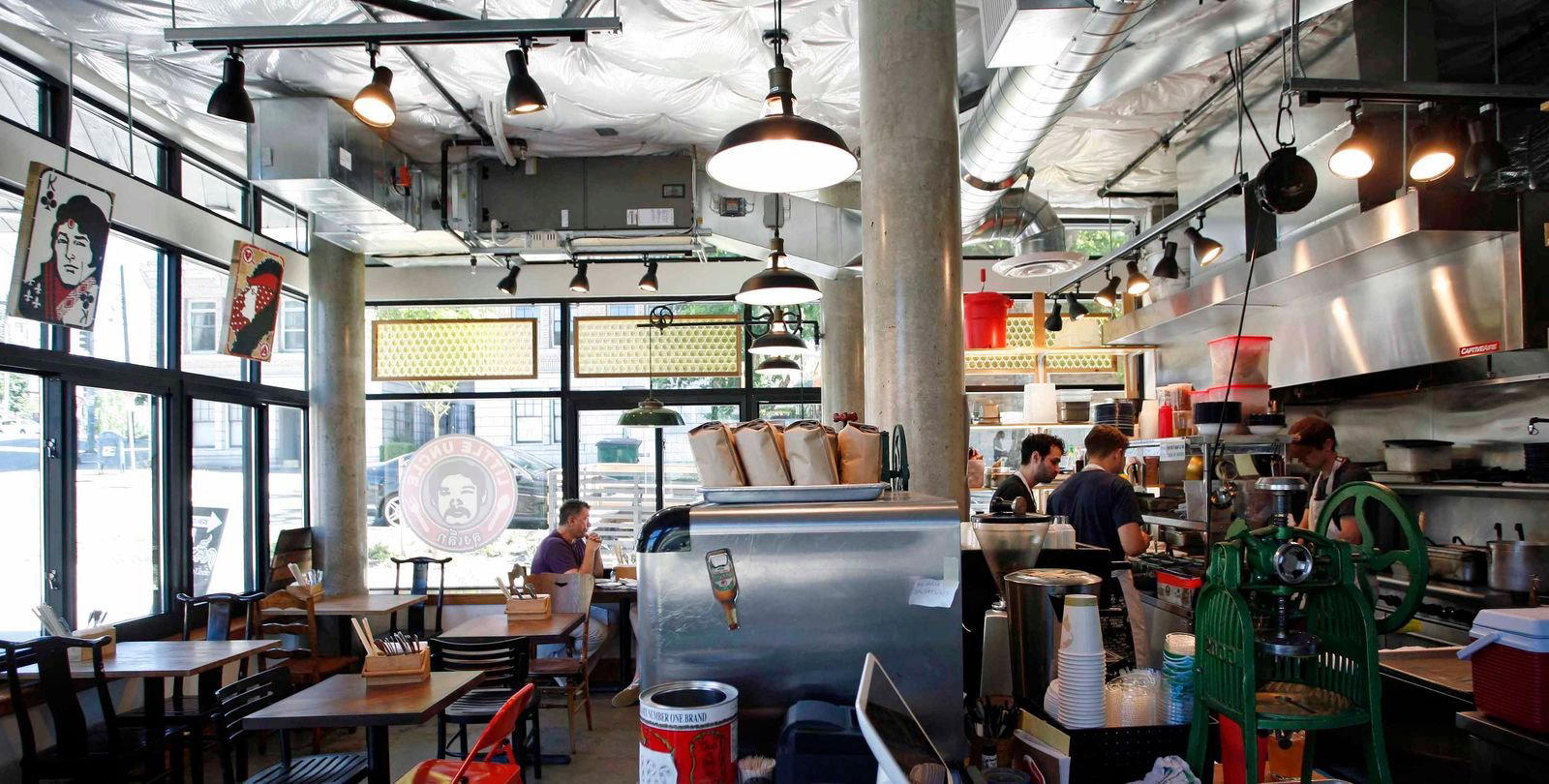
Madison Street on Capitol Hill runs through a stretch of Seattle where the dining room sizes stay small and the cooking tends to be more pointed in ambition than the square footage suggests. The block around 1523 E Madison St has the character of a neighborhood that eats seriously: residents who walk in on weeknights, a low threshold for pretension, and an expectation that the food will do the work. Little Uncle is a restaurant in Seattle's Capitol Hill neighborhood, and it is permanently closed. Little Uncle operates inside that register, a tight room in suite 101 where the physical setting is spare enough that nothing distracts from what arrives at the table.
The Thai Street Kitchen Tradition in an American City
Thai cooking in the United States spent decades filtered through a version of itself adapted for suburban comfort. Sweet curries, predictable pad thai, and heat levels calibrated down by default defined the category for most American diners. The last decade has seen a different model emerge in cities with serious food cultures: kitchens that treat Thai regional cooking on its own terms, keeping the acid sharp, the herbs abundant, and the heat negotiable rather than eliminated. Seattle has developed a small but coherent cohort in this mode, with Little Uncle among the Capitol Hill restaurants that have pushed the conversation forward. The comparison set that matters here is not the broader Thai category in the city but the narrower group of places that treat the cuisine with the same specificity that Joule applies to Korean-influenced cooking or that the soba houses of the city bring to Japanese craft.
This is the cultural frame worth holding when thinking about what the restaurant does. Thailand's food geography is not uniform. The cooking of the central plains differs sharply from the north, and both differ from the Isan tradition of the northeast, with its fermented fish pastes, grilled meats, and the tight herbal clarity of larb and som tam. A kitchen that understands those distinctions and cooks from them, rather than blending them into a single approachable Thai idiom, is doing something categorically different from a restaurant that simply lists pad see ew and green curry on the same menu without a sense of why those dishes exist.
Capitol Hill's Dining Character and Where Little Uncle Sits Within It
Capitol Hill is the neighborhood in Seattle most tolerant of informal format paired with serious intent. The clientele expects value and flavor over ceremony, which makes it a natural home for a kitchen focused on getting the food right rather than on the theatrical apparatus around it. The restaurant fits the neighborhood's informal contract without being careless: the cooking reflects technique and sourcing decisions that a more casual presentation might obscure.
Within Seattle's broader dining geography, the contrast is instructive. The city's high-end New American tradition, anchored by places like Canlis (New American), operates with a formality and price architecture that reflects a different set of priorities. The restaurant sits in the opposite quadrant: compact, focused, and priced to function as a regular neighborhood option rather than a special-occasion destination. That positioning is not a limitation; it is a feature of a category of cooking that derives much of its power from frequency. Thai food eaten once a month as an event is a different experience from Thai food eaten twice a week as sustenance, and the latter is closer to the cultural context from which these dishes come.
The Case for Regional Specificity
The broader American conversation about Southeast Asian cooking has moved steadily toward regional specificity. In New York, the same shift is visible across Korean cooking at counters like Atomix in New York City, where the premise is that a cuisine's full range only becomes legible when a kitchen commits to a specific tradition rather than a composite one. The argument applies equally to Thai cooking: a kitchen that knows whether it is cooking from northern, central, or Isan tradition, and makes that clear through the food, is giving diners something to learn from as well as eat.
This is not an exclusively American phenomenon. The same tension between regional authenticity and broad accessibility runs through Southeast Asian kitchens in cities across Europe and Australia. What distinguishes the better operators in any of those cities is a willingness to let the food be what it is, including the heat levels, the fermented notes, and the herb combinations that make the cuisine structurally distinct from its neighbors.
Practical Considerations for Visiting
The restaurant is located at 1523 E Madison St, suite 101, in Seattle's Capitol Hill neighborhood. The format and size of the room suggest walk-in dining is possible.
The restaurant is a casual, walk-in-friendly Thai noodle specialist at a price tier of about $15 per person. Readers comparing the experience to higher-commitment formats elsewhere in the city, or to the tasting-menu end of American dining represented by places like The French Laundry in Napa or Smyth in Chicago, are working with a different set of criteria entirely. The interest here is in what a small, focused kitchen can do with a specific culinary tradition at a format that lets the food lead without the frame getting in the way.
Peers in This Market
Comparable venues nearby, for context on price, style, and recognition.
| Venue | Cuisine | Price | Notes |
|---|---|---|---|
| Little UncleThis venue — the venue you are viewing | Thai Noodle Specialist | $$ | Not listed |
| Pestle Rock | Isan Thai Cuisine | $$ | Adams |
| Pho Bac Súp Shop | Traditional Vietnamese Pho | $$ | Atlantic |
| Humble Pie | Wood-Fired Neapolitan Pizza | $$ | Little Saigon |
| FareStart Restaurant | American Comfort Classics | $$ | Denny Triangle |
| Hatch Cantina | New Mexican Southwestern | $$ | Belltown |
Continue exploring
More in Seattle
Restaurants in Seattle
Browse all →
Bars in Seattle
Browse all →
Hotels in Seattle
Browse all →



At a Glance
- Trendy
- Cozy
- Casual Hangout
- Family
- Open Kitchen
Casual and welcoming Thai spot with polished, intricate flavors in a neighborhood setting.