Where the Road Meets the Cocoa Belt The Eastern Region of Ghana runs on cacao. Around Tafo, the air carries the faint earthy sweetness of drying pods, and the roads that thread through the Ashanti borderlands pass research stations, cooperative...
 Discover on Pearl
Pearl is the En Primeur Club membership app — saves, bookings, and concierge access live there. Same editors, same standards.
Where the Road Meets the Cocoa Belt
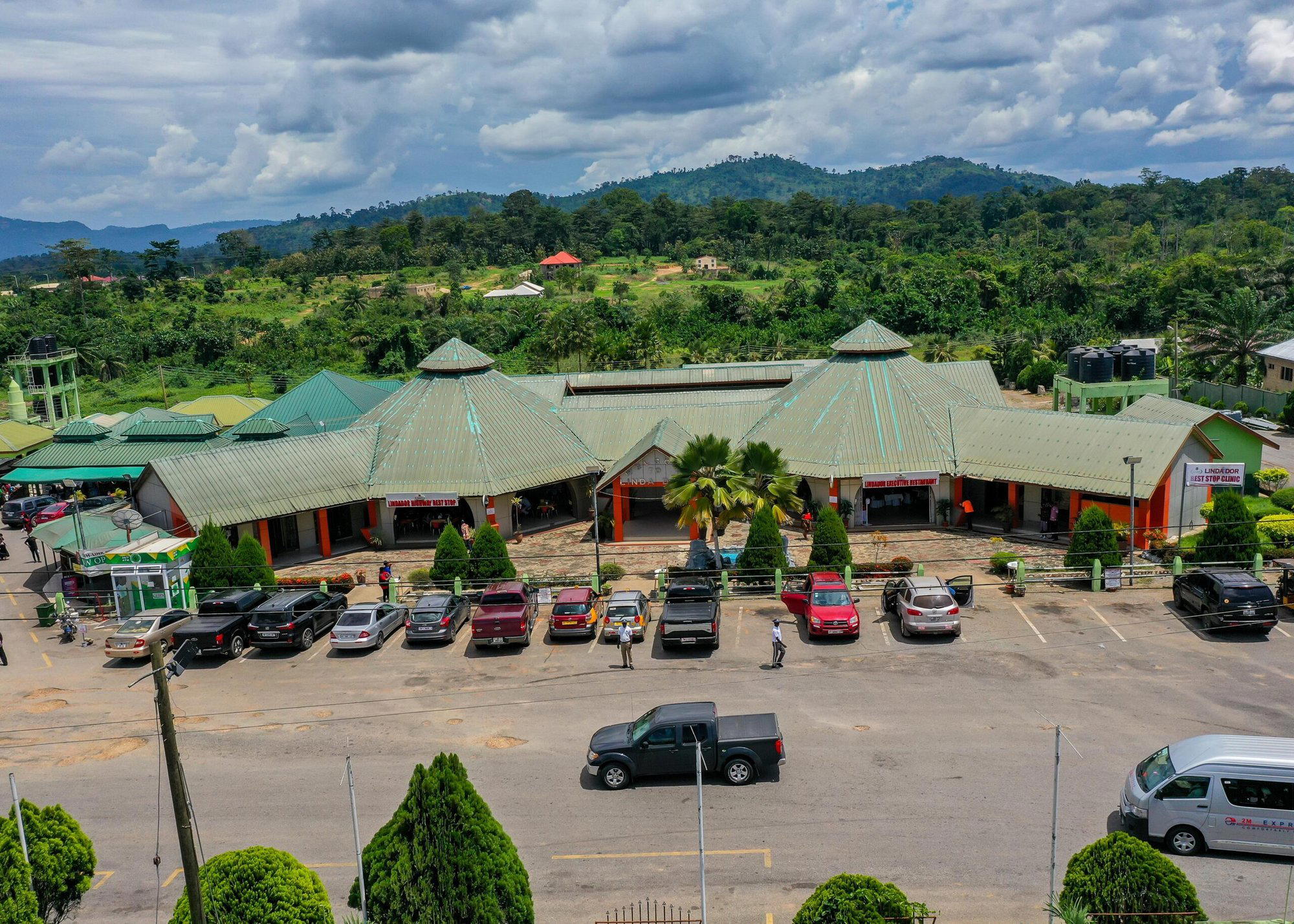
The Eastern Region of Ghana runs on cacao. Around Tafo, the air carries the faint earthy sweetness of drying pods, and the roads that thread through the Ashanti borderlands pass research stations, cooperative farms, and the kind of roadside stops that have fed truck drivers, agronomists, and visiting buyers for decades. Linda-Dor Rest Stop sits on the CRIG corridor, the stretch of road adjacent to the Cocoa Research Institute of Ghana, and that location is not incidental. It places the stop squarely inside one of the most agriculturally dense food corridors in West Africa, where proximity to primary ingredients is structural rather than aspirational.
The contrast with how ingredient sourcing is discussed in high-concept dining elsewhere is instructive. At destination restaurants like Arpège in Paris or Azurmendi in Larrabetzu, farm-to-table provenance is a marketing architecture built around menus that change by season and press releases that name individual producers. At a rest stop in Tafo, the supply chain is simply the town itself. Markets in the Ashanti Region deal in plantain, yam, kontomire, garden eggs, and smoked fish sourced within a radius that most European restaurants would frame as a competitive advantage. Here, it is just geography.
Ghana's Rest Stop Culture as a Culinary Form
Ghanaian roadside food occupies a distinct and often underexamined category. It is not street food in the Lagos or Bangkok sense, where the theatre of preparation is part of the draw. It is functional, generous, and often more carefully seasoned than the sit-down restaurants in larger towns, because the clientele is repeat, mobile, and unforgiving. Drivers returning from Kumasi, field workers from CRIG, and travellers on the Accra-Kumasi corridor have established clear preferences over years, and stops that do not meet those preferences simply lose custom to the next junction.
This creates a competitive environment that is entirely peer-driven. The currency is consistency: a bowl of fufu with groundnut soup that tastes the same at noon on a Tuesday as it does at six on a Saturday evening, portioned generously and priced to keep people coming back rather than to extract margin. In this sense, roadside stops in Ghana operate under a kind of informal quality discipline that has nothing to do with awards systems and everything to do with word-of-mouth across a working population. Compare the format to something like ASANKA LOCAL RESTAURANT in Accra, which translates traditional Ghanaian cooking into a sit-down format for a more urban audience. The rest stop version of the same cuisine is less mediated, closer to the production source, and priced for daily rather than occasional visits.
The Ingredient Logic of the CRIG Location
The Cocoa Research Institute of Ghana at Tafo is one of the oldest agricultural research bodies in West Africa, established in the mid-twentieth century and responsible for developing hybrid cacao varieties that shaped Ghana's export profile. The surrounding area, as a result, has a long history of feeding an educated, internationally connected workforce alongside local farming families. That dual audience has influenced what gets cooked in the vicinity: dishes that draw on deep Ashanti culinary tradition without the self-consciousness of urban restaurants trying to codify that tradition for export.
In practical terms, this means that ingredients at a stop like Linda-Dor arrive through the same informal supply networks that stock home kitchens in the region. Plantain comes ripe and seasonal. Palm nut soup, where available, reflects the flavour profile of locally pressed oil rather than the shelf-stable product urban restaurants increasingly rely on. The distinction matters in the same way it matters at any serious dining address: sourcing determines flavour before any technique is applied. At Aponiente in El Puerto de Santa María, the conceptual framework around marine ingredients from the Bay of Cádiz is what generates critical attention. In Tafo, the sourcing is unremarked upon precisely because it requires no framework. It is default.
Situating Tafo in Ghana's Broader Food Scene
Accra absorbs most of the editorial attention given to Ghanaian dining. Restaurants like Midunu and La Borracha have built followings among an expatriate and returning-diaspora audience, and their positioning draws on global fine dining references. The food culture of the Ashanti Region and the Eastern Region operates largely outside that coverage. This is not a gap to be romanticised. It means that data on pricing, seating, and service format at places like Linda-Dor is sparse by the standards of documented dining guides, and that any editorial account should be honest about what is known versus inferred from regional context.
What can be said with reasonable confidence: Tafo is a working town, not a tourist destination. The rest stops on the CRIG road serve a population with specific, experienced expectations around Ghanaian cooking. The food that survives in that environment is the food that works. For a reader coming from Kumasi or Accra, the logistical reality is that Tafo sits roughly along the main inter-city route, making Linda-Dor a practical stop rather than a detour. Anyone planning a broader circuit of Ghana's food culture would do well to cross-reference our full Tafo restaurants guide for current context on what the town offers beyond single stops.
What the Format Tells You About the Food
Rest stops of this type in Ghana generally operate across extended daytime hours, with peak service at lunch when road traffic is heaviest. The food is cooked in volume but not carelessly: the economics of a working stop depend on throughput, which means dishes need to be ready quickly, hold well, and satisfy without complexity. This tends to favour stews, soups, and boiled or pounded starches over anything that requires individual plating or last-minute preparation. The logic is the same logic that drives the popularity of tagine in Moroccan roadside cooking or dal at Indian highway dhabas: the form fits the function.
There is a version of this conversation happening at the high end of global dining, where chefs at places like Lazy Bear in San Francisco or Atelier Crenn foreground the cultural and agricultural context of their ingredients as an explicit editorial act. In Tafo, the same agricultural intimacy exists without the editorial layer. That is either a loss or a relief, depending on what you are looking for when you stop to eat.
Planning Your Visit
Linda-Dor Rest Stop is located on the CRIG road in Tafo, Eastern Region, and is accessible by road from Kumasi and Accra along the main inter-city corridor. Given the nature of the format, no booking is required or expected. Visitors should plan around midday service for the widest selection. Specific pricing and operating hours were not available at the time of writing; the practical approach is to arrive with local currency and reasonable flexibility. The stop is leading understood as a complement to a longer regional itinerary rather than a standalone destination.
Side-by-Side Snapshot
These are the closest comparables we have in our database for quick context.
| Venue | Cuisine | Price | Awards | Notes |
|---|---|---|---|---|
| Linda-Dor Rest Stop | This venue | |||
| Midunu | Ghanaian Cuisine | Ghanaian Cuisine | ||
| ASANKA LOCAL RESTAURANT | ||||
| La Borracha | ||||
| Tortuga Island Gh |
At a Glance
- Casual Hangout
- Standalone
Casual roadside atmosphere suitable for quick stops.