A Corner of Rome That Still Belongs to Rome Via dei Santi Quattro runs southeast from the Colosseum toward the Caelian Hill, through a stretch of the city that international tourism has not fully absorbed. The street is quieter than it should be...
Pearl is the En Primeur Club membership app — saves, bookings, and concierge access live there. Same editors, same standards.
- Address
- Via dei SS. Quattro, 24, 00184 Roma RM, Italy
- Phone
- +39 06 7045 0605
- Website
- lirioni.it
- Directions
- Get directions
 Saves & bookings on Pearl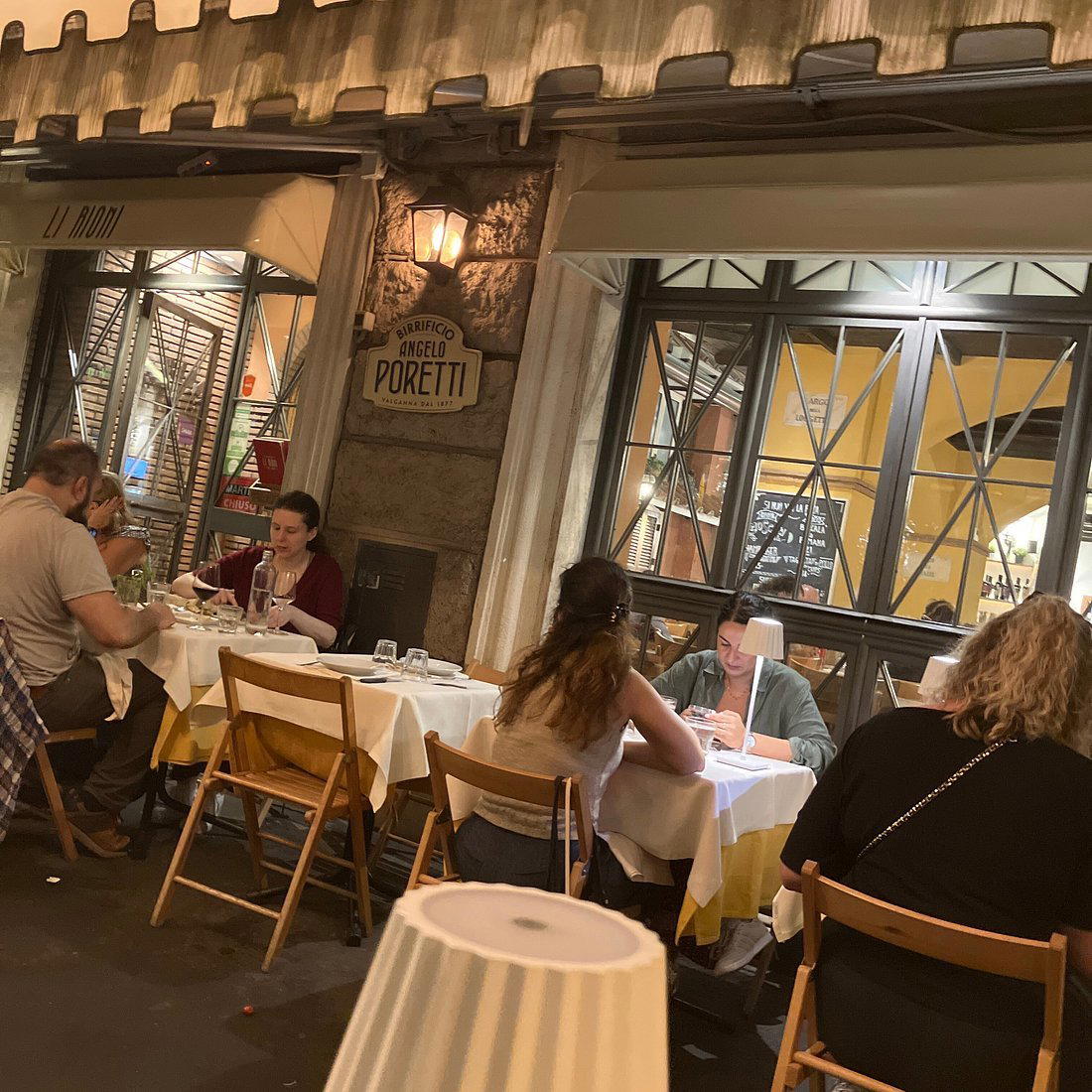
A Corner of Rome That Still Belongs to Rome
Via dei Santi Quattro runs southeast from the Colosseum toward the Caelian Hill, through a stretch of the city that international tourism has not fully absorbed. The street is quieter than it should be given its proximity to one of the world's most visited monuments. The ambient noise here is residential rather than commercial: scooters on cobblestones, a window opening above, the low register of a neighbourhood still oriented toward the people who live in it. Li Rioni a Santiquattro occupies a position on this street that is inseparable from its character. The address is not incidental. The Celio rione, one of Rome's historic administrative quarters, defines what this kind of trattoria is expected to do: hold a line against reinvention, serve the dishes the neighbourhood has eaten for generations, and do so without performing at it.
What the Rione Tradition Asks of a Restaurant
Roman trattoria culture is often discussed in broad strokes, but the rione-specific version carries particular pressures. Each of Rome's twenty-two rioni developed its own social texture, and the Celio, wedged between the Colosseum, the Lateran Basilica, and the Aventine, has historically been a working district with a direct relationship to offal cookery, cured meats, and the bean-and-pasta combinations that define cucina povera at its most austere. A restaurant carrying the rione name in its title operates under an implicit compact: the menu should read as an argument for the district's table, not a survey of the broader Roman canon. Dishes like cacio e pepe, coda alla vaccinara, and supplì are not novelties here. They are reference points against which the kitchen is measured by anyone who has eaten them many times before.
In that sense, the comparison set for a place like Li Rioni a Santiquattro is not the creative-tasting-menu tier represented by Il Pagliaccio or Acquolina, and it is not the white-tablecloth formality of La Pergola. The relevant comparable set is smaller neighbourhood houses operating in the Celio, Testaccio, and Trastevere zones, places where the cooking is measured by faithfulness and execution rather than innovation. That is a different competition, and in some ways a more demanding one, because the customers know the dish better than the kitchen might prefer.
The Physical Atmosphere and What It Signals
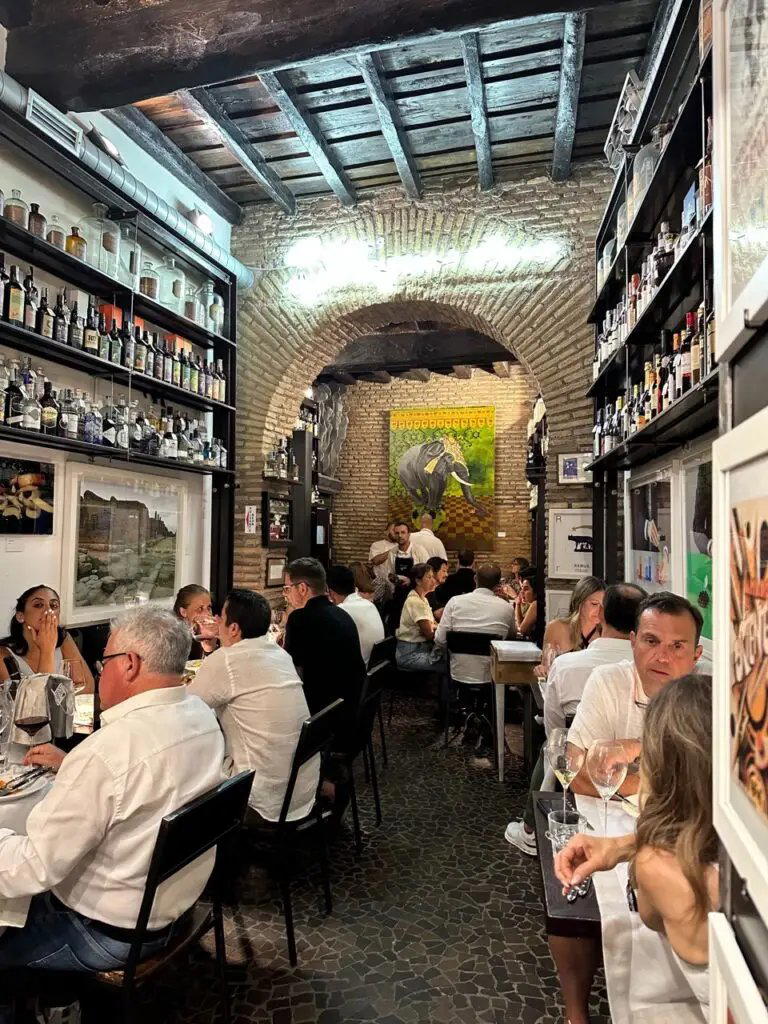
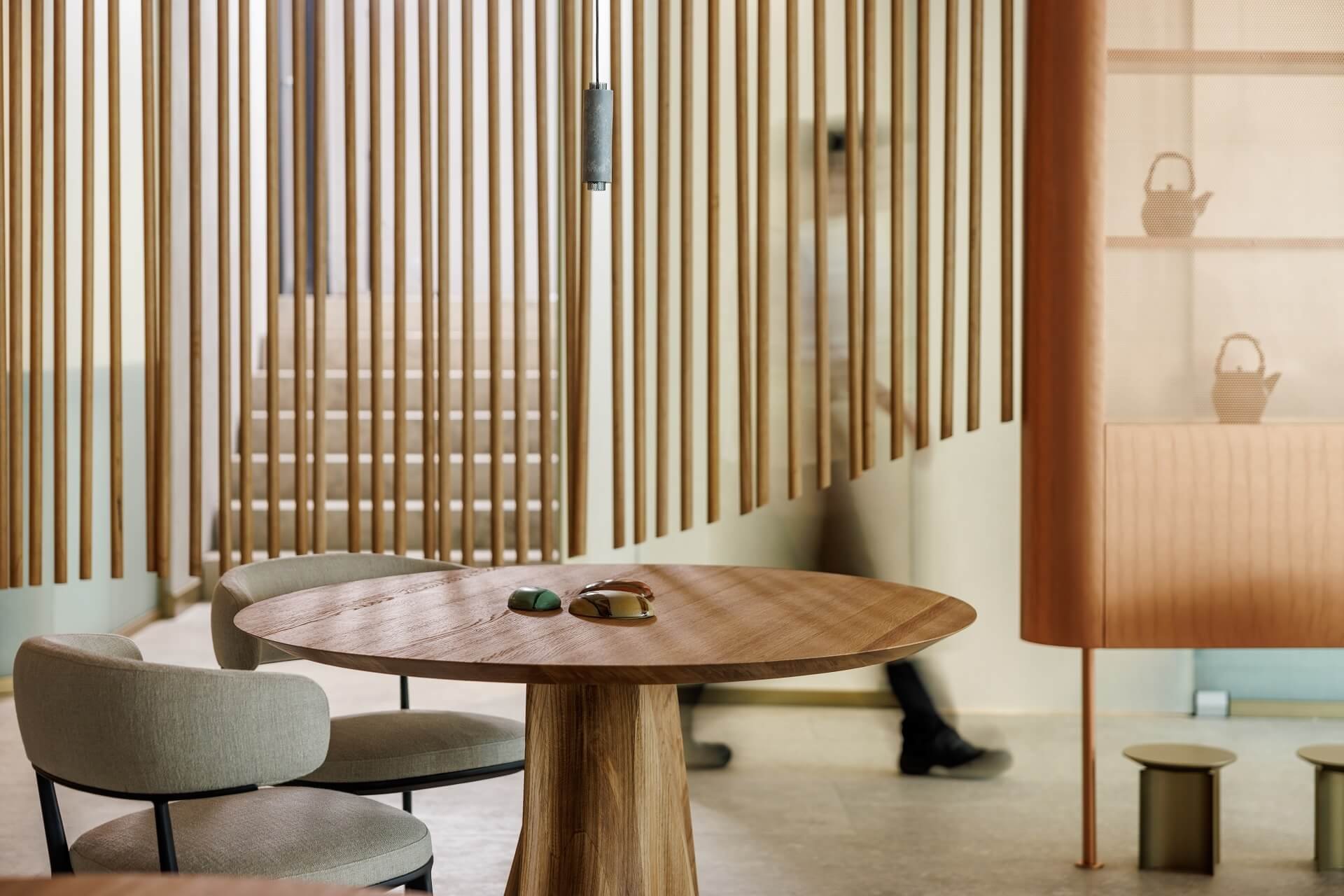
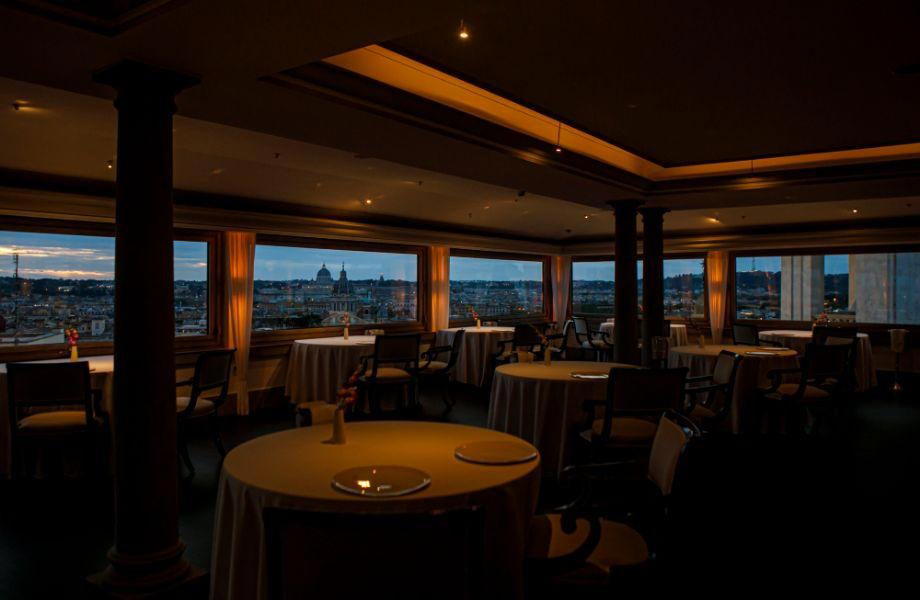
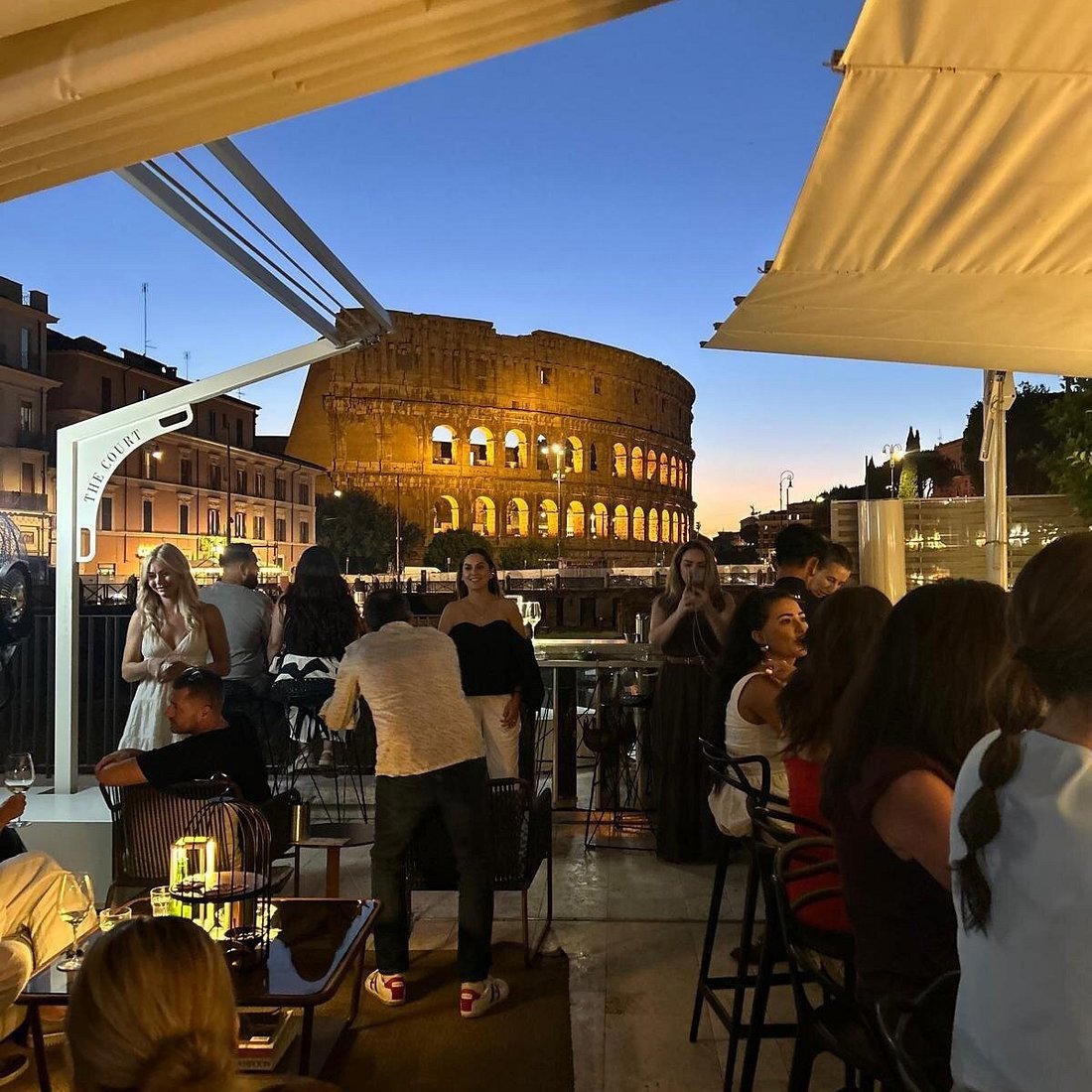
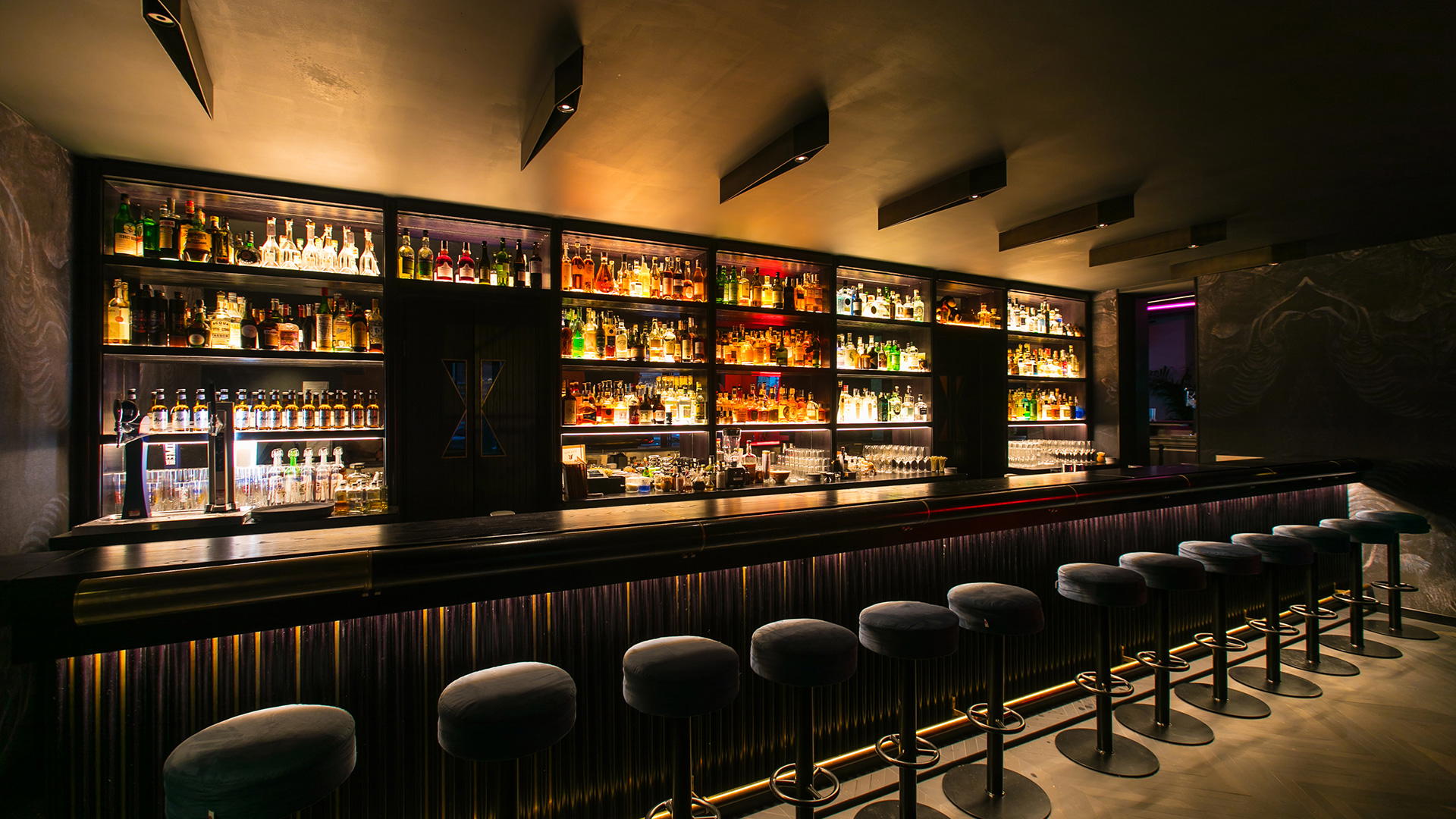
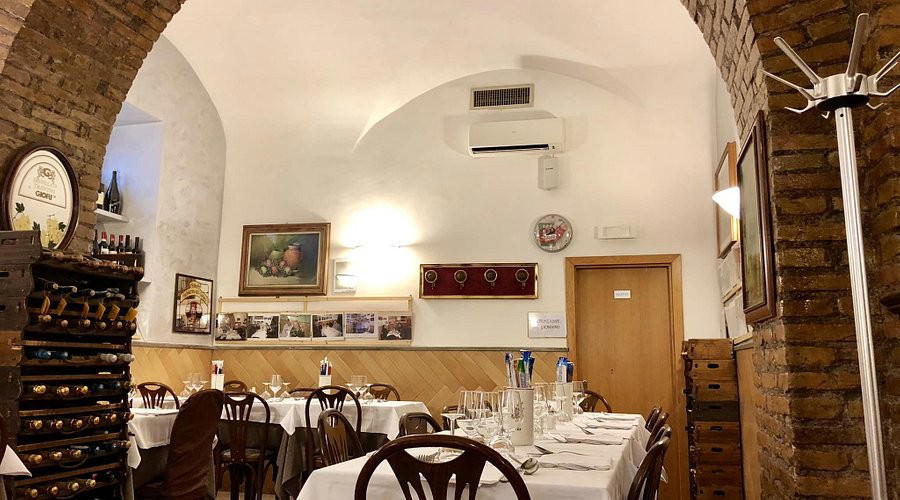
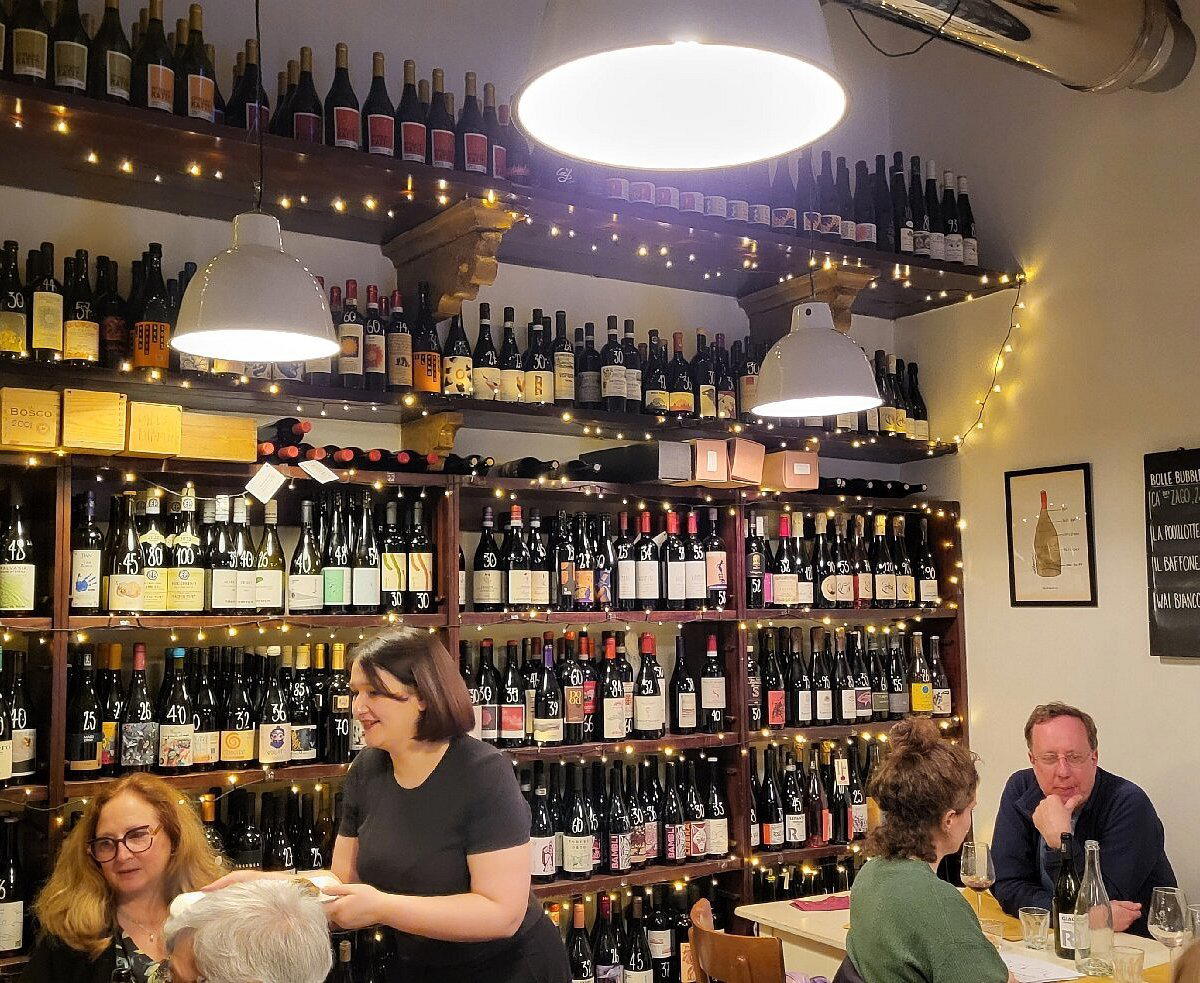
The approach along Via dei Santi Quattro sets expectations that the interior either fulfils or disappoints. The restaurant is a casual Roman-style pizza spot, with recommended reservations and an average spend of about $20 per person. At this address, the signal is consistency: a neighbourhood room designed for eating rather than spectacle. Roman trattorie in the Celio tend to run to tile floors, close-set tables, walls holding wine bottles or framed neighbourhood imagery, and a noise level that rises with the room. These are not design choices so much as conditions inherited from function. The atmosphere is produced by the density of the room, the proximity of tables, and the unmediated sound of a space where nobody is particularly concerned with being seen. That informality is itself a form of quality control. When the room is full of people eating rather than performing dining, the kitchen is accountable to appetite rather than occasion.
That accountability is most legible in the antipasti and pasta courses, where Roman trattorie typically concentrate their identity. A well-executed cacio e pepe requires precise emulsification and pasta cooked to a specific resistance; there is nowhere to hide in a dish with three ingredients. The same applies to a rigatoni all'amatriciana, where the guanciale-to-tomato ratio and the sharpness of the pecorino are matters of local consensus that diners will have opinions about. These are the dishes against which the kitchen earns or loses its standing in the neighbourhood.
Locating Li Rioni in the Wider Italian Conversation
The broader Italian dining conversation in 2024 runs strongly toward chef-driven creative formats. Places like Osteria Francescana in Modena, Piazza Duomo in Alba, and Le Calandre in Rubano represent the high end of a national scene that has developed considerable institutional confidence. Reale in Castel di Sangro and Uliassi in Senigallia each hold three Michelin stars and command national attention. Even Rome's own creative tier, represented by Enoteca La Torre and Achilli al Parlamento, operates at a different register than the trattoria tradition. The value of a neighbourhood house is precisely that it holds its position against this drift. It answers a different question: not what Italian cooking can become, but what it has been and what it continues to mean to the people who grew up eating it.
For international visitors with deeper context, the comparison extends further. The creative ambition of Enrico Bartolini in Milan or the mountain-rooted precision of Atelier Moessmer Norbert Niederkofler in Brunico represents one vector of Italian dining. The trattoria in a working rione represents another, and neither is a reduced version of the other. They answer to different traditions and different customers. Internationally, the equivalents would be something like the contrast between Le Bernardin in New York City and a neighbourhood bistro in the 11th arrondissement of Paris. Both are legitimate, both are serious, and conflating them produces a category error.
Planning a Visit: What to Know Before You Go
Li Rioni a Santiquattro sits at Via dei SS. Quattro, 24, in Rome, a casual Roman-style pizza restaurant with recommended reservations and average pricing around $20 per person. The neighbourhood is quieter at lunch than at dinner, and the trattoria format here typically supports both services. Roman neighbourhood restaurants in this zone tend to fill on weekday lunchtimes with a mix of locals and in-the-know visitors; evenings attract a broader range. Given the proximity to the Colosseum, the area sees heavy tourist foot traffic during the day, but the Via dei Santi Quattro itself runs off the main tourist axis, which affects the room's composition.
Reputation First
Comparable venues nearby, for context on price, style, and recognition.
| Venue | Cuisine | Price | Notes |
|---|---|---|---|
| Li Rioni a SantiquattroThis venue — the venue you are viewing | Roman-Style Pizza | $$ | Not listed |
| ViMi Ristorante | Traditional Italian Trattoria | $$ | Ripa |
| Materia Cafe | Italian Cafe with Healthy Mediterranean | $$ | Esquilino |
| Profumo di Mirto | Sardinian Seafood | $$ | Tuscolano |
| Gelateria La Romana | Artisanal Italian Gelato | $$ | Sallustiano |
| Rifugio Romano | Vegan Roman Trattoria | $$ | Castro Pretorio |


At a Glance
- Rustic
- Cozy
- Lively
- Casual Hangout
- Family
- Group Dining
- Open Kitchen
Current opening hours
- Monday
- 6:30 PM–12 AM
- Tuesday
- Closed
- Wednesday
- 6:30 PM–12 AM
- Thursday
- 6:30 PM–12 AM
- Friday
- 6:30 PM–12 AM
- Saturday
- 6:30 PM–12 AM
- Sunday
- 6:30 PM–12 AM
Hours can change for holidays and private events. Last verified .
Cozy and traditional interior designed like a small village street with terraces and canopies, lively atmosphere with close tables and cheerful service.