
We're Smart World 3 Radishes
Our verdict
Leuchtendroter, on Lindleystraße in Frankfurt's Ostend, is part of the We're Smart plant-forward movement and draws recognition for the purity, colour, and value of its dishes. Chef Niclas Horn represents a new wave of contemporary plant-based cooking pushing into a Frankfurt scene long anchored by Seven Swans. For anyone tracing where serious vegetable-driven cuisine is heading in Germany, this address is worth tracking.

Pearl is the En Primeur Club membership app, where members save venues, book tables and use the concierge.
The menu
What to order
- Chili Snow
- Filtered Clear Tomato Soup
- Carrot Tartare with Fermented Apricots
- Blueberry Samosas with Wild Garlic and Yogurt
- Onion Mushroom Balls with Caramelised Cherries
Frankfurt's Plant-Forward Scene Has a New Address to Watch
Frankfurt's fine-dining conversation has been shaped, for years, by a small number of high-profile restaurants operating in the classic European mould. The Sachsenhausen side of the river offers old-money dining rooms; the banking district runs on expense-account menus with French and Japanese accents. But Ostend, where Leuchtendroter operates on Lindleystraße 17, belongs to a different chapter: the post-industrial east of the city that has absorbed creative businesses, independent food concepts, and a demographic less interested in ceremony than in substance. Walking into this part of Frankfurt, the architectural register shifts from polished glass to repurposed brick, and the restaurants that have taken root here tend to communicate in a different register too.
Leuchtendroter fits that description in more than its address. The We're Smart recognition it has earned signals a specific commitment: the food here is 100% plant-based, assessed not just on creativity but on sourcing integrity, flavour discipline, and the relationship between what arrives on the plate and where it began. We're Smart, the Belgium-based plant-food guide, applies its Green Leaf ratings to restaurants that demonstrate genuine commitment to vegetables as a primary culinary language rather than as an afterthought or a marketing position. Inclusion in that movement is a form of peer-group identification as much as an award. For readers tracing where plant-driven cooking sits in Germany's broader dining map, Leuchtendroter is now part of that conversation. For context on the wider range of German fine dining, see Aqua in Wolfsburg, JAN in Munich, and Schwarzwaldstube in Baiersbronn.
What We're Smart Recognition Actually Means at the Table
The We're Smart framework is worth understanding because it shapes what Leuchtendroter is and is not. This is not a vegetarian-friendly menu at an otherwise conventional restaurant, nor a plant-based fine-dining tasting menu in the maximalist, component-heavy style that has come to define some European creative kitchens. The We're Smart assessment of Leuchtendroter specifically calls out the purity of the dishes, the quality of combinations, and the value for money. Purity, in this context, is a technical and philosophical word: it implies restraint in transformation, a confidence in letting sourced ingredients carry the plate rather than burying them under process.
That approach connects Leuchtendroter to a broader shift visible across serious European vegetable cooking. At the upper end of the market, creative kitchens like CODA Dessert Dining in Berlin or Vendôme in Bergisch Gladbach demonstrate what rigorous creative technique applied to non-animal ingredients can produce. Leuchtendroter operates in a different price register, one the We're Smart notes on value suggest is accessible rather than rarefied. That matters: it positions the restaurant not as a destination for special-occasion plant dining at fine-dining prices, but as a regular address for a Frankfurt diner who wants ingredient-led food without the theatre or the bill that accompanies it at higher-end operations.
Chef Niclas Horn and Frankfurt's Vegetable Moment
Germany's plant-based restaurant scene has been thin relative to its overall culinary weight. A country with deep classical training traditions, strong French influence visible at addresses like Restaurant Haerlin in Hamburg and Schanz in Piesport, and a wine-pairing culture that shapes menu architecture has been slow to develop the kind of pure-vegetable fine-dining ecosystem that Amsterdam or Copenhagen sustain. Frankfurt, specifically, has had Seven Swans as its primary reference point for serious plant-based cooking for several years. The We're Smart commentary on Leuchtendroter directly asks whether Seven Swans is gaining competition, which is a meaningful framing: it suggests that Frankfurt may be developing a small cohort of plant-forward kitchens rather than a single flag-bearer.
Chef Niclas Horn is the figure at the centre of this. The We're Smart commentary describes him as a chef after their hearts, which within the We're Smart framework is a credential tied to how the kitchen thinks about ingredients: their origin, their handling, and their integrity on the plate. In a city where the dominant fine-dining model still runs through French classical structure (illustrated by German addresses such as Victor's Fine Dining by Christian Bau in Perl and Waldhotel Sonnora in Dreis), a kitchen defined by contemporary plant cooking with recognised sourcing discipline occupies a clearly differentiated position.
Sourcing as the Editorial Argument
The We're Smart movement's framework puts sourcing at the foundation of its assessments. A restaurant cannot simply eliminate animal products and claim the recognition; the question is what replaces them and how those ingredients are selected, treated, and communicated. The language used in Leuchtendroter's recognition, fresh, colourful, beautifully presented, crisp, points toward a kitchen that sources for brightness and vitality rather than for shelf stability or convenience. These are signals of a procurement philosophy that prioritises seasonal and local supply chains, the kind of approach that gives a plate of vegetables a reason to be what it is rather than simply what is left after animal protein is removed.
This matters for Frankfurt as a city because the dining scene has not historically been associated with ingredient-forward cuisine at the local and seasonal end. The city's food culture is built on Ebbelwoi and Grüne Soße and Frankfurter Würstchen, the kind of civic food identity that runs on continuity rather than renovation. The emergence of a restaurant with We're Smart recognition on Lindleystraße is, in that context, not just a new restaurant opening but a small marker of what is changing in the city's food culture. Readers tracking Frankfurt's broader restaurant development can explore our full Frankfurt am Main restaurants guide.
Where Leuchtendroter Sits in the Frankfurt Picture
Frankfurt's dining scene is broader than its reputation for finance-district steakhouses suggests. For bars and drinking, the city supports a distinct culture documented in our Frankfurt bars guide. For accommodation that matches a food-led visit, our Frankfurt hotels guide covers options across the city's neighbourhoods. Those interested in wine can follow our Frankfurt wineries guide, and for cultural and experiential programming, our Frankfurt experiences guide covers the wider picture.
Within that map, Leuchtendroter sits at a specific coordinate: Ostend, plant-forward, value-conscious relative to its ambition, and aligned with an international movement that grades restaurants on ingredient integrity. It shares a country with acclaimed operations from Bagatelle in Trier to ES:SENZ in Grassau, but it is not competing in that register. Its peer group is the small and growing set of urban, mid-market, plant-serious restaurants developing across German cities. Internationally, the turn toward ingredient-sourcing rigour in plant-based cooking connects to a broader shift visible even in very different culinary cultures, from the fish-focused precision of Le Bernardin in New York City to the product-led philosophy at Emeril's in New Orleans.
Leuchtendroter's address is Lindleystraße 17, 60314 Frankfurt am Main. Given the We're Smart recognition and the commentary around value, it is worth noting that this is a restaurant worth approaching without the assumption that plant-based dining in Frankfurt requires either a special occasion budget or a compromise on ambition.
Frequently asked questions
Is Leuchtendroter suitable for children?
Leuchtendroter's 100% pure plant menu, as recognised by the We're Smart movement, means there are no animal products on the plate, a format that suits families with dietary commitments or curious young eaters. That said, this is a contemporary fine-dining address in Frankfurt's Lindleystraße rather than a casual family restaurant, so the pacing and presentation are pitched at an adult dining experience.
What should I expect atmosphere-wise at Leuchtendroter?
We're Smart's own assessment of Leuchtendroter flags a communication style that is distinctly its own, described as 'weird' in the most positive sense, suggesting a venue that does not default to the usual fine-dining formality. Frankfurt's plant-forward scene is still forming its identity, and Leuchtendroter sits on the contemporary, creative end rather than the classic European mould. Expect something closer to the hip register of a chef-driven neighbourhood restaurant than a white-tablecloth institution.
What kind of recognition has Leuchtendroter received?
Leuchtendroter has received recognition including: Weird? The style of communication here is very distinct indeed. But there is something for everyone, at We're Smart it's all about what ends up on the plate, and this is without a doubt 100% pure plant here! We love the purity of the dishes….
What should I eat at Leuchtendroter?
The We're Smart recognition at Leuchtendroter is built on the purity and combination logic of the dishes, not on plant substitutes or conventional vegetarian comfort food, meaning the focus is entirely on vegetables as the central argument of each plate. We're Smart specifically cites crisp, fresh, colourful presentation and strong value for money as defining qualities of Chef Niclas Horn's cooking.
Comparable Venues
Comparable venues nearby, for context on price, style, and recognition.
| Venue | Cuisine | Price | Awards | Notes |
|---|---|---|---|---|
| LeuchtendroterThis venue (the venue you are viewing) | Creative Seasonal Vegan Fine Dining | $100–150 | We're Smart World 3 Radishes | Not listed |
| Hausmann's | Traditional German Brasserie | $20–30 | Not listed | Frankfurt Airport |
| ASIA Street Cooking | Asian Street Food | Not listed | Not listed | Frankfurt Airport |
| Zum Zehnthof | Traditional German & Austrian | $20–30 | Not listed | Alt-Schwanheim |
| coa | Modern Pan-Asian | $10–20 | Not listed | City Center |
| Kabuki | Teppanyaki Japanese Grill | $50–100 | Not listed | Bahnhofsviertel |
Recognition history
Dated appearances from independent guides and award organizations, with the underlying list record or original source where available.
We're Smart World 3 Radishes
We're Smart World
Continue exploring
More in Frankfurt
Restaurants in Frankfurt
All restaurants in Frankfurt →
Bars in Frankfurt
All bars in Frankfurt →
Hotels in Frankfurt
All hotels in Frankfurt →

Leuchtendroter
The wine
- Extensive wine list
- Sommelier-led
- Natural wine
Details
- Elegant
- Modern
- Cozy
- Trendy
- Date Night
- Special Occasion
- Celebration
- Business Dinner
- Group Dining
- Open Kitchen
- Private Dining
- Hotel Restaurant
- Design Destination
- Extensive Wine List
- Natural Wine
- Sommelier Led
- Farm To Table
- Local Sourcing
- Organic
- Natural Wine
- Tasting Menu
- Small Plates
- Natural Wine
- Non Alcoholic Beverages
- Vegan Options
- Vegetarian Friendly
- Allergy Accommodating
- Organic Focus
Current opening hours
- Monday
- 7 AM–12 PM
- Tuesday
- 7 AM–12 PM, 6:30–10 PM
- Wednesday
- 7 AM–12 PM, 6:30–10 PM
- Thursday
- 7 AM–12 PM, 6:30–10 PM
- Friday
- 7 AM–12 PM, 6:30–10 PM
- Saturday
- 8 AM–1 PM, 6:30–10 PM
- Sunday
- 8 AM–1 PM
Hours can change for holidays and private events. Hours as of .
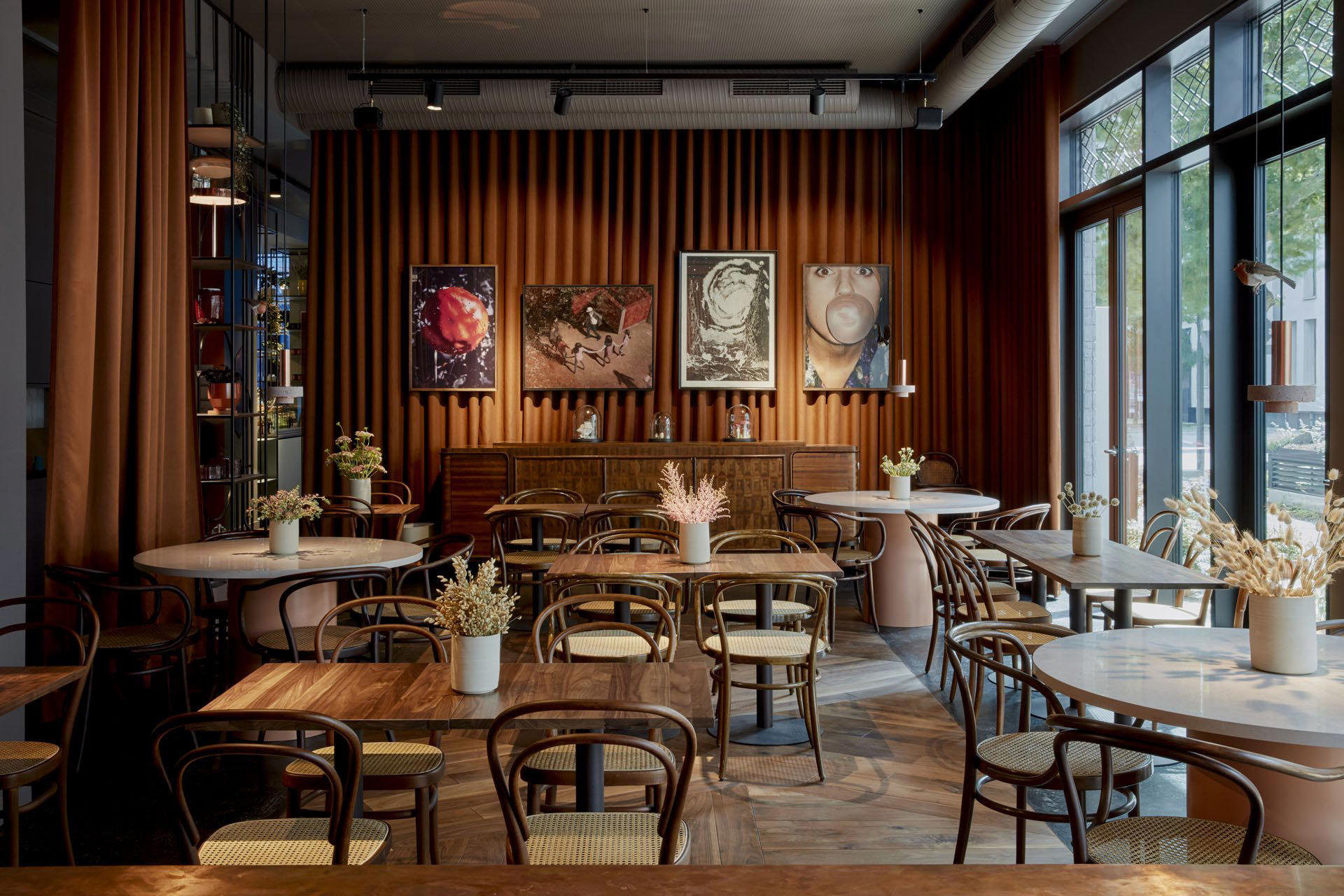
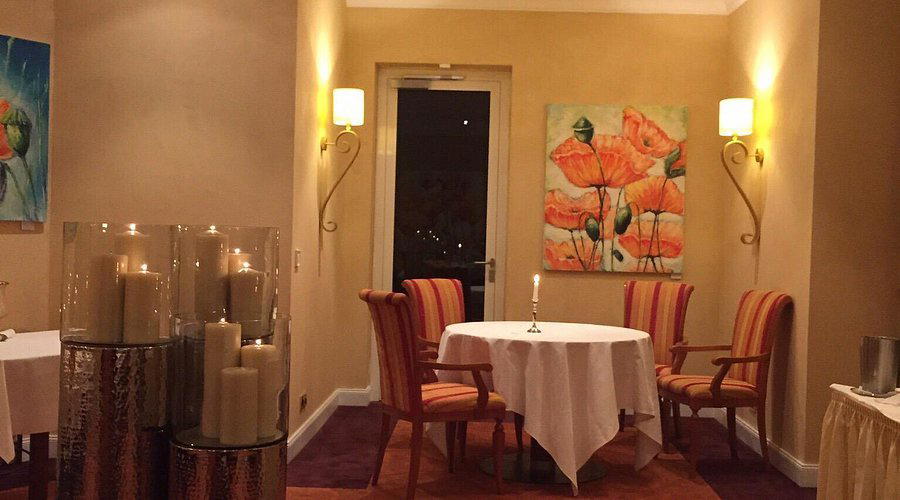
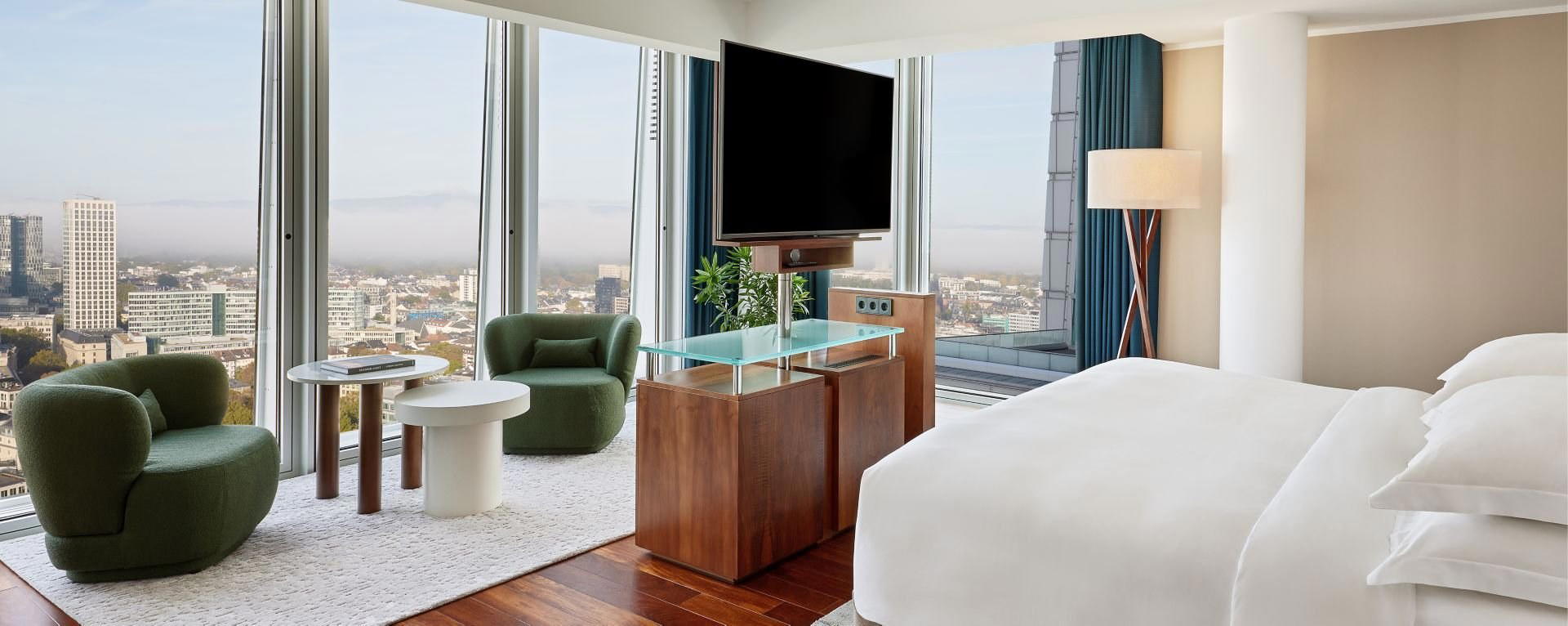
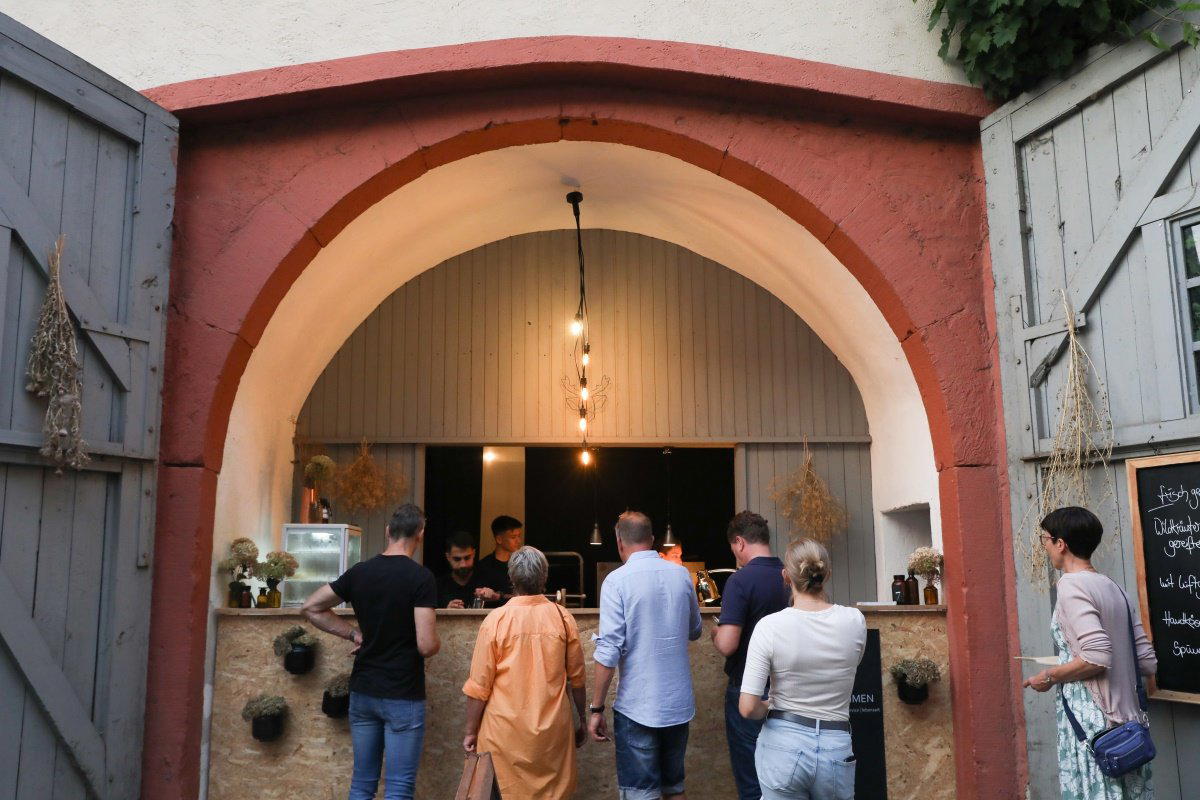
Spacious, clean, and inviting with creative artwork and paintings; modern yet cozy atmosphere that feels chic without being stuffy; soft background music complements the dining experience.