Our verdict
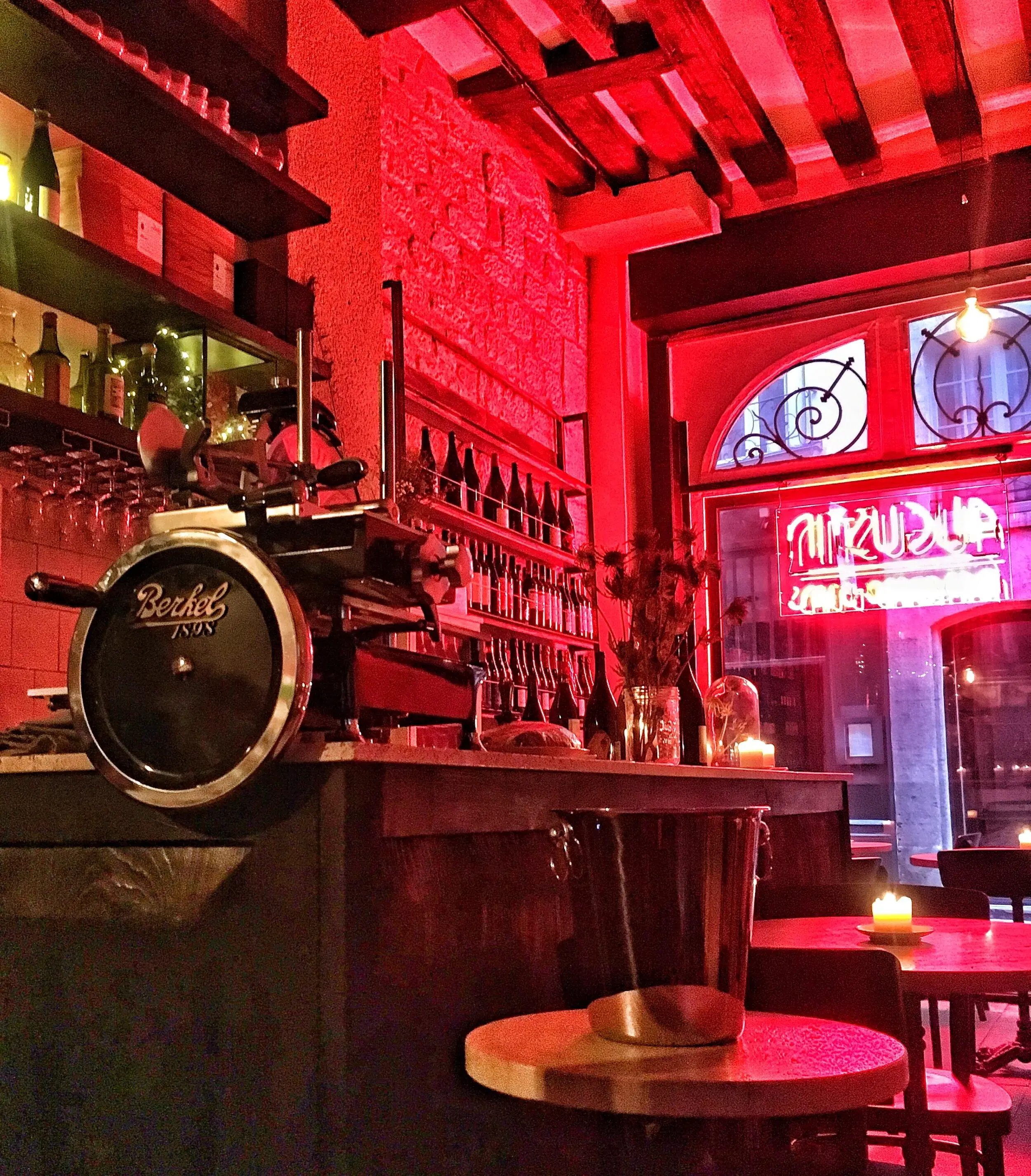
On a quiet stretch of Rue Saint-Blaise in the 20th arrondissement, Les Rêveuses occupies territory at some distance from the grand-boulevard dining circuit that defines central Paris. The address places it inside a neighbourhood more associated with local bistros and the Père Lachaise perimeter than with destination restaurants, which shapes the entire tone of a meal there.

Pearl is the En Primeur Club membership app, where members save venues, book tables and use the concierge.
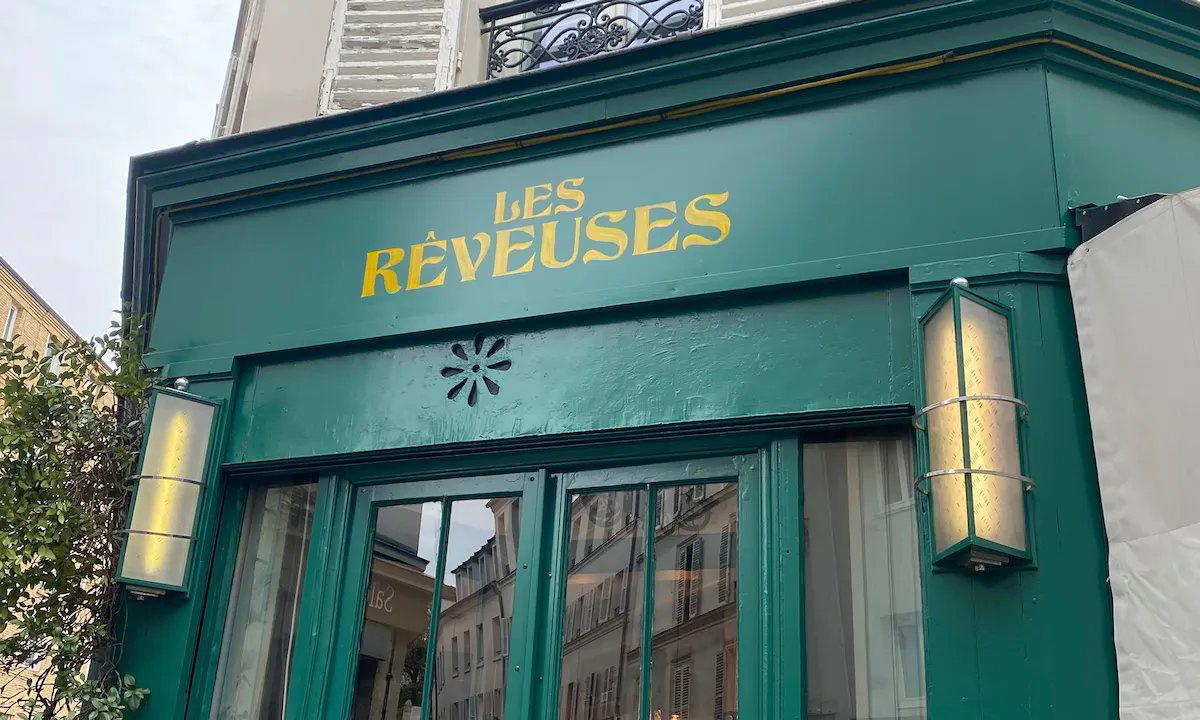
The 20th Arrondissement as a Dining Address
Paris restaurant geography has always carried its own hierarchy. The 8th arrondissement consolidates much of the city's formal high-end dining: Alléno Paris au Pavillon Ledoyen operates from the Champs-Élysées gardens, Le Cinq at the Four Seasons Hôtel George V anchors the 8th's hotel-dining tier, and the 7th holds Arpège within easy reach of the ministries. Against that geography, an address at 15 Rue Saint-Blaise in the 20th reads as a deliberate departure. The street sits in the old village core of Charonne, a neighbourhood whose identity has historically been shaped by working-class Paris rather than by bourgeois gastronomy. Opening a serious restaurant here is a positioning choice, and it tells you something about the kind of meal the kitchen is after.
That positioning shift is not unique to Les Rêveuses. Over the past decade, a cohort of Parisian restaurants has moved away from the traditional prestige arrondissements, treating the 10th, 11th, 18th, and 20th as viable territory for destination-level cooking. The logic is partly economic and partly editorial: rents are lower, the clientele skews younger and more engaged, and the neighbourhood context allows a register that would feel wrong in a gilded dining room near the Arc de Triomphe. Les Rêveuses sits inside that broader shift.
Occasion Dining Outside the Grand Tradition
French fine dining has a well-established grammar for celebratory meals. The white tablecloth, the sommelier cadence, the amuse-bouche sequence, these conventions are performed with particular precision at places like L'Ambroisie on the Place des Vosges, where the room itself is part of the occasion. That grammar is not the only available one. A different tier of Paris restaurants has developed a more stripped-back approach to the milestone meal: fewer covers, less ceremony, more focus on the food as the central event rather than on the theatre surrounding it.
For diners planning celebrations, anniversary dinners, or milestone meals in Paris, the choice of register matters as much as the choice of kitchen. A reservation at an address in the 20th signals something specific to the people you're bringing: that the evening is about the table rather than about the room's status. This is a considered preference, not a compromise, and it reflects a shift in how a younger generation of serious diners in Paris frames a special occasion.
French regional cooking outside Paris has long produced its own occasion-dining tradition. Flocons de Sel in Megève, Mirazur in Menton, and Troisgros in Ouches each anchor their region's celebratory dining identity in ways that extend well beyond local clientele. What Paris offers differently is density: the ability to book a serious meal at short notice, to walk to a second venue for a drink, to make the occasion part of a broader urban evening rather than a destination trip. The 20th's emerging restaurant scene has started to deliver that density in a register that the central arrondissements rarely offer.
What the Address Tells You About the Kitchen's Ambitions
The broader French fine-dining tradition provides useful context for reading what a restaurant on Rue Saint-Blaise might be attempting. The kitchens that have shaped the country's culinary record, from Auberge de l'Ill in Illhaeusern to Bras in Laguiole, from Paul Bocuse in Collonges-au-Mont-d'Or to Auberge du Vieux Puits in Fontjoncouse, have tended to operate at some remove from urban pressure, drawing diners toward them rather than competing for passing trade. In Paris itself, kitchens at Kei and Assiette Champenoise in Reims have approached their menus with a similar conviction: that the food itself should justify the journey. An address in the 20th, away from the natural gravitational pull of central Paris dining, operates under the same implicit contract.
The comparison point internationally is instructive too. AM par Alexandre Mazzia in Marseille and Au Crocodile in Strasbourg have both demonstrated that serious culinary work in France does not require a Parisian postcode. Within Paris, the argument is that it does not require a prestigious arrondissement either. The 20th is, in this reading, simply the most recent expression of that broader decentralisation.
For context beyond France, the shift from grand-room occasion dining to neighbourhood-based destination restaurants has analogues elsewhere. Atomix in New York operates from a Midtown address but with a format and register that deliberately distances itself from the white-tablecloth tradition, in the same way that Le Bernardin has maintained the formal register of the grand room as its core identity. These are two different answers to what a milestone meal should feel like. Les Rêveuses, based on its address and neighbourhood positioning, appears to be offering a Parisian version of the former.
Planning a Visit to Rue Saint-Blaise
The 20th arrondissement is served by Métro Line 9 (Alexandre Dumas station) and Line 2 (Père Lachaise), both within a short walk of Rue Saint-Blaise. The street itself is pedestrianised for part of its length and sits at the edge of one of the older village-scale sections of eastern Paris, which gives the approach a character distinct from the Haussmannian grid that dominates much of the city. For a celebratory dinner, arriving on foot from Père Lachaise adds a natural prelude to the evening.
Given the volume of serious occasion dining in Paris and the lead times required at the city's most in-demand tables, planning ahead is standard practice. Addresses in the 20th tend to operate with smaller covers than their counterparts in the 8th, which means availability can be tighter than a peripheral postcode might suggest. For Paris visitors arriving from outside France, the comparison with similar-tier restaurants in the French regions is worth holding in mind: the same level of care that diners travel to find at Mirazur or Flocons de Sel is increasingly available within a 30-minute Métro ride of central Paris.
Is Les Rêveuses suitable for a private dining event or small group celebration?
Based on its address in the 20th arrondissement's village-scale Charonne district, Les Rêveuses fits the profile of a smaller, neighbourhood-rooted address better suited to intimate dinners and small-group occasions than to large event formats. Restaurants in this part of Paris typically operate with limited covers, which shapes the atmosphere toward the kind of focused, unhurried dinner that milestone meals benefit from.
Frequently asked questions
What part of town is Les Rêveuses in?
Les Rêveuses is located at 15 Rue Saint-Blaise, 75020 Paris, France, Paris.
Is Les Rêveuses a good choice for dinner near Père Lachaise cemetery in Paris?
Les Rêveuses on Rue Saint-Blaise in Paris's 20th arrondissement is among the few sit-down dinner addresses in immediate proximity to Père Lachaise, accessible via Métro Line 2. The Charonne district around Rue Saint-Blaise has a village character distinct from central Paris, making it a practical and locally rooted option for an evening meal in this part of the city.
How hard is it to get a table at Les Rêveuses?
Paris addresses in the Charonne district of the 20th arrondissement that attract a dedicated local and destination following often fill quickly, particularly at weekends. Reaching out well in advance is advisable for evening sittings.
Recognition, Side-by-Side
Comparable venues nearby, for context on price, style, and recognition.
| Venue | Cuisine | Price | Notes |
|---|---|---|---|
| Les RêveusesThis venue (the venue you are viewing) | French Bistro with Natural Wines | $20–30 | Not listed |
| Café de la Nouvelle Mairie | Traditional French Bistro | $20–30 | Latin Quarter |
| H Kitchen | French revisited by Japanese chef | $30–50 | Notre-Dame-des-Champs |
| Prout Prout | Modern French Neo-Bistro | $30–50 | Plaine de Monceaux |
| Becquetance | Modern French Bistro | $30–50 | Ménilmontant |
| Brasserie Martin | Traditional French Brasserie with Rotisserie | $20–30 | 11th arrondissement |
Continue exploring
More in Paris
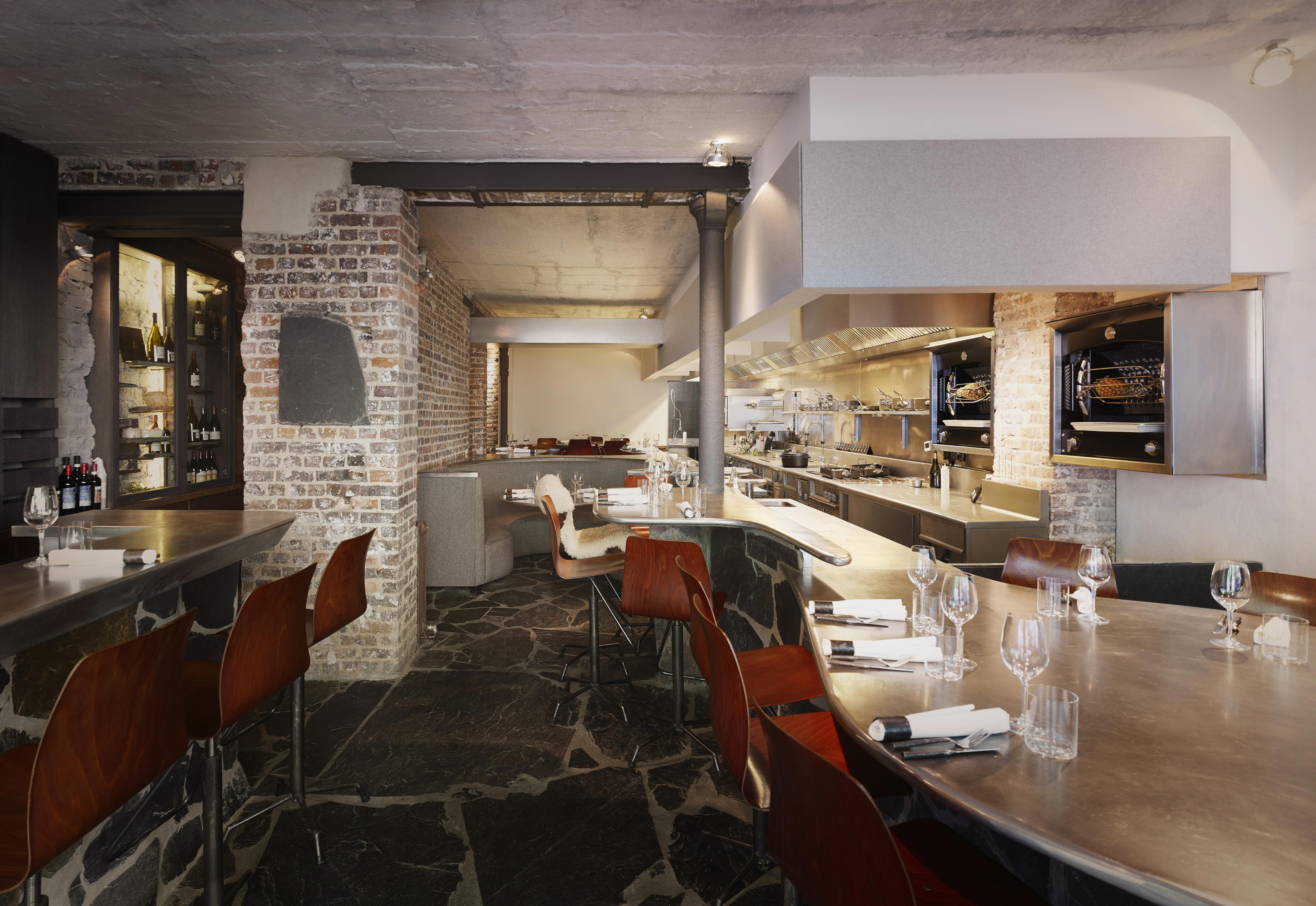
Restaurants in Paris
All restaurants in Paris →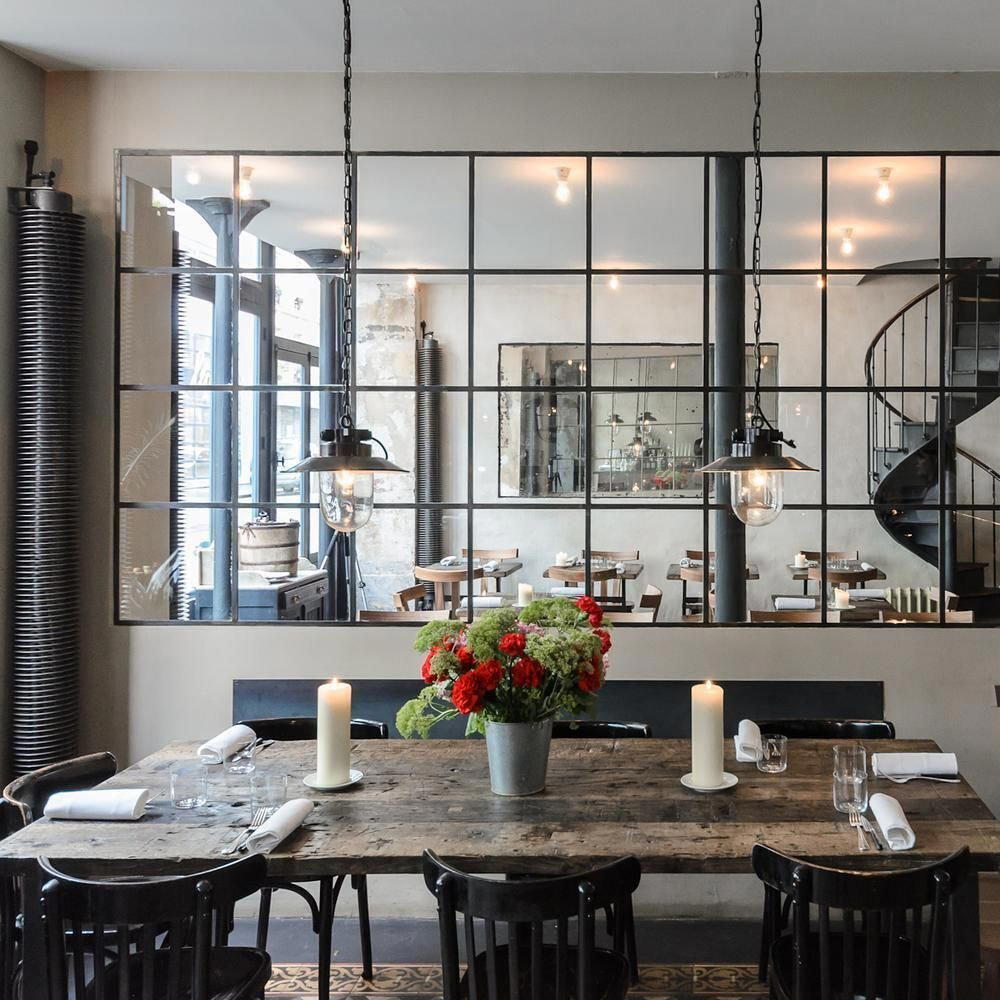
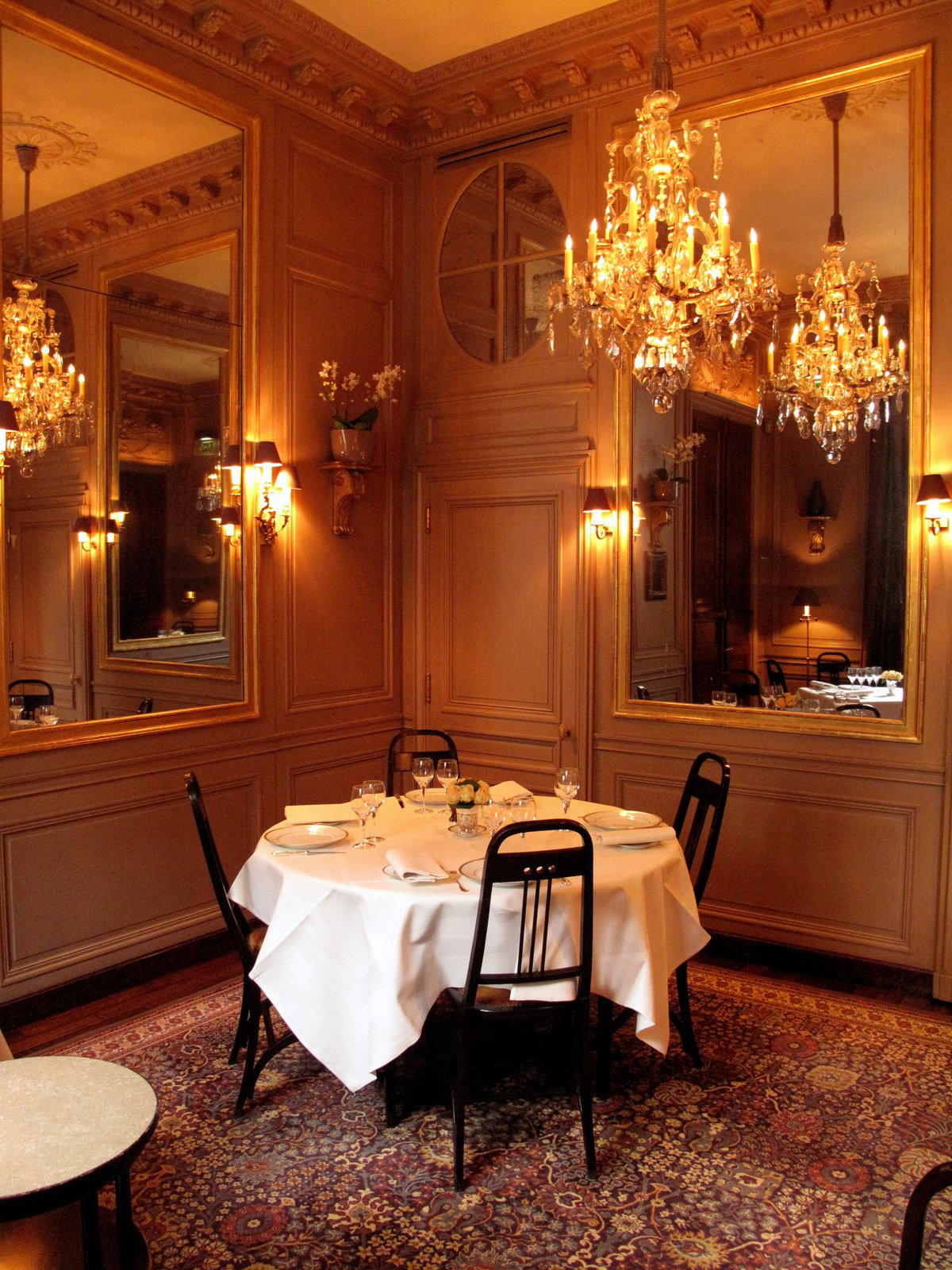
Bars in Paris
All bars in Paris →



Details
- Cozy
- Elegant
- Casual Hangout
- Date Night
- Terrace
- Natural Wine
- Local Sourcing
- Organic
- Street Scene
- A La Carte
- Natural Wine
- Vegetarian Friendly
Current opening hours
- Monday
- 10:30 AM–1 AM
- Tuesday
- 10:30 AM–1 AM
- Wednesday
- 10:30 AM–1 AM
- Thursday
- 10:30 AM–1 AM
- Friday
- 10:30 AM–1 AM
- Saturday
- 10:30 AM–1 AM
- Sunday
- 10:30 AM–1 AM
Hours can change for holidays and private events. Hours as of .
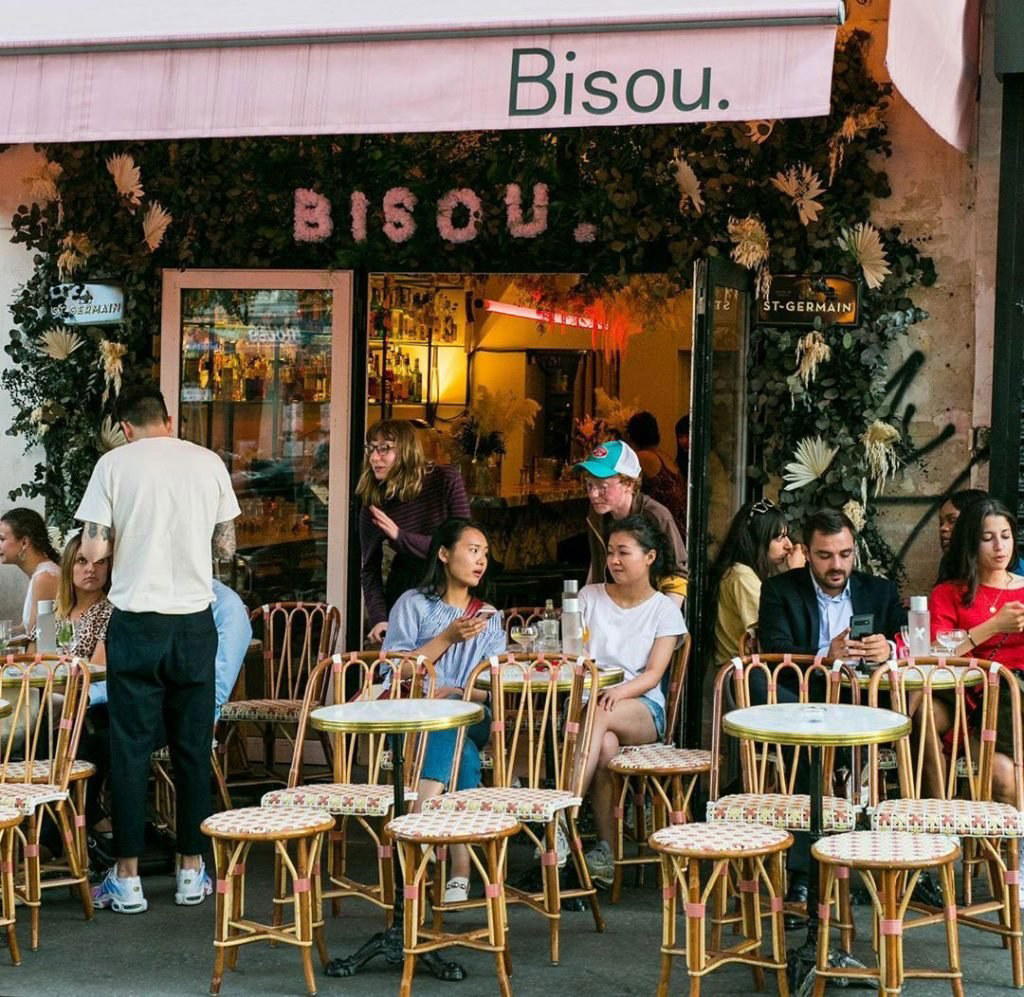
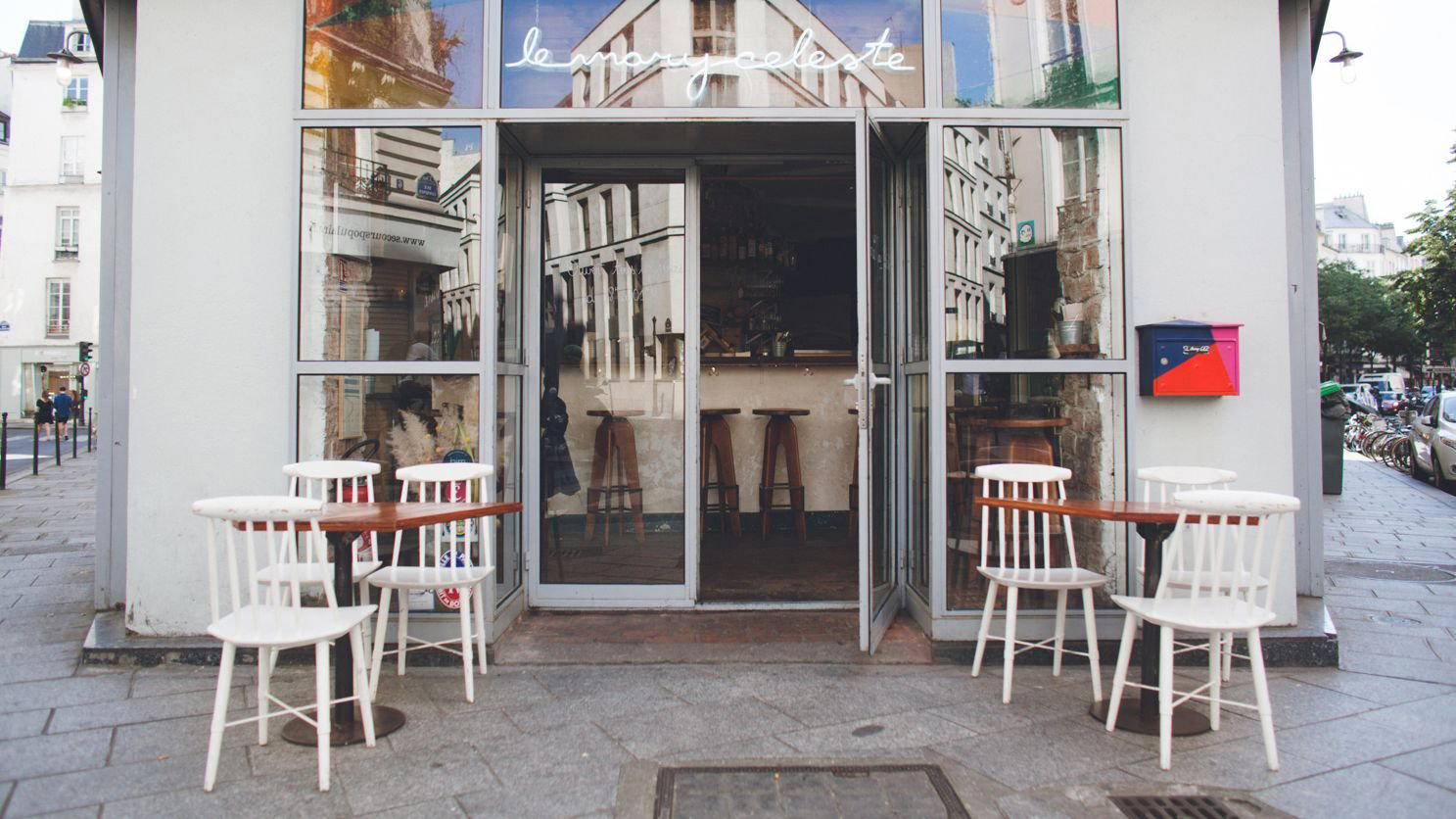
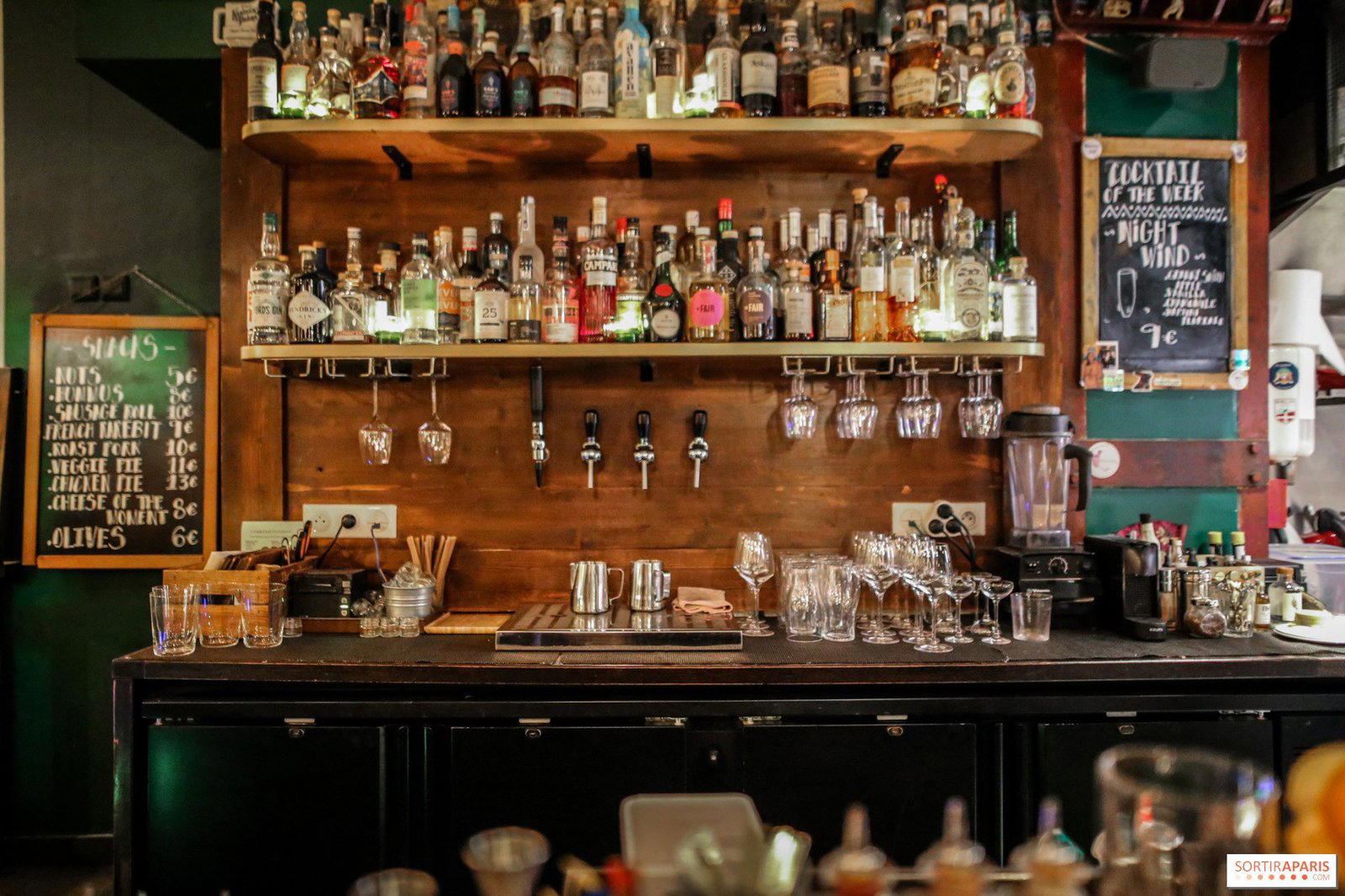
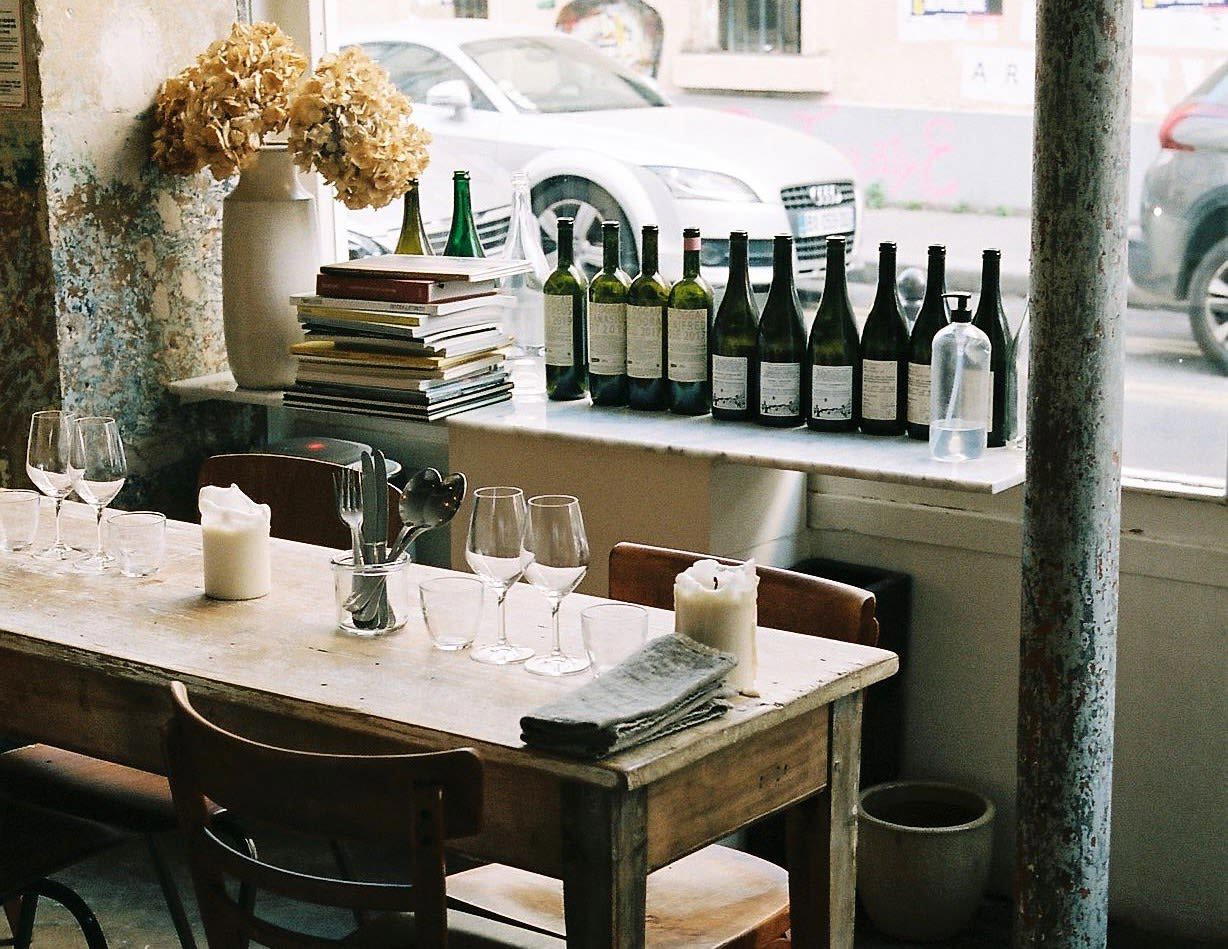
Pleasant, bright interior with terrace seating; lower level can be somewhat noisy.