The Sourcing Logic Behind the Plate
Mediterranean fish cookery at this level is a discipline where the intervention question matters more than it might in a cuisine built on longer preparation windows. Red mullet, John Dory, turbot, and sea bass , the species that define the restaurant's seafood register , each carry a texture and flavour that degrades quickly and responds poorly to overworking. The strongest kitchens on this coast have always understood that their job with a line-caught rouget or a morning-landed Saint-Pierre is largely one of restraint: controlled heat, clean seasoning, and a willingness to let the fish read as itself on the plate. Chef Nicolas Rondelli's menu at Les Pêcheurs operates within that tradition, with the sourcing from Le Croûton port giving the kitchen a time advantage over restaurants that draw from larger wholesale channels.
The meat programme runs alongside the fish with comparable geographic specificity. Pigeon, Sisteron lamb, and free-range veal each carry a regional identity that grounds the menu in the South of France's broader culinary geography rather than in the generic luxury-protein register that characterises some Riviera dining at this price level. Sisteron lamb, raised on alpine pasture in the Alpes-de-Haute-Provence, has a defined flavour profile that differs materially from barn-raised equivalents, and its appearance on a menu of this kind is a signal about the chef's sourcing relationships rather than simply a prestige marker. For context on how this regionality compares across the Riviera's starred addresses, Mirazur in Menton makes a useful reference point at the other end of the ambition spectrum.
The Kitchen's Lineage
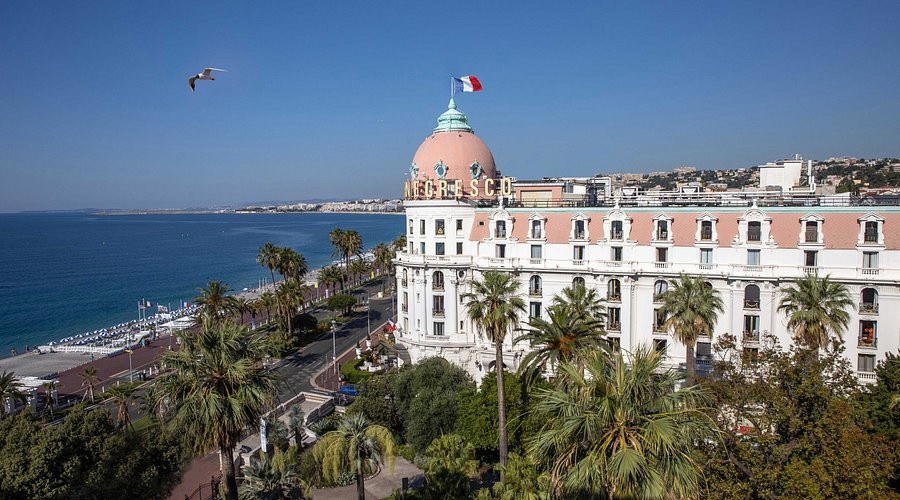
On the Côte d'Azur, as in most of France's serious regional dining scenes, the question of a chef's formation carries weight because the region has its own internal hierarchy of kitchens. Nicolas Rondelli is Nice-born and trained at Les Pêcheurs itself before passing through the brigades of Alain Llorca, Michel Del Burgo, Le Negresco, and Jacques Chibois. That trajectory covers the spectrum of Provençal fine dining from the relatively classical to the more contemporary, and it maps onto a generation of chefs who trained through the formal brigade system before building individual approaches. Rondelli's subsequent return to the restaurant where he first trained, now as its head chef, is less remarkable as biography than as a signal about the kitchen's continuity and its connection to the local ingredient networks he would have known from early in his career.
The broader context for understanding this formation is the French Riviera's relationship to national fine dining. While Alléno Paris au Pavillon Ledoyen or Troisgros represent the headline addresses of French gastronomy, the south has always maintained its own internal logic, one that prizes seasonal honesty and proximity sourcing over technical elaboration. Rondelli's menu sits comfortably within that tradition. His cooking draws on the flavours of the South of France without reaching for the kind of self-conscious complexity that has sometimes characterised Riviera fine dining's attempts to compete with Paris on Paris's terms.
Where Les Pêcheurs Sits in Antibes
Antibes holds a more interesting dining position than its neighbour Nice, which has deeper institutional infrastructure, or Cannes, which tilts toward festival-season showiness. The town's starred restaurants tend toward craft-led approaches that reflect genuine connection to the surrounding agricultural and maritime supply chains. Le Figuier de Saint-Esprit works the regional cuisine angle with similar seriousness, while Louroc at the Hôtel du Cap-Eden-Roc represents the grand hotel end of the Antibes fine dining spectrum. Les Pêcheurs occupies neither pole: it is not a regional cuisine exercise in the formal sense, nor a hotel dining room with the attendant institutional scale. Its peer comparison is better drawn against coastal Mediterranean addresses elsewhere on the Riviera that anchor their identity in what arrives from the water each morning.
The €€€€ price positioning places it alongside Le Vauban and the upper tier of Antibes addresses, though the Michelin star gives it a credentialed distinction within that bracket. For readers approaching the wider regional table, Arnaud Donckele at Louis Vuitton in Saint-Tropez and La Brezza in Ascona offer useful comparative angles on how Mediterranean fine dining is currently being interpreted across the broader coastal arc. For a full survey of what the town offers across categories, our Antibes restaurants guide covers the range from traditional to contemporary.
Planning a Dinner
Les Pêcheurs operates Tuesday through Sunday, with a single dinner service from 7:30 PM to 9:15 PM. Monday is the kitchen's day off. The address is 10 Boulevard Maréchal Juin, positioned along the coast south of the old town. Given the limited service window and the restaurant's Michelin recognition, advance reservation is advisable, particularly across the summer months when Antibes fills with visitors from across Europe and beyond. The format is dinner-only, which concentrates the kitchen's attention and suits the produce-driven approach: the day's catch from Le Croûton port arrives well before service begins, allowing time for proper preparation without the pressure of a dual lunch-dinner rotation. Google review data across 248 responses gives the restaurant a 4.3 score, a figure that reflects consistency rather than division. For hotels, bars, and other experiences across Antibes during your stay, our hotels guide, bars guide, wineries guide, and experiences guide cover the full picture.
What should I eat at Les Pêcheurs?
The menu at Les Pêcheurs follows seasonal and daily availability rather than a fixed carte, so specific dishes shift based on what arrives from the water and from the region's farms. The kitchen's focus is Mediterranean fish , red mullet, John Dory, turbot, and sea bass are recurring species , sourced directly from Le Croûton port. Alongside the seafood, the meat programme draws on Sisteron lamb, pigeon, and free-range veal from local producers. Chef Nicolas Rondelli, who holds one Michelin star as of 2024 and trained through kitchens including Le Negresco and Jacques Chibois, approaches the produce with a seasonal, proximity-sourcing logic that prioritises the flavours of the South of France. In practical terms: lean toward the fish if the day's supply has come in that morning, and treat the meat courses as a secondary expression of the same regional philosophy. For comparable seasonal approaches across the Riviera, Flocons de Sel in Megève and Bras in Laguiole offer useful reference points for how French starred kitchens handle the discipline of terroir-led menus across different regional contexts. Paul Bocuse at L'Auberge du Pont de Collonges remains the historical benchmark for understanding how French regional fine dining codified its relationship to local produce.



 Discover on Pearl