Les Alizés
On the Île d'Oléron, Les Alizés sits at the edge of France's Atlantic oyster and shellfish corridor, where what arrives on the plate is shaped more by tide and season than by kitchen ambition. The address, Saint-Pierre-d'Oléron's quiet Rue Dubois-Aubry, places it squarely in the tradition of coastal French cooking that treats the sea not as a theme but as a supplier. See our full Les Ecarts restaurants guide for broader context.
Pearl is the En Primeur Club membership app — saves, bookings, and concierge access live there. Same editors, same standards.
- Address
- 4 Rue Dubois-Aubry, 17310 Saint-Pierre-d'Oléron, France
- Phone
- +33546472020
- Directions
- Get directions
 Saves & bookings on Pearl
Where the Atlantic Sets the Menu
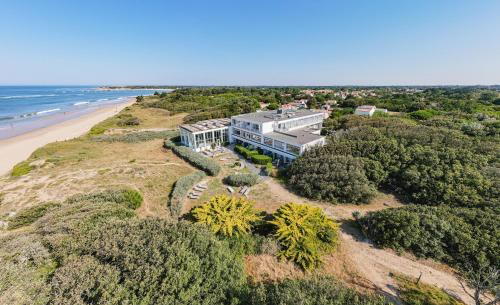
The Île d'Oléron sits off the Charente-Maritime coast, connected to the mainland by a bridge that still feels like a threshold. Cross it in the right season and the salt-flat smell hits before you clear the toll. Saint-Pierre-d'Oléron, the island's main town, runs a particular kind of French coastal economy: oyster parks visible at low tide, fishing trawlers returning mid-morning, market stalls that empty before noon. Rue Dubois-Aubry cuts through the quieter residential edge of that town, and Les Alizés occupies a position in that fabric that is less about spectacle and more about proximity to source.
That sourcing logic matters more than it might appear. The Marennes-Oléron basin produces some of France's most closely watched oysters, a designation that carries genuine production controls and flavour differentiation tied to the specific mineral composition of these tidal flats. A restaurant on the island that ignores this geography is making an active choice. One that leans into it is aligning with a culinary tradition that connects Oléron to the wider Atlantic French table, the same tradition that informs [Christopher Coutanceau in La Rochelle] and, further north, [La Marine in Noirmoutier-en-l'île], two addresses that have built serious reputations around the Atlantic's cold-water produce.
The Sourcing Tradition Behind Atlantic Coastal Cooking
French coastal restaurants in this tier operate within a sourcing framework that the broader dining public often underestimates. The Charente-Maritime is not simply a scenic backdrop; it is among the more productive marine and agricultural zones in western France. Beyond oysters, the region supplies sea bass, sole, cuttlefish, and the small crustaceans that form the backbone of classic Atlantic French sauces. The pineau des Charentes and Cognac produced inland provide local aperitif and cooking-wine options that anchor menus to the terroir in a way that a wine list alone cannot.
This is the tradition within which Les Alizés operates. The name itself, les alizés, the trade winds, frames the restaurant inside a maritime consciousness that precedes the current vogue for provenance-led menus. In France's Atlantic corridor, that provenance has never been a marketing strategy; it has been an economic and geographic inevitability. What changes between restaurants is how consciously they address it: whether the kitchen treats the morning market as the starting point or the menu as the fixed constraint. The better addresses in this region tend toward the former.
Coastal French Cooking in a Wider Frame
To understand where a place like Les Alizés sits in French dining, it helps to sketch the broader map. At the extreme of the French gastronomic tradition, addresses like Alléno Paris au Pavillon Ledoyen in Paris and Mirazur in Menton define one pole: highly technical, heavily awarded, with sourcing as one sophisticated input among many. Further into the French countryside, addresses like Bras in Laguiole and Auberge du Vieux Puits in Fontjoncouse have built reputations on hyper-local sourcing that is inseparable from the identity of the place. Coastal France has its own version of this logic, with La Marine in Noirmoutier-en-l'île and Christopher Coutanceau in La Rochelle both building cases for the Atlantic as a fine-dining terroir rather than simply a regional backdrop.
The restaurant operates in a less scrutinised register than those addresses, but the underlying geography is identical. Oléron's produce feeds some of the country's most decorated kitchens at a remove. Eating it on the island itself, at a restaurant close to where it is pulled from the water, is a different kind of argument for provenance, less mediated, more literal. In a French dining culture that has long celebrated the idea of cuisine du terroir, this has its own value, independent of Michelin tallies or chef pedigree. Institutions like Auberge de l'Ill in Illhaeusern or Georges Blanc in Vonnas have demonstrated that rootedness to a specific geography can sustain a restaurant's identity across generations, a principle that applies at multiple price points.
Planning a Visit
Saint-Pierre-d'Oléron is accessible by car from La Rochelle in under an hour via the Île d'Oléron bridge, which is toll-free. Train travellers can reach the mainland at Rochefort or La Rochelle, then continue by road. The island sees its highest visitor volume between late June and August, when Atlantic tourism peaks and local restaurants operate at full pressure; the shoulder months of May, early June, and September carry the same produce offer with considerably more ease of booking. The address on Rue Dubois-Aubry is within walking distance of the central market, which matters for a restaurant whose logic depends on what the morning delivers. Direct verification before a visit is sensible.
Quick Comparison
Comparable venues nearby, for context on price, style, and recognition.
| Venue | Cuisine | Price | Notes |
|---|---|---|---|
| Les AlizésThis venue — the venue you are viewing | French Bistro | $$ | Not listed |
| Au Gré du Vin | Modern French Bistronomic | $$ | Place de la République |
| L’aventure | French Mountain Grill | $$ | Oz en Oisans |
| Aux Frères de la Côte | French Seafood Shack | $$ | Ars-en-Re |
| Chez Gaspard | French Crêperie & Waffles | $$ | Vieux Port |
| Chez Franklin | Modern French Brasserie | $$ | Graslin |
Continue exploring
More in Les Ecarts
Restaurants in Les Ecarts
Browse all →
At a Glance
- Dinner
Current opening hours
- Monday
- 12–1:30 PM, 6–9 PM
- Tuesday
- 9 AM–2 PM, 6–8:30 PM
- Wednesday
- Closed
- Thursday
- 12–1:30 PM, 6–8:30 PM
- Friday
- 12–1:30 PM, 6–9 PM
- Saturday
- 12–2 PM, 6–8:30 PM
- Sunday
- 12–2 PM
Hours can change for holidays and private events. Last verified .