Au Gré du Vin
On the main square of Le Château-d'Oléron, Au Gré du Vin operates in the register that defines the Charente-Maritime coast at its most honest: local produce, Atlantic provenance, and a wine focus that takes the island's terroir seriously. This is the kind of address where the sourcing does the talking, and the room stays out of the way.
Pearl is the En Primeur Club membership app — saves, bookings, and concierge access live there. Same editors, same standards.
- Address
- 1 Pl. de la République, 17480 Le Château-d'Oléron, France
- Phone
- +33546850273
- Website
- facebook.com
- Directions
- Get directions
 Saves & bookings on Pearl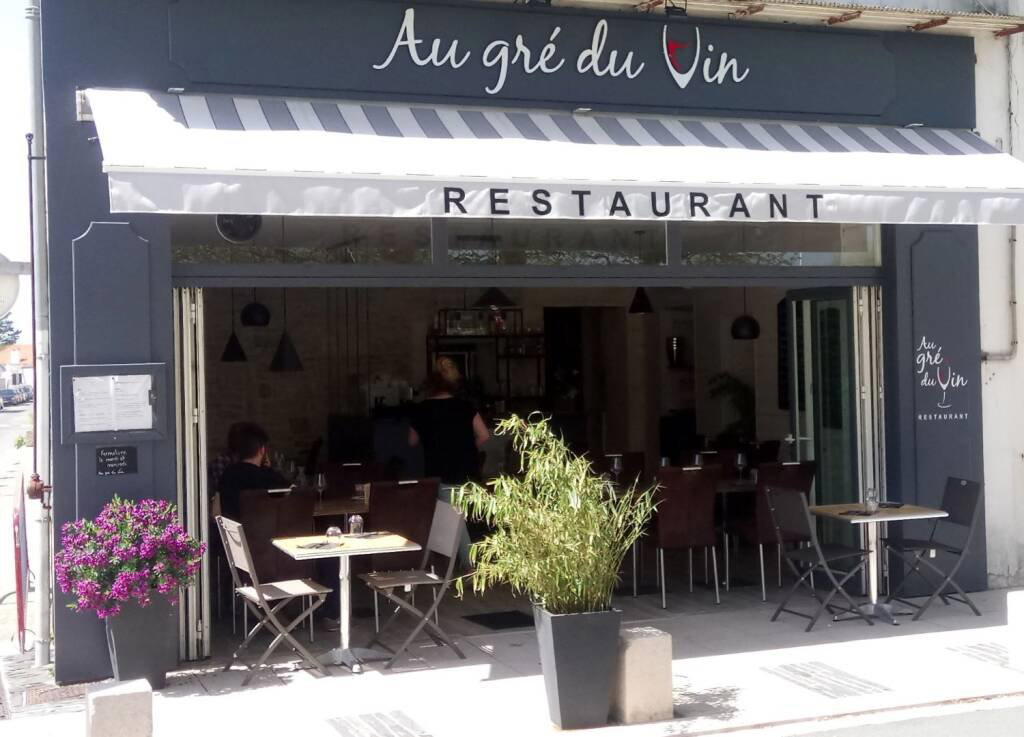
Place de la République, and What the Square Tells You
The Place de la République in Le Château-d'Oléron is not a grand set piece. It is a working Charentais square: plane trees, low morning light off the estuary, and a rhythm set by fishermen and market traders rather than tourist coaches. Addresses that anchor themselves here tend to operate on the island's own logic rather than serving imported expectations, and Au Gré du Vin is consistent with that pattern. Arriving at 1 Place de la République, you read the context before you read the menu: this is a room that earns its authority from the Atlantic geography around it, not from the conventions of destination dining.
That geographic grounding matters more on Île d'Oléron than it would in, say, a Parisian arrondissement. The island sits between the Gironde estuary to the south and the Pertuis d'Antioche to the north, a position that gives it a specific marine microclimate and access to shellfish beds, salt marshes, and coastal produce that don't travel well. Restaurants working in this register either take that provenance seriously or they don't. The name Au Gré du Vin — roughly, "as the wine leads" — signals a dining room where the bottle and the plate are expected to inform each other, which is a different proposition from the broader Charentes coast where seafood often arrives without a considered wine dimension.
Atlantic Provenance and Why Sourcing Defines This Coast
The Charente-Maritime department produces some of France's most geographically specific ingredients. Oléron oysters are cultivated in waters shaped by the mix of Atlantic saltwater and the freshwater outflow of the Charente river, giving them a minerality and iodine character distinct from Marennes-Oléron's more sheltered basins. The salt marshes at the island's southern end yield fleur de sel harvested by hand, a product that has defined coastal cooking from this region for centuries. Mussels, sea bass, cuttlefish, and the local clams known as palourdes are part of a larder that changes week by week with the tides and the season.
Restaurants on this island that work with these ingredients directly, rather than sourcing through wholesale channels that dilute geographic specificity, occupy a different tier from those running standardised menus for summer visitors. The distinction is not always visible on the plate, but it is consistently detectable in what the menu is willing to commit to and what it holds back. An ingredient-led address in this geography is making a bet that the provenance will carry the dish, and that restraint in technique will let the Atlantic character come through rather than masking it. This is the cooking philosophy that French regional cuisine has exported to a global audience through addresses like Bras in Laguiole and Auberge du Vieux Puits in Fontjoncouse, where terroir specificity is the editorial argument of the kitchen.
At the high end of French regional dining, that argument becomes a guiding discipline. Consider how Les Prés d'Eugénie in Eugénie-les-Bains or Auberge de l'Ill in Illhaeusern have built their identities around a specific geography rather than a portable style. Au Gré du Vin operates at a different scale and price point, but the underlying logic of place-anchored sourcing connects it to that tradition. The island provides the brief; the kitchen responds to it.
The Wine Dimension on an Island with Atlantic Context
The Charente region is not primarily a wine region in the way that Burgundy or Bordeaux commands immediate reference. Its most famous product is Cognac, distilled from the Ugni Blanc grape in the surrounding departments, and the local Pineau des Charentes, a fortified grape juice and Cognac blend, sits somewhere between aperitif and dessert wine depending on whom you ask. Neither is a natural pairing partner for the kind of precise Atlantic seafood cooking that the island's produce supports.
A wine-focused room on Île d'Oléron is therefore making a curatorial argument: the list will need to reach beyond the immediate geographic hinterland to find bottles that perform at the table. Loire whites, Muscadet, Sancerre, Pouilly-Fumé, are the obvious structural answer for shellfish-led cooking. Burgundy Chardonnay at various price points offers another register. The name Au Gré du Vin implies that the list has been assembled with those pairing relationships in mind, rather than defaulting to regional loyalty or generic restaurant selections. In French provincial dining, a serious wine program is often the most reliable signal that a kitchen is equally considered, because both require the same discipline of selection and restraint.
For context on how wine focus functions as a trust signal in French fine dining more broadly, the three-Michelin-star tier addresses the question definitively: Flocons de Sel in Megève, Mirazur in Menton, and Alléno Paris au Pavillon Ledoyen all treat the cellar as a structural element of the dining experience rather than an accessory to it. Au Gré du Vin does not operate in that tier, but the orientation is consistent.
How Île d'Oléron Sits in the French Atlantic Dining Picture
France's Atlantic coast has a different dining character from the Mediterranean south, where addresses like La Vague d'Or in Saint-Tropez or L'Oustau de Baumanière in Les Baux have built identities around heat, Provençal ingredient palettes, and a certain visual grandeur. The Atlantic register is cooler, more mineral, less theatrical. Oléron's restaurants draw from a larder shaped by tides and salt air rather than lavender and olive groves, and the cooking tends to follow accordingly: cleaner preparations, less fat, more acidity, a reliance on the produce to deliver the drama.
In that context, an address with a wine emphasis on the square of the island's main town is operating in a specific and relatively underserved niche. The summer visitor economy on Oléron supports plenty of casual seafood restaurants along the harbour fronts, but rooms that treat the wine list as seriously as the sourcing represent a smaller proportion of the offer. That positioning makes Au Gré du Vin a different kind of stop from the broader tourist circuit. For readers tracking comparable approaches to Atlantic-sourced French regional cooking at higher certified levels, Le Bernardin in New York offers an instructive international reference point for how Atlantic seafood provenance can anchor a serious room.
Planning Your Visit
Au Gré du Vin is at 1 Place de la République in Le Château-d'Oléron, the fortified town at the island's southern end, accessible from the mainland via the toll bridge that connects Oléron to the Charente-Maritime coast near Marennes. The square is walkable from the town's parking areas and sits adjacent to the Vauban citadel. Given that this is an island address with a focused format, visiting outside the peak July-August window will reduce competition for tables and may also reflect a more locally-sourced seasonal menu as the summer produce transitions. Our full Le Château-d'Oléron restaurants guide covers the broader island dining context for readers planning a longer stay.
For readers calibrating Au Gré du Vin against a wider field of French regional addresses with ingredient-led programs, the reference set is long and geographically spread: Troisgros in Ouches, Maison Lameloise in Chagny, Georges Blanc in Vonnas, Paul Bocuse in Collonges-au-Mont-d'Or, and La Table du Castellet each represent a distinct regional identity anchored to specific geography and ingredient provenance. Au Gré du Vin operates at a different scale, but the orientation connects it to that tradition of place-specific French cooking. For a different international register on the casual-creative end, Lazy Bear in San Francisco shows how a communal, ingredient-forward format can generate serious critical attention without formal fine-dining architecture. Le 1947 at Cheval Blanc in Courchevel marks the opposite end of the French Alpine spectrum, where ingredient sourcing operates at altitude and price points well above the Oléron register.
How Au Gré du Vin Le Chateau D Oleron compares with similar nearby venues.
| Venue | Cuisine | Price |
|---|---|---|
| Le Relais des Salines | Seafood | €€ |
| La Table du Grand Large | Modern Cuisine | €€€ |
Continue exploring
More in Le Chateau D Oleron
Restaurants in Le Chateau D Oleron
Browse all →
Bars in Le Chateau D Oleron
Browse all →
Hotels in Le Chateau D Oleron
Browse all →

At a Glance
- Cozy
- Elegant
- Date Night
- Special Occasion
- Terrace
- Extensive Wine List
- Local Sourcing
- Street Scene
Current opening hours
- Monday
- 12–1:30 PM, 7–8:30 PM
- Tuesday
- Closed
- Wednesday
- Closed
- Thursday
- 12–1:30 PM, 7–8:30 PM
- Friday
- 12–1:30 PM, 7–8:30 PM
- Saturday
- 12–1:30 PM, 7–8:30 PM
- Sunday
- 12–1:45 PM, 7–8:30 PM
Hours can change for holidays and private events. Last verified .
Chaleureux et convivial with a warm and welcoming atmosphere.
Know Before You Go
- Getting there
- 1 Pl. de la République, 17480 Le Château-d'Oléron, France