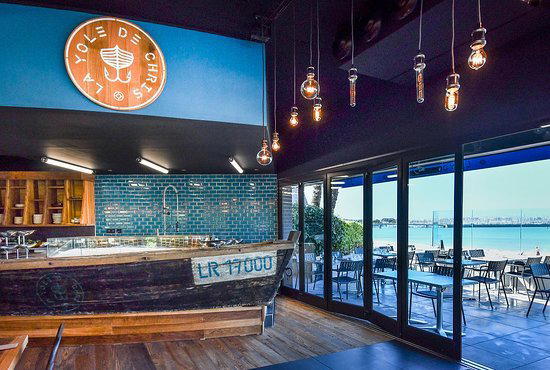
Aux Frères de la Côte serves French seafood shack cooking on a waterfront terrace in Ars-en-Ré, with moules frites and plateau de fruits de mer.
Pearl is the En Primeur Club membership app — saves, bookings, and concierge access live there. Same editors, same standards.
- Address
- 5793 Rte de la Grange, 17590 Ars-en-Ré, France
- Phone
- +33769972809
- Website
- restaurant-ile-re.fr
- Directions
- Get directions
 Saves & bookings on Pearl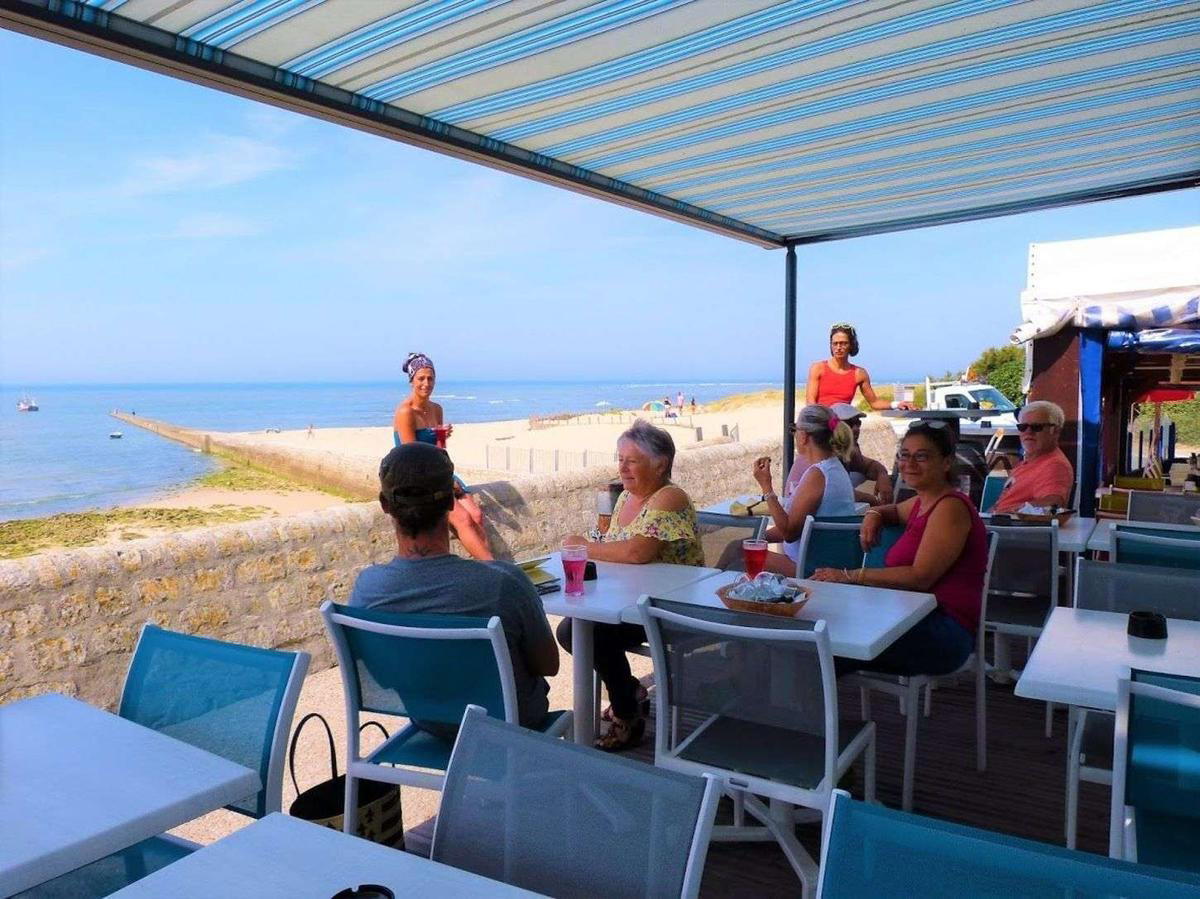
Where the Île de Ré Feeds You from the Water Up
The road to Ars-en-Ré narrows as it crosses the salt flats, and by the time you reach the village the Atlantic has made its presence known through smell before sight. Salt crystals catch the afternoon light on the marshes, oyster beds thread the inlets, and the white-and-black church tower that has served as a navigational marker for sailors for centuries presides over a village that has never fully decided whether it belongs to the land or the sea. It is in this specific geography — brackish, tidal, provisional — that Aux Frères de la Côte operates, at 5793 Route de la Grange, a short walk from the village centre.
Ars-en-Ré sits at the quieter, northern end of the Île de Ré, separated from the busier resort towns of Saint-Martin-de-Ré and La Flotte by stretches of protected marshland and vine plots. The island itself is a forty-five minute drive from La Rochelle across the toll bridge, and the distance filters out a certain kind of visitor. What remains is a dining public that tends to arrive with some intention: cyclists who have spent the morning on the coastal paths, families with a week rather than a weekend to spare, and a small contingent of Parisians who rent the same stone house every August and know exactly which table they prefer.
Sourcing on an Island with No Agricultural Hinterland
Islands impose a particular discipline on kitchens. There is no broad agricultural hinterland to draw from, no convenient motorway junction where produce trucks converge at four in the morning. What the Île de Ré offers instead is hyper-local abundance in a narrow range: oysters from the Fier d'Ars, the shallow lagoon that separates the island's northern flats from the open Atlantic; clams and cockles worked from the same tidal ground; salt harvested by hand from the marais salants that adjoin the village; and the small, sweet potatoes that the island has quietly produced for generations, benefiting from the sandy soil and the particular microclimate that the Gulf Stream provides.
This is the sourcing logic that frames the cooking at places like Aux Frères de la Côte, and it is a logic shared across the island's better tables. The Fier d'Ars oyster has a salinity and mineral character that is specific to its growing environment; served very fresh, with nothing more than their own liquor, they require no elaboration. The same argument applies to the island's sea bass and sole, which appear on local menus when available rather than on fixed schedules. Kitchens that respect this calendar do not always offer the same dish twice in the same week. That variability is a mark of quality, not inconsistency.
For a broader sense of how French restaurants build identity around regional sourcing, the approach at Bras in Laguiole and Auberge du Vieux Puits in Fontjoncouse offers instructive reference points: both have built multi-decade reputations on a refusal to source beyond their immediate territory. The ambition at Aux Frères de la Côte operates at a different register, but the underlying commitment to place as ingredient is recognisable across that tradition.
The Village Table as a French Format
There is a distinct category of French restaurant that does not fit neatly into either the destination-restaurant bracket or the casual bistro tier: the serious village table, where cooking is skilled and locally anchored, the room is unhurried, and the price point reflects geography rather than ambition. Ars-en-Ré has several examples of this format, and Aux Frères de la Côte belongs to this cohort.
The contrast with Paris or Lyon is useful here. At the top end of French formal dining, the sourcing story is often global in its ambition even when regional in its framing: a three-Michelin-star kitchen in Paris, such as Alléno Paris au Pavillon Ledoyen, draws from a network of producers that spans several regions and sometimes several countries. A village restaurant on the Île de Ré operates within tighter parameters and is better for it. The narrower the sourcing radius, the more the specific character of a place comes through on the plate.
That same principle of radical proximity informs some of France's most admired provincial rooms. Auberge de l'Ill in Illhaeusern has sustained its Michelin recognition partly by remaining inseparable from its Alsatian riverbank setting. Les Prés d'Eugénie in Eugénie-les-Bains built its identity around the thermal range of the Landes. Aux Frères de la Côte works within the same logic at a less formal register, where the tidal flats and salt marshes of the northern Ré are the primary reference point.
Visitors to Ars-en-Ré should also consider Chez Rémi and La Cabane du Fier as part of the same village dining circuit. Our full Ars-en-Ré restaurants guide maps the island's dining options across price tiers and formats.
Planning a Meal Here
Ars-en-Ré is a seasonal destination in the clearest sense: the island's population multiplies several times over between July and late August, and the village's restaurant tables fill quickly during that window. Visiting in June or September offers shorter waits and a calmer room without sacrificing the quality of local produce, which is in full supply across both shoulders of summer. The salt harvest peaks in late summer, and the oyster season runs year-round, but the broader produce calendar leans toward warmer months. Getting to Ars-en-Ré requires crossing the Île de Ré toll bridge from La Rochelle, where the TGV connects to Paris Montparnasse in approximately three hours; once on the island, the village is most easily reached by bicycle along the coastal paths or by car along the D735.
Continue exploring
More in Ars En Re
Restaurants in Ars En Re
Browse all →
Bars in Ars En Re
Browse all →
Hotels in Ars En Re
Browse all →
Wineries in Ars En Re
Browse all →
At a Glance
- Cozy
- Rustic
- Lively
- Family
- Group Dining
- Casual Hangout
- Terrace
- Waterfront
- Waterfront
Current opening hours
- Monday
- Closed
- Tuesday
- Closed
- Wednesday
- 7 AM–11:30 PM
- Thursday
- 7 AM–11:30 PM
- Friday
- 7 AM–11:30 PM
- Saturday
- 8 AM–11:30 PM
- Sunday
- 8 AM–12:30 AM
Hours can change for holidays and private events. Last verified .
Warm, laidback atmosphere with plastic chairs, well-suited for sunset aperitifs and sharing seafood platters.
Know Before You Go
- Getting there
- 5793 Rte de la Grange, 17590 Ars-en-Ré, France