Leos by Stephan Brandl

1 Michelin Star
Our verdict
Leos by Stephan Brandl holds a Michelin star in the most unlikely of settings: a four-table Stube inside a Bavarian spa hotel on the edge of the Bavarian Forest. Chef Franz Feckl delivers five- and seven-course menus built on precise technique and well-sourced ingredients, with hotel guests paying a notably lower price for the same menu.

Pearl is the En Primeur Club membership app, where members save venues, book tables and use the concierge.
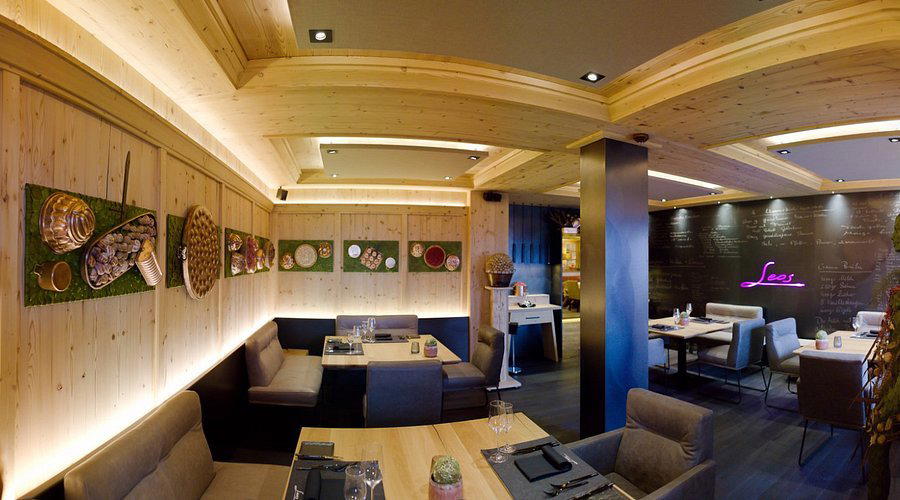
A Parlour Table in the Bavarian Forest
The Bavarian Forest is not a region that appears on most fine-dining shortlists. The towns along the Czech border draw walkers, spa weekenders, and families in search of quiet countryside, not the kind of traveller who books three months ahead for an omakase counter or compares tasting menus across city restaurants. That distance from metropolitan fine-dining culture is precisely what makes the single-star operation at the Bayerwaldhof in Bad Kötzing worth understanding on its own terms.
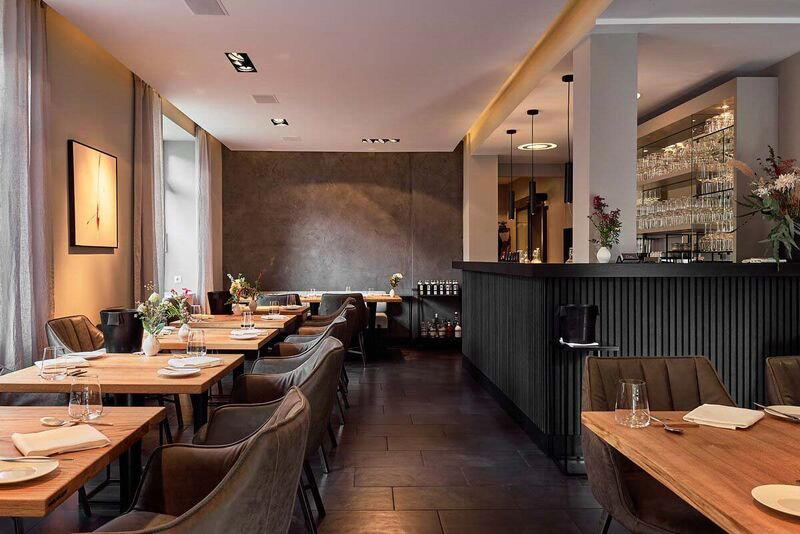
Leos occupies a small room inside the Bayerwaldhof spa hotel, overlooking the village of Liebenstein. The room reads as a modern interpretation of a Stube, the traditional Bavarian parlour format that combines wood panelling, close seating, and an atmosphere closer to a private dining room than a formal restaurant. Here, rustic wood features and original decorative touches have been edited down to something minimal rather than folkloric. Four tables. That is the entire operation. At that capacity, the room functions less like a restaurant and more like a set-piece, where service pace, dish timing, and the energy of the kitchen staff are all immediately legible to every diner simultaneously.
What the Michelin Recognition Signals
Germany's Michelin coverage extends well beyond its major cities. The 2025 guide includes starred addresses in Piesport, Dreis, Grassau, and Perl, small towns where the logic of earning and holding a star depends on consistent kitchen discipline rather than metropolitan foot traffic or a loyal urban clientele. Schanz in Piesport and Waldhotel Sonnora in Dreis are examples of that rural-star model, as is ES:SENZ in Grassau, where the Bavarian alpine context shapes both the produce and the clientele in ways that a city address cannot replicate.
Leos earned its first Michelin star in 2025, which places it at the beginning of that credentialling arc rather than at a point of long-established reputation. In the context of Classic Cuisine, a category that prioritises ingredient quality, structural clarity, and technique over conceptual novelty, that score reflects dishes that perform reliably at a high level, not just on photographable nights.
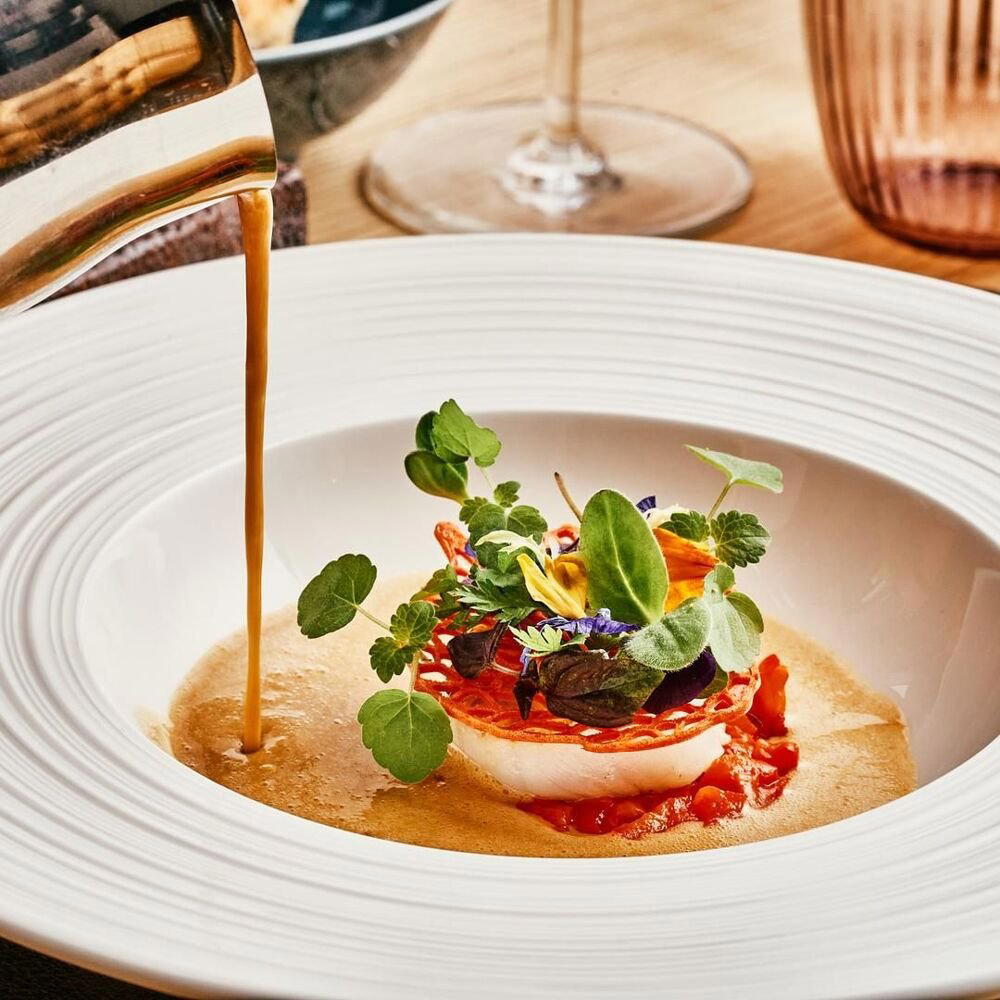
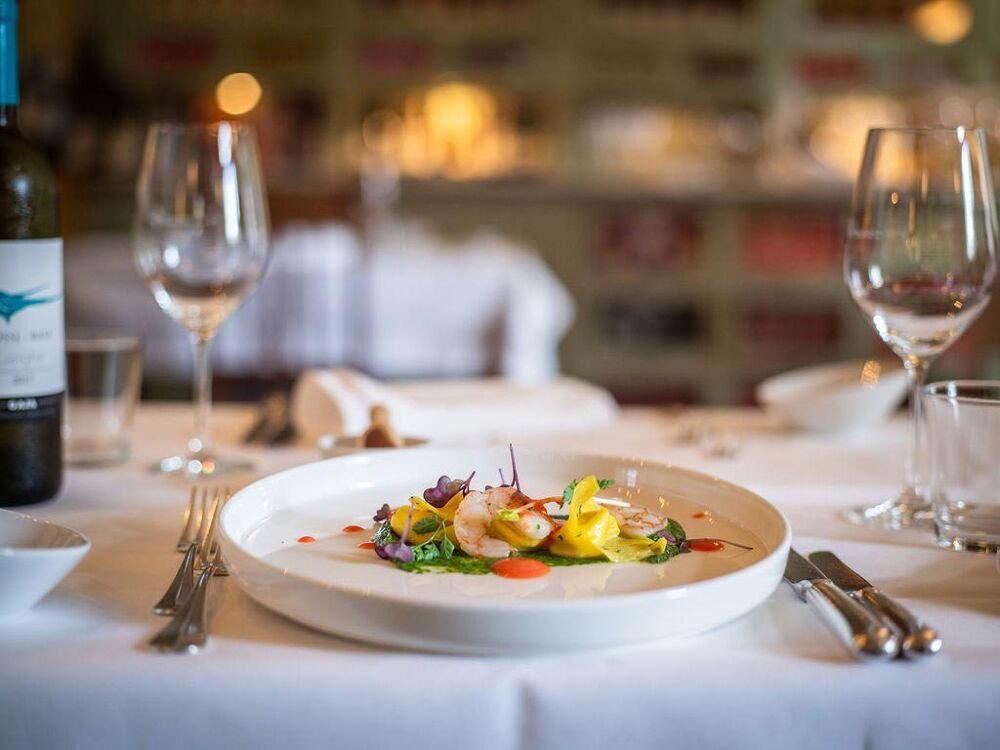
The Classic Cuisine designation matters here. The category sits at some distance from the creative-forward programs at CODA Dessert Dining in Berlin or Aqua in Wolfsburg, and even from the Modern European approach at Vendôme in Bergisch Gladbach. Classic Cuisine prioritises the integrity of the main ingredient, precise cooking, and sauces or accompaniments that support rather than redirect. The Michelin description cites a Vendée sole cooked to tenderness, served on bacon foam with onion marmalade: textbook in its structure, the kind of combination where the cooking temperature of the fish and the salinity calibration of the foam carry more weight than the concept behind the dish.
The Format and What It Demands of a Diner
The menu structure at Leos is deliberately contained. Diners choose between a five-course and a seven-course set menu, with selection points at starter, main course, and dessert. This format, common across mid-to-high tier German tasting programs, offers enough choice to feel personal while keeping the kitchen in control of ingredient procurement and preparation timing. At four tables, any deviation from that structure would introduce complexity that the room cannot absorb.
Comparison set for this format in Germany looks like Schwarzwaldstube in Baiersbronn, where Classic French technique applied to a Black Forest hotel setting has produced decades of consistent recognition, or JAN in Munich, where a city address serves a similar structural approach to a more urban clientele. Leos operates with fewer tables than almost any of its Michelin peers, which concentrates both the service quality and the attentiveness the kitchen can apply to each cover.
Wine is available by the glass, which is a practical consideration worth noting for a room this small. Couples or solo travellers dining on a weeknight do not need to commit to a bottle to drink well. The by-the-glass selection functions as a built-in flexibility mechanism in a format that otherwise runs on fixed parameters.
Chef Stephan Brandl and the Classic Cuisine Tradition
The restaurant carries Stephan Brandl's name in its title, which signals that his kitchen philosophy defines the program. The current kitchen is led by chef Franz Feckl, whose execution of Brandl's Classic Cuisine approach is what Michelin assessed and recognised. The Classic Cuisine category, as applied by Michelin in Germany and France, see Maison Rostang in Paris for a parallel reference point in the French context, represents a direct line to French culinary tradition: stocks, reductions, composed plates built around a central protein, and accompaniments that demonstrate restraint rather than accumulation.
This approach has been under pressure from more progressive formats for the better part of two decades. The continued inclusion of Classic Cuisine practitioners in Michelin guides is not nostalgia; it reflects that the technical baseline required to cook a piece of sole precisely, build a foam with correct salinity and texture, and produce an onion marmalade that reads as spicy and aromatic without overpowering the plate is high, and that the category rewards kitchens that meet it consistently. KOMU in Munich operates within a similar Classic Cuisine framework in a more urban context, offering a useful comparison for those assessing where Leos sits in the regional tier.
The Hotel Context and Its Pricing Logic
Leos sits inside the Bayerwaldhof, a spa hotel in Liebenstein. That integration shapes the economics of dining there in a direct way: hotel guests pay a substantially lower price for the same set menu. This is not unusual in the German hotel-restaurant model, comparable arrangements exist at starred hotel restaurants across Baden-Württemberg and Bavaria, but it is significant enough to affect planning decisions. For a couple or small group already considering the Bavarian Forest as a destination, building a Bayerwaldhof stay around a Leos reservation changes the price-to-experience ratio materially.
The spa hotel format also means that the dining experience is not isolated. Guests arriving for dinner from outside the hotel are stepping into a hospitality environment designed around a longer stay: the atmosphere is unhurried, the service style is described as relaxed yet efficient, and the room itself functions as an extension of the hotel's broader tone rather than as a standalone destination that happens to share a building. For those interested in the full range of what Bad Kötzing and the Bayerwaldhof area offer, our full Bad Kötzing hotels guide covers the accommodation options in detail.
Planning a Visit
Bad Kötzing is not a transit city. Getting to the Bayerwaldhof requires a deliberate decision to travel to the Bavarian Forest, which sits roughly 50 kilometres northeast of Regensburg. That geography means Leos draws a different visitor profile from city-based starred restaurants: guests are either staying at the hotel, staying nearby, or making a specific day trip from Regensburg or Straubing. The four-table capacity and the 2025 Michelin recognition will have sharpened demand, and booking ahead is the sensible approach. The price tier of €€€€, equivalent to the upper bracket across the comparison set including Victor's Fine Dining by Christian Bau in Perl and Restaurant Haerlin in Hamburg, drops significantly for hotel guests, which is the clearest practical argument for combining the meal with an overnight stay.
For those building a broader itinerary around the area, our full Bad Kötzing restaurants guide, bars guide, wineries guide, and experiences guide map the wider area. The Bavarian Forest is thin on fine-dining options at this level, which means Leos operates without direct local competition. That isolation is both its constraint and its case for visiting: in a region where the nearest equivalent program is a significant drive away, a single-star kitchen with four tables and a 4.9 public rating represents a concentration of serious cooking that the setting alone would not lead you to expect. It also puts a visit in the same bracket as dining at Bagatelle in Trier, where regional placement rather than metropolitan density defines the dining proposition.
Frequently asked questions
What does dinner at Leos by Stephan Brandl typically cost?
Pricing at Leos by Stephan Brandl is listed as €€€€.
What's Leos by Stephan Brandl's location?
Leos by Stephan Brandl is located at Hotel Bayerwaldhof, Liebenstein 25, 93444 Bad Kötzting, Germany, Bad Kötzing.
Side-by-Side Snapshot
| Venue | Cuisine | Price | Awards | Notes |
|---|---|---|---|---|
| Leos by Stephan BrandlThis venue (the venue you are viewing) | Modern German Fine Dining | $150–200 | 1 Michelin Star | Not listed |
| Schwarzwaldstube | Modern French Fine Dining | $150–200 | 3 Michelin Stars · World's 50 Best #47 | French, Classic French |
| Aqua | Contemporary German, Italian/Japanese, Creative | Not listed | Michelin 3 Star | Not listed |
| CODA Dessert Dining | Dessert-Inspired Fine Dining | $200–300 | 2 Michelin Stars · World's 50 Best #79 | Creative |
| Tantris | Modern French, French Contemporary | Not listed | Michelin 2 Star | Not listed |
| Vendôme | Modern German Haute Cuisine | $200–300 | 2 Michelin Stars · World's 50 Best #47 | Modern European, Creative |
Recognition history
Dated appearances from independent guides and award organizations, with the underlying list record or original source where available.
Michelin 1 Star
Michelin
Full recognition history (3 entries)
Michelin 1 Star
Michelin
Michelin 1 Star
Michelin
Continue exploring
More in Bad Kötzing
Restaurants in Bad Kötzing
All restaurants in Bad Kötzing →
Hotels in Bad Kötzing
Browse all →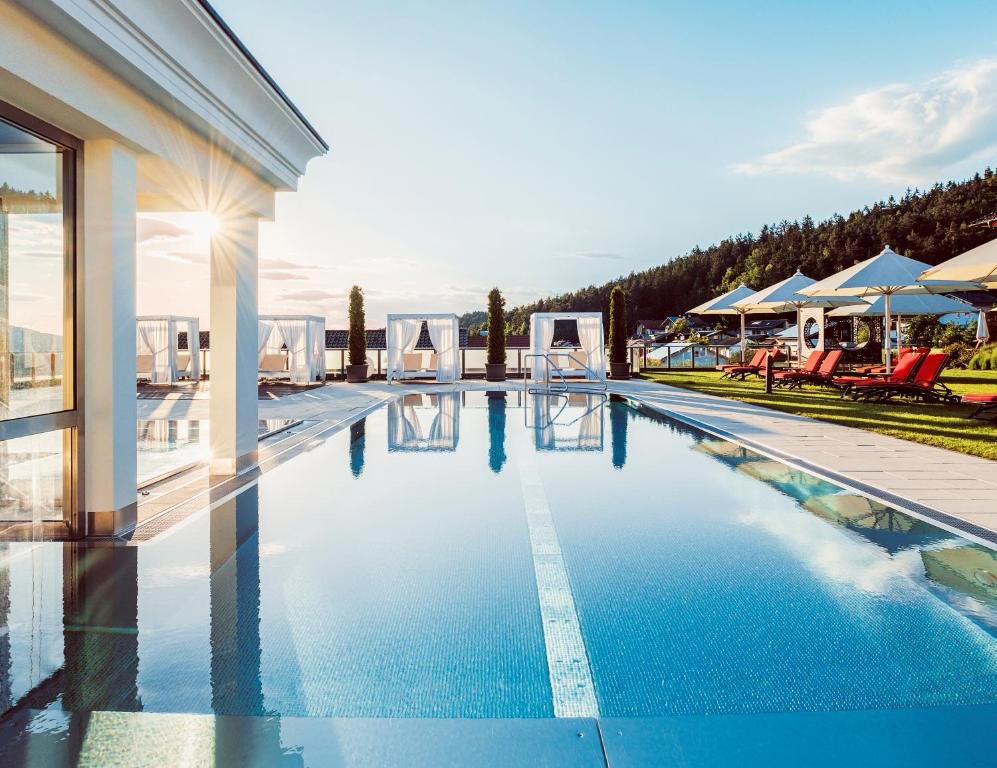
Wineries in Bad Kötzing
Browse all →
Leos by Stephan Brandl
The wine
- Extensive wine list
- Sommelier-led
Details
- Minimalist
- Elegant
- Intimate
- Cozy
- Sophisticated
- Date Night
- Special Occasion
- Hotel Restaurant
- Extensive Wine List
- Sommelier Led
- Set Menu
- Prix Fixe
- Vegetarian Friendly
Current opening hours
- Monday
- Closed
- Tuesday
- Closed
- Wednesday
- 6:30–10 PM
- Thursday
- 6:30–10 PM
- Friday
- 6:30–10 PM
- Saturday
- 6:30–10 PM
- Sunday
- Closed
Hours can change for holidays and private events. Hours as of .
High-end minimalist decor with rustic wood features, soft candlelight, and a pleasantly informal yet stylish atmosphere.