Our verdict
Leo Burdock on Werburgh Street is one of Dublin's most recognisable fish-and-chip shops, trading in the shadow of Christchurch Cathedral in a part of the city that predates the modern restaurant scene by centuries. Where Patrick Guilbaud and Chapter One represent Ireland's fine-dining conversation, Burdock anchors the other end of the spectrum: cash-friendly, counter-service, and deeply embedded in the daily life of the Liberties.

Pearl is the En Primeur Club membership app — saves, bookings, and concierge access live there. Same editors, same standards.
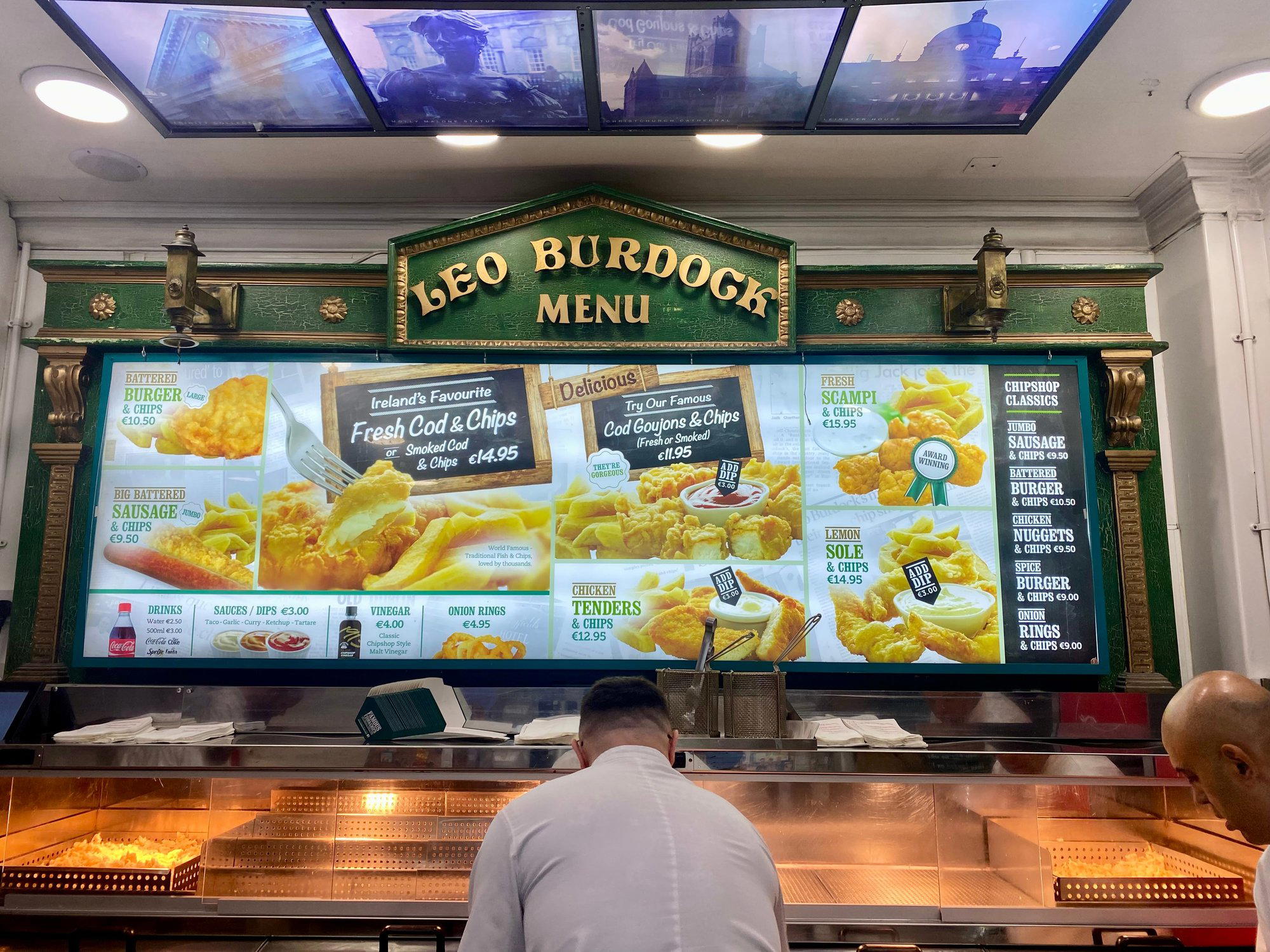
The menu
What to order
- Traditional Fresh Cod
- Fish and Chips
- Scampi and Chips
Christchurch and the Chip: Dublin's Oldest Quarter Sets the Scene
The approach to Leo Burdock on Werburgh Street puts you in one of the oldest inhabited corners of Dublin. Christchurch Cathedral rises immediately to the north, and the streets here — narrow, cobbled in patches, flanked by buildings whose foundations predate the Georgian city entirely — create a physical context that few dining addresses in Ireland can match. Where the city's fine-dining conversation happens in polished rooms in Fitzwilliam Square or the refurbished Georgian interiors favoured by restaurants like Chapter One by Mickael Viljanen and Patrick Guilbaud, Burdock operates in a different register: a counter-service chippy whose physical container is defined by function rather than design intention.
That distinction matters. Dublin's restaurant scene has, over the past decade, developed genuine ambition at its upper tiers. Bastible on South Circular Road and Glovers Alley in the Fitzwilliam Hotel belong to a cohort that has pushed Irish ingredients through a modern European lens. Leo Burdock belongs to an older, more durable category: the neighbourhood chip shop that accumulates meaning through repetition and consistency rather than through any single creative gesture. The two ends of that spectrum coexist in Dublin without much tension, which tells you something useful about how the city actually eats.
The Physical Container: Space as Function
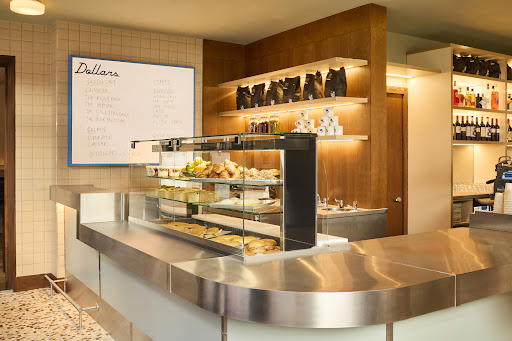
In the vocabulary of food-and-chip shops across the British Isles and Ireland, the interior is rarely the point. The queue is. At Leo Burdock, the spatial logic follows that tradition: the counter divides the space between preparation and customer, the transaction is direct and fast, and the architecture draws no attention to itself. There is no designed seating to encourage lingering. The experience is built around movement, ordering, collecting, leaving, with most eating happening outdoors, on the Cathedral steps or along the walking routes that thread through the Liberties toward Thomas Street and the Coombe.
This is, in the context of Dublin's broader dining offer, a deliberate spatial position. The city has plenty of rooms designed to hold you: the hushed dining rooms of D'Olier Street, the intimate counter formats that have grown in number as chef-led independents have proliferated. Leo Burdock's counter format predates all of that, and its refusal to evolve toward a more designed experience is itself a kind of editorial statement about what it is and whom it serves.
Fish and Chips in the Irish Context
The fish-and-chip shop arrived in Ireland as part of the broader late-Victorian expansion of the format across the British Isles, carried largely by Italian immigrant communities who established chippies in Dublin, Belfast, Cork, and Limerick through the late nineteenth and early twentieth centuries. Burdock's place on Werburgh Street situates it in the Liberties, Dublin's oldest working-class quarter, where food traditions have always been shaped by proximity to the markets of Thomas Street and the Coombe.
Within the Irish dining context, the chip shop occupies a distinct cultural register. It is not the pub, which carries its own complex social architecture. It is not the restaurant, with its performance of occasion. It is the most transactional and democratic form of eating out that the city has: available without reservation, priced for everyday use, and indifferent to the hour or the weather. For visitors arriving from cities where fish-and-chip quality varies wildly, from the strong regional traditions of Yorkshire and the Scottish northeast to the more uneven output of American fish-and-chip operations, Dublin's better chippies, of which Burdock is the most discussed in the Liberties, represent a relatively consistent execution of the form.
Across Ireland more broadly, the dining conversation has moved considerably in the past fifteen years. Aniar in Galway and Campagne in Kilkenny have each built serious reputations around Irish produce treated with care and technique. The west Cork scene, anchored by places like Chestnut in Ballydehob and dede in Baltimore, has drawn international attention to what Irish ingredients can do in skilled hands. Liath in Blackrock, Bastion in Kinsale, and Homestead Cottage in Doolin each represent the kind of focused, place-specific cooking that has given Irish food a credibility it did not always have. Leo Burdock sits entirely outside that conversation, which is precisely what defines its position in the city's eating life.
Locating Burdock in the Wider Dublin Map
Werburgh Street sits roughly equidistant between Dublin Castle and the Guinness Storehouse, which means it falls on one of the city's most-walked visitor routes. The footfall here is a mix of Dubliners cutting through from the Liberties toward the city centre and tourists working through the medieval quarter. That dual audience has always characterised the better-known chip shops in city centres across Ireland and Britain: they are simultaneously local institutions and visitor landmarks without attempting to be either.
For anyone moving between the historic core and the more contemporary dining options south of the Liffey, Burdock functions as a natural pause. The cathedral steps provide a ready eating surface, the Cathedral quarter has enough pedestrian life to make standing and eating comfortable, and the transaction time at the counter is short enough that the whole stop rarely exceeds fifteen minutes. This is a meaningfully different experience from booking a tasting menu at The Oak Room in Adare or planning ahead for The Morrison Room in Maynooth, and that difference is the point.
For a broader map of where Leo Burdock sits relative to Dublin's full restaurant spectrum, our full Dublin restaurants guide covers the city from counter-service to tasting-menu formats. Internationally, the democratic-access model at Burdock has loose parallels with counter-format institutions in other cities: the pre-theatre counter culture at Le Bernardin in New York City operates at an entirely different price and formality tier, while Lazy Bear in San Francisco and Terre in Castlemartyr represent the opposite end of the format spectrum, where fixed seatings and pre-purchased tickets define the experience. The chip shop counter is the furthest possible point from both.
Planning Your Visit
Leo Burdock is a walk-in operation, no booking, no reservation system, no requirement to plan ahead. The address is 2 Werburgh Street, immediately south of Christchurch Cathedral in the Dublin 8 postal district, and it is reachable on foot from Dame Street in under ten minutes. The queue dynamic at lunchtime and early evening moves quickly by the standards of counter service. Cash has historically been the working currency of Dublin chippies, though payment norms across the city have shifted post-pandemic; arriving with cash remains the lower-friction option. The immediate surroundings are easily walked, and the Cathedral grounds provide space to eat outdoors when weather allows.
Frequently asked questions
Where do I go for Leo Burdock?
Leo Burdock is located at 2 Werburgh St, Christchurch Pl, Dublin, D08 HC82, Ireland, Dublin.
Where exactly is Leo Burdock located in Dublin, and why does the location matter?
Leo Burdock sits at 2 Werburgh Street, Christchurch Place, Dublin D08 HC82, directly adjacent to Christchurch Cathedral in one of the city's oldest continuously inhabited neighbourhoods. The address places it roughly between Dublin Castle and the Guinness Storehouse, positioning it on a corridor walked by a significant portion of Dublin's visitors. For anyone moving between the Viking-era city core and the Liberties, it is a natural stop without a detour.
What do regulars order at Leo Burdock?
The core order at Leo Burdock follows the established Irish chippy template: battered cod or ray served with chips. Optional extras such as battered sausages and sauces round out the menu. The format is counter service at 2 Werburgh Street, so orders are placed and collected at the counter with no table component involved.
Can I walk in to Leo Burdock?
Yes. Leo Burdock at 2 Werburgh Street, Christchurch Place operates entirely on a walk-in basis. There is no booking system and no reservation requirement. The queue, not the reservation list, is the mechanism — consistent with the counter-service chippy format across Ireland.
What is Leo Burdock known for?
Leo Burdock is one of Dublin's most recognisable fish-and-chip shops, trading from a counter on Werburgh Street immediately beside Christchurch Cathedral. Its location in one of the city's oldest quarters, combined with a no-frills, walk-in counter format, has made it a consistent reference point in conversations about traditional Dublin takeaway culture.
The Quick Read
| Venue | Cuisine | Price | Awards | Notes |
|---|---|---|---|---|
| Leo BurdockThis venue — the venue you are viewing | Traditional Irish Fish & Chips | $10–20 | Not listed | Not listed |
| Patrick Guilbaud | Modern French Fine Dining | $150–200 | 2 Michelin Stars · La Liste Top Restaurants | Irish - French, Modern French |
| Bastible | Modern Irish | $100–150 | 1 Michelin Star · The Sunday Times Ireland’s 100 Best Restaurants | Modern Cuisine |
| Host | Modern Italian | $50–100 | Michelin Plate | Nordic, Modern Cuisine |
| mae | Modern Irish Fine Dining | $50–100 | Michelin Plate · The Sunday Times Ireland’s 100 Best Restaurants | Southern, Modern Cuisine |
| Matsukawa | Authentic Edomae Omakase | $100–150 | Michelin Plate · La Liste Top Restaurants | Kaiseki, Japanese |
Continue exploring
More in Dublin
Restaurants in Dublin
All restaurants in Dublin →
Bars in Dublin
All bars in Dublin →
Details
- Classic
- Well Known
- Rustic
- Casual Hangout
- Late Night
- Historic Building
- Local Sourcing
- A La Carte
Current opening hours
- Monday
- 12–10:30 PM
- Tuesday
- 12–10:30 PM
- Wednesday
- 12–10:30 PM
- Thursday
- 12–10:30 PM
- Friday
- 12–10:30 PM
- Saturday
- 12–10:30 PM
- Sunday
- 12–10:30 PM
Hours can change for holidays and private events. Last verified .
No-frills, super small shop with a casual, historic fish and chips atmosphere.