


Michelin Plate · Guía Repsol 1 Sol
Our verdict
Inside Hotel Puente Romano, Leña Marbella is the Costa del Sol outpost of Dani García's asador concept, grilling premium beef cuts over Josper embers alongside yakipinchos and a tableside Caesar Salad. Holding a Michelin Plate and ranked in Opinionated About Dining's Casual Europe list since 2023, it sits at the intersection of Spanish fire-cooking tradition and the resort-facing international crowd that defines Marbella's upper dining tier.

Pearl is the En Primeur Club membership app — saves, bookings, and concierge access live there. Same editors, same standards.
- Address
- Hotel Puente Romano, Av. Bulevar Príncipe Alfonso de Hohenlohe, s/n, 29602 Marbella, Málaga, Spain
- Phone
- +34 952 76 42 52
- Hours
- Daily 1 PM–2 AM
- Website
- lenarestaurants.com
- Directions
- Get directions
- Booking
- Book on CoverManager
The menu
What to order
- Yakipinchos
- Mini hamburgers
- Ribeye
- Tarte di rose
Fire, Steel, and the Resort Dining Room
The asador format has deep roots in Spanish cooking, particularly in the Basque Country and Castile, where the ritual of fire, aged beef, and minimal intervention defines the meal. What happens when that tradition migrates to the Costa del Sol, installs itself inside one of Europe's most recognized resort hotels, and gets filtered through a chef with three former Michelin stars and an international expansion agenda? The result is Leña Marbella, a restaurant that operates at the meeting point of two distinct dining cultures: the serious Spanish meat-cooking tradition and the resort-facing international room that Marbella demands.
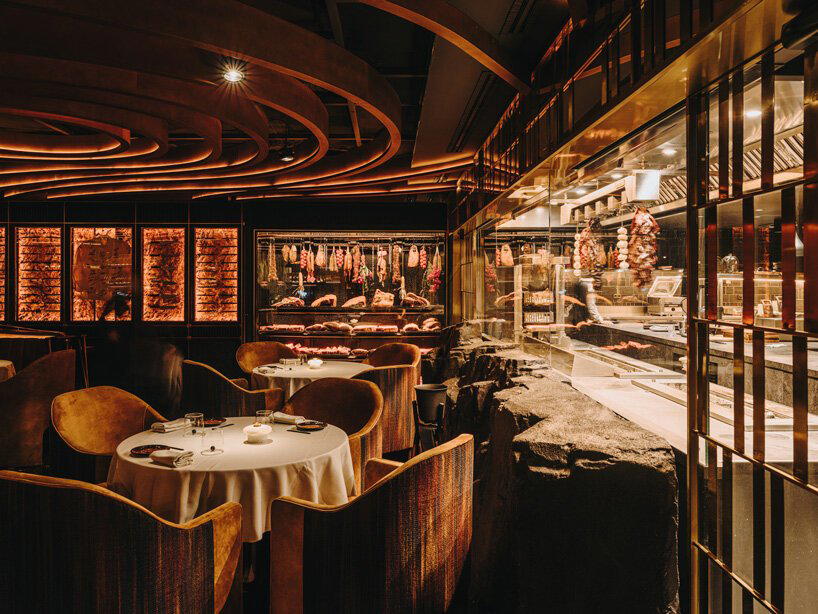
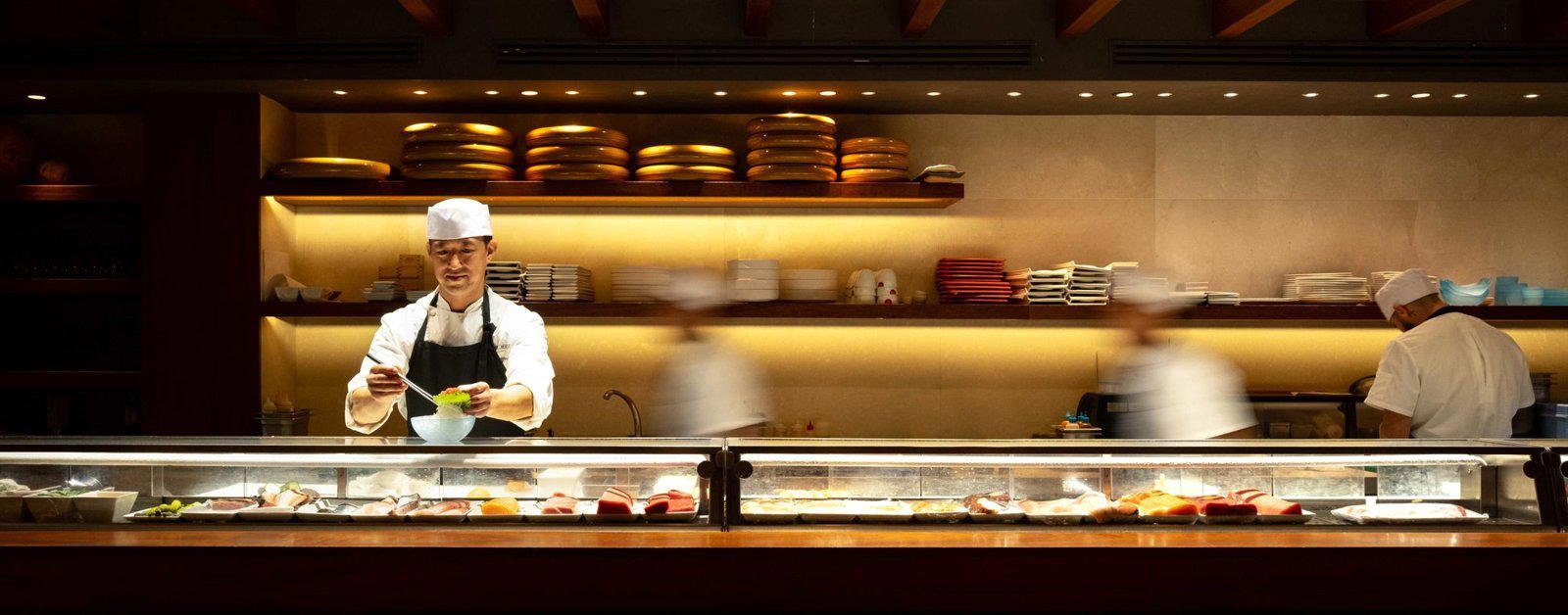
Seated inside Hotel Puente Romano on the Bulevar Príncipe Alfonso de Hohenlohe, the space reads as a deliberate theatrical statement. The restaurant's design vocabulary foregrounds the grill itself — Josper ovens and live-fire equipment are not hidden infrastructure here but visible focal points that anchor the room's aesthetic logic. The Josper, a closed-charcoal oven-grill hybrid, produces a controlled smoke environment that distinguishes its output from open-flame parrilla cooking, and the smoke that drifts through the dining room functions as both sensory signal and brand promise. In a hotel context where kitchens are routinely invisible, making the fire architecture central to the interior arrangement is a considered spatial choice.
The Physical Container
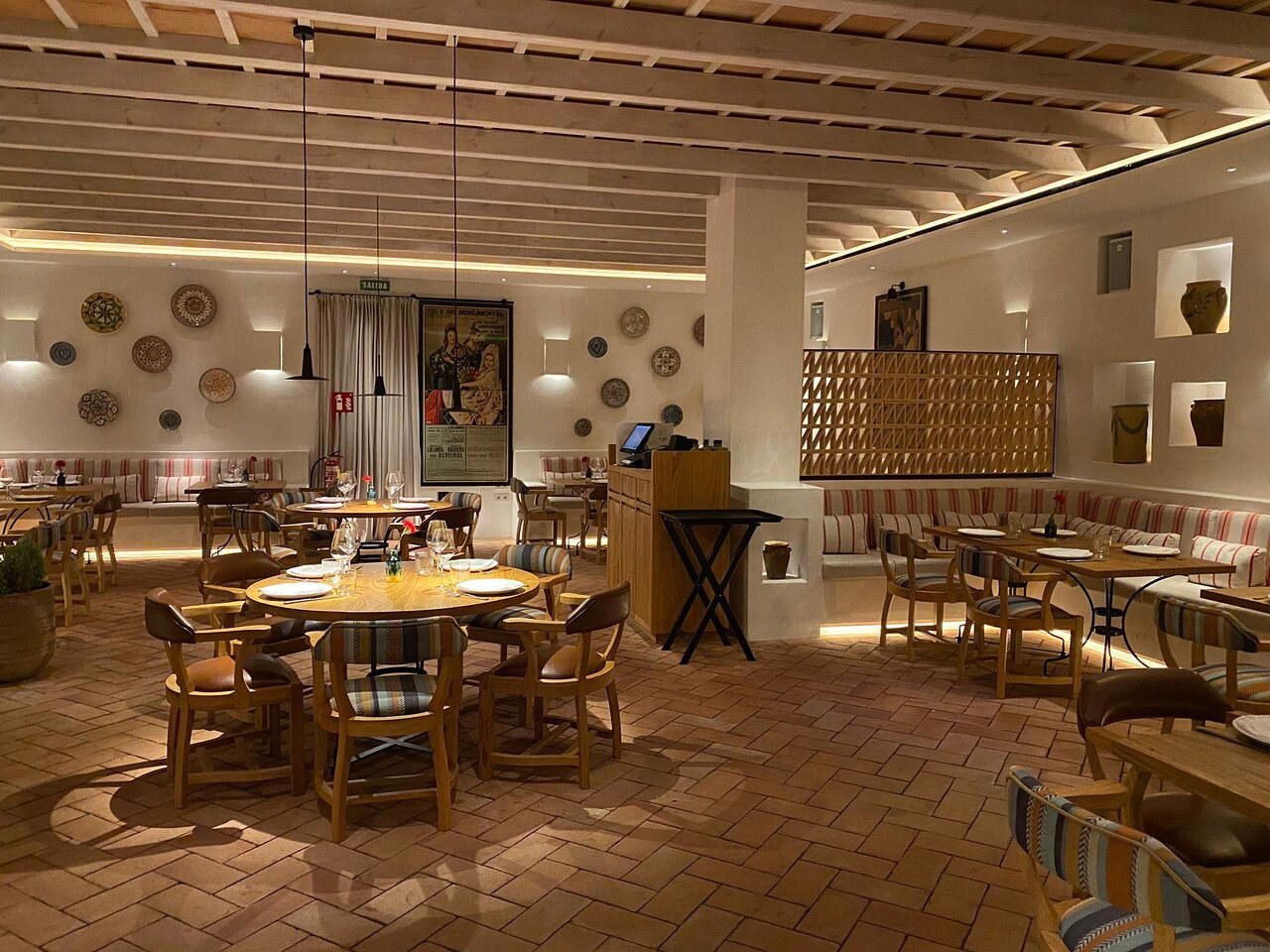
Spanish asadores traditionally occupy no-frills spaces: tiled walls, communal tables, functional lighting. Leña operates by deliberate contrast. The Puente Romano setting already carries a resort formality, and the interior of Leña Marbella layers in an international design register that speaks to the restaurant's twin outposts in Madrid and Dubai. The concept is consistent across all three locations, which means the Marbella room shares a design DNA built for cross-market legibility — a space a Dubai or Madrid regular would read immediately, without needing to recalibrate expectations.
The seating arrangement reflects this. Rather than the communal wooden bench culture of a traditional Basque asador, the room is configured for the €€€ resort crowd: tables spaced for privacy, service routes that accommodate elaborate tableside preparation, and a visual rhythm centered on the meat display and grill station. The knives, sourced from multiple origins and presented as objects of interest, reinforce the idea that the tools of fire-cooking are as worth displaying as the food itself. It is a design position that places Leña closer to the premium steakhouse genre internationally than to the unadorned Basque txoko.
What the Menu Is Actually Doing
The menu's architecture tells a clear story about the venue's positioning. Premium beef cuts, Tomahawk, T-bone, Txuleta, are the central offering, sourced from select breeds and aged to specifications that align with the upper tier of Spanish meat-cooking. The Txuleta in particular anchors Leña to Basque asador tradition: these thick bone-in ribeyes, typically from older Rubia Gallega or similar heritage cattle, require sourcing discipline and technical confidence in fire management. Their presence on a Marbella resort menu signals that the kitchen is working to a set of standards derived from that tradition, not simply importing its vocabulary.
Yakipinchos represent the most unconventional element: an adaptation of Japanese yakitori applied to Spanish ingredients and grilling context. In a dining scene where cross-cultural borrowing is common, the specific choice of yakitori structure, small skewers, intense heat, precise timing, maps coherently onto the ember-cooking logic already driving the menu. The concept has twin outposts in Madrid, where asador culture already has deep roots, and in Dubai, a market where international premium formats must travel well. The yakipinchos survive that translation intact.
Tableside Caesar Salad deserves specific mention, not as novelty but as format signal. Tableside preparation in a Spanish context carries associations with classic European resort dining, and the claim to the "real" Caesar Salad, prepared in front of the guest with slices of aged beef, is a confident piece of menu positioning. It frames the kitchen as historically aware while integrating the beef program into a course that would typically be entirely separate from the grill.
Where Leña Sits in Marbella's Dining Tier
Marbella's dining scene at the €€€ level is occupied by several strong competitors. Messina operates in the creative register; Nintai holds the Japanese position; Andala Marbella covers Andalusian tradition. At €€€€, Skina occupies the seasonal fine-dining slot. BACK offers a modern cuisine alternative. Leña's asador positioning means it competes less directly with any of these and more directly with the broader category of premium fire-cooking, a category that has expanded significantly across Spain over the past decade.
Nationally, the asador format's prestige endpoints are well established. The Basque Country has anchored that tradition for generations, and operations like Almansa · Pasión & brasas in Seville represent how the format has traveled into Andalusia. Spain's broader fine-dining constellation, from Aponiente in El Puerto de Santa María to Arzak in San Sebastián, DiverXO in Madrid, El Celler de Can Roca in Girona, Quique Dacosta in Dénia, and Azurmendi in Larrabetzu, operates in a separate register entirely, but it frames the wider ambition of Spanish cooking that Dani García's work sits within.
On recognition metrics, Leña Marbella holds a Michelin Plate (2024 and 2025) and has been ranked in Opinionated About Dining's Casual Europe list across three consecutive years, moving from Recommended (2023) to #658 (2024) to #773 (2025). The OAD ranking fluctuation is worth noting: the list measures expert surveyor consensus, and movement within it reflects changing relative scores across a large field rather than a decline in absolute quality.
Planning a Visit
Leña Marbella opens daily from 1 pm through 1 am, a schedule that accommodates both early lunch sittings and the late dinner rhythm that defines summer in Marbella. The hotel address, Puente Romano on the Bulevar Príncipe Alfonso de Hohenlohe, places it in the established resort corridor west of the old town, accessible by taxi from the centro in under ten minutes. For guests staying at Puente Romano, the restaurant is on-property. The price range sits at €€€, in line with comparable premium asador formats across Spain. For more options across the city, see our full Marbella restaurants guide, along with guides to Marbella hotels, Marbella bars, Marbella wineries, and Marbella experiences.
Frequently asked questions
Is Leña Marbella expensive?
Pricing at Leña Marbella is listed as €€€.
A Quick Peer Check
A small set of peers for context, based on recorded venue fields.
| Venue | Cuisine | Price | Awards | Notes |
|---|---|---|---|---|
| Leña MarbellaThis venue — the venue you are viewing | Modern Grill by Dani García | $50–100 | Michelin Plate · Guía Repsol 1 Sol | Not listed |
| Skina | Modern Andalusian Fine Dining | Not listed | 2 Michelin Stars · La Liste Top Restaurants | Seasonal Andalusian, Modern Cuisine |
| Areia | Mediterranean-French-Spanish Fine Dining | $50–100 | Michelin Plate · Guía Repsol 1 Sol | Farm to table |
| La Milla Marbella | Modern Mediterranean Seafood | Not listed | Michelin Plate · Macarfi 8.5 Food Rating | Spanish, Seafood |
| TA-KUMI | Modern Japanese Omakase & Fusion | $50–100 | Michelin Plate · Macarfi 8.2 Food Rating | Japanese |
| Kava | Modern Mediterranean Tasting Menu | $50–100 | Michelin Plate · Guía Repsol 1 Sol | Modern Spanish, Modern Cuisine |
Recognition history
Dated appearances from independent guides and award organizations, with the underlying list record or original source where available.
Michelin Plate
Michelin
Guía Repsol 1 Sol
Guía Repsol
Opinionated About Dining Casual in Europe Recommended
Opinionated About Dining
Full recognition history (8 entries)
Michelin Plate
Michelin
Opinionated About Dining Casual in Europe Ranked #773
Opinionated About Dining
Michelin Plate
Michelin
Opinionated About Dining Casual in Europe Ranked #658
Opinionated About Dining
Opinionated About Dining Casual in Europe Recommended
Opinionated About Dining
Continue exploring
More in Marbella
Restaurants in Marbella
Browse all →
Bars in Marbella
Browse all →

Hotels in Marbella
Browse all →

Details
- Elegant
- Sophisticated
- Lively
- Trendy
- Date Night
- Special Occasion
- Group Dining
- Open Kitchen
- Terrace
- Hotel Restaurant
- Extensive Wine List
- Local Sourcing
- Waterfront
- A La Carte
- Small Plates
- Wine
- Vegetarian Friendly
Current opening hours
- Monday
- 1 PM–2 AM
- Tuesday
- 1 PM–2 AM
- Wednesday
- 1 PM–2 AM
- Thursday
- 1 PM–2 AM
- Friday
- 1 PM–2 AM
- Saturday
- 1 PM–2 AM
- Sunday
- 1 PM–2 AM
Hours can change for holidays and private events. Last verified .
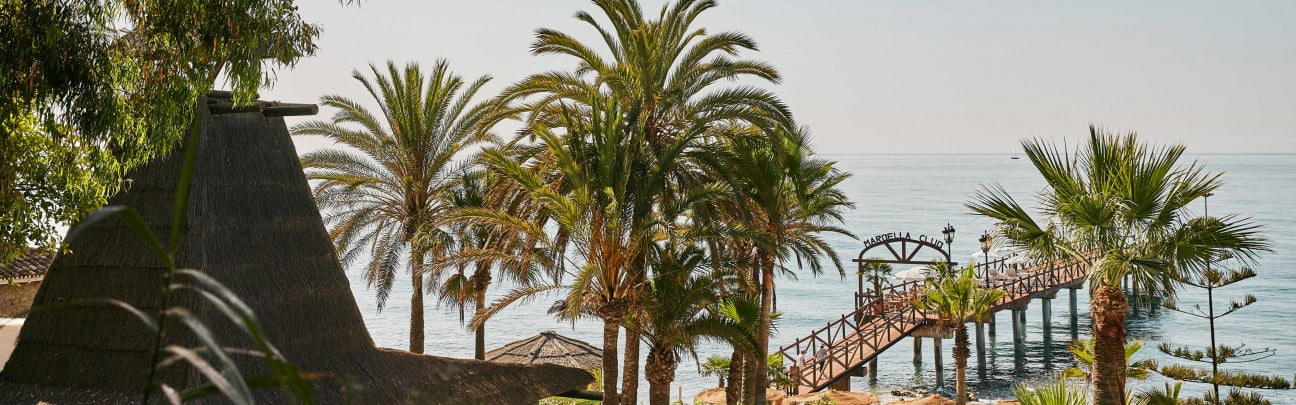
Elegant with moody lighting, sculptural textures, open-kitchen theatre inside, and lively terrace atmosphere with sea views and people-watching.