



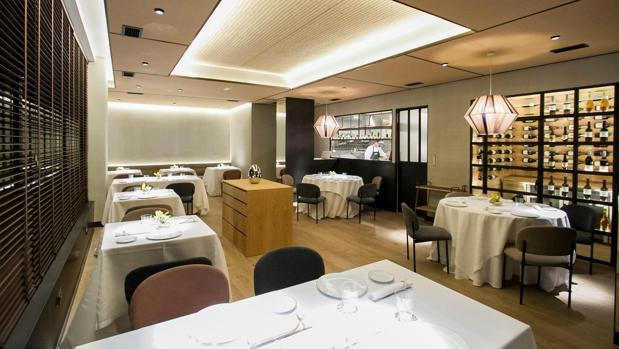
Messina holds a Michelin star on Marbella's Avenida Severo Ochoa, where chef Mauricio Giovanini works a cuisine built on the liquid essence of ingredients, pure juices, concentrates, and natural thickening agents that pull flavour into sharp focus. The kitchen opens onto the dining room, and a four-seat Chef's Table offers dishes unavailable to the main room. Sommelier Pía Ninci runs a wine program that matches the technical ambition of the food.
Pearl is the En Primeur Club membership app — saves, bookings, and concierge access live there. Same editors, same standards.
- Address
- Av. Severo Ochoa, 12, 29603 Marbella, Málaga, Spain
- Phone
- +34 952 86 48 95
- Website
- restaurantemessina.com
- Directions
- Get directions
 Saves & bookings on Pearl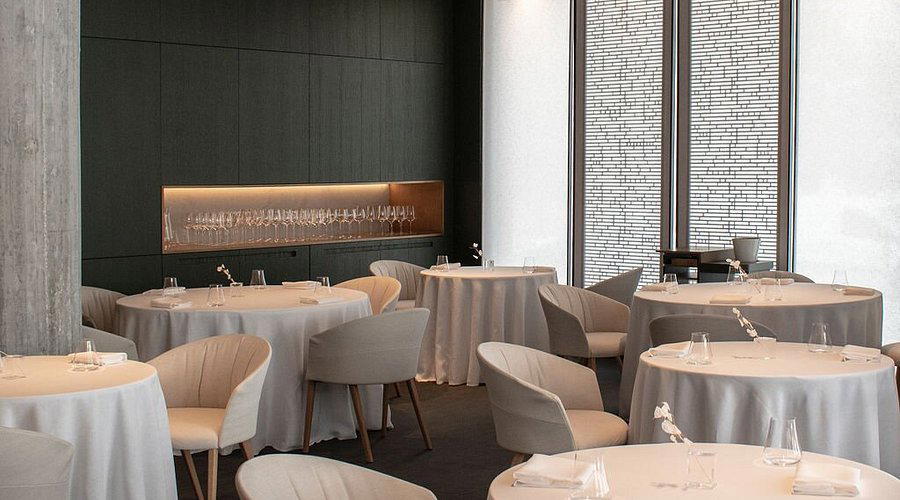
Where Marbella's Creative Dining Finds Its Sharpest Edge
The Costa del Sol has spent decades building a reputation for volume: beachfront paella, sunset cocktails, and hotel dining rooms sized for resort crowds. Against that backdrop, the format that Messina occupies on Avenida Severo Ochoa reads as a deliberate counterpoint. The dining room is compact and considered, the kitchen visible from the tables, and the Chef's Table, a four-seat enclave that receives dishes the main room never sees, signals immediately that this is a place structured around precision rather than throughput. The 2024 Michelin star confirms what the format already implies: this is a technically focused creative kitchen.
Spain's creative cooking tradition runs deep, from Arzak in San Sebastián and El Celler de Can Roca in Girona to DiverXO in Madrid and Aponiente in El Puerto de Santa María. What those kitchens share is a commitment to working through a defined technical lens rather than simply applying classical technique to good ingredients. Messina belongs to that same philosophical current, even if its address, a commercial strip in southern Andalusia rather than a Basque farmhouse or a Catalan town, places it outside the obvious creative-dining geography. The Michelin star places it among Andalusian restaurants earning recognition for structured creative cooking: Skina, Marbella's other starred address, works seasonal Andalusian produce through a different but equally rigorous lens, and the two sit at the summit of a local market that otherwise skews toward approachable Spanish and seafood formats.
The Technical Premise: Flavour as Liquid
The organising idea behind the kitchen at Messina is not decorative. Chef Mauricio Giovanini, who trained beyond his Argentinian roots to develop a cross-continental approach drawing on both European and Latin American cuisines, built the menu around a specific observation: that the concentrated liquid essence of an ingredient, its pure juice, its reduction, its distillate, carries more of that ingredient's identity than the solid form alone. The practical result is a cooking style that foregrounds concentrates, pure juices, and their derivative forms (creams, reductions, infused liquids) as primary flavour vehicles rather than as finishing flourishes.
More recently the kitchen has moved toward natural thickening agents, a technical evolution that shifts texture without masking the liquid clarity the concept depends on. The result is food that sits in a different register from the Andalusian produce-driven cooking that defines much of the region's fine dining. Where a kitchen like Andala Marbella foregrounds regional ingredient identity, Messina foregrounds what those ingredients yield under pressure and extraction. It is a meaningful distinction, not a stylistic one, and it explains why the kitchen has its own R&D; space, InsIDe Messina, where the extraction and thickening work is developed before it reaches the menu.
InsIDe Messina functions as a multi-purpose laboratory and development space, and it is available to book as a separate experience for guests who want to observe or participate in the technical process behind the food. The transparency has a purpose: it extends the restaurant's argument, that technique is the subject, not just the means, into a bookable format.
The Wine Program and the Logic of Pairing
The wine program at Messina is directed by Pía Ninci, who manages both the cellar and the front-of-house operation. The combination of responsibilities is more coherent than it might appear: in a restaurant where the cooking is built around liquid extraction and concentrate clarity, the person who controls service flow also controls how the wine arrives at the table relative to each course. That integration matters when the food presents flavours in concentrated, unfamiliar forms.
The creative cooking tradition in Spain has produced particularly demanding pairing contexts in European dining. At Quique Dacosta in Dénia, Azurmendi in Larrabetzu, and Alléno Paris au Pavillon Ledoyen, the sommelier's role has expanded from selection to active structural participation in the meal's progression. A food philosophy built around liquid essence and concentrate places similar demands on whoever is selecting wines: the pairing has to account for flavour intensity and extraction in the food, not just its category or region. The cellar at this price tier should reflect that. Ninci's dual role positions the wine program as architecturally connected to the food, rather than as a separate service layer.
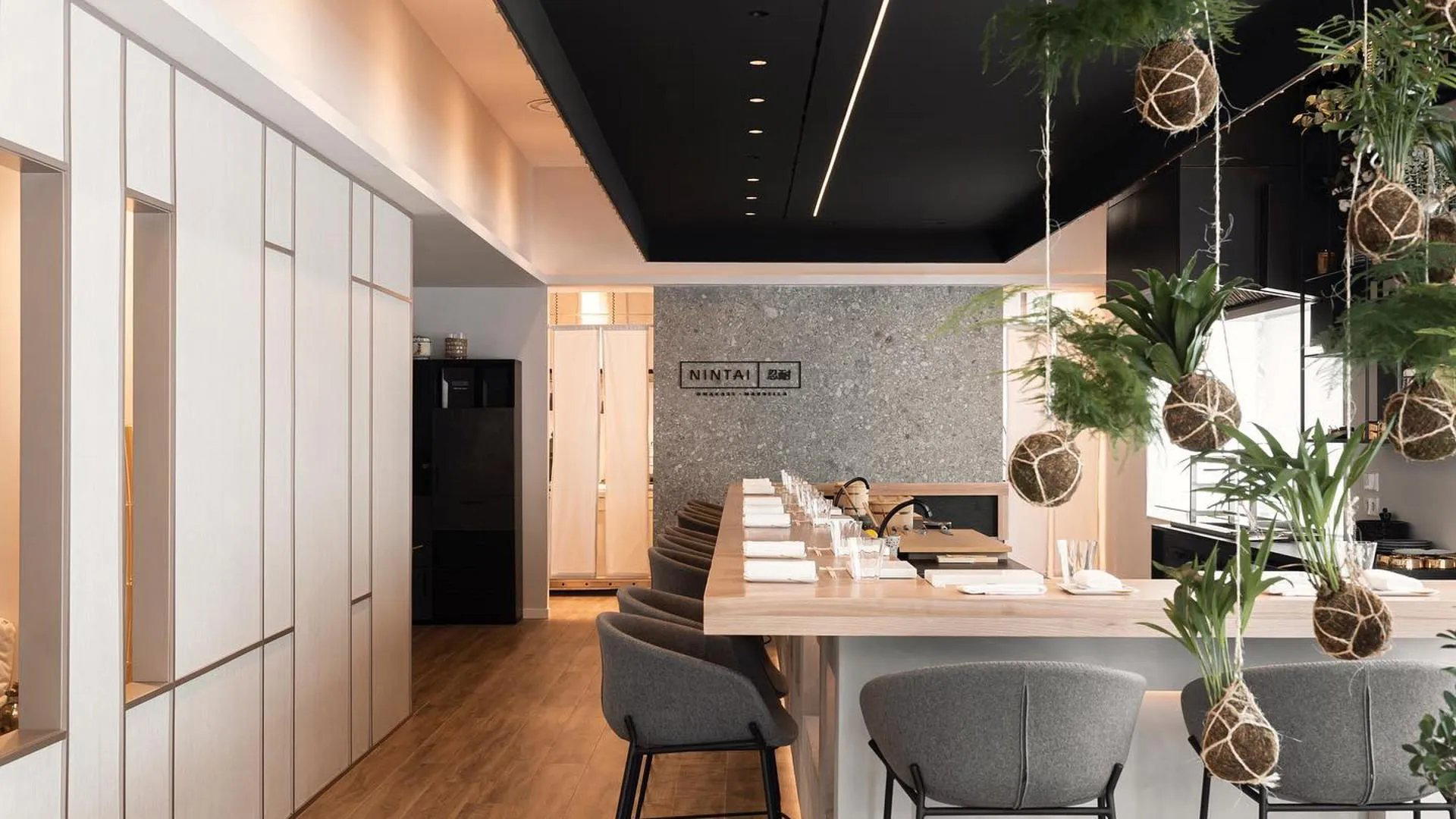
For comparison, the broader Marbella dining scene at the €€€€ level is small. Skina is the peer, and the two restaurants are not competing for the same guest on the same night so much as defining between them what serious dining in Marbella looks like. Below that tier, formats like BACK and Nintai offer modern cooking with different scope and price points. The wine investment expected at Messina is calibrated to the Michelin-starred creative tier, not to the broader Costa del Sol casual market.
The Chef's Table Format
The four-seat Chef's Table at Messina is an instructive detail. In the broader context of European creative dining, at Enrico Bartolini in Milan, for instance, or at the technical end of London's tasting-menu circuit, the chef's table has become a mechanism for serving food that is either too time-intensive, too prototype-stage, or too small-batch for the main room. At Messina, the explicit statement is that the Chef's Table receives dishes unavailable elsewhere in the restaurant. This is not a marketing distinction: it reflects genuine operational logic. When your core technique involves extracting and concentrating the essence of ingredients, some preparations produce quantities too small to scale across a full dining room. The Chef's Table exists, in part, to serve that work.
Booking the Chef's Table is therefore a different decision from booking the main room, one that carries different expectations about the scope and pace of the meal. Guests who want the full technical range of the kitchen's current work should orient toward that format.
Getting There and Planning Your Visit
Messina sits on Avenida Severo Ochoa in the commercial zone of Marbella's urban core, a short distance from the old town and readily accessible from the main hotel corridors along the Golden Mile. The service week runs Tuesday through Saturday for both lunch (1:30 to 2:30 PM, one sitting) and dinner (7:00 to 10:00 PM, with Saturday dinner starting at 7:30 PM). Sunday and Monday are closed. The lunch window is narrow, a single hour, so arrival on time is not a courtesy, it is a structural requirement. At the €€€€ price point, this is a full-commitment meal, not a drop-in; the format assumes a dedicated block of time in both directions.
Marbella's broader dining scene, from Candeal to the seafood and Asador formats lower in the price tier, gives the city more range than its beach-resort reputation implies. The Michelin recognition at Messina is part of a pattern in which Andalusian coastal towns have begun to develop serious creative dining infrastructure.
Cuisine and Awards Snapshot
Comparable venues nearby, for context on price, style, and recognition.
| Venue | Cuisine | Price | Awards | Notes |
|---|---|---|---|---|
| MessinaThis venue — the venue you are viewing | Modern Mediterranean Fine Dining | $$$$ | Michelin 1 Star | Not listed |
| BACK | Modern Andalusian Tapas | $$$$ | Michelin 1 Star | Marbella |
| Nintai | Michelin-Starred Japanese Omakase | $$$$ | Michelin 1 Star | Marbella center |
| Erre & Urrechu | Grilled Mediterranean with Northern Spanish Influence | $$$$ | Michelin Plate | Not listed |
| La Milla Marbella | Modern Mediterranean Seafood | $$$ | Michelin Plate | Nagüeles |
| Leña Marbella | Modern Grill by Dani García | $$$$ | Michelin Plate | Golden Mile |
Recognition history
Dated appearances from independent guides and award organizations, with the underlying list record or original source where available.
Falstaff Restaurant - 95 Falstaff Points
Falstaff
Guía Repsol 1 Sol
Guía Repsol
Macarfi 8.4 Food Rating
Macarfi
Michelin 1 Star
Michelin
Michelin 1 Star
Michelin
Michelin 1 Star
Michelin
Continue exploring
More in Marbella
Restaurants in Marbella
Browse all →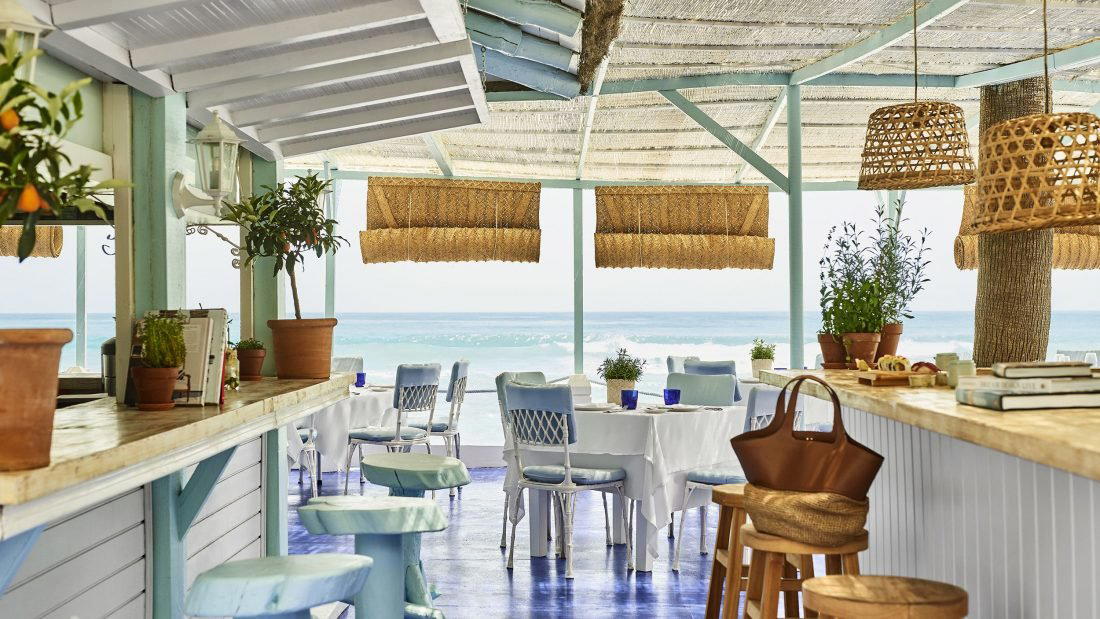
Bars in Marbella
Browse all →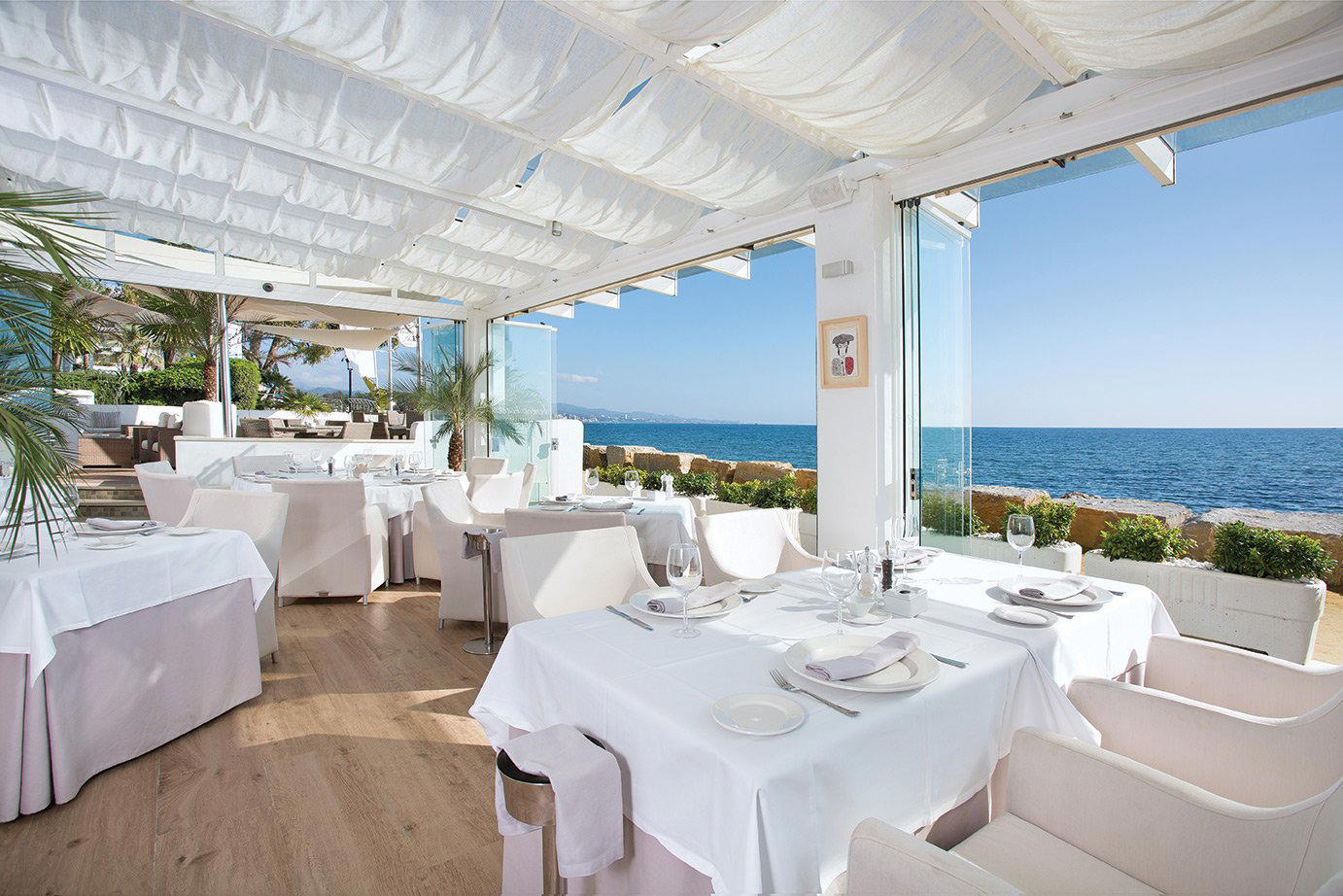



Hotels in Marbella
Browse all →

At a Glance
- Modern
- Elegant
- Sophisticated
- Minimalist
- Date Night
- Special Occasion
- Celebration
- Chefs Counter
- Open Kitchen
- Extensive Wine List
- Sommelier Led
- Local Sourcing
Current opening hours
- Monday
- 1:30–2:30 PM, 7–10 PM
- Tuesday
- 1:30–2:30 PM, 7–10 PM
- Wednesday
- Closed
- Thursday
- Closed
- Friday
- 7–10 PM
- Saturday
- 1:30–2:30 PM, 7–10 PM
- Sunday
- Closed
Hours can change for holidays and private events. Last verified .
Contemporary minimalist interiors with wooden floors, red chairs, white tablecloths, incandescent lighting, and an open kitchen creating a warm, sophisticated atmosphere.