Le Raisin

1 Michelin Star
Our verdict
Le Raisin in Pont-de-Vaux serves Contemporary French (Bressane) cuisine with a refined, market-driven approach. Must-try plates include Scallops with wakame and vichyssoise, Crispy sweetbread with green pumpkin, and the signature Bresse chicken cooked two ways. The kitchen updates its menu monthly to highlight local produce and Bresse poultry, while a Burgundy wine list provides perfect pairings. With one Michelin star and Travelers’ Choice recognition, Le Raisin delivers slick, professional, cheerful service in a plush, elegant dining room. Expect precise techniques, seasonal flavors, and tactile presentations that make each course feel immediate and memorable.

Pearl is the En Primeur Club membership app, where members save venues, book tables and use the concierge.
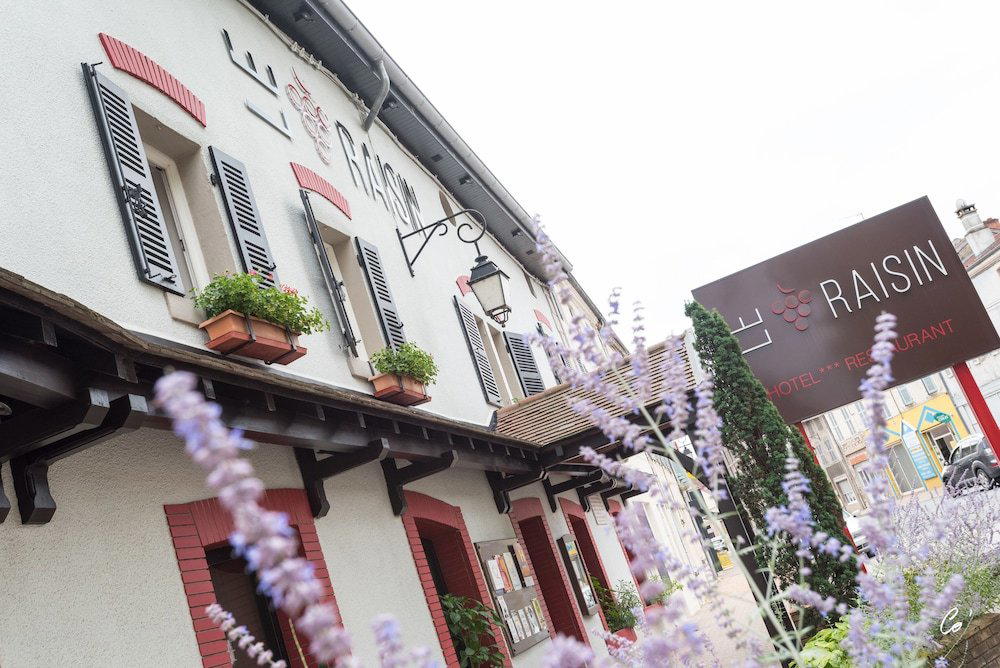
Where the Market Dictates the Menu
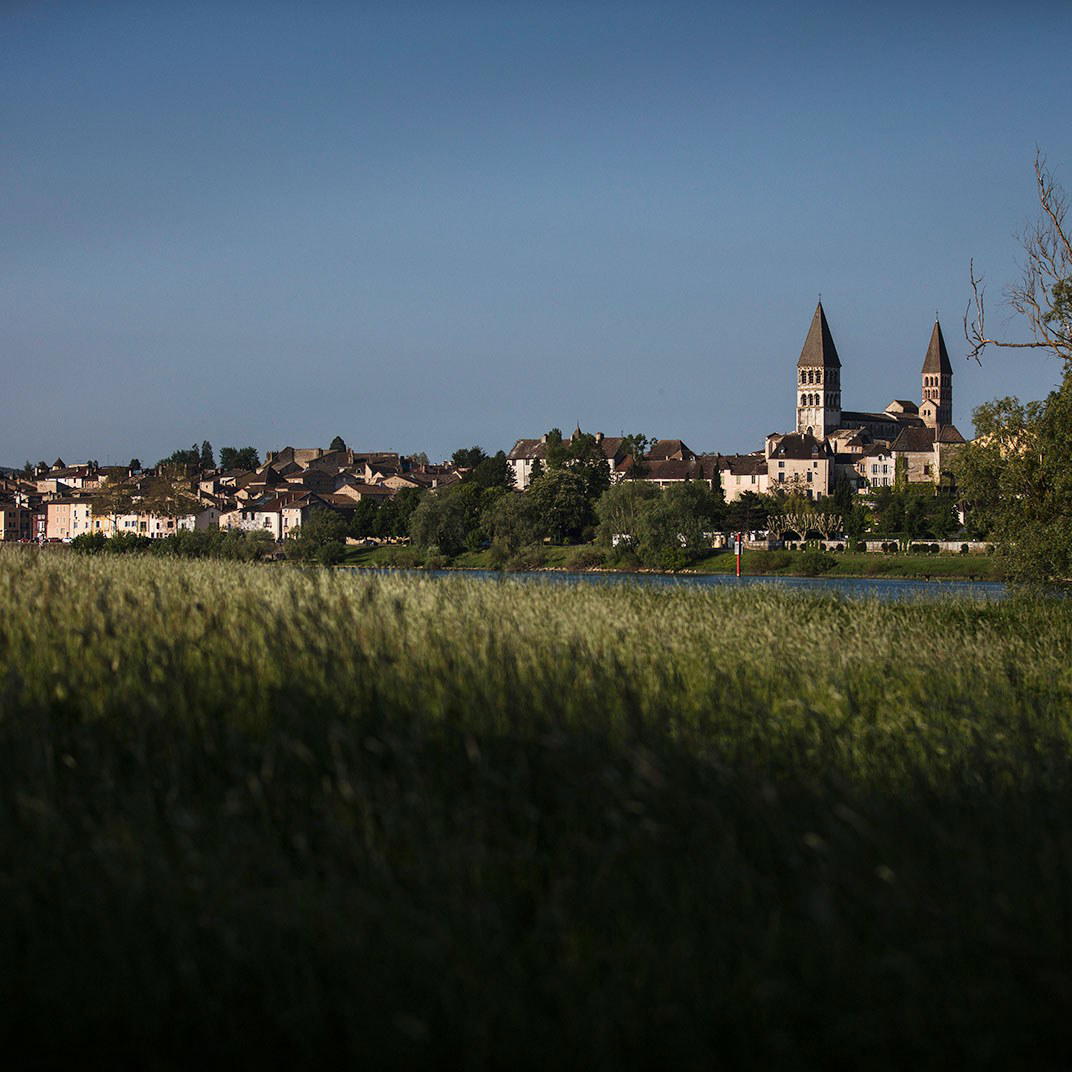
The town square at Pont-de-Vaux moves at a pace that most of urban France has forgotten. Plane trees shade the Place Michel Poisat on warm afternoons, the kind of square where the morning market still determines what appears on the lunch table a few hours later. It is in this context that Le Raisin operates, and that context matters: the restaurant's monthly-changing menu is not a marketing device but a practical response to what the surrounding region actually produces. When availability shapes the cooking, the discipline of seasonal sourcing becomes visible in the plate rather than merely stated on the menu.
In the Ain department, sitting between the Bresse plains to the north and the Rhône corridor to the south, the raw material question answers itself. This is the territory that supplies some of France's most carefully regulated proteins. Poulet de Bresse, the only chicken in France to carry an AOC designation, is raised to specific density and feed ratios within a defined geographical boundary that places Pont-de-Vaux near its heart. A kitchen that draws from this supply chain occupies a different starting position than one working from a general wholesale catalogue. The produce is part of the argument Le Raisin is making.
The Cooking: Tradition as a Base, Not a Ceiling
The Michelin Guide's 2024 one-star assessment frames the approach precisely: classics subtly reworked, a score as delicate as it is original. That language points to a kitchen that respects the grammar of French traditional cuisine without treating it as a constraint. The combinations on offer, scallops with wakame and vichyssoise, crispy sweetbread with green pumpkin, Bresse chicken prepared two ways, are not exercises in fusion or novelty. They are evidence of a chef applying contemporary technique to regional foundations, using the occasional non-European accent (wakame, in this case) to sharpen rather than obscure the main flavour logic.
The sweetbread preparation deserves attention as a category signal. Offal cookery at this level of refinement is a measure of technical confidence; it requires exact timing, precise sourcing, and the kitchen's willingness to work with ingredients that the less assured simply avoid. Green pumpkin as an accompaniment places the dish in a seasonal register, this is autumn-harvest thinking, not year-round menu filler. The Bresse chicken cooked two ways reflects a different kind of ambition: when you have access to the most regulated chicken breed in France, cooking it twice demonstrates both respect for the ingredient and a refusal to let simplicity become laziness.
Monthly rotation is the structural guarantee that none of this becomes routine. It aligns the kitchen with market availability while giving the chef a fresh compositional problem each cycle. For repeat visitors, this makes Le Raisin a different restaurant across the year, which is not a trivial thing for a small-town table operating in a market where loyalty is earned slowly and lost quickly.
The Room and the Service
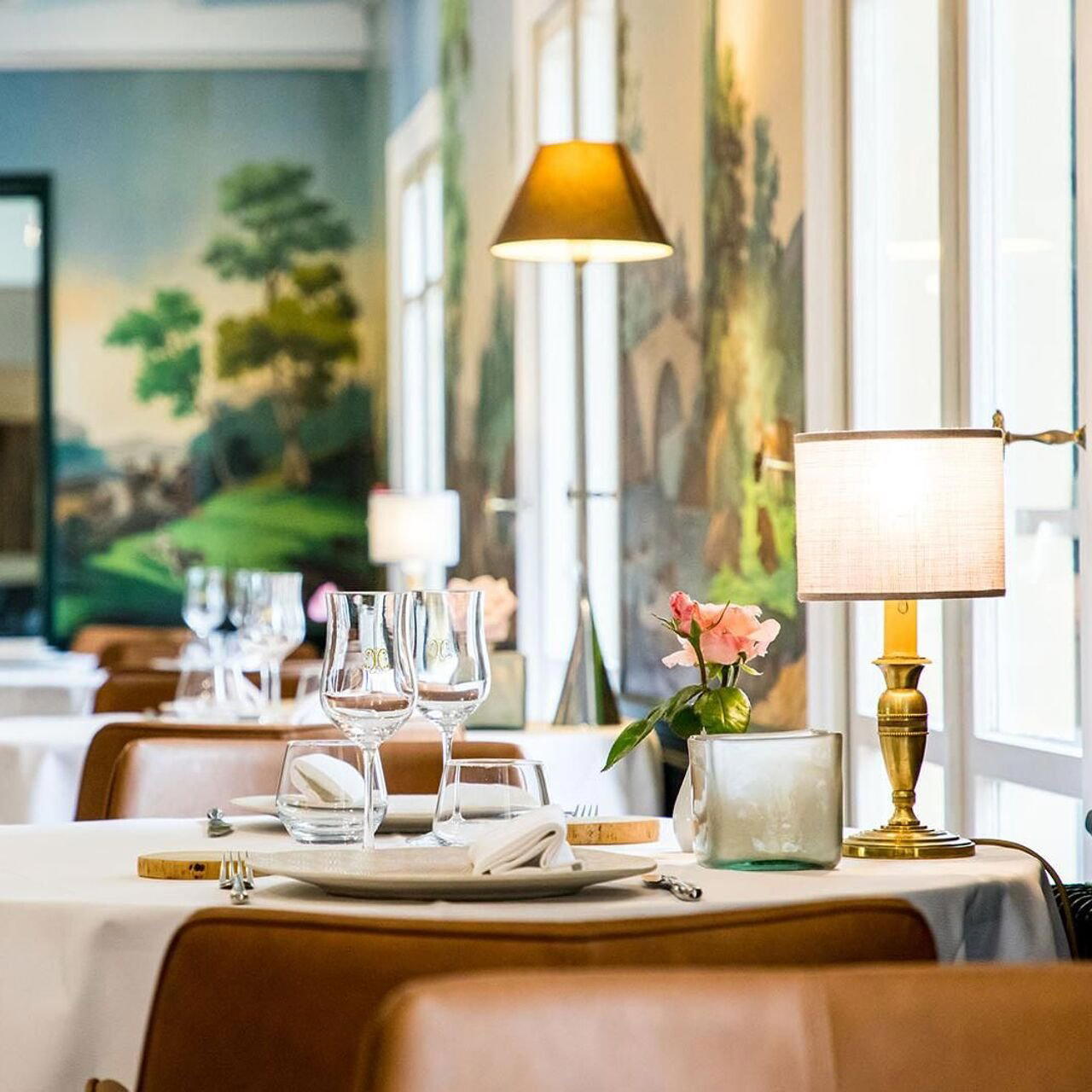
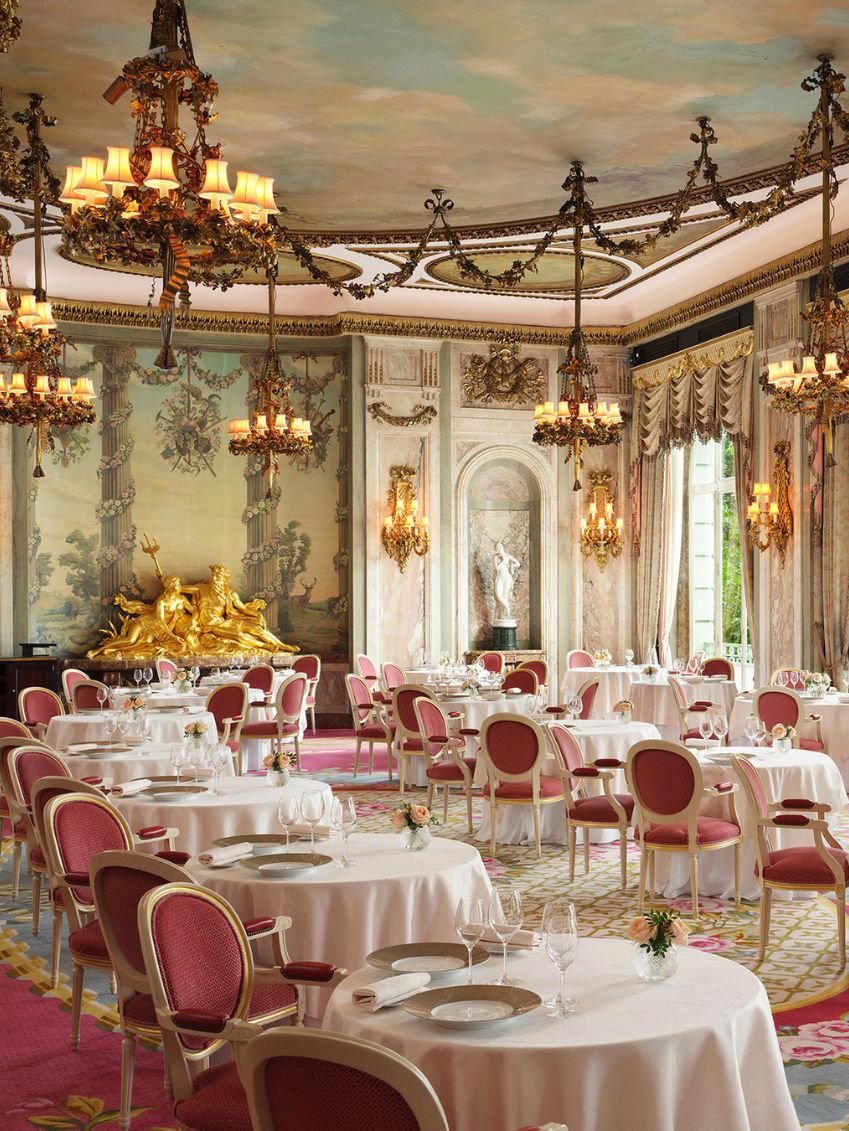
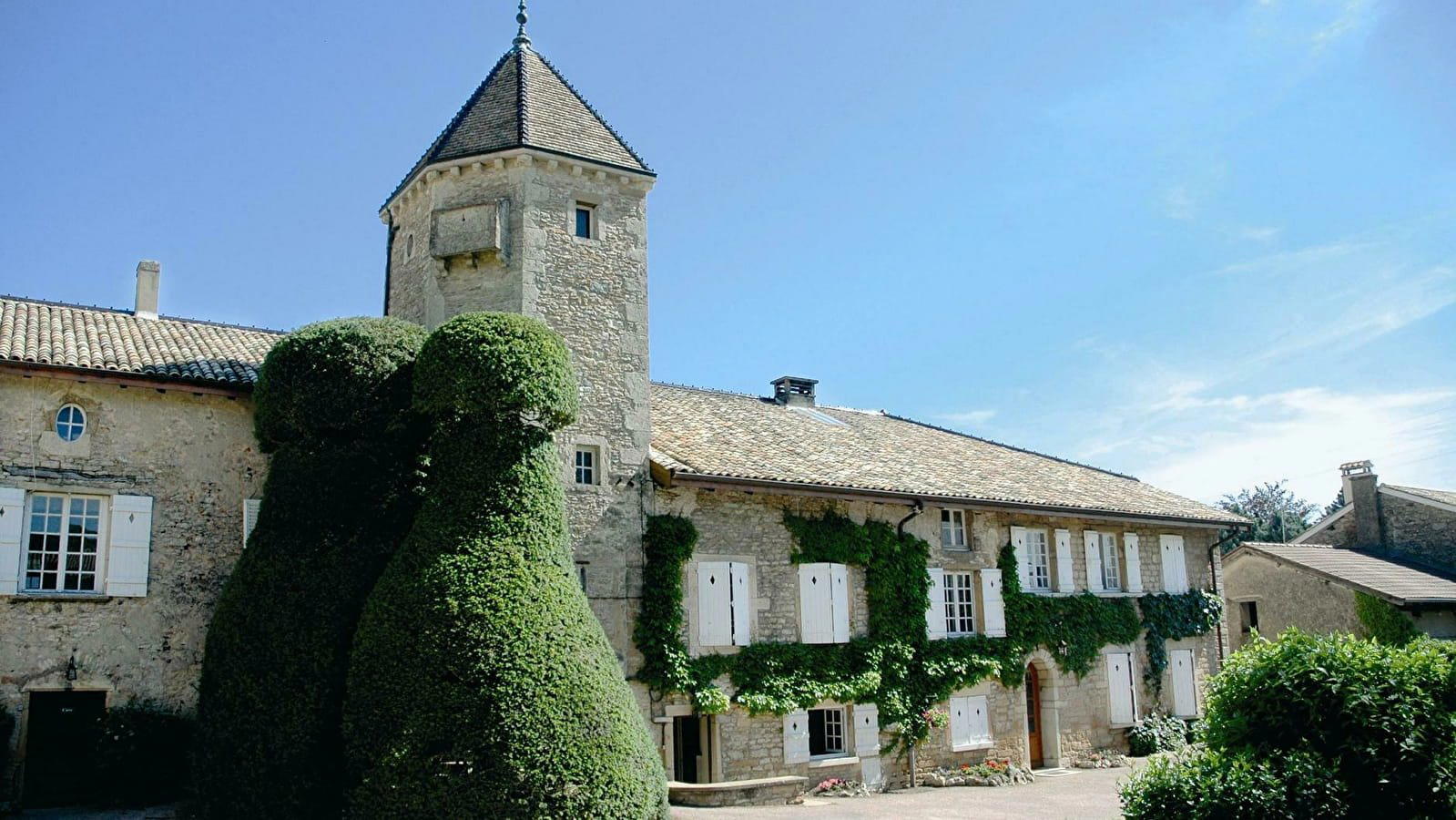
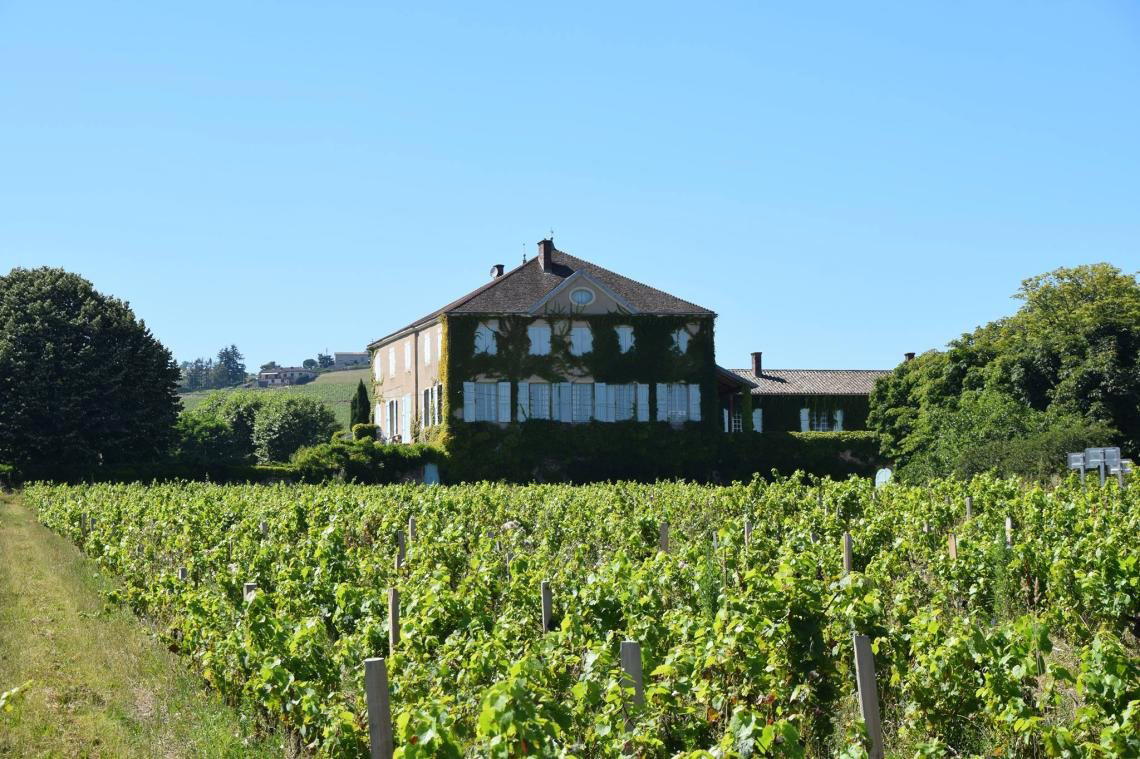
Physical setting is described as plush and elegant, which in a Bresse-country town of this scale positions Le Raisin clearly in the upper tier of local dining. This is not a casual rural bistro; the room communicates formality without severity.
Service at this category of French restaurant has a particular responsibility. The Michelin descriptor, slick, professional, cheerful, signals a front of house that delivers technical competence without the stuffiness that the same level of preparation can produce in less self-aware rooms. For a diner arriving from outside the region, a knowledgeable and unhurried service team is often what converts a single visit into a return booking.
The Wine List: Burgundy Country
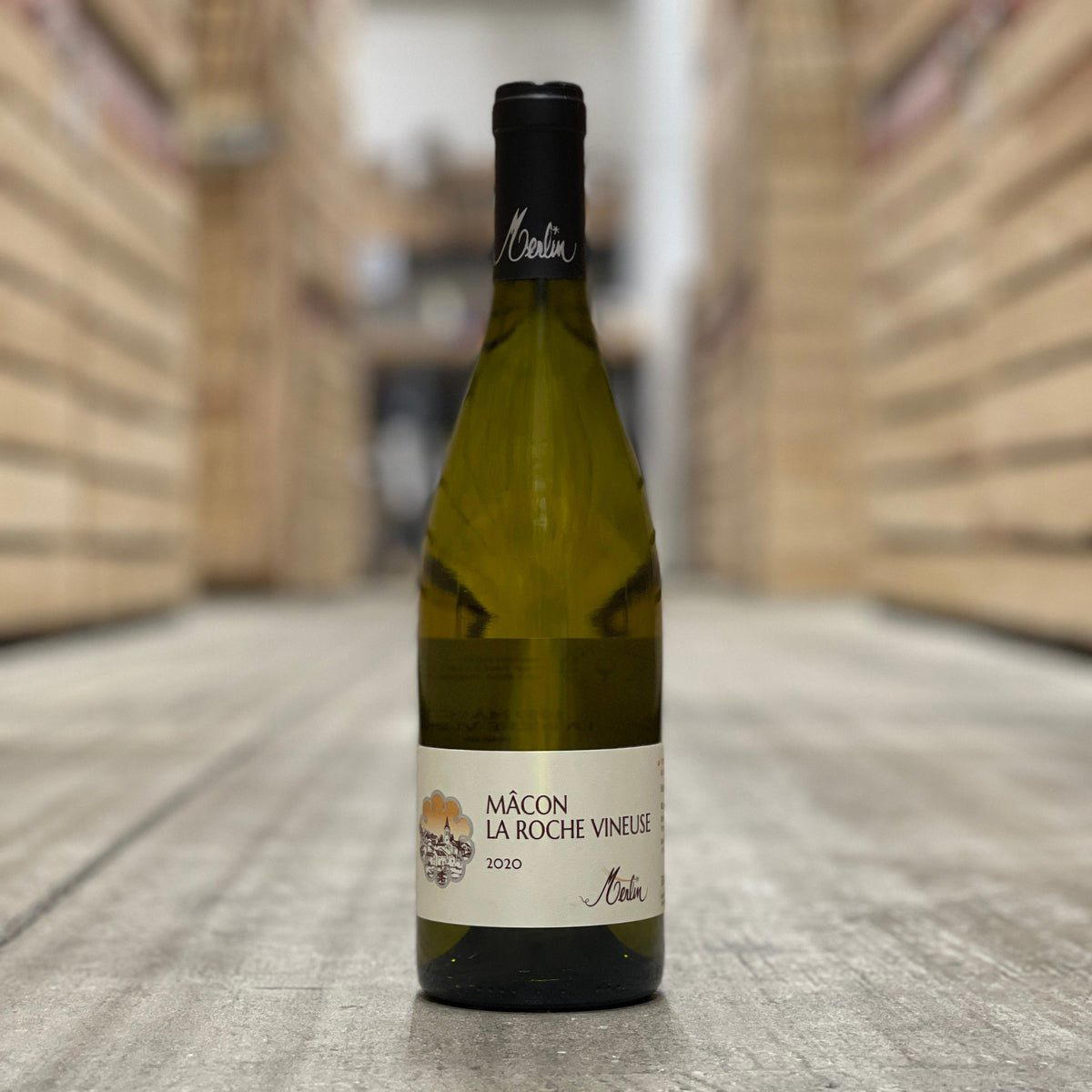
Pont-de-Vaux sits at the southern edge of Burgundy's gravitational field. The wine list at Le Raisin reflects this geography directly, with a strong selection of Burgundies forming the list's core identity. This is not a universal choice for a kitchen that occasionally reaches east for ingredients like wakame, but it is the geographically honest one. Burgundian whites, particularly from the Mâconnais and the Côte de Beaune, share structural qualities with the cream-forward, acid-balanced cooking that defines the traditional Bresse kitchen. The pairing logic runs through the soil, quite literally.
For diners interested in the broader Rhône and southern Burgundy wine corridor, the list at a one-star address in this location should carry both breadth and depth that a standard provincial restaurant would not. It merits engagement rather than a quick default to the house recommendation.
Le Raisin in the French One-Star Field
To place Le Raisin accurately, it helps to map it against the broader field of French Michelin one-star tables operating outside the major metropolitan areas. The one-star in a small provincial town is a specific category: it signals cooking that consistently exceeds what location and price point would suggest, without necessarily competing on the terms of urban fine dining. The comparison set is not Alléno Paris au Pavillon Ledoyen in Paris or the multi-star urban showpieces. It is closer to the tradition of serious rural tables that define a region rather than a city.
That tradition is well established across France. Troisgros - Le Bois sans Feuilles in Ouches, Auberge du Vieux Puits in Fontjoncouse, and Bras in Laguiole all demonstrate the model: a kitchen anchored in regional produce and culinary identity, operating in a location that requires the diner to make an intentional journey. Flocons de Sel in Megève and Mirazur in Menton extend the comparison to different geographic registers. Within the traditional cuisine sub-category specifically, Auberge Grand'Maison in Mûr-de-Bretagne offers a useful structural parallel: a Michelin-recognised table maintaining regional cooking standards in a small-town context.
Le Raisin holds its place in this company by doing what the category demands: sourcing seriously, cooking with discipline, and maintaining standards that justify a deliberate detour from Lyon, Mâcon, or Bourg-en-Bresse. The €€€ price positioning is consistent with a one-star provincial table, above everyday dining, below the metropolitan fine-dining tier. AM par Alexandre Mazzia in Marseille, Assiette Champenoise in Reims, and Au Crocodile in Strasbourg represent the urban one-and-above tier, where the dining room overhead and metropolitan clientele push prices into a different bracket entirely.
Also worth noting for context in the Iberian and Alsatian ranges: Auberge de l'Ill in Illhaeusern, Paul Bocuse - L'Auberge du Pont de Collonges in Collonges-au-Mont-d'Or, and Auga in Gijón each illustrate how provincial or regional anchoring can sustain a kitchen's identity across decades, a model Le Raisin fits within.
Planning a Visit
Le Raisin operates Tuesday through Saturday (Tuesday from 3 PM, Wednesday through Saturday from 8 AM, all closing at 11 PM), with Sunday and Monday closed. The closed days are typical of serious French kitchens at this level, where the week's structure allows for proper market sourcing and kitchen preparation. Given that the menu changes monthly, first-time visitors should check the current composition before booking if particular ingredients or preparations are a priority. The €€€ price bracket places a full dinner in the range expected of a one-star provincial table: accessible compared to the multi-star metropolitan tier, but a considered spend. For planning the wider trip, consult our full Pont-de-Vaux restaurants guide, our full Pont-de-Vaux hotels guide, our full Pont-de-Vaux bars guide, our full Pont-de-Vaux wineries guide, and our full Pont-de-Vaux experiences guide to build a stay that uses the region properly.
Frequently asked questions
How much does it cost to eat at Le Raisin?
Pricing at Le Raisin is listed as €€€.
What days is Le Raisin closed?
Hours at Le Raisin: Monday closed Tuesday 3 PM-11 PM Wednesday 8 AM-11 PM Thursday 8 AM-11 PM Friday 8 AM-11 PM Saturday 8 AM-11 PM Sunday closed.
Side-by-Side Snapshot
| Venue | Cuisine | Price | Awards | Notes |
|---|---|---|---|---|
| Le RaisinThis venue (the venue you are viewing) | Michelin-Starred Bresse French Gastronomy | $50–100 | 1 Michelin Star | Not listed |
| Alléno Paris au Pavillon Ledoyen | Modern French Fine Dining | $150–200 | 3 Michelin Stars · World's 50 Best #79 | Creative |
| Kei | Contemporary French, Modern Cuisine | Not listed | Michelin 3 Star | Not listed |
| L'Ambroisie | Classic French Haute Cuisine | $300–500 | 2 Michelin Stars · World's 50 Best #23 | French, Classic Cuisine |
| Le Cinq - Four Seasons Hôtel George V | Modern French Fine Dining | $300–500 | 3 Michelin Stars · World's 50 Best #24 | French, Modern Cuisine |
| Plénitude | Modern French Sauce-Led Fine Dining | $300–500 | 3 Michelin Stars · World's 50 Best #14 | Contemporary French |
Recognition history
Dated appearances from independent guides and award organizations, with the underlying list record or original source where available.
Michelin 1 Star
Michelin
Full recognition history (3 entries)
Michelin 1 Star
Michelin
Michelin 1 Star
Michelin
Continue exploring
More in Pont-de-Vaux
Restaurants in Pont-de-Vaux
All restaurants in Pont-de-Vaux →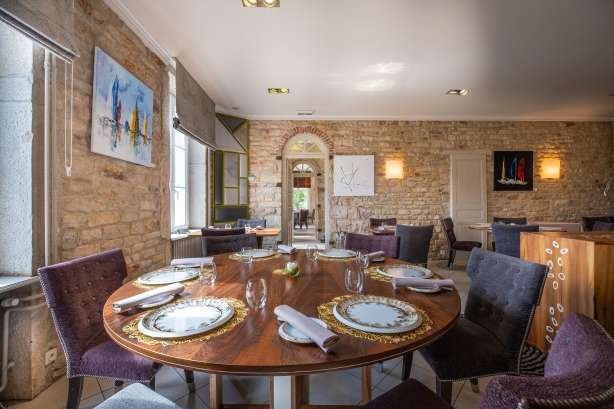
Details
- Elegant
- Cozy
- Sophisticated
- Classic
- Date Night
- Special Occasion
- Family
- Historic Building
- Extensive Wine List
- Local Sourcing
- A La Carte
- Wine
- Allergy Accommodating
Current opening hours
- Monday
- Closed
- Tuesday
- 3–11 PM
- Wednesday
- 8 AM–11 PM
- Thursday
- 8 AM–11 PM
- Friday
- 8 AM–11 PM
- Saturday
- 8 AM–11 PM
- Sunday
- Closed
Hours can change for holidays and private events. Hours as of .
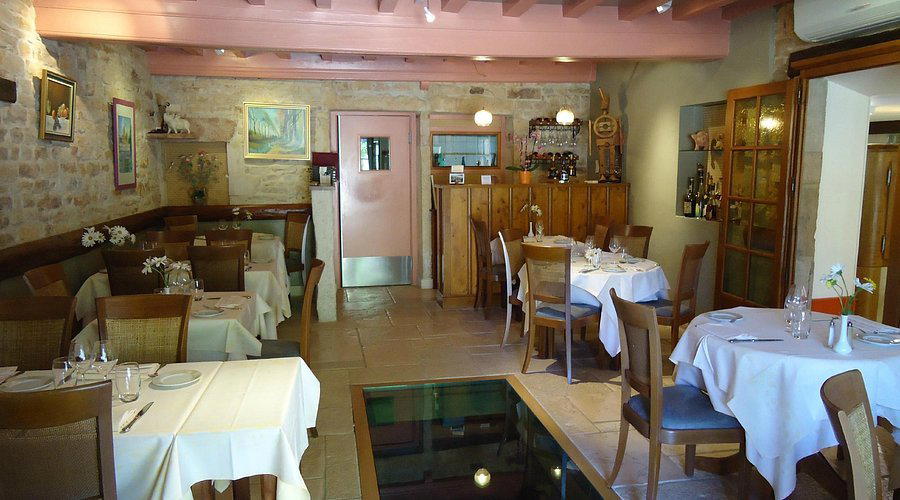
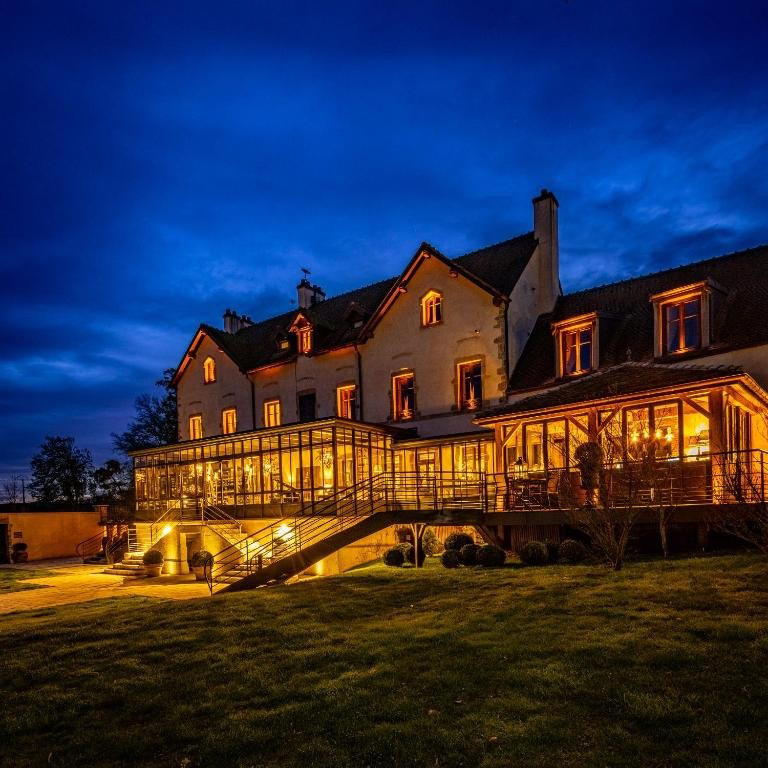
Plush, elegant, and traditional dining room with warm, professional service and a cozy, intimate atmosphere.