Le Kozy
In Bourg-Saint-Maurice, where the Tarentaise valley narrows before the Petit-Saint-Bernard pass, Le Kozy occupies a direct address on Avenue du Stade that puts it within reach of the ski lifts and the summer hiking trails alike. The kitchen draws on the Alpine larder that defines this corner of Savoie: cured meats, aged cheeses, and mountain produce with short supply chains. It is the kind of address that rewards planning over impulse.
Pearl is the En Primeur Club membership app — saves, bookings, and concierge access live there. Same editors, same standards.
- Address
- 95 Av. du Stade, 73700 Bourg-Saint-Maurice, France
- Phone
- +33479098513
 Saves & bookings on Pearl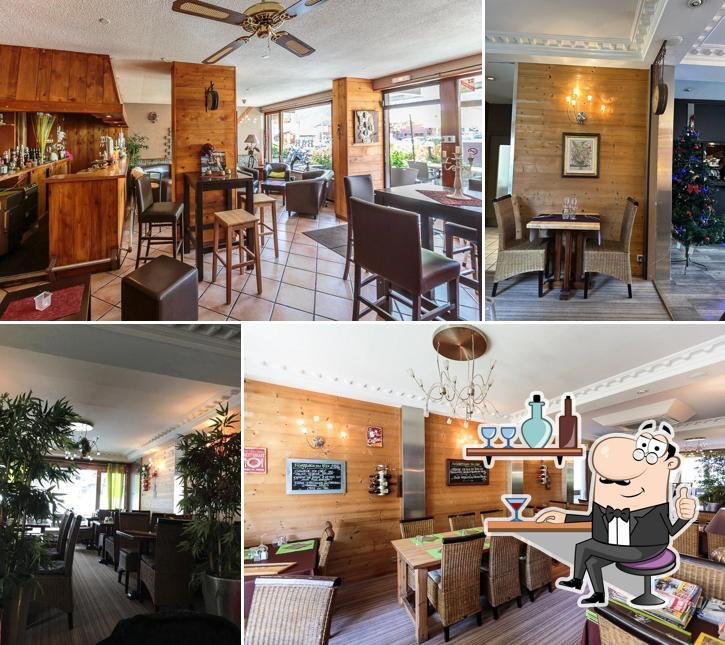
Where the Tarentaise Table Begins
Bourg-Saint-Maurice sits at 840 metres above sea level, a working valley town rather than a groomed resort, and that distinction shapes what eating here looks like. The high-altitude resorts of Les Arcs sit directly above, reachable by funicular, while the town itself maintains a year-round economy built around agriculture, transit, and the slower rhythms of Savoyard life. Restaurants at this altitude and latitude occupy a different register from the destination dining of lower France: the reference points are the valley's own larder rather than supply chains running from Rungis, and the cooking tradition is Alpine rather than classically French in the metropolitan sense.
Le Kozy, at 95 Avenue du Stade, sits in that local register. The address places it at the edge of the town's sports and civic quarter, away from the more tourist-facing cluster near the train station, which means the clientele skews toward residents and repeat visitors rather than passing trade. Approaching along the Avenue du Stade, the surrounding architecture is functional Savoyard rather than decorative, which sets expectations accurately: this is a dining room shaped by its community rather than designed for a rack card.
Alpine Ingredients and Short Supply Chains
The culinary tradition of the Tarentaise valley is among the more ingredient-specific in France. The valley is the home of Beaufort cheese, an AOC-protected hard cheese made exclusively from the milk of Tarentaise and Abondance cattle grazed at altitude. A Beaufort aged for a full summer season, what producers call Beaufort d'alpage, carries a complexity that commodity mountain cheese cannot replicate: the flora of the high pastures, above 1,500 metres, transfers directly into the milk and then into the rind and paste. Any serious kitchen in Bourg-Saint-Maurice has access to this ingredient at closer range than almost anywhere else in France.
The same logic applies to charcuterie. The Savoie and Haute-Savoie traditions of cured pork, including diot sausages and various forms of dried and smoked cuts, operate through small producers spread across the valleys. Proximity matters here in ways that it cannot for a Parisian bistro sourcing from the same region: the chain is shorter, the relationships more direct, and the product often less standardised. For a comparison point, consider how Flocons de Sel in Megève has built a multi-Michelin reputation partly on its relationship with exactly this kind of hyperlocal Alpine sourcing, operating at a price point and ambition level well above what Bourg-Saint-Maurice's dining scene targets. Le Kozy operates lower on that spectrum, but the raw ingredient access is, by geography, similar.
Freshwater fish from the Isère and its tributaries, game from the surrounding forests and high pastures during the appropriate seasons, and the dairy tradition that makes Savoie cheese one of France's most coherent regional categories: these are the building blocks of the Tarentaise table. The broader French dining conversation, anchored in Paris at addresses like Alléno Paris au Pavillon Ledoyen or in the south at Mirazur in Menton, operates with different reference points entirely. Alpine cooking at the valley level is about condensing what the mountain produces rather than transforming it through technique.
Bourg-Saint-Maurice in the French Dining Context
France's most recognised restaurant addresses are mostly at a considerable remove from the Alps: Paul Bocuse in Collonges-au-Mont-d'Or, Troisgros in Ouches, Bras in Laguiole, Auberge de l'Ill in Illhaeusern. These are destination restaurants in regions where the dining infrastructure has been built around a centuries-long hospitality tradition and, in many cases, around a single family or kitchen line. Bourg-Saint-Maurice does not have that kind of accumulated institutional dining prestige.
What the town does have is a captive, seasonally dense population of visitors passing through on the way to and from the Tarentaise resorts, supplemented by a resident population with its own expectations. The restaurant scene here functions accordingly: it is practical and locally rooted rather than aspirational and media-facing. That is not a limitation so much as a different set of priorities. For readers accustomed to the format of a Georges Blanc in Vonnas or an Auberge du Vieux Puits in Fontjoncouse, the scale and ambition here will read differently. Le Kozy belongs to the town's dining ecosystem, not to the national prestige circuit.
For those travelling through the region and wanting to understand the full range of what French regional cooking looks like, the town's restaurants span practical Alpine dining across a range of price points and formats. Context from further afield, including coastal kitchens like Christopher Coutanceau in La Rochelle and La Marine in Noirmoutier-en-l'île, or southern addresses like AM par Alexandre Mazzia in Marseille and L'Oustau de Baumanière in Les Baux, illustrates how differently the French regions have developed their culinary identities.
Planning a Visit
Bourg-Saint-Maurice is on the Eurostar and TGV route from London and Paris during the winter ski season, with direct trains running on weekends from December through April; outside ski season, the town is accessible by TGV to Bourg-Saint-Maurice station, which sits in the town centre and puts the Avenue du Stade address within walking distance. The dual season rhythm of the town, ski traffic from December to April and hiking and cycling visitors from June to September, means that the busiest periods fill local restaurants quickly. Visiting during peak weeks without a reservation is a risk not worth taking. The shoulder months of May and early October tend to be quieter, which can mean more flexibility but also reduced trading hours at some addresses. Checking directly before arrival is the practical step here, given the opening pattern can change seasonally.
Dress expectations at this kind of address in the Tarentaise tend toward the comfortable and practical: ski towns normalise technical outerwear and hiking gear in dining rooms in ways that Paris does not. References like Assiette Champenoise in Reims or Au Crocodile in Strasbourg represent a different register of French dining formality entirely.
Fast Comparison
Comparable venues nearby, for context on price, style, and recognition.
| Venue | Cuisine | Price | Notes |
|---|---|---|---|
| Le KozyThis venue — the venue you are viewing | Franco-English Fusion | $$$ | Not listed |
| Bergerie de Planpraz | Wood-Fired Savoyard Brasserie | $$$ | Chamonix Main Town |
| Ôberge de BounavÔ | French Savoyard Bistro | $$$ | Bonnevaux |
| La Corne d'Or | Seasonal French Nature Cuisine | $$$ | Corenc |
| Le Café Megève | Traditional French Brasserie with Savoyard Accents | $$$ | centre du village |
| Le Carre d'As | French Bistronomic | $$$ | Casino Grand Cercle |
Continue exploring
More in Bourg Saint Maurice
Restaurants in Bourg Saint Maurice
Browse all →
Bars in Bourg Saint Maurice
Browse all →
At a Glance
- Cozy
- Family
- Casual Hangout
- Terrace
Current opening hours
- Monday
- 12–1:45 PM, 7–8:30 PM
- Tuesday
- 12–1:45 PM, 7–8:30 PM
- Wednesday
- Closed
- Thursday
- 12–1:45 PM, 7–8:30 PM
- Friday
- 12–1:45 PM, 7–8:45 PM
- Saturday
- 12–1:45 PM, 7–8:45 PM
- Sunday
- 12–1:45 PM
Hours can change for holidays and private events. Last verified .
Inviting and cozy atmosphere with warm welcome as described by guests.