Our verdict
La Corne d'Or serves Seasonal French Nature Cuisine with local sourcing, a terrace, and panoramic mountain and skyline views for leisurely lunch or dinner.

Pearl is the En Primeur Club membership app — saves, bookings, and concierge access live there. Same editors, same standards.
- Address
- 159 Rte de Chartreuse, 38700 Corenc, France
- Phone
- +33438866236
- Hours
- Mon–Tue ClosedWed 7:30–9 PMThu–Sat 12–1 PM, 7:30–9 PMSun 12–1 PM
- Website
- cornedor.com
- Directions
- Get directions
- Booking
- Book on the venue's website
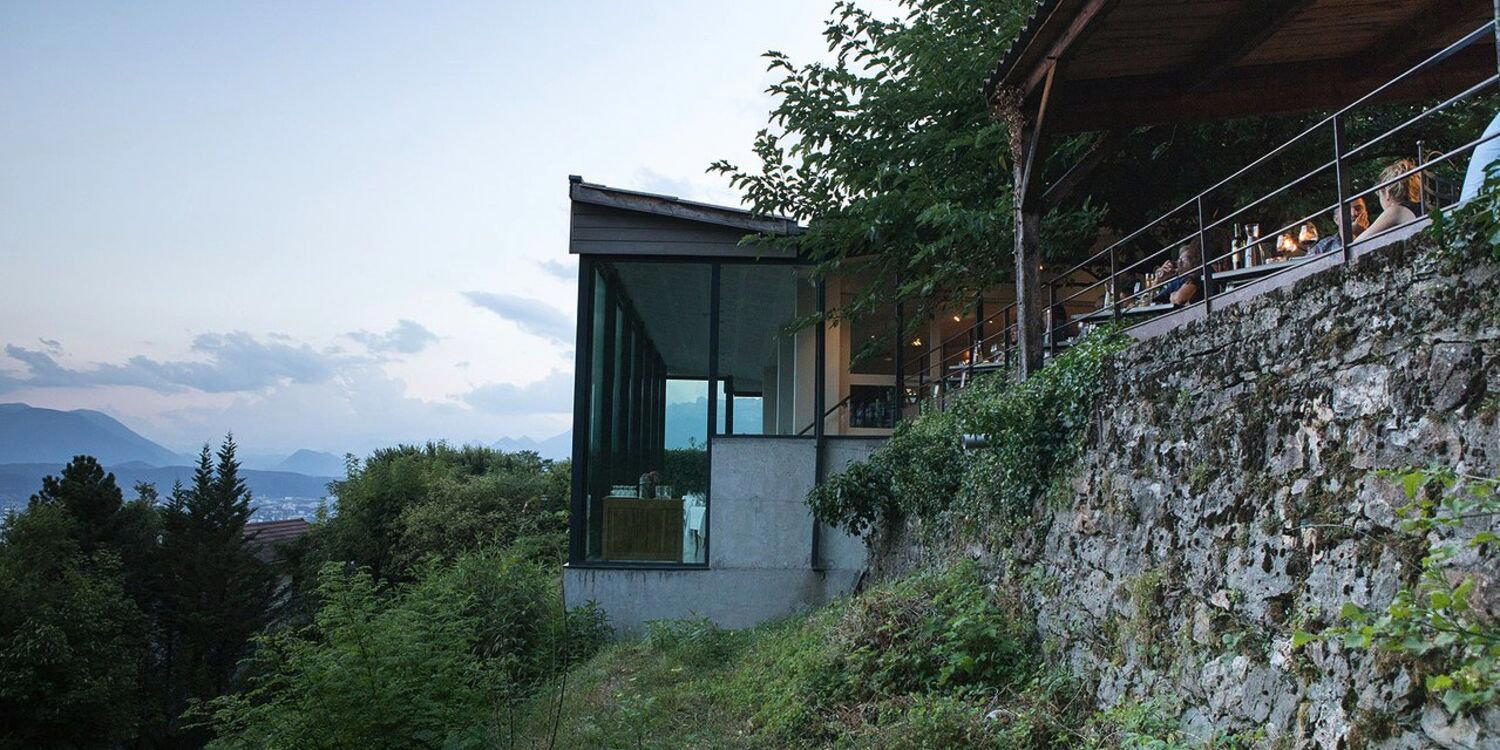
Where the Chartreuse Begins
The road from Grenoble climbs quickly once it crosses into Corenc. Within minutes, the urban grid of the city gives way to something older and more deliberate: stone walls, dense tree cover, and the first real foothills of the Chartreuse massif. It is along this transitional corridor, at 159 Route de Chartreuse, that La Corne d'Or sits. The address itself is a clue to what the kitchen is likely doing. Restaurants positioned at the foot of the Chartreuse have historically drawn on the alpine and pre-alpine supply chains that run through this corridor, where the geography shapes what arrives at the pass.
Corenc is administratively distinct from Grenoble but functionally inseparable from it. Diners coming from the city centre reach it in under fifteen minutes by car, yet the shift in register is immediate. This is not a suburban extension of urban dining; it occupies a different category altogether, the kind of address that requires a specific decision to visit rather than a spontaneous detour. That friction is often a reliable indicator of a kitchen with a loyal, deliberate clientele. For context on the broader dining options in the area, see our full Corenc restaurants guide.
The Ingredient Geography of the Chartreuse
French regional cooking at this altitude and proximity to mountain terrain tends to be organised around a particular logic: what the land produces in each season, and how the kitchen preserves, ferments, or prepares it to extend that availability. The Chartreuse massif and the surrounding Isère valley offer a supply profile that few French regions can replicate at this density. Wild herbs from the massif, dairy from mountain herds, freshwater fish from alpine streams, game from managed forests, and a growing network of small-scale vegetable producers in the valleys below Grenoble all feed into kitchens along this corridor.
This is the ingredient geography that a restaurant on the Route de Chartreuse inhabits. It is comparable in its structural logic to what kitchens in other mountain-adjacent French regions have built their reputations on. Flocons de Sel in Megève in the Haute-Savoie operates under similar alpine sourcing pressures, and Bras in Laguiole in the Aubrac has made terrain-led sourcing its defining editorial statement across decades. Both represent what happens when a kitchen commits to its geography rather than importing prestige ingredients from outside its zone. The question for any Chartreuse-adjacent kitchen is whether it pursues the same discipline or defaults to the broader national luxury supply chain that feeds Paris-facing kitchens like Alléno Paris au Pavillon Ledoyen.
The Broader French Regional Fine Dining Context
France's non-Parisian fine dining circuit has undergone a sustained recalibration over the past two decades. Destination restaurants that once required travellers to build entire itineraries around them, from Auberge de l'Ill in Illhaeusern to Georges Blanc in Vonnas, now exist alongside a newer generation of regionally rooted kitchens that are less interested in classical grandeur and more focused on tight sourcing geography. The contrast between these two modes, the monument and the territory-first kitchen, defines much of what is interesting in French regional dining right now.
Grenoble and its surrounding communes sit within that newer logic. The city has not historically produced a restaurant that anchors the national conversation in the way that Mirazur in Menton or Paul Bocuse - L'Auberge du Pont de Collonges have defined their respective geographies. But that absence of a dominant flagship creates space for smaller, more specific operations to hold local authority without competing on a national stage. La Corne d'Or occupies this kind of position: an address whose relevance is local and proximate rather than destination-driven, and whose sourcing story is shaped by what is immediately around it rather than by what a glossy supplier catalogue offers.
For readers calibrating expectations, the comparison set here is not with three-star operations like Assiette Champenoise in Reims or Au Crocodile in Strasbourg, both of which carry significant formal dining infrastructure. It sits closer to the tier of thoughtful regional tables that have earned loyalty through consistency and sourcing clarity rather than through award accumulation.
What a Chartreuse-Adjacent Table Means in Practice
Restaurants positioned on this road serve a clientele that divides roughly into two groups: Grenoble residents seeking a meal that feels meaningfully removed from the city, and visitors using Grenoble as a base for Chartreuse hiking, cycling, or winter access. Both groups bring different expectations, and a kitchen that reads them well tends to operate with a menu that can hold up to scrutiny from both directions, whether that means a multi-course lunch or a more direct regional plate.
Seasonality in this corridor is not a marketing claim; it is a structural reality. The alpine supply chain operates on hard calendar windows. Spring brings wild garlic and the first tender mountain herbs. Summer opens access to the higher-altitude producers. Autumn is the pivot point, when game, mushrooms, and preserved preparations from summer's harvest converge. Winter tightens the range but concentrates the flavour profile toward dairy, cured meats, and root-driven preparations. A kitchen that sources honestly from this geography will reflect those shifts in ways that a kitchen importing from national distributors simply cannot replicate.
This is the frame through which La Corne d'Or makes most sense as a choice. It is not competing with the ambition level of AM par Alexandre Mazzia in Marseille or the coastal precision of Christopher Coutanceau in La Rochelle. It is operating in a specific geographic lane with a specific clientele, which is exactly what a well-placed regional table should do. For international comparators of territory-driven kitchens, the logic mirrors what La Marine in Noirmoutier-en-l'île has built around its island geography, or what Auberge du Vieux Puits in Fontjoncouse has done with a remote southern village setting.
Planning a Visit
La Corne d'Or is on the Route de Chartreuse in Corenc, reachable from central Grenoble by car in under fifteen minutes. Given its position on a road that serves as an access route to the Chartreuse natural park, arrival by car is the practical default. The address is well-suited to a late lunch format, particularly when paired with time in the surrounding hills before or after. For those building a broader southeast France itinerary, Troisgros - Le Bois sans Feuilles in Ouches and L'Oustau de Baumanière in Les Baux represent the higher end of the regional dining spectrum and sit within driving range of a Grenoble base.
Frequently asked questions
Does La Corne d'Or work for a family meal?
La Corne d'Or is on the Route de Chartreuse in Corenc, a road that draws both Grenoble families and visitors heading into the massif. Its position outside the city suggests a relaxed, destination-meal context rather than a rushed urban one.
How would you describe the vibe at La Corne d'Or?
The setting on the Route de Chartreuse in Corenc frames the experience before you arrive: the road climbs quickly out of Grenoble's urban grid into older, quieter terrain. Restaurants on this route tend to draw a clientele looking for a meal that feels meaningfully removed from the city, even if it is only fifteen minutes away. The address at 159 Route de Chartreuse places it squarely in that transition zone between Alpine approach and urban reach.
Is La Corne d'Or a good choice for a meal before or after hiking in the Chartreuse massif?
Positioned at 159 Route de Chartreuse in Corenc, La Corne d'Or sits directly on the main road into the Chartreuse massif, making it a natural stopping point for those approaching or returning from the trails. Central Grenoble is under fifteen minutes by car, so it functions equally as a pre-departure meal or a post-hike destination without requiring a significant detour. Specific hours and reservation requirements should be confirmed with the restaurant before planning around a hiking itinerary.
What's the signature dish at La Corne d'Or?
French kitchens at this altitude and proximity to the Chartreuse massif typically draw on mountain terrain — dairy, game, and seasonal forage — but any specific dish claims should be verified directly with the restaurant.
How do I find La Corne d'Or?
La Corne d'Or is located at 159 Rte de Chartreuse, 38700 Corenc, France, Corenc.
Do they take walk-ins at La Corne d'Or?
Restaurants on the Route de Chartreuse in Corenc serve a mix of local Grenoble residents and visitors passing through to the massif, which can mean variable demand by season. Arriving without a reservation on a weekend or during summer hiking season carries some risk; contacting the restaurant ahead of your visit is the safer approach.
Fast Comparison
Comparable venues nearby, for context on price, style, and recognition.
| Venue | Cuisine | Price | Awards | Notes |
|---|---|---|---|---|
| La Corne d'OrThis venue — the venue you are viewing | Seasonal French Nature Cuisine | $50–100 | Not listed | Not listed |
| Bienheureux | Modern French Creative | Not listed | Michelin Plate | Wasquehal |
| Comptoir De Vie | Modern French Tasting Counter-Bar | $100–150 | Not listed | 2nd Arrondissement |
| Terres d'Emotions | French Farm-to-Table | $30–50 | Not listed | Bourg-de-Péage |
| MAISON GRIZLAW | Eco-responsible French Gastronomic | Not listed | Not listed | Avenue Victor Hugo |
| L'Art & la Manière | French Bistronomy | $30–50 | Not listed | Quartier Guillotière |
Continue exploring
More in Corenc
Restaurants in Corenc
Browse all →
Bars in Corenc
Browse all →
Hotels in Corenc
Browse all →

Details
- Elegant
- Scenic
- Cozy
- Sophisticated
- Date Night
- Special Occasion
- Panoramic View
- Terrace
- Natural Wine
- Local Sourcing
- Mountain
- Skyline
- A La Carte
- Vegetarian Friendly
Current opening hours
- Monday
- Closed
- Tuesday
- Closed
- Wednesday
- 7:30–9 PM
- Thursday
- 12–1 PM, 7:30–9 PM
- Friday
- 12–1 PM, 7:30–9 PM
- Saturday
- 12–1 PM, 7:30–9 PM
- Sunday
- 12–1 PM
Hours can change for holidays and private events. Last verified .
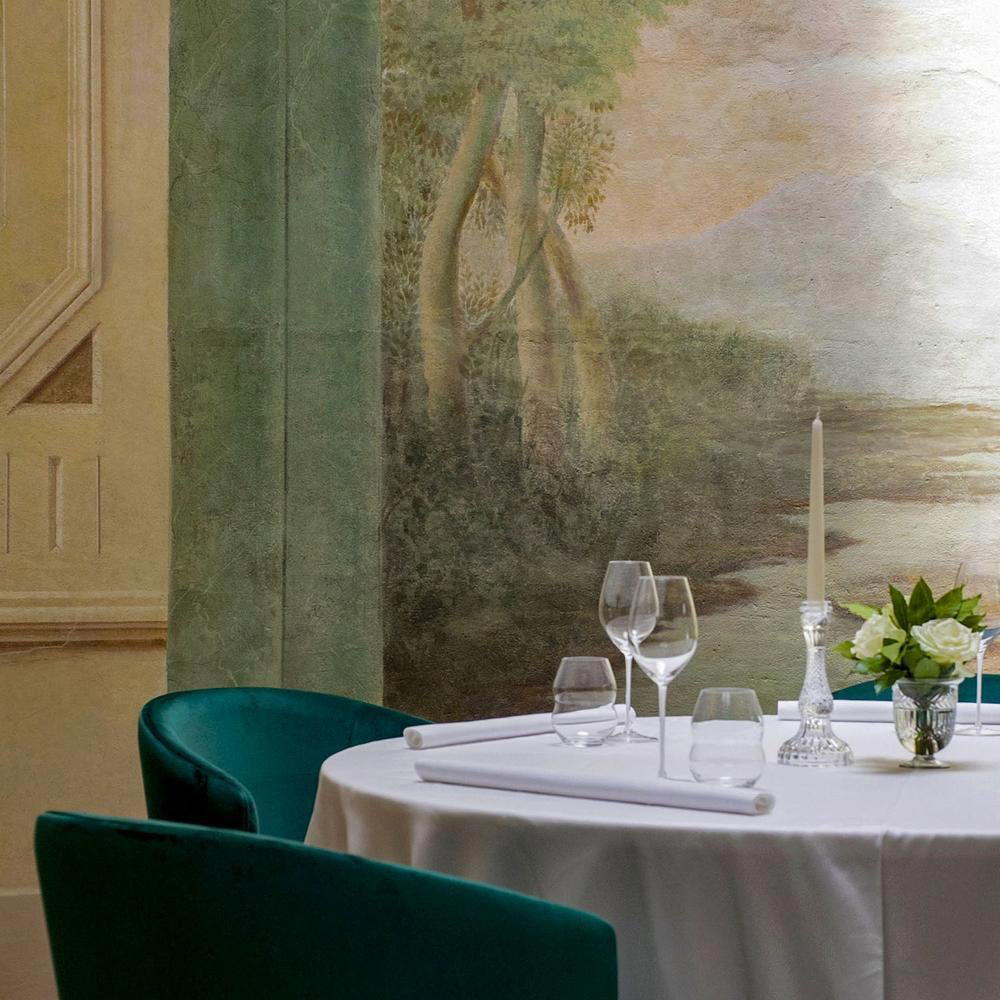
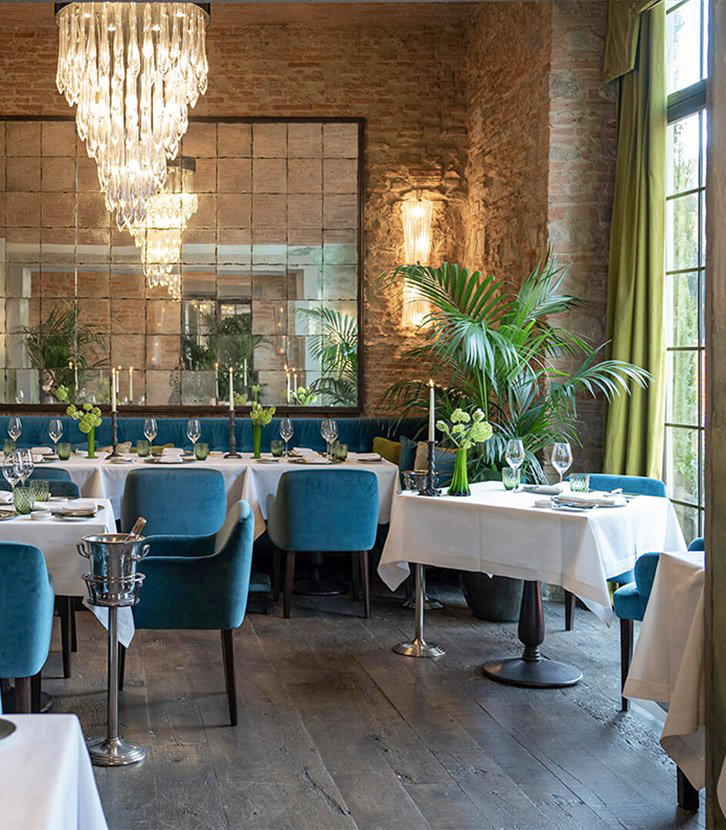
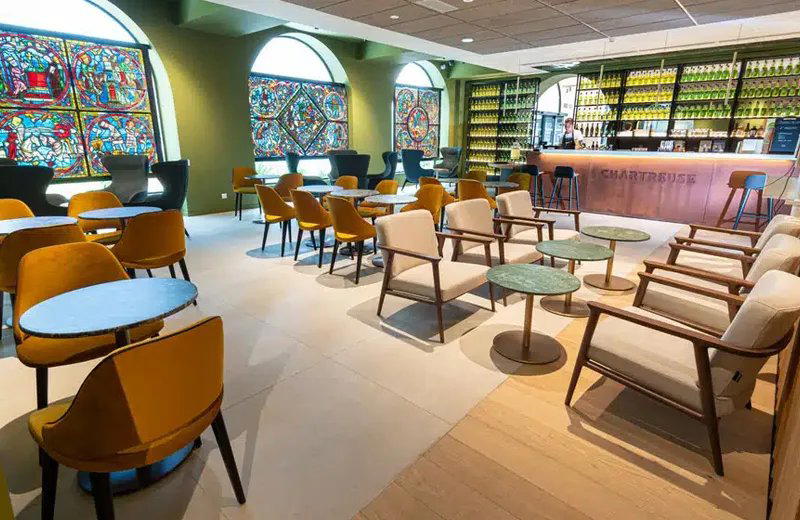
Relaxed and elegant atmosphere with natural light enhancing the dramatic panoramic views of the valley and mountains.