LE GRAND JARDIN
Our verdict
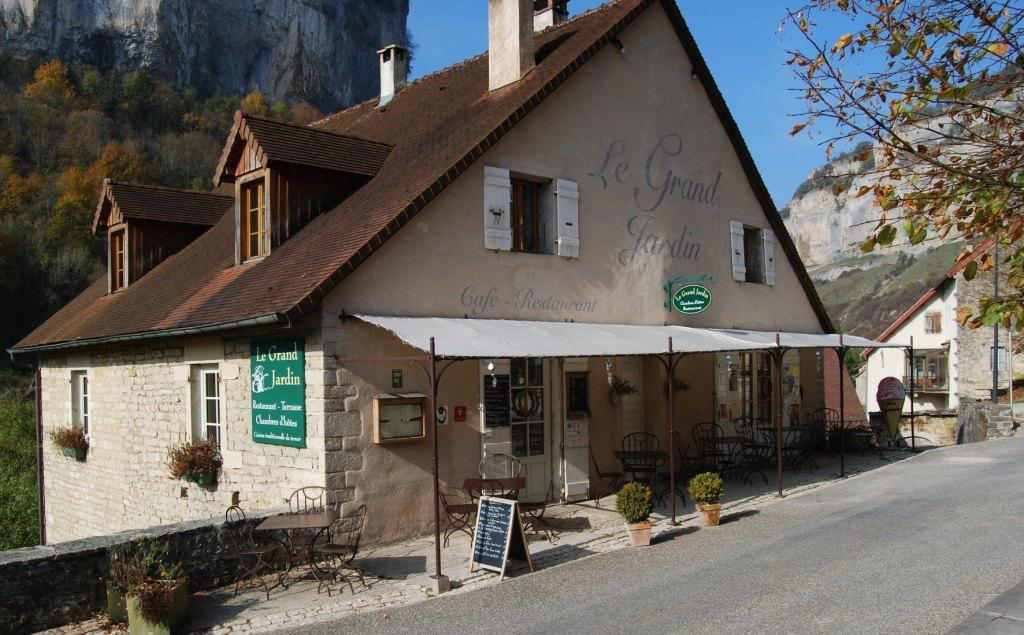
Le Grand Jardin sits at the heart of Baume-les-Messieurs, one of the most dramatically situated villages in the Jura, where limestone cirques and medieval abbey walls frame a dining room connected to one of France's most compelling rural food regions. The restaurant draws on a larder shaped by mountain pastures, river valleys, and centuries of fermier tradition. For travellers routing through Franche-Comté, it represents a direct encounter with Jurassien terroir on the plate.

Pearl is the En Primeur Club membership app — saves, bookings, and concierge access live there. Same editors, same standards.
- Address
- 6 Pl. Guillaume de Poupet, 39210 Baume-les-Messieurs, France
- Phone
- +33384446837
- Website
- legrandjardin.fr
- Directions
- Get directions
The menu
What to order
- Truite au vin jaune
- Poulet de Bresse aux morilles
A Village That Sets the Terms
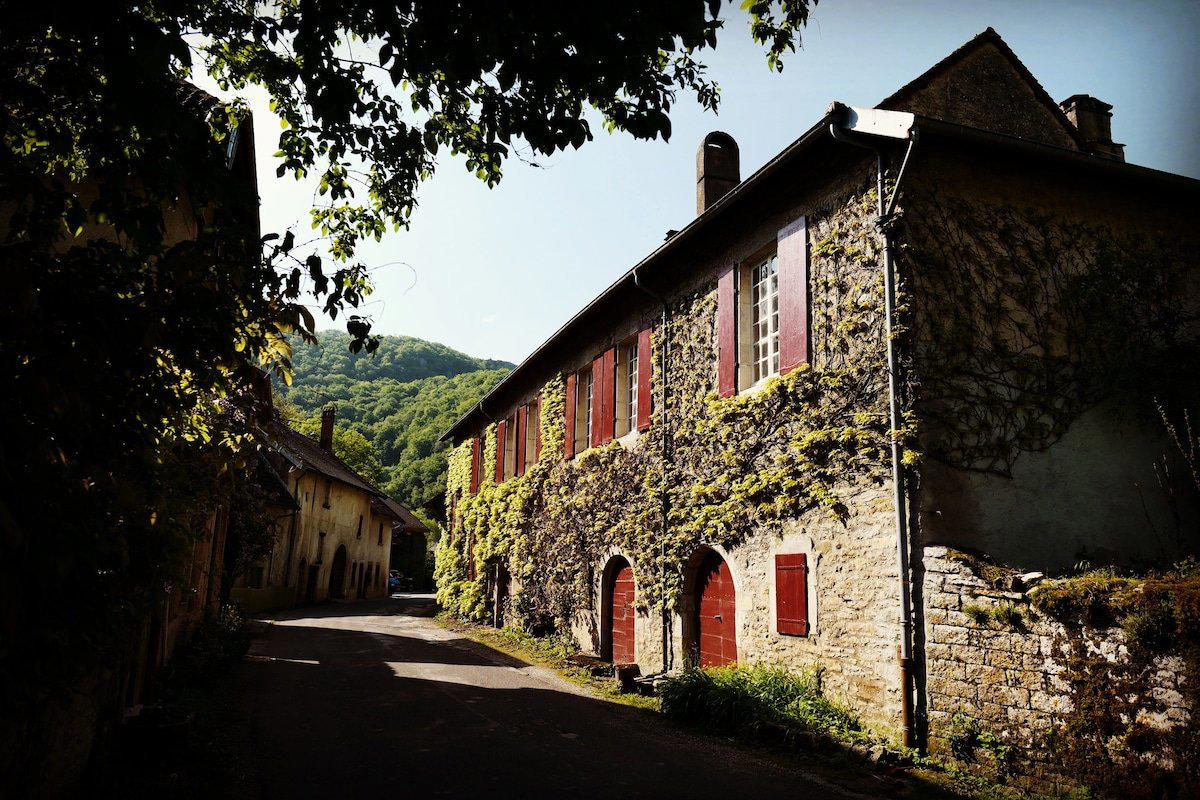
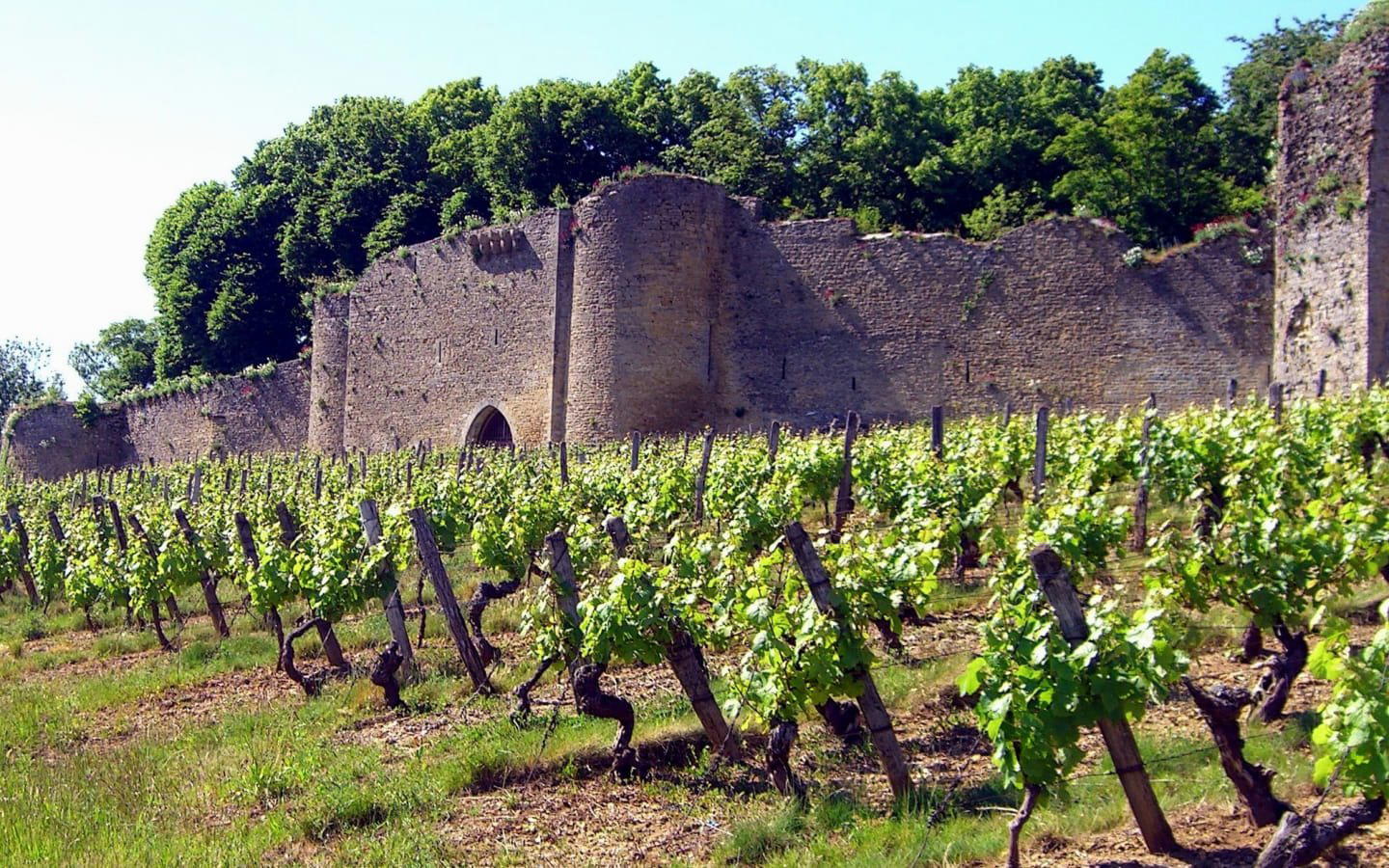
Baume-les-Messieurs occupies a position in the Jura that is almost theatrical in its geology: a confluence of three valleys, walled by vertical limestone cliffs, with a Benedictine abbey at its centre that dates to the sixth century. The village appears on France's official list of Plus Beaux Villages, a designation that draws visitors not for infrastructure but for precisely the kind of place Le Grand Jardin inhabits — a square address in a settlement where the built environment and the natural one are in near-constant conversation. Arriving by the D70 from Lons-le-Saunier, roughly 12 kilometres south-west, or descending from the cirque above, the scale of the surrounding cliffs makes the village feel purposefully enclosed, as if the landscape itself has organised a dining room around a central courtyard. That physical context is not incidental to the experience of eating here. It is the argument the meal makes before a plate arrives.
Franche-Comté as a Producing Region
The Jura and broader Franche-Comté region operate as one of France's more coherent food-producing territories, with a larder that is both narrow in its geography and deep in its specificity. Comté cheese — aged in the region's fruitières, with wheels graded by the Marcel Petite system and matured for anywhere from eight to thirty-six months, is the anchor product, but it sits within a wider supply chain of mountain-grazed beef, Bresse poultry to the immediate west, river-sourced trout and écrevisses from the Ain and Loue, and the region's own wine appellation, which produces Savagnin and Chardonnay under the Côtes du Jura, Château-Chalon, and Arbois labels. The oxidative wines of the Jura, particularly the vins jaunes aged under a film of yeast in the manner of a slow, unfortified sherry, are among the most food-specific wines produced anywhere in France. Restaurants working within this tradition have a pantry that rewards sourcing discipline rather than creative import. What makes Franche-Comté compelling from an ingredient-sourcing perspective is that proximity alone does not guarantee quality, the question is which producers a kitchen chooses to work with, and at what point in the seasonal cycle.
This is the context in which Le Grand Jardin operates. Positioned at the edge of the Place Guillaume de Poupet in the village centre, the restaurant draws its relevance from the raw material richness of the surrounding territory. France's most celebrated rural dining rooms, from Bras in Laguiole, where the Aubrac plateau provides the foundational ingredient logic, to Georges Blanc in Vonnas, where Bresse poultry has anchored the menu for generations, share a commitment to place as a sourcing principle rather than a marketing claim. Le Grand Jardin operates at a smaller scale, in a smaller village, but the regional larder available to it is no less serious.
What Ingredient Sourcing Looks Like in Practice
In a region where Comté PDO standards require milk from Montbéliarde or French Simmental cows grazed on mountain pastures free of silage, the sourcing chain is already regulated at a structural level before a kitchen makes any decisions. The discipline is baked into the supply. What distinguishes one Jurassien kitchen from another is how far that logic extends beyond the anchor products, whether trout comes from a named stretch of the Loue or from an anonymous wholesale supplier, whether wild mushrooms (morilles in spring, girolles through summer) are gathered locally or sourced from a national distribution network. The Jura's forest cover, among the highest of any French département, makes local foraging both viable and seasonally significant. Spring menus in the region that do not engage with morilles are missing the most legible seasonal signal the territory offers.
Restaurants that take ingredient provenance seriously in this part of France tend to operate menus that shift with agricultural reality rather than chef preference. That means late-summer menus built around the blueberries and bilberries of the higher massif, autumn menus anchored by game from local hunts, and winter menus that lean hard into aged Comté, smoked products, and the region's charcuterie tradition. The comparison set for this kind of sourcing rigour extends well beyond the Jura: Mirazur in Menton has built its reputation on garden-to-table proximity, while Auberge du Vieux Puits in Fontjoncouse demonstrates how a remote village address can become an asset when the surrounding terroir is treated as primary. The logic at Le Grand Jardin follows the same principle at a more accessible register.
Placing Le Grand Jardin in the Wider French Dining Conversation
The French regional dining scene has fractured in interesting ways over the past decade. On one end, starred urban rooms, Alléno Paris au Pavillon Ledoyen, Assiette Champenoise in Reims, AM par Alexandre Mazzia in Marseille, command international attention and price at the top of the market. On the other, a quieter tier of village restaurants has continued to work with local producers without the apparatus of hospitality infrastructure that drives multi-starred operations. Le Grand Jardin belongs to this second register: a room where the draw is proximity to source rather than technical ambition measured in Michelin terms. It sits in a different competitive conversation than Flocons de Sel in Megève or Troisgros in Ouches, but for travellers specifically routing through the Jura, that distinction is a feature rather than a limitation.
For context on how France's most serious destination dining operates in rural formats, Auberge de l'Ill in Illhaeusern and L'Oustau de Baumanière in Les Baux represent the apex of the genre, village addresses where the surrounding landscape and regional larder have been the operational premise for decades. Le Grand Jardin works within the same genre logic, scaled to a village of fewer than 200 permanent residents and a dining room that reflects that intimacy.
Planning a Visit
Baume-les-Messieurs sits in the southern Jura, most practically reached from Lons-le-Saunier by car. The village draws a significant volume of visitors in summer, when the waterfall above the cirque runs at full volume and the abbey gardens are open, so booking ahead for the warmer months is sensible. For travellers combining this visit with broader Jura wine exploration, the Château-Chalon appellation for vin jaune is less than ten kilometres north, the area rewards a multi-day stay. Our full Baume-les-Messieurs restaurants guide covers the wider dining options across the village and surrounding valley. The restaurant's address is 6 Place Guillaume de Poupet, 39210 Baume-les-Messieurs.
Frequently asked questions
Is LE GRAND JARDIN good for families?
Baume-les-Messieurs gives families a full day's itinerary beyond the table: the Tufs waterfall, the Carolingian abbey, and trails through the surrounding limestone cirque keep children engaged before and after a meal. The village square address at 6 Place Guillaume de Poupet places the restaurant within easy walking distance of those attractions. Dining at a regional village restaurant rather than a formal urban room typically means a more relaxed pace, though visitors should confirm hours and booking requirements directly with the venue before travelling.
What kind of setting is LE GRAND JARDIN?
The restaurant occupies a village square address in Baume-les-Messieurs, a commune enclosed by a confluence of three valleys and vertical limestone cliffs that define one of the Jura's most geologically distinctive locations. France's Ministère de la Culture lists Baume-les-Messieurs among Les Plus Beaux Villages de France, a designation that carries real weight given the density of medieval architecture and natural drama within a few hundred metres of the square. The setting functions as part of the experience: few restaurant terraces in eastern France sit this close to an active abbey and a tufa waterfall simultaneously.
Is Le Grand Jardin a good base for exploring Jura wine country?
Baume-les-Messieurs sits within close driving distance of Château-Chalon, the monopole appellation responsible for France's most concentrated production of vin jaune, and the broader Côtes du Jura appellation runs along the same corridor. The village is most practically reached from Lons-le-Saunier, which itself sits at the centre of the Jura wine route. Using a meal at Le Grand Jardin in Baume-les-Messieurs as an anchor for a day covering the southern Jura vineyards is a logical itinerary, given the geographic density of producers in this part of the region.
What should I order at LE GRAND JARDIN?
Franche-Comté's regional larder is among the most codified in France, so dishes drawing directly on Jurassien ingredients are the reference point. Comté PDO — produced under strict milk-sourcing rules from Montbéliarde cows on silage-free mountain pastures — appears across the regional table in multiple forms, while freshwater fish from local rivers and morilles (morel mushrooms) from Jura forests are seasonal markers worth seeking. Pairing food with a vin jaune or Chardonnay from the nearby Château-Chalon appellation is the standard regional approach and worth following.
Fast Comparison
| Venue | Cuisine | Price | Awards | Notes |
|---|---|---|---|---|
| LE GRAND JARDINThis venue — the venue you are viewing | Traditional Jura French Cuisine | $30–50 | Not listed | Not listed |
| Alléno Paris au Pavillon Ledoyen | Modern French Fine Dining | $150–200 | 3 Michelin Stars · World's 50 Best #79 | Creative |
| Kei | Modern French with Japanese Influences | $300–500 | 3 Michelin Stars · World's 50 Best #93 | Contemporary French, Modern Cuisine |
| L'Ambroisie | Classic French Haute Cuisine | $300–500 | 2 Michelin Stars · World's 50 Best #23 | French, Classic Cuisine |
| Le Cinq - Four Seasons Hôtel George V | Modern French Fine Dining | $300–500 | 3 Michelin Stars · World's 50 Best #24 | French, Modern Cuisine |
| Mirazur | Modern French Fine Dining | $300–500 | 3 Michelin Stars · World's 50 Best #1 | Modern French, Creative |
Continue exploring
More in Baume Les Messieurs
Restaurants in Baume Les Messieurs
Browse all →
Bars in Baume Les Messieurs
Browse all →
Hotels in Baume Les Messieurs
Browse all →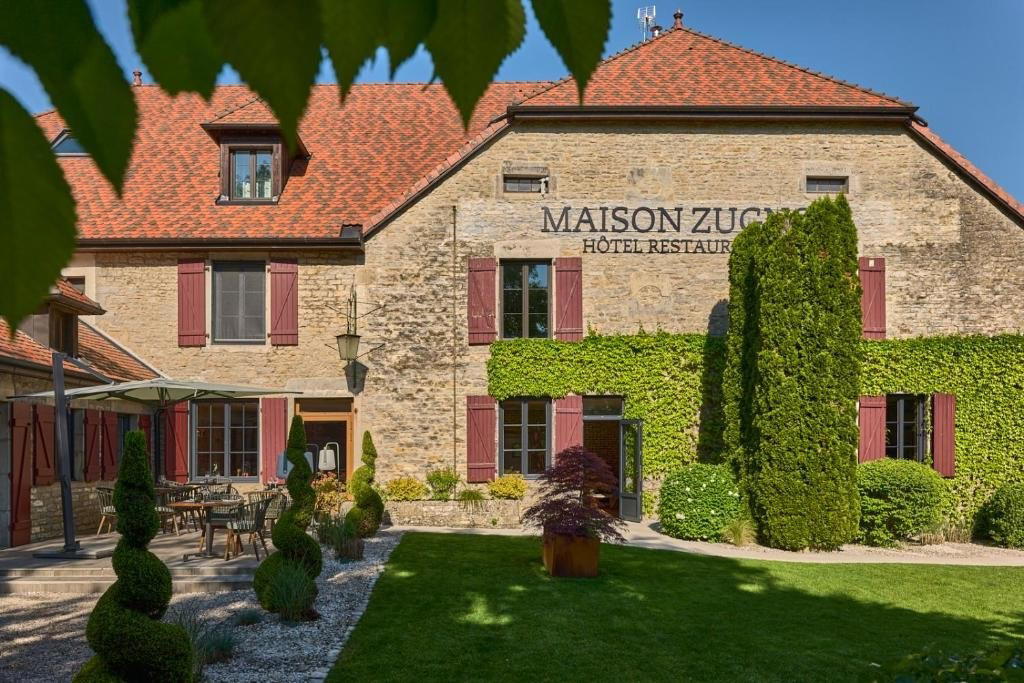

Details
- Scenic
- Cozy
- Rustic
- Classic
- Family
- Date Night
- Casual Hangout
- Special Occasion
- Terrace
- Historic Building
- Standalone
- Extensive Wine List
- Local Sourcing
- Mountain
- A La Carte
- Set Menu
- Wine
- Vegetarian Friendly
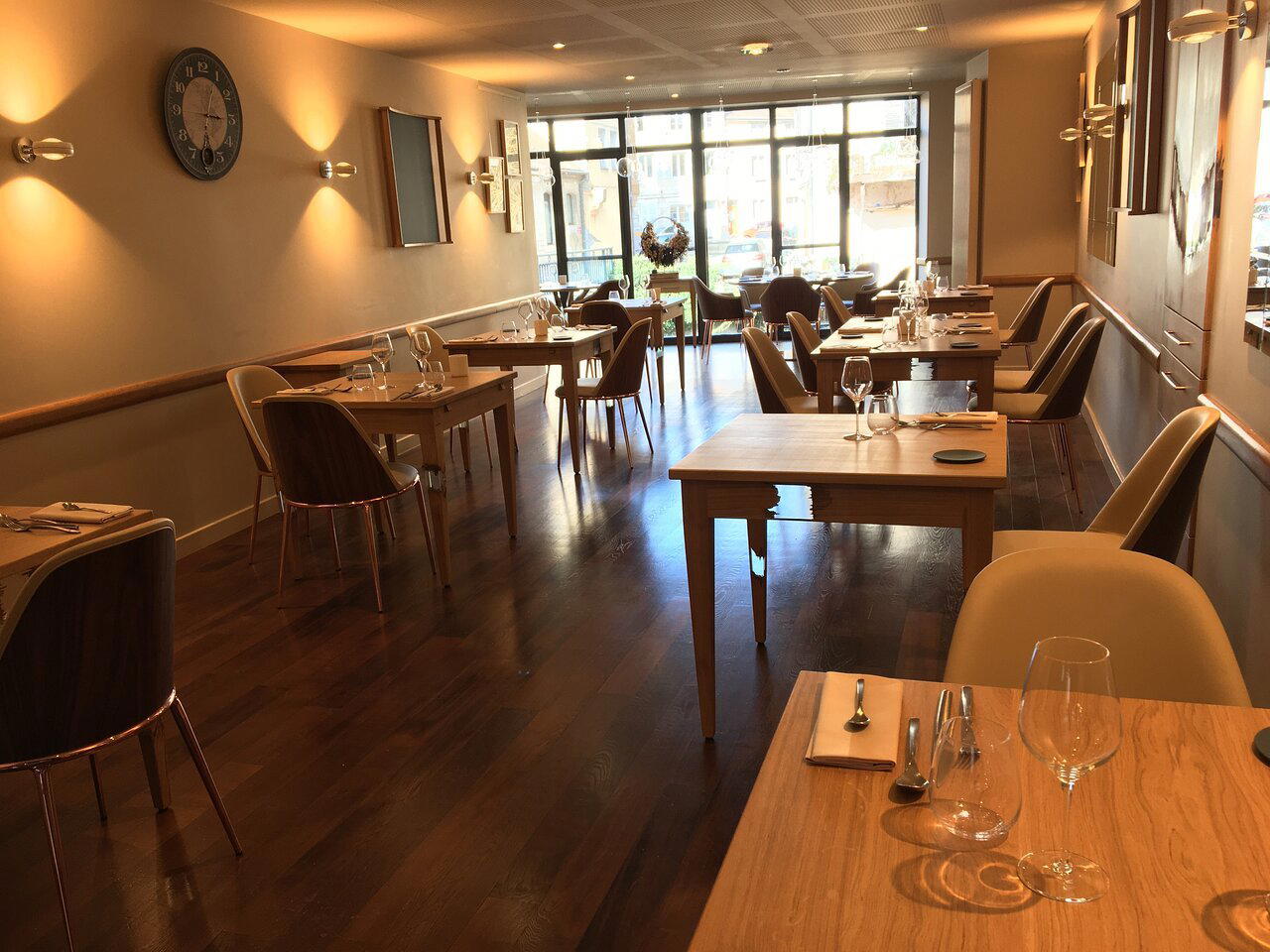
Warm, welcoming and characterful, with a cozy dining room and terrace suited to a relaxed meal in a scenic village setting.