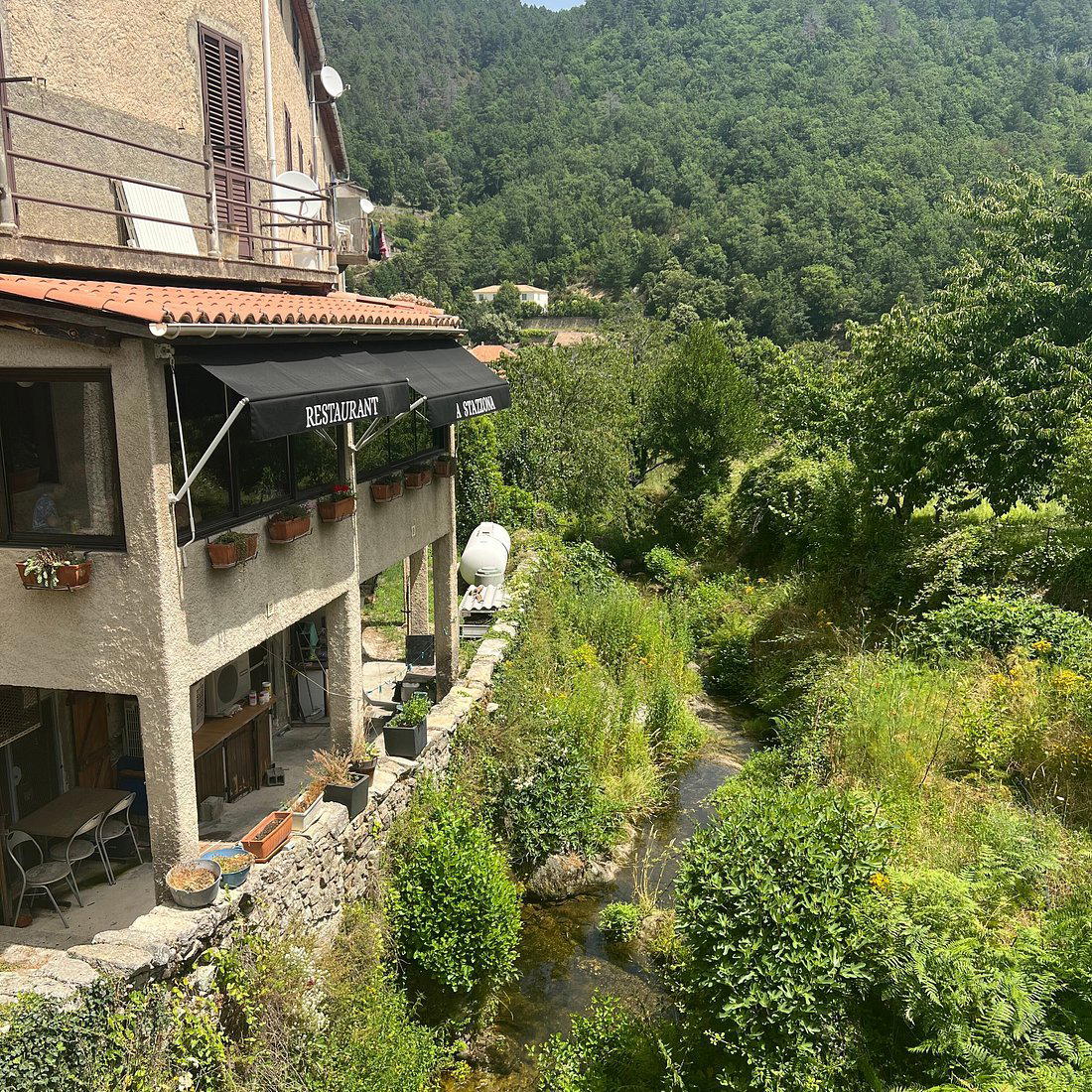
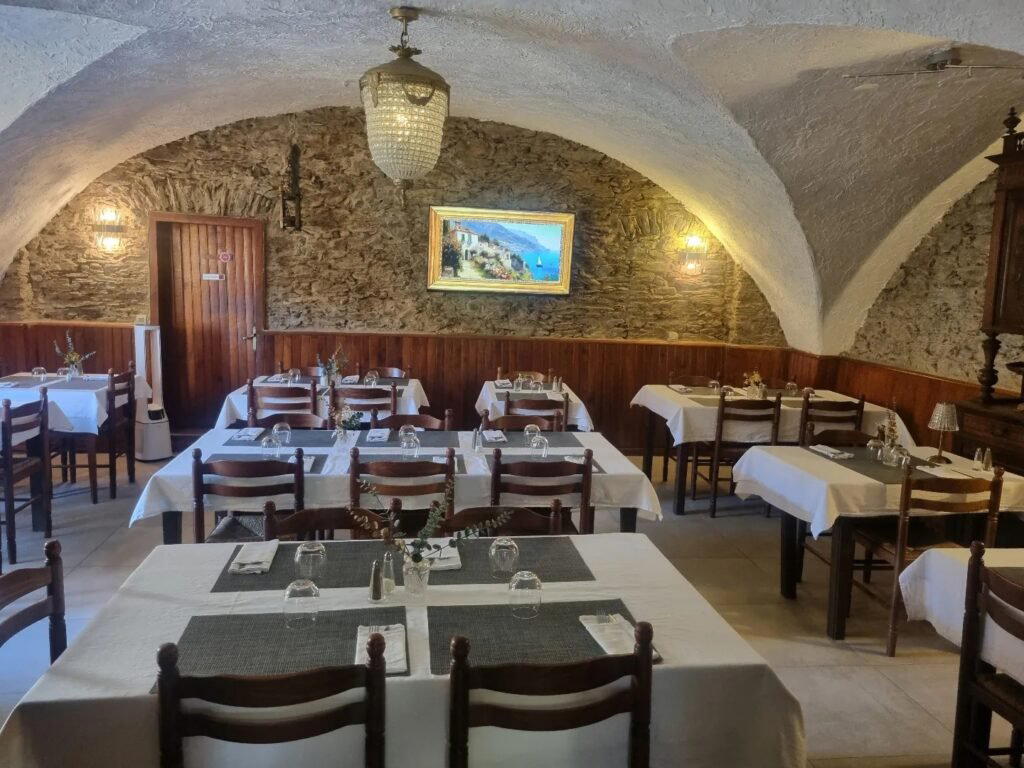
Le Fort sits in Aléria, a small town on Corsica's eastern plain where Roman ruins and lagoon fisheries define the local identity more than any restaurant marquee. The kitchen operates within a food culture shaped by proximity to the Étang de Diana, one of France's most respected oyster and mussel beds. For visitors passing through the island's less-travelled interior corridor, it is a grounded reference point in a town with more history than dining options.
Pearl is the En Primeur Club membership app — saves, bookings, and concierge access live there. Same editors, same standards.
- Address
- 20270 Aléria, France
- Phone
- +33627463674
 Saves & bookings on Pearl
Aléria and the Eastern Plain: A Food Culture Built on What the Land and Water Provide
Corsica's eastern plain is not the island's postcard face. The maquis-covered mountains and cliff-edged coves draw the crowds; Aléria, by contrast, sits on a flat agricultural corridor where the Tavignano river meets the sea and where the Étang de Diana stretches southward as one of the most productive shellfish lagoons in the western Mediterranean. That geographical fact shapes everything about how people eat in this part of the island. The ingredients arrive with very short supply chains: oysters pulled from Diana's brackish waters, freshwater fish from the nearby rivers, charcuterie from pigs raised on Corsican chestnut forests inland. It is a food culture that predates culinary fashion by centuries.
Le Fort is a French Grill & Barbecue restaurant in Aléria, France. Aléria has a small and unsentimental dining scene, this is a market town and a crossroads, not a resort, which means the restaurants that persist here do so on the basis of what they serve rather than atmosphere manufacturing or tourist footfall. The eastern plain rewards patient itinerary-building. Visitors who route their Corsican trip through the interior rather than circuit the coastline find a different register of the island entirely.
The Étang de Diana and the Logic of Sourcing in This Corner of France
Across French regional dining, the most compelling ingredient stories tend to share one characteristic: the producer and the plate are close enough that provenance is observable rather than claimed. The Étang de Diana, a few kilometres south of Aléria, is one of those rare cases where that proximity is structural. The lagoon has supplied oysters since antiquity, Roman amphora fragments recovered from its shores indicate commercial shellfish trade going back two millennia, and its particular salinity profile, a function of the lagoon's semi-enclosed connection to the Tyrrhenian Sea, produces oysters with a mineral character that differs measurably from Atlantic-farmed stock.
For nearby restaurants, the implication is direct: the shellfish on the plate can be harvested that morning. That is a different condition from even the best-supplied metropolitan kitchens. The Aux Coquillages de Diana in the same town has built its identity almost entirely around that lagoon. The broader point is that Aléria's dining scene, limited in number of covers as it is, sits on top of an ingredient base that most French provincial towns would find difficult to match. Proximity to primary production is the structural advantage, and it tends to express itself in simplicity of preparation rather than complexity of technique.
This is worth holding in mind when comparing Aléria's table to France's higher-profile dining destinations. The ambition at places like Mirazur in Menton or Bras in Laguiole involves translating exceptional regional ingredients through elaborate conceptual frameworks. In a small eastern-plain town, the relationship between source and plate is more direct. Neither approach is inherently superior; they represent different convictions about what a kitchen should do with good raw material.
Aléria's Position in the French Regional Dining Map
France's most documented restaurant destinations cluster in Paris, Lyon, and along the Mediterranean Riviera. The provincial tier below that, places like Illhaeusern, home to Auberge de l'Ill, or Fontjoncouse, where Auberge du Vieux Puits operates, tends to earn attention through Michelin recognition rather than urban proximity. Corsica sits outside that circuit almost entirely. The island has fewer awarded restaurants per capita than comparable French regions, partly because of its geographic remove from the mainland inspection circuit, and partly because its leading cooking has historically been embedded in agriturismo-style formats rather than formal restaurant structures.
That positioning means Aléria's restaurants are evaluated against a local standard rather than a national one. Visitors arriving with expectations calibrated to Paris's Alléno Paris au Pavillon Ledoyen or Reims's Assiette Champenoise will find a different proposition. Those expecting the kind of direct, ingredient-led cooking that defines the better end of French provincial dining will be better positioned to read what Aléria offers.
See our full Aleria restaurants guide for a broader map of where to eat across the town and surrounding area.
Planning a Visit: What the Eastern Plain Requires
Aléria is accessible by road from Bastia in roughly an hour and from Porto-Vecchio in around ninety minutes, making it a logical stop on a north-south transit rather than a dedicated destination for most itineraries. The town itself has limited accommodation options, which means most visitors arrive for a meal and continue. Summer months bring higher traffic through the eastern plain corridor, as the RN198 is the main coastal artery connecting the island's north and south. Reservations at any Aléria restaurant are advisable in July and August; outside peak season, the town operates at a pace that reflects its agricultural rather than tourist function.
Le Fort's address places it in the town centre. Le Fort is recommended for reservations and follows a casual dress code. Its regular hours are Monday to Saturday from 10 AM to 11 PM and Sunday from 9 AM to 11 PM. The eastern plain receives less rainfall than the western coast and tends to run warmer in autumn, making September and October viable months for travel with fewer logistical pressures than high summer.
The Wider Context: French Cooking Traditions and Where Corsican Tables Fit
The French restaurant traditions that draw international attention, the multi-course tasting formats at houses like Georges Blanc in Vonnas or the classical rigour of Paul Bocuse's Auberge du Pont de Collonges, represent one strand of French culinary identity. Corsican cooking sits in a different tradition: closer to Italian and North African influence than to the northern French canon, built on chestnut flour, wild herbs from the maquis, cured pork products, and coastal seafood. It has absorbed fewer of the formal techniques that define the mainland's Michelin tier, and it is not worse for that.
The seafood-forward coastal kitchens of the western Mediterranean offer useful comparison points. Christopher Coutanceau in La Rochelle and AM par Alexandre Mazzia in Marseille both work within seafood-dominant regional identities while operating at Michelin-starred levels of technical ambition. Corsican restaurants, Aléria's included, rarely pursue that tier of technical development, but they often deliver on the underlying premise more directly: the fish and shellfish are genuinely fresh, genuinely local, and prepared without the distance that formal technique can introduce between ingredient and plate.
For travellers who have covered the French mainland's major restaurant destinations, the mountain-set precision of Flocons de Sel in Megève, the Alsatian institution of Au Crocodile in Strasbourg, or the Provence classicism of L'Oustau de Baumanière in Les Baux, Corsica represents a genuinely different register of French eating. Aléria is where that register is perhaps most concentrated, away from the island's busier resort towns and anchored in an agricultural and aquacultural reality that keeps the cooking honest about where it comes from.
Comparable Venues
Comparable venues nearby, for context on price, style, and recognition.
| Venue | Cuisine | Price | Awards | Notes |
|---|---|---|---|---|
| Le FortThis venue — the venue you are viewing | French Grill & Barbecue | $$ | , | |
| Aux Coquillages de Diana | Mediterranean Seafood & Shellfish | $$$ | , | Aleria |
| Le Signal 2108 | Bistronomic French with Regional Specialties | $$ | , | Signal Mountain |
| Chez Léon | Traditional Corsican Gastropub | $$ | , | Cateri |
| A Volta | French Mediterranean with Local Corsican Products | $$ | , | Cargese |
| Le Divin | Corsican French Bistro | $$ | , | Porto-Vecchio |
Continue exploring
More in Aleria
Restaurants in Aleria
Browse all →
At a Glance
- Casual Hangout