Les Regalia

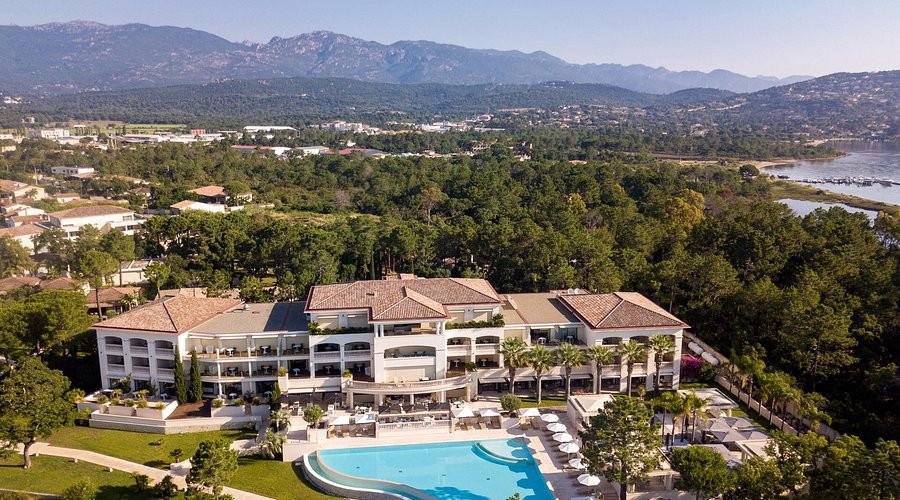
Where the Corsican hills meet the sea, Les Regalia positions itself apart from Porto-Vecchio's beach-front hotel tier. The 24-room family-run estate sits on a wooded hillside above the Mediterranean, with infinity pool, private beach club, and suites fitted with Philippe Starck soaking tubs, all oriented toward the water views that define the property's case for attention.
Pearl is the En Primeur Club membership app — saves, bookings, and concierge access live there. Same editors, same standards.
- Address
- Strada di, Sainte Lucie de, Pinarello, 20144 Porto-Vecchio
- Phone
- +33 4 95 71 44 42
- Website
- lesregalia.com
- Directions
- Get directions
 Saves & bookings on Pearl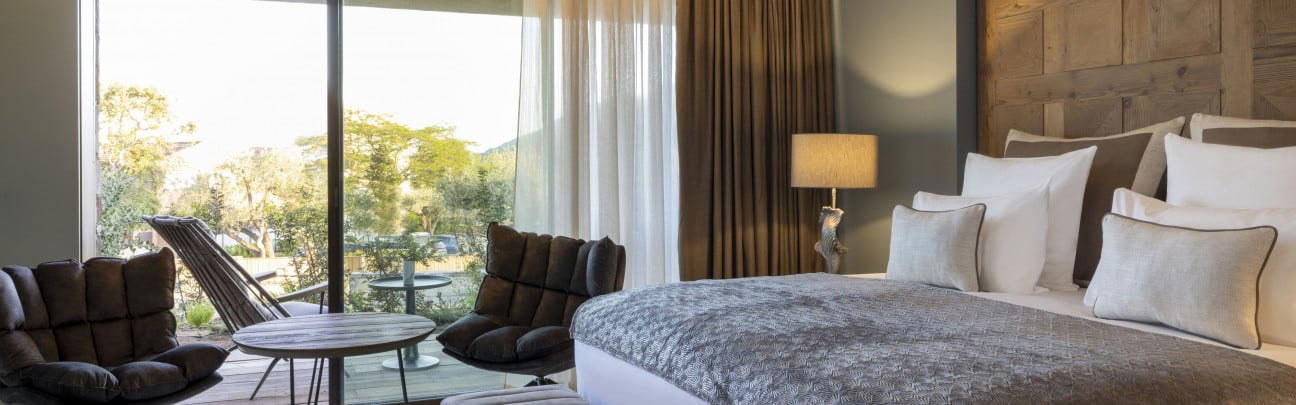
A Hilltop Address on Corsica's Southern Coast
The prevailing logic in southern Corsica holds that proximity to the beach is the primary measure of a hotel's value. Most visitors to Porto-Vecchio arrive with a beach in mind, the pale granite coves at Palombaggia, the shallows at Santa Giulia, and book accordingly, selecting from the cluster of waterfront properties that compete mainly on access and sand. Les Regalia operates from a different premise. The property sits on a wooded hillside estate along the road toward Pinarello, where the terrain rises away from the coast and the sea becomes a panorama rather than a destination you walk to. That shift in perspective, from horizontal beach experience to refined vantage point, shapes everything from room design to the restaurant terrace.
In the broader context of southern French premium hotels, hilltop positioning is an established tradition. Properties like Château de la Chèvre d'Or in Èze and The Maybourne Riviera in Roquebrune-Cap-Martin have long argued that a commanding view of the Mediterranean is worth more than direct sand access. Les Regalia makes a version of that same argument on Corsican terms, substituting maquis-covered hillside for Riviera cliff face and family ownership for international group infrastructure.
What the Location Actually Delivers
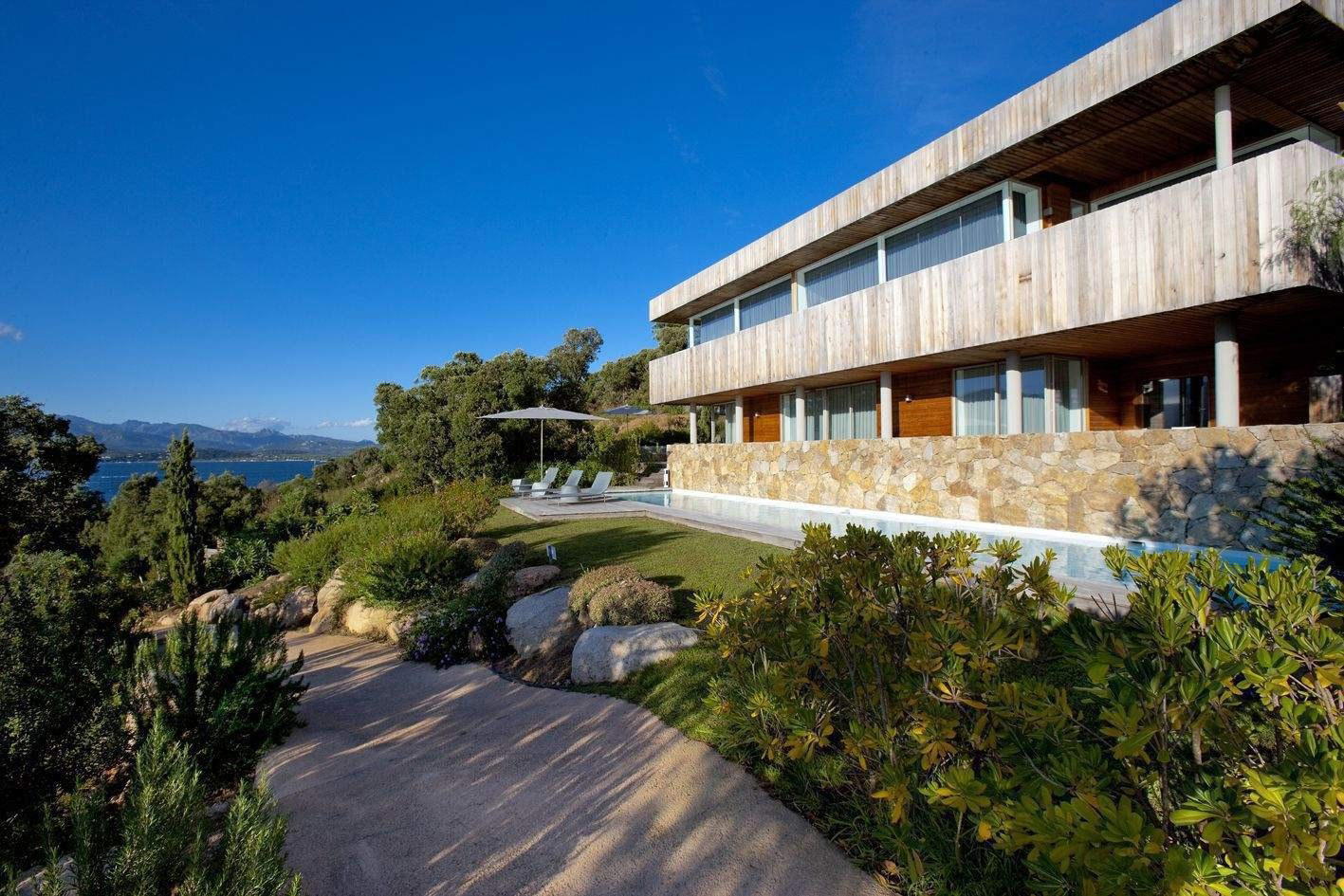
The estate is wooded, which means arrival feels like entering a contained landscape rather than pulling up to a seafront forecourt. The design works with local materials, stone sourced from the island, recycled wood, choices that read as deliberate rather than decorative, aligning the property with a Corsican architectural tradition that prioritises material authenticity over imported luxury signifiers. The same approach informs the cocktail bar, which is framed by olive groves in a configuration that several guests and critics have described as a secret garden format: enclosed, planted, and distinct from the main pool area.
The infinity-edge pool is the property's primary architectural statement. From that position on the hillside, the pool's horizon line meets the sea, producing the visual layering that photographs well and reads, in person, as a specific kind of spatial quality, the sense of elevation over distance, that flat beach properties cannot replicate. The restaurant terrace operates on the same principle, with water views that make the meal's physical setting as present as the food itself. For a certain category of traveller, this is not a secondary consideration.
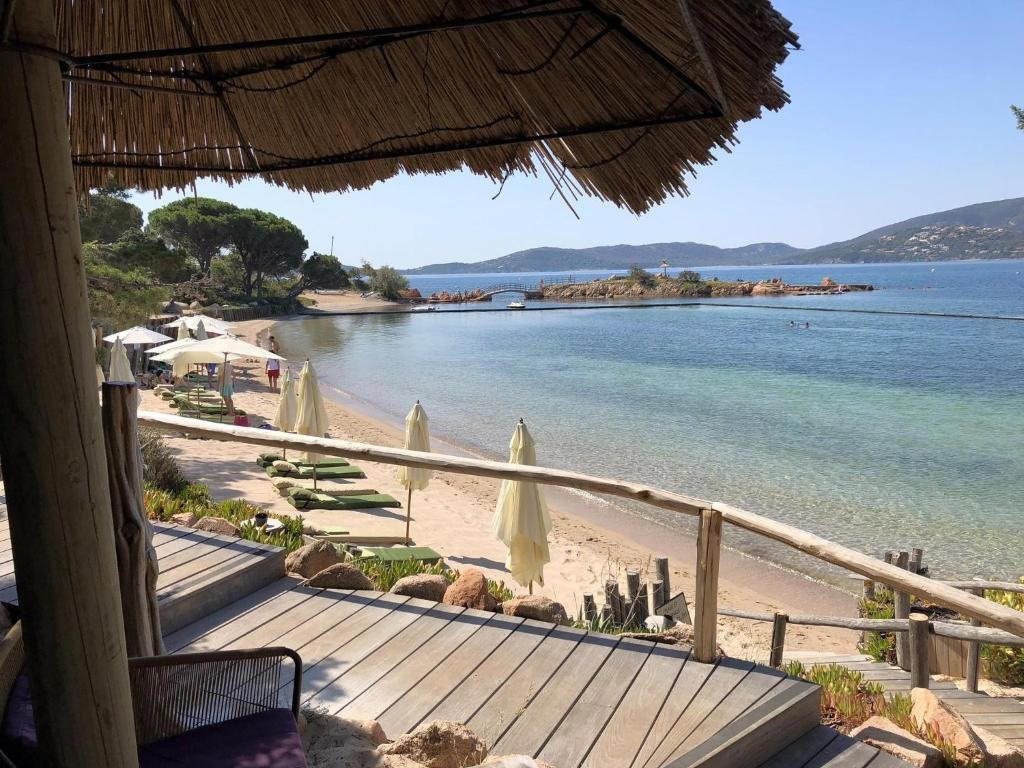
Access down to sea level is described as a short walk, with a private beach club at the bottom. This positions Les Regalia differently from both the locked-in hilltop properties of the Riviera, where the cliff makes the sea largely decorative, and the fully beachfront properties along Porto-Vecchio's coastline such as Casadelmar. The estate offers both registers: refined views from the main property and actual sand access via the beach club, a combination that fewer properties in the area manage across a 24-room footprint.
Rooms: Glass, Views, and a Clear Hierarchy
With 24 rooms, the property sits in the smaller end of the premium hotel scale on the island, which tends to concentrate service capacity and limit the anonymity that larger resorts produce. Room categories follow a clear logic: the leading suites offer glass-walled terraces facing the bay, spa-scale bathrooms fitted with Philippe Starck sculptural soaking tubs, and unobstructed sea views. The Starck tub specification is a specific credential, Starck's sanitary design work, produced through his long collaboration with Duravit and other manufacturers, appears in a defined tier of European design hotels and carries a signal value that separates the suite tier from the category below.
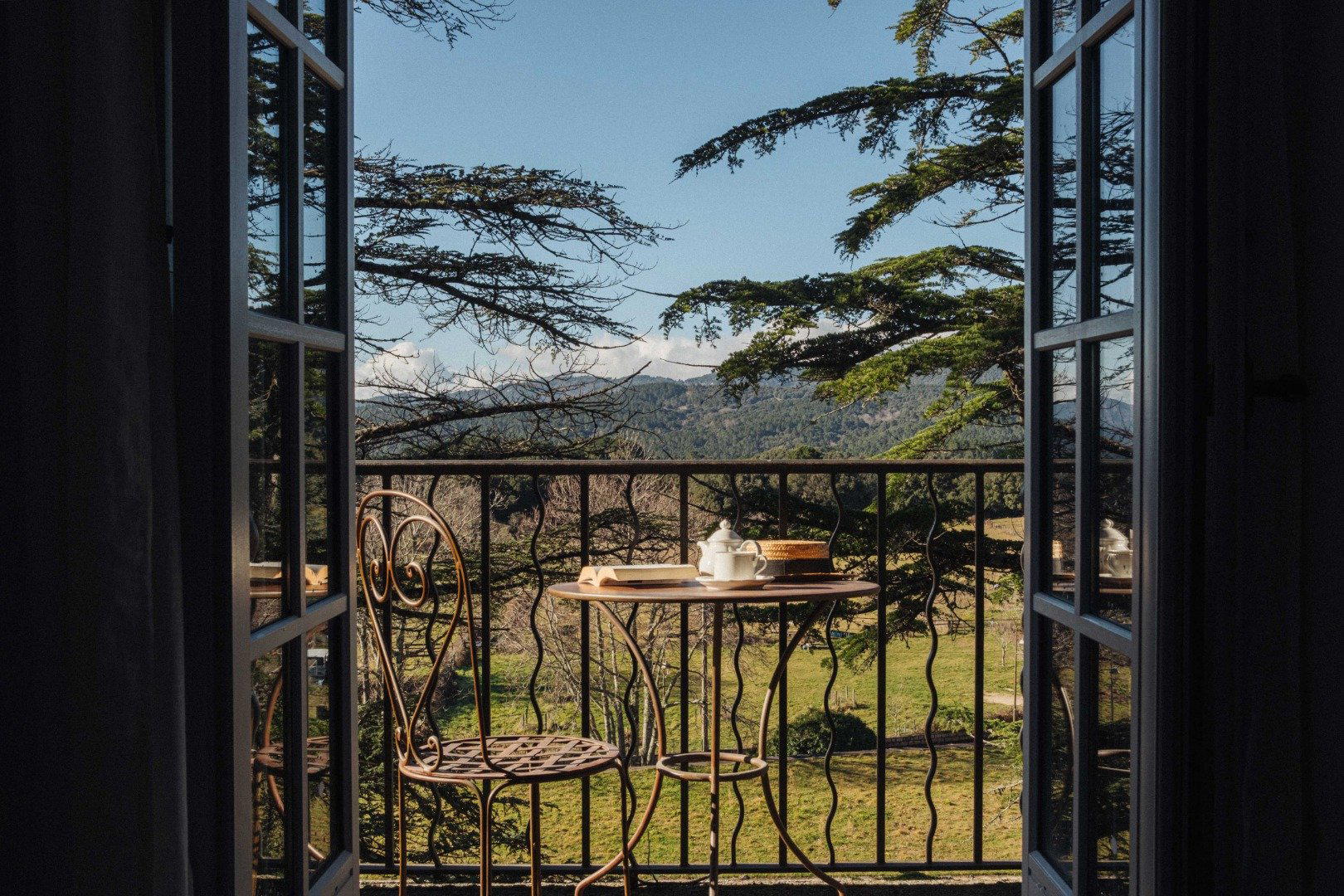
The entry-level rooms do not match that specification but are described as having floor-to-ceiling windows and private balconies facing Mediterranean gardens rather than sea. That is a meaningful distinction for planning purposes: guests prioritising the view over the design credential should book upward in the room hierarchy. For comparison, waterfront-positioned properties in Porto-Vecchio like Hôtel Don César or Les Bergeries de Palombaggia distribute sea access differently, with beach proximity as the base-level offer rather than an add-on reached by walking down from the main building.
The Property in the Context of French Mediterranean Luxury
The southern French premium hotel tier is competitive and segmented. At the high end of the institutional scale, properties such as Hotel Du Cap-Eden-Roc in Cap d'Antibes, Airelles Saint-Tropez Château de la Messardière, and La Réserve Ramatuelle operate with brand infrastructure, full spa facilities, and multi-outlet dining that Les Regalia, as a family-run 24-room property, does not attempt to replicate. The comparison set for the hotel is better drawn from estate-scale properties in Provence, where the property itself and its position in the landscape form the primary guest proposition.
Corsica adds a specific variable: the island's relative inaccessibility compared to the Riviera means that properties here face less competitive density but also less foot traffic from the luxury short-break market. Guests arriving at the hotel have, in most cases, committed to the island as a destination, which tends to produce a different engagement with the property than a two-night Riviera stop allows. That dynamic suits a hillside estate oriented toward views and slow pace better than it suits a beach club built for volume.
For guests building a broader France itinerary, the estate-and-view format has parallels across the country's premium hotel inventory: Domaine Les Crayères in Reims and Royal Champagne Hotel & Spa in Champillon apply similar logic, property as landscape asset, in entirely different geographies.
Planning: Getting There and Booking
The hotel is located at Strada di Sainte Lucie de Pinarello, outside the main Porto-Vecchio town, on a hillside estate. The property runs 24 rooms, and at that scale, availability tightens during the high Corsican summer season (July and August), when southern Corsica receives the bulk of its annual visitor volume. The walk from the main building down to the private beach club makes the property less suited to guests for whom beach access needs to be immediate and flat, that is a physical consideration, not a shortcoming, and it is the logical consequence of the hilltop positioning that defines the property's offer.
The Quick Read
Comparable venues nearby, for context on price, style, and recognition.
| Venue | Price | Notes |
|---|---|---|
| Les RegaliaThis venue — the venue you are viewing | $$$$ | Not listed |
| Les Bergeries de Palombaggia | $$$$ | Porto-Vecchio, Modern refinement blended with authentic Corsican simplicity in a natural setting |
| Mariosa | $$$$ | Route de Palombaggia, Contemporary seaside boutique with distinctive architecture blending luxury and relaxation |
| Le Pinarello | $$$$ | Sainte-Lucie-de-Porto-Vecchio, Contemporary beachfront resort with classic chic interiors and abundant outdoor spaces |
| Riva Beach | $$$$ | Porto-Vecchio, Coastal boutique overlooking gulf |
| Hôtel Don César | $$$$ | Porto-Vecchio, Mediterranean seaside luxury with panoramic terraces |
Recognition history
Dated appearances from independent guides and award organizations, with the underlying list record or original source where available.
Mr & Mrs Smith Smith Seal of Approval
Mr & Mrs Smith
Michelin 1 Key
Michelin
Continue exploring
More in Porto-Vecchio
Hotels in Porto-Vecchio
Browse all →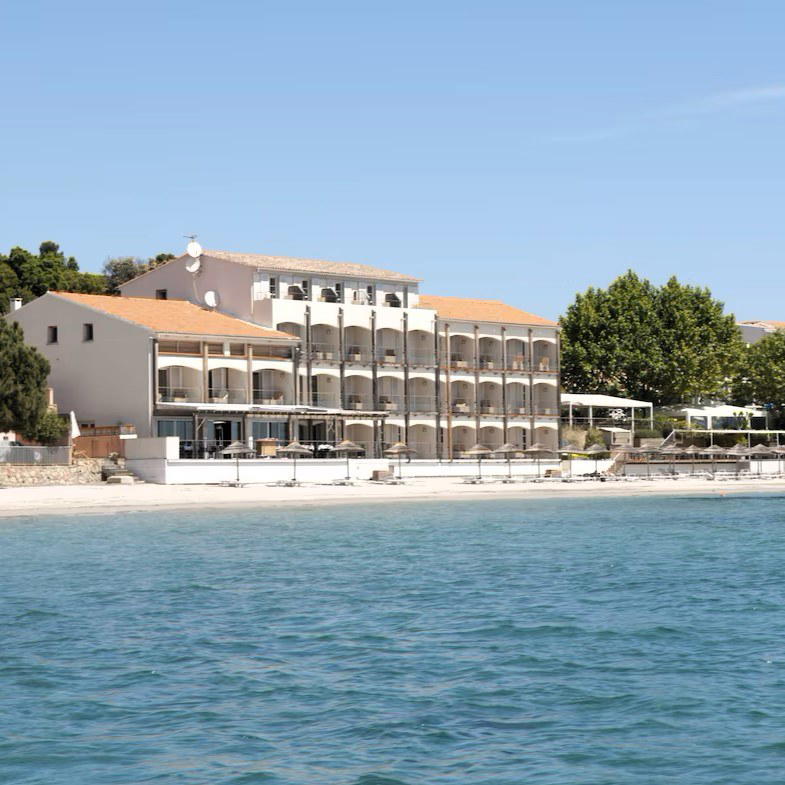
Bars in Porto-Vecchio
Browse all →
Restaurants in Porto-Vecchio
Browse all →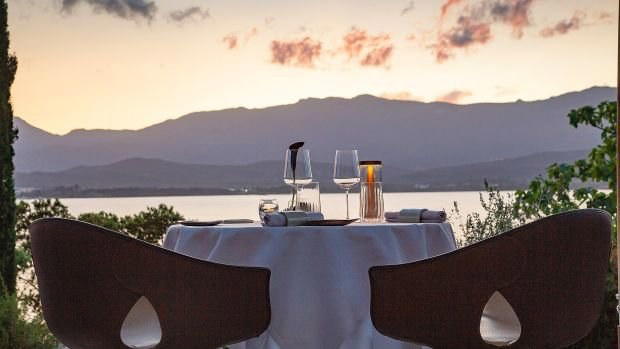
Wineries in Porto-Vecchio
Browse all →

At a Glance
- Elegant
- Sophisticated
- Scenic
- Romantic
- Romantic Getaway
- Honeymoon
- Wellness Retreat
- Weekend Escape
- Beachfront
- Infinity Pool
- Panoramic View
- Terrace
- Wi Fi
- Pool
- Spa
- Fitness Center
- Room Service
- Concierge
- Restaurant
- Bar
- Sauna
- EV Charging
- Garden
- Waterfront
- Wi Fi
- Pool
- Spa
- Fitness Center
- Room Service
- Concierge
- Restaurant
- Bar
- Sauna
- EV Charging
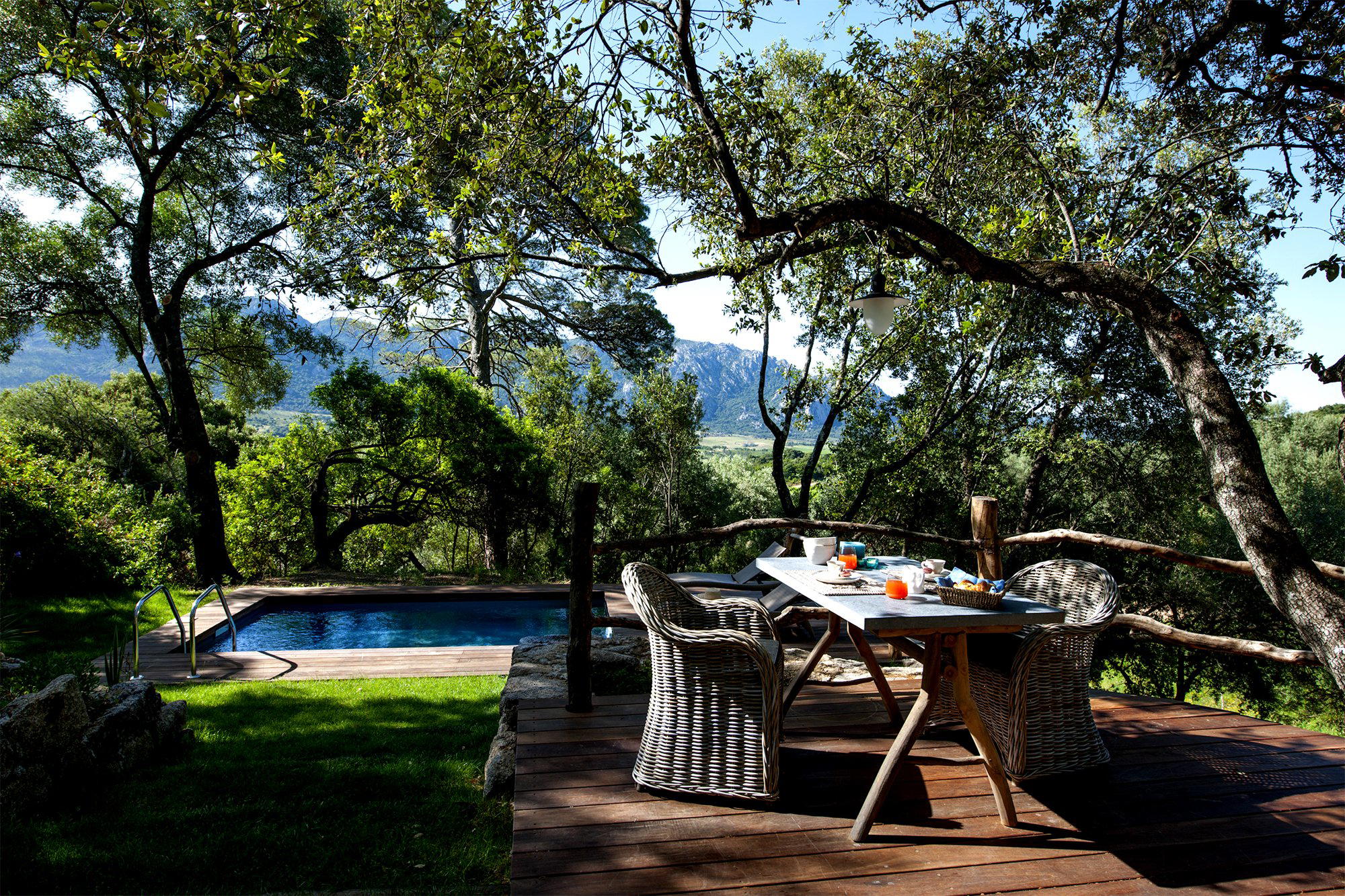
Refined and relaxing atmosphere with elegant lighting, soundproof rooms, and terraces offering serene garden or sea views, praised for its peaceful, high-end feel.