Chez Léon sits in Cateri, a small village in the Balagne region of Corsica where the island's agricultural traditions shape what reaches the table. The address alone, on the Avenue de la Corse, places it within a part of France where cuisine and territory remain closely bound. For visitors tracing Corsica's distinct food character, Cateri is a serious starting point.
Pearl is the En Primeur Club membership app — saves, bookings, and concierge access live there. Same editors, same standards.
- Address
- 135 Avenue de la Corse, 20225 Cateri, France
- Phone
- +33495617395
- Website
- hotel-corse-usandume.com
- Directions
- Get directions
 Saves & bookings on Pearl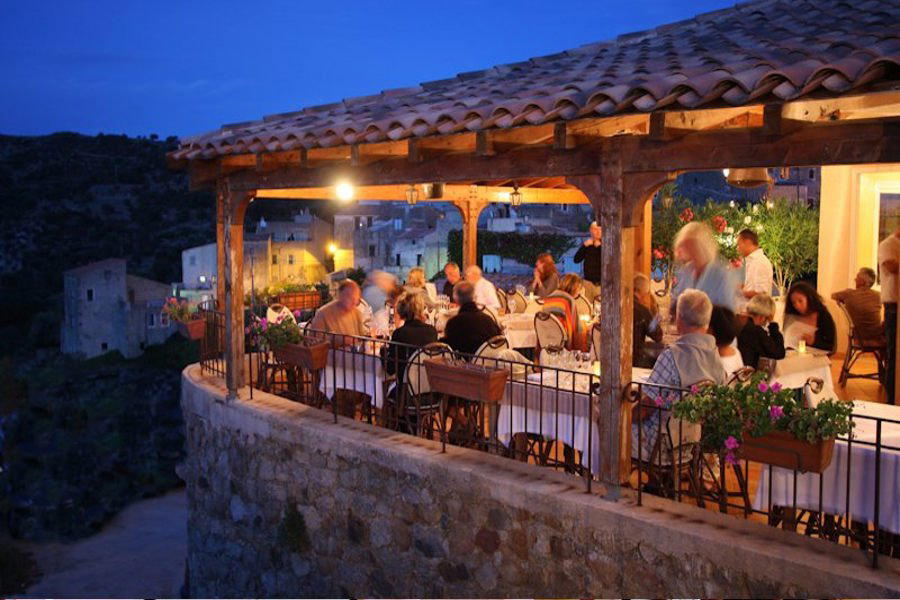
Where Corsican Territory Meets the Table
The Balagne region of Corsica operates by different rules than mainland French dining. In villages like Cateri, the distance between a pig in a chestnut forest and a plate of charcuterie is measured in kilometres rather than supply-chain abstractions. This is the defining condition of eating well in inland Corsica: proximity to raw material is not a marketing claim but a structural fact of how small producers, shepherds, and cooks have always worked here. Chez Léon, at 135 Avenue de la Corse in Cateri, sits inside that tradition.
Cateri itself occupies a ridge in the Balagne, the so-called Garden of Corsica, where the density of olive groves, chestnut stands, and small farms is higher than almost anywhere else on the island. That agricultural concentration is the backdrop against which any restaurant in the village should be understood. The cuisine of this part of Corsica draws on chestnut flour, brocciu (the island's fresh sheep or goat cheese with protected designation of origin status), cured pork from free-ranging pigs, and fish from a coastline less than twenty kilometres away. A table here is, almost by definition, a direct expression of what the land produces.
The Logic of Ingredient Proximity in Balagne Cooking
France's premium dining tier has spent the past decade in vigorous conversation about terroir, localism, and producer relationships. At restaurants like Bras in Laguiole or Auberge du Vieux Puits in Fontjoncouse, sourcing from a specific named plateau or valley is the organizing principle of the menu. Corsica's village restaurants operate on a related but distinct logic: the sourcing is less a curatorial choice than a practical reality. Refrigerated trucking from the mainland is expensive and slow. What grows or grazes nearby is what gets cooked.
Chestnut flour is one illustrative case. The Corsican interior has depended on chestnut trees for centuries, and the flour milled from them, used in breads, polenta, pastries, and even beer, carries a faint sweetness and density that imported wheat flour cannot replicate. Brocciu, made from the whey of sheep or goat milk and eaten fresh or aged, is protected under French and EU designation laws precisely because its character cannot be separated from the specific pastures of the island. These are not ingredients that a kitchen selects from a catalogue. They are what Corsica produces, and their quality is contingent on the season, the pasture, and the producer's method.
For comparison, the dining circuits around Mirazur in Menton or La Vague d'Or in Saint-Tropez represent the Mediterranean French coast at its most formally ambitious, where sourcing decisions are mediated by three-starred kitchens with the infrastructure to range widely. The village table in Balagne operates closer to the source but without that curatorial apparatus. The result is different in register rather than lesser in quality.
Cateri as a Dining Destination
The village sits inland from Calvi and Île-Rousse, two of the Balagne's main coastal towns. Driving up into Cateri from the coast takes visitors through a landscape where the shift from beach resort to agricultural village is pronounced and quick. The ridge villages of the Balagne, including Cateri, Sant'Antonino, and Pigna, form a loose cultural circuit that draws visitors interested in craft, food, and the slower rhythms of Corsican inland life rather than the beach-resort infrastructure of the coast.
That positioning matters for how to think about dining in the area. This is not a scene in the way that Parisian arrondissements or the Côte d'Azur resort strip constitute scenes. There is no late-opening bar culture, no competitive density of acclaimed kitchens. What exists instead is a set of small establishments where the relationship between the village's productive land and the kitchen is the primary story. Travellers who arrive expecting the formalised experience of, say, Flocons de Sel in Megève or the classical grandeur of Auberge de l'Ill in Illhaeusern will need to recalibrate. The value proposition in Cateri is about the directness of the food, not the elaboration of the service format.
For context on the broader French fine dining register, Alléno Paris au Pavillon Ledoyen, Maison Lameloise in Chagny, Georges Blanc in Vonnas, and Troisgros in Ouches each represent France's most decorated provincial and capital dining. Paul Bocuse's Auberge du Pont de Collonges and Les Prés d'Eugénie in Eugénie-les-Bains anchor the historical canon. Le 1947 à Cheval Blanc in Courchevel and La Table du Castellet represent the luxury-resort end of the spectrum. Chez Léon belongs to a completely different register: the village restaurant rooted in a specific Corsican agricultural geography. For international travellers more accustomed to the refined formats of Le Bernardin in New York or Lazy Bear in San Francisco, the shift requires active adjustment of expectations and is worth the adjustment. Browse L'Oustau de Baumanière in Les Baux for a point on the spectrum between Provençal terroir and formal ambition.
Planning a Visit
Cateri is most accessible by car from Calvi, roughly 20 kilometres to the northwest. The Balagne region is leading visited between late spring and early autumn, when the mountain roads are clear and the agricultural rhythm of the area is at its most visible. Corsica's tourist season compresses heavily into July and August, and the ridge villages see more traffic during those months. Visiting in June or September allows access to the same landscape and food culture with significantly less road congestion and accommodation pressure. Direct enquiry on arrival or via the local tourist infrastructure in Calvi or Île-Rousse is the practical approach.
Quick Comparison
Comparable venues nearby, for context on price, style, and recognition.
| Venue | Cuisine | Price | Notes |
|---|---|---|---|
| Chez LéonThis venue — the venue you are viewing | Traditional Corsican Gastropub | $$ | Not listed |
| La Cave | Modern French Meat & Wine Bar | $$ | Place Pascal Paoli |
| Saturne | Modern French with Nordic Influences | $$$ | 2nd Arrondissement |
| La Petite Epicerie | French Bistro - Local & Seasonal | $$ | Saorge village center |
| Le 20123 | Traditional Corsican | $$ | Centre-ville |
| Bienheureux | Modern French seasonal tasting menu | $$$ | Wasquehal |
Continue exploring
More in Cateri
Restaurants in Cateri
Browse all →
Bars in Cateri
Browse all →
Hotels in Cateri
Browse all →
Wineries in Cateri
Browse all →
At a Glance
- Rustic
- Cozy
- Scenic
- Family
- Celebration
- Terrace
- Live Music
- Private Dining
- Mountain
Current opening hours
- Monday
- 9 AM–11:30 PM
- Tuesday
- 9 AM–11:30 PM
- Wednesday
- 9 AM–11:30 PM
- Thursday
- 9 AM–11:30 PM
- Friday
- 9 AM–11:30 PM
- Saturday
- 9 AM–11:30 PM
- Sunday
- 9 AM–11:30 PM
Hours can change for holidays and private events. Last verified .
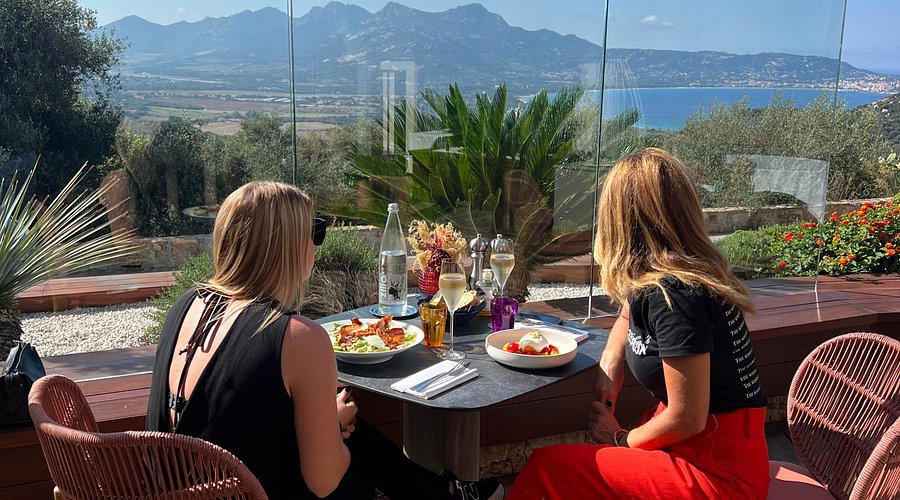
Festive and friendly atmosphere with a beautifully arranged flowery terrace offering magnificent views of mountains and sea.