

Michelin Plate
Our verdict
In the Jourdain pocket of Upper Belleville, Le Cheval d'Or holds a Michelin Plate and back-to-back Opinionated About Dining Casual Europe rankings, including #12 in 2023, for its Asian-inflected menu woven through with French technique. Chef Yohei Haratake's kitchen runs Tuesday through Friday evenings only, making advance planning essential for a table at this compact, red-façaded address on Rue de la Villette.

Pearl is the En Primeur Club membership app, where members save venues, book tables and use the concierge.
The menu
What to order
- Mapo tofu tortellini
- Scallop dumplings
- Cumin lamb shoulder
Where the 19th Arrondissement Meets Asia, One Course at a Time
Paris's relationship with Asian cooking has always been complicated. The city has long maintained a significant Vietnamese and Chinese restaurant population, particularly in the 13th arrondissement, yet the category of Asian cuisine filtered through French fine-dining technique has historically occupied a narrower space. Venues like Brigade du Tigre and Lai'Tcha have pushed into that territory from different directions, while neighbourhood standards like Lao Siam have held their ground in the 19th for decades. Into this layered context, Le Cheval d'Or at 21 Rue de la Villette has carved out a position that belongs to none of those traditions entirely, and that is precisely the point.
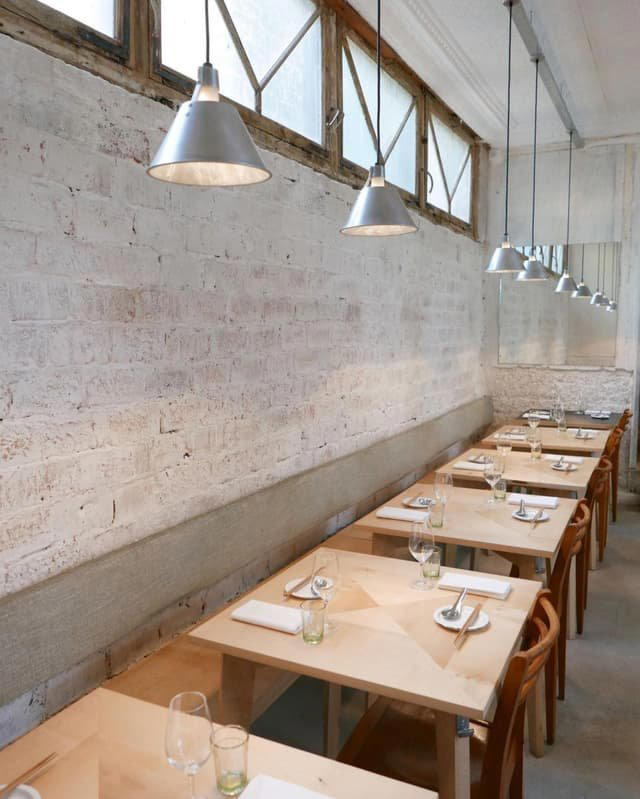
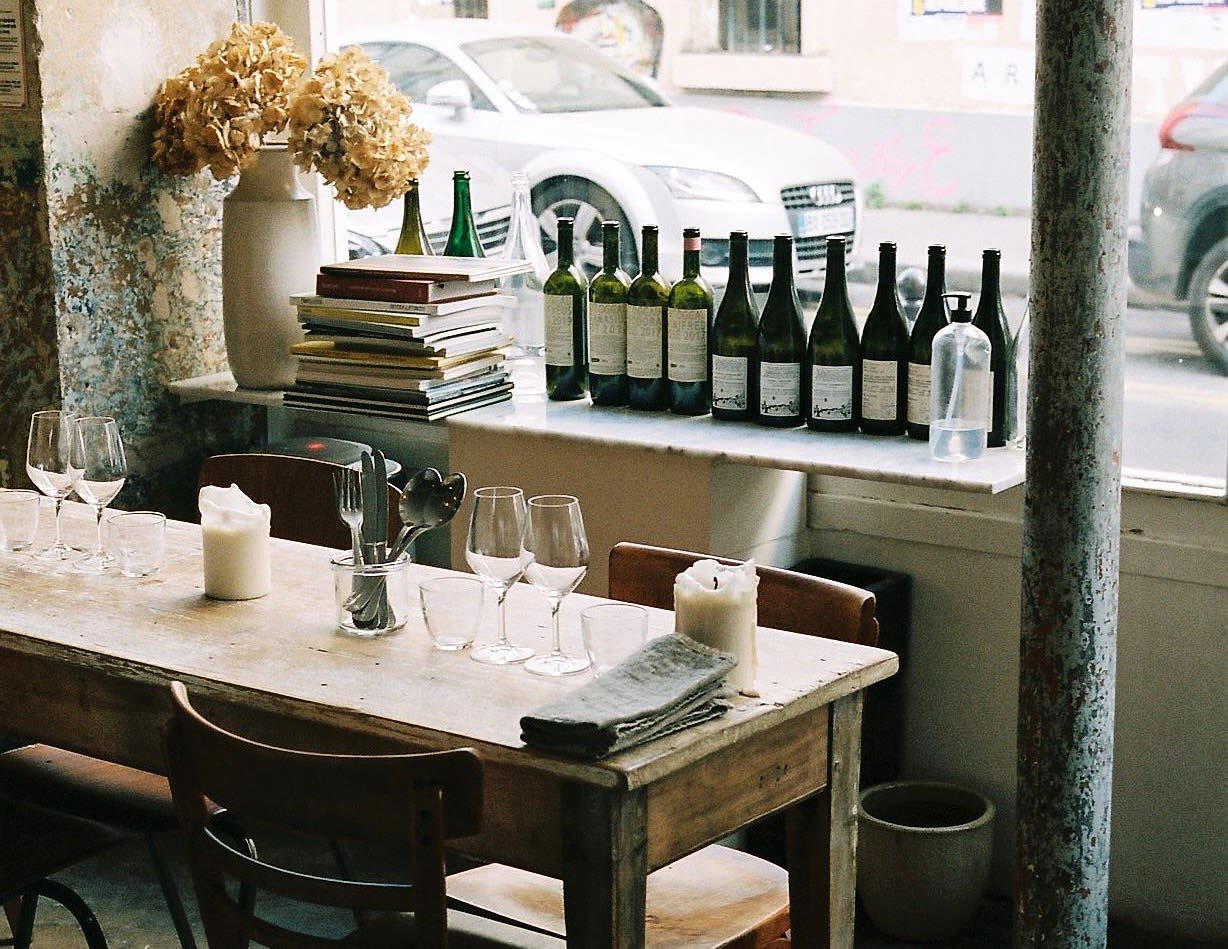
The address sits in the Jourdain pocket of Upper Belleville, a stretch of the 19th that has resisted the more aggressive gentrification of the Buttes-Chaumont edges nearby. The restaurant occupies a room shaped by someone else's choices: the oriental red façade, polished concrete floors, whitewashed walls, and an open-plan kitchen were inherited, not designed from scratch. A brand-new team, led by chef Yohei Haratake, took over those bones without altering them. In a city where gut renovations signal ambition and erasure simultaneously, the decision to keep the scenery intact carries its own quiet confidence.
The Ritual of the Meal: How This Menu Actually Works
The dining ritual at Le Cheval d'Or is built around a question the kitchen appears to enjoy leaving unanswered: is this French cooking inflected with Asian technique, or Asian cooking translated into French idiom? The honest answer is that it moves between the two depending on the dish, and that oscillation is what gives the meal its particular rhythm.
Dishes recorded in the awards data illustrate the method precisely. A tofu and caviar consommé à la royale uses a preparation rooted in classical French cuisine, the royale being a silky, egg-set custard, but the protein frame is Japanese. Barbajuan raviolis arrive in sweet pepper sauce, borrowing from the filled-pasta tradition of the Ligurian border region while landing somewhere the Monaco street snack's originators would not immediately recognise. Tofu and shiitake tortellini fold a French pasta shape around East Asian aromatics. Stuffed duck à l'orange, a dish so embedded in the French canon it barely needs naming, appears in a form that apparently carries enough recalibration to signal the kitchen's intent. A 100% vegetarian cassoulet, the cassoulet being one of the most defiantly meat-anchored dishes in all of southern French cooking, completes a menu that treats Gallic tradition as material rather than constraint.
This is not the register of fusion cooking as it existed in the 1990s, where novelty was the point. The ambition here reads more like the approach at certain Franco-Japanese counters: use the grammar of one tradition to say something the other tradition's vocabulary cannot quite express. The result is a meal with its own internal logic, where the sequence of courses asks you to recalibrate slightly with each arrival rather than follow a single guiding narrative. Pacing, at a restaurant that operates only Tuesday through Friday evenings, 7 to 10:30 pm, tends to feel deliberate, the kitchen is not turning tables aggressively on a four-night week.
The Opinionated About Dining Casual Europe list is a useful compass here. OAD's methodology weights frequent diner opinion heavily and skews toward technically serious cooking at accessible price points. Le Cheval d'Or ranked #12 in the Casual Europe category in 2023, dropped to #38 in 2024, and returned to #37 in 2025. That trajectory, high entry, slight dip, recovery, is common for restaurants that change teams mid-run and need a season to re-establish consistency. The Michelin Plate awarded in 2024 confirms the guide's interest without committing to star-level expectation.
For context, the €€€€ end of Paris dining is well-documented: Alléno Paris au Pavillon Ledoyen and Arpège operate in a bracket defined by multi-course tasting formats and three-figure covers.
Across Europe, other kitchens are working in adjacent territory. taku in Cologne approaches Asian cooking through a hotel fine-dining frame; Jun's in Dubai operates at a similar intersection of Japanese technique and Western context. The sub-category is not unique to Paris, but the specific Franco-Asian register Le Cheval d'Or occupies, grounded in a working-class neighbourhood rather than a prestige address, gives it a distinct position in that European conversation.
What Regulars Order and What That Signals
The dishes that appear in critical notes consistently are the consommé à la royale and the duck à l'orange, which together bracket the menu's conceptual range. The consommé represents the kitchen at its most technically classical, a preparation that demands precise execution and offers almost nowhere to hide, while the duck signals the willingness to take on a loaded French reference and rework it. Regulars who order across both are, in effect, reading the menu as intended: as a dialogue rather than a list.
The vegetable cassoulet functions differently. In a city where fully vegetarian cooking at this level of ambition remains a smaller category, a cassoulet stripped of its confit and sausage and rebuilt as a vegetable dish is a statement. It earns its place on the menu not as an accommodation but as an argument about what French technique can do when protein is removed as a load-bearing element.
Planning Your Visit
Le Cheval d'Or runs a tight operational window: Monday through Friday, 7 to 10:30 pm, with Saturday and Sunday service closed. That four-evening week, combined with OAD recognition and a modest room in a neighbourhood that does not overflow with options at this cooking level, means forward planning is advisable. The €€ price tier makes it accessible relative to Paris's starred tier, venues like Flocons de Sel in Megève, Mirazur in Menton, or historic houses like Paul Bocuse in Collonges-au-Mont-d'Or, Troisgros in Ouches, Bras in Laguiole, and Auberge de l'Ill in Illhaeusern all occupy a different financial register entirely.
The restaurant is at 21 Rue de la Villette in the 19th arrondissement. The Jourdain metro station (line 11) puts you within a short walk. For broader context on where Le Cheval d'Or sits in Paris dining, see our full Paris restaurants guide. For hotels, bars, wineries, and experiences in the city, the respective guides cover the full picture: Paris hotels, Paris bars, Paris wineries, and Paris experiences.
Frequently asked questions
What do regulars order at Le Cheval d'Or?
Critical notes and awards descriptions point consistently to the tofu and caviar consommé à la royale and the stuffed duck à l'orange as the dishes that anchor the menu's identity, the first demonstrating classical French technique applied to Japanese ingredients, the second showing the kitchen's willingness to reframe a Gallic reference point. The fully vegetarian cassoulet has also drawn attention as an example of the kitchen treating a meat-defined dish as a technical problem to be solved rather than a category to be accommodated. Across all three, the common signal is that the most discussed dishes are those where the Franco-Asian dialogue is most directly legible on the plate.
Booking and Cost Snapshot
| Venue | Cuisine | Price | Awards | Notes |
|---|---|---|---|---|
| Le Cheval d'OrThis venue (the venue you are viewing) | French-Chinese Fusion | $50–100 | Michelin Plate | Not listed |
| Alléno Paris au Pavillon Ledoyen | Modern French Fine Dining | $150–200 | 3 Michelin Stars · World's 50 Best #79 | Creative |
| Kei | Modern French with Japanese Influences | $300–500 | 3 Michelin Stars · World's 50 Best #93 | Contemporary French, Modern Cuisine |
| L'Ambroisie | Classic French Haute Cuisine | $300–500 | 2 Michelin Stars · World's 50 Best #23 | French, Classic Cuisine |
| Le Cinq - Four Seasons Hôtel George V | Modern French Fine Dining | $300–500 | 3 Michelin Stars · World's 50 Best #24 | French, Modern Cuisine |
| Plénitude | Modern French Sauce-Led Fine Dining | $300–500 | 3 Michelin Stars · World's 50 Best #14 | Contemporary French |
Recognition history
Dated appearances from independent guides and award organizations, with the underlying list record or original source where available.
Michelin Plate
Michelin
Opinionated About Dining Casual in Europe Ranked #37
Opinionated About Dining
Full recognition history (6 entries)
Michelin Plate
Michelin
Michelin Plate
Michelin
Opinionated About Dining Casual in Europe Ranked #38
Opinionated About Dining
Opinionated About Dining Casual in Europe Ranked #12
Opinionated About Dining
Continue exploring
More in Paris
Restaurants in Paris
All restaurants in Paris →
Bars in Paris
All bars in Paris →




Details
- Trendy
- Cozy
- Industrial
- Date Night
- Group Dining
- Special Occasion
- Open Kitchen
- Extensive Wine List
- Natural Wine
- Biodynamic
- Prix Fixe
- A La Carte
- Small Plates
Current opening hours
- Monday
- 7–9 PM
- Tuesday
- 7–9 PM
- Wednesday
- 7–9 PM
- Thursday
- 7–9 PM
- Friday
- 7–9 PM
- Saturday
- Closed
- Sunday
- Closed
Hours can change for holidays and private events. Hours as of .
Industrial-chic space blending rusticity and refinement with Chinese heritage elements, described as cozy, hipster hangout, and trendy yet sometimes noisy.