Google: 4.5 · 302 reviews
Le Cantine
.png)
A 2025 Michelin Plate holder set within a restored 16th-century oil cellar on the edge of Sestri Levante, Le Cantine makes a deliberate break from the Ligurian coast's fish-centric tradition. The kitchen focuses on self-produced vegetables and meat cooked over olive wood, while a regionally anchored wine list ties the cooking firmly to Ligurian terroir.
 Discover on Pearl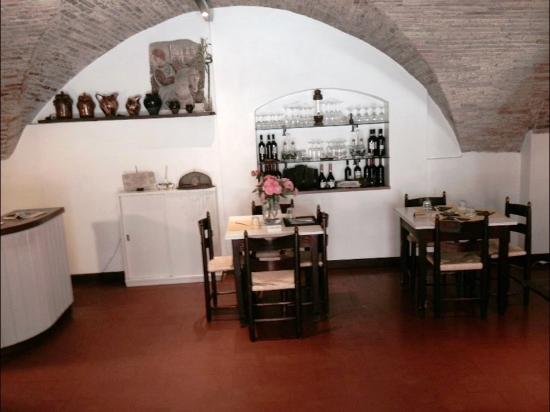
A Stone Cellar, an Olive Wood Fire, and No Fish on the Menu
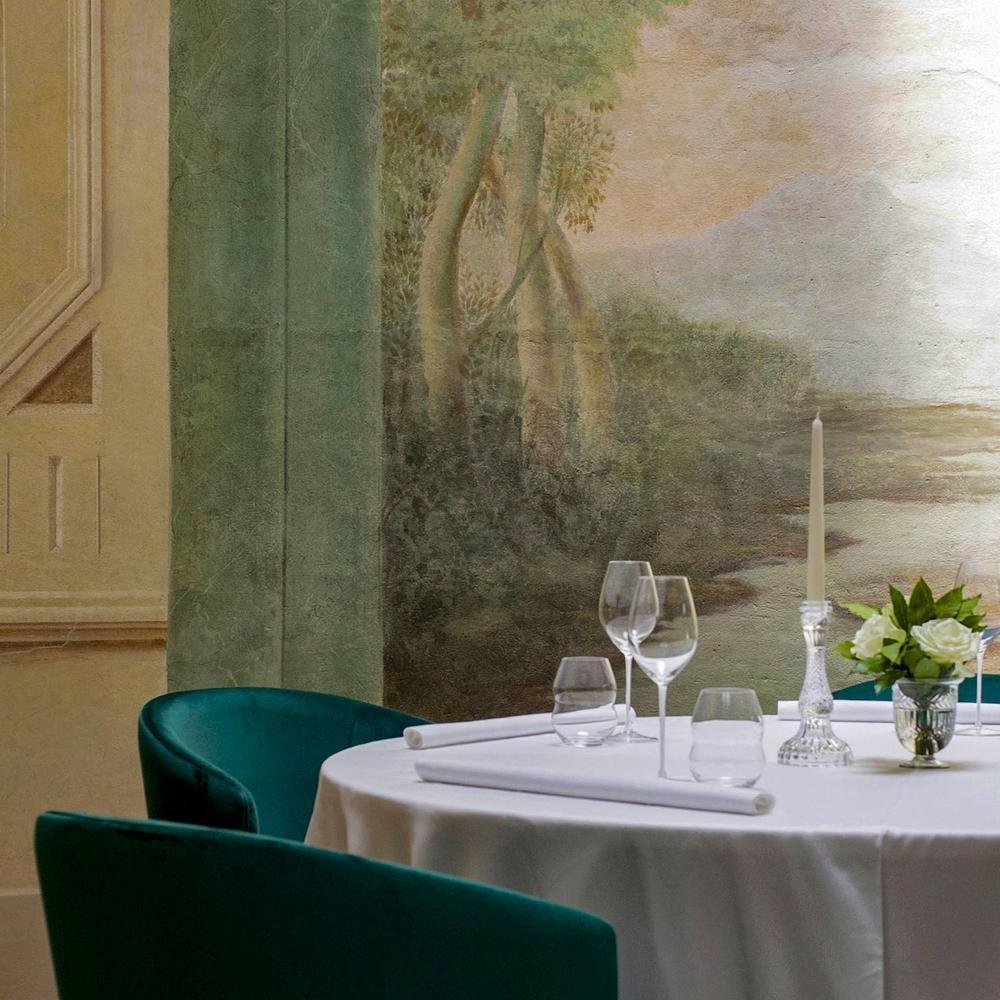
There is a particular pleasure in approaching a restaurant through its own kitchen garden. At Le Cantine, on Via Cantine Cattaneo just a short walk from Sestri Levante's seafront, the path past the vegetable beds signals something the menu will confirm: this is a place whose priorities run inland. The 1590 oil cellar that houses the dining room was built for storage, not theatre, and its thick stone walls and accumulated decades of accumulated ornament create an atmosphere that sits closer to a Ligurian farmhouse than to the coastal trattoria format that dominates the town. The setting is bucolic without feeling studied, the kind of room where a long dinner extends naturally into a second carafe.
Sestri Levante's dining scene clusters around two broad orientations. The first follows the water: seafood-led menus, raw preparations, the Ligurian tradition of trofie with pesto and fish-based brodetti. Rezzano Cucina e Vino represents that current clearly, as does the broader coastal positioning of places like Baia del Silenzio and Balin Sestri Levante. Le Cantine belongs to the second, smaller orientation: the inland agrarian tradition, where meat, preserved vegetables, and fire cooking define the register. Dropping fish entirely from the menu is a substantive editorial position in a coastal town, and the kitchen holds it consistently.
The Case for Cooking Meat Over Olive Wood
The choice of fuel matters more than it is sometimes given credit for. Olive wood burns hot and slow, produces a dense, faintly bitter aromatic smoke, and leaves a char with more complexity than beech or fruitwood. Across the Mediterranean, from the Greek islands to Puglia, cooks who work with olive wood describe it as a seasoning as much as a heat source. The fat in well-raised meat responds differently to it than to gas or charcoal: the crust develops more slowly, and the smoke penetrates the outer layers without overwhelming the interior.
At Le Cantine, the barbecue program is built around this fuel source, and the self-produced vegetables from the kitchen garden arrive alongside the meat rather than as supporting filler. In Italian inland cooking broadly, the relationship between fire, fat, and garden-grown alliums or bitter greens is one of the older structural patterns in the cuisine. The format at Le Cantine sits inside that tradition rather than operating as a contemporary reinterpretation of it.
Within the Italian grill category, this positions Le Cantine alongside an approach found in other wood-fire-focused houses elsewhere in the country, from the more elaborated programs at places like A de Totó in Trasmonte to the fuel-conscious kitchens that have earned attention across northern Italy. Internationally, the shift toward sourcing-led grill programs, evidenced by venues like Humo in London, reflects a broader reckoning with what wood-fire cooking actually requires in terms of ingredient quality. Le Cantine's version is quieter and more rooted in a specific local tradition, but it operates on a coherent version of the same premise.
Provenance at the Table: Vegetables, Meat, and What Self-Production Means
The self-produced vegetable gardens at Le Cantine are not a decorative detail. In the context of a meat-focused kitchen, the garden supplies the counterweight: the acidic, bitter, or starchy elements that make fat and char readable. Italian agri-dining has long understood this relationship, and the Ligurian tradition in particular draws on a densely planted, varied kitchen garden as a matter of practical necessity, given the steep terracing of the region and the historical difficulty of importing bulk produce.
When a kitchen controls its own vegetable production, two things change. Harvest timing aligns with service rather than distribution logistics, which means greens arrive at the table at a different stage of their life than supermarket supply chains allow. And variety selection shifts toward flavour and textural utility rather than shelf durability, which opens up heritage types that don't survive commercial distribution. Neither of these details is visible on a printed menu, but both are discernible in the quality of what arrives alongside the grilled proteins.
Michelin's Plate designation in 2025 acknowledges the kitchen's overall standard without indicating the formal complexity of a starred house. Among the Liguria entries in the current Michelin guide, the Plate designation marks restaurants cooking at a consistent technical level, and at Le Cantine it signals that the wood-fire approach and the garden sourcing produce results that hold up under scrutiny. For comparative context within Italy's broader scene, the starred houses in the guide, from Osteria Francescana in Modena to Le Calandre in Rubano, represent a different tier of elaboration entirely; Le Cantine is not operating in that register and does not appear to be trying to. The Plate designation fits a kitchen that is doing one thing at a high level of honesty rather than several things with formal ambition.
The Wine List and the Regional Logic
Liguria produces a small volume of wine relative to its profile in the national imagination, and most of it is consumed locally. The regional output splits between the Cinque Terre whites, built on Bosco, Albarola, and Vermentino, and the Rossese reds of Dolceacqua in the western Riviera. Both have logical affinities with fire-cooked meat and garden vegetables: the whites offer the acid cut that fatty cuts need, while Rossese, one of the lighter-bodied Italian reds, works with the more delicate char profiles that olive wood produces.
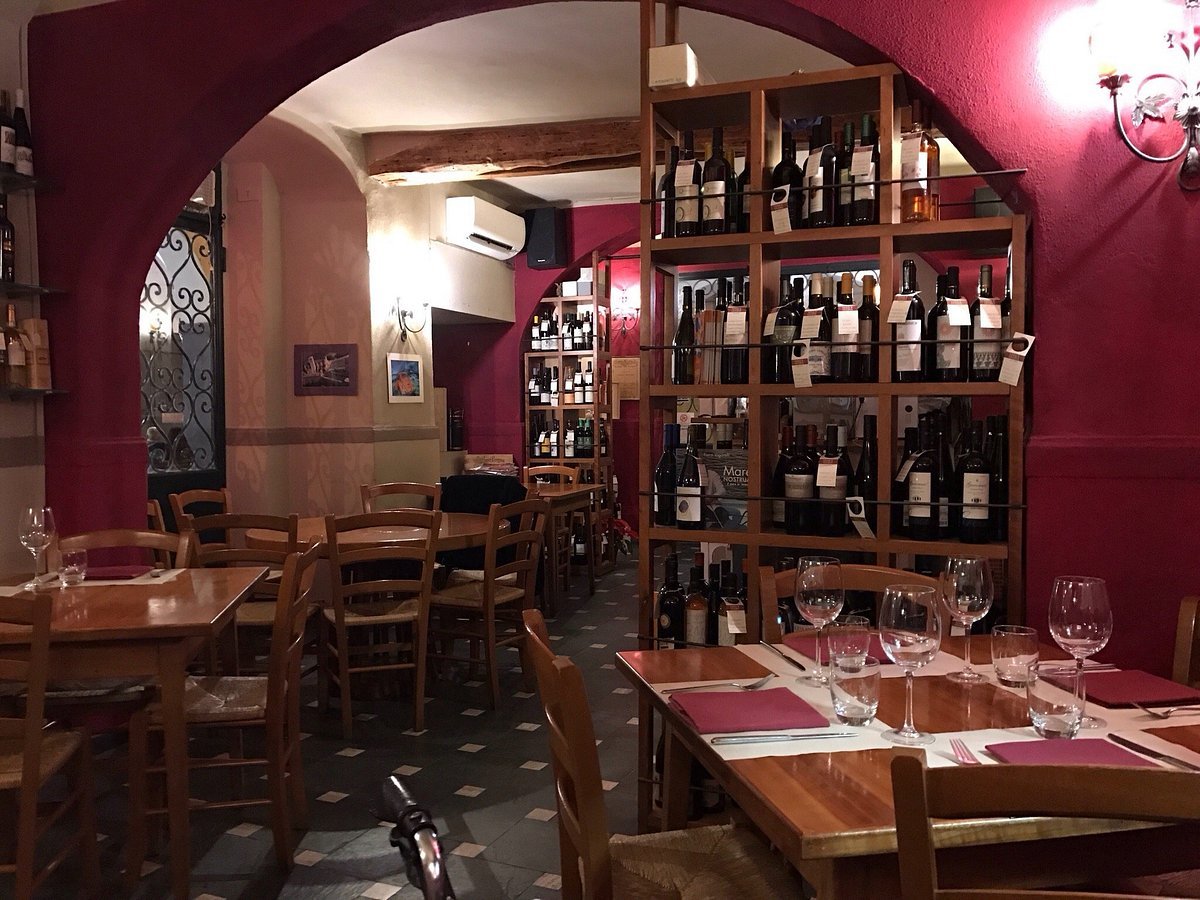
A wine list described as mostly regional and high-quality in this context is a structural decision, not a limitation. It tightens the kitchen and cellar into a coherent geographic argument. For guests accustomed to large-format Italian cellars, like those at Enoteca Pinchiorri in Florence or the deep Italian selections at Dal Pescatore in Runate, the focused regional list at Le Cantine will feel deliberately constrained. For guests eating along the Ligurian coast, it is the more interesting choice.
Planning Your Visit
Le Cantine is at Via Cantine Cattaneo, 11, in Sestri Levante, a short walk from the town centre and the seafront, with the kitchen garden visible on approach. The price range sits at €€€, comparable to the other leading restaurants in the area including Baia del Silenzio and Balin Sestri Levante, reflecting the Michelin Plate standard and the sourcing overhead of a self-producing kitchen. Google reviews stand at 4.5 across 292 responses, a consistent signal at that volume. Booking ahead is advisable, particularly in summer when Sestri Levante draws significant visitor numbers from the wider Ligurian coast. For a fuller picture of the town's hospitality options, the Sestri Levante restaurants guide covers the range of formats, and the hotels guide, bars guide, wineries guide, and experiences guide provide supporting context for a longer stay.
Cuisine and Credentials
A compact peer snapshot based on similar venues we track.
| Venue | Cuisine | Awards | Notes |
|---|---|---|---|
| Le Cantine | Grills | A few management changes, but they are still in charge: Enrico in the kitchen an… | This venue |
| Baia del Silenzio | Italian Contemporary | Italian Contemporary, €€€ | |
| Balin Sestri Levante | Contemporary | Contemporary, €€€ | |
| Rezzano Cucina e Vino | Seafood | Seafood, €€€ |
Continue exploring
More in Sestri Levante
Restaurants in Sestri Levante
Browse all →
Bars in Sestri Levante
Browse all →
At a Glance
- Elegant
- Rustic
- Cozy
- Intimate
- Sophisticated
- Date Night
- Special Occasion
- Open Kitchen
- Wine Cellar
- Historic Building
- Extensive Wine List
- Local Sourcing
Refined yet warm and welcoming atmosphere with impeccable attention to detail, open kitchen, and extensive wine selection.