Michelin Plate
Our verdict
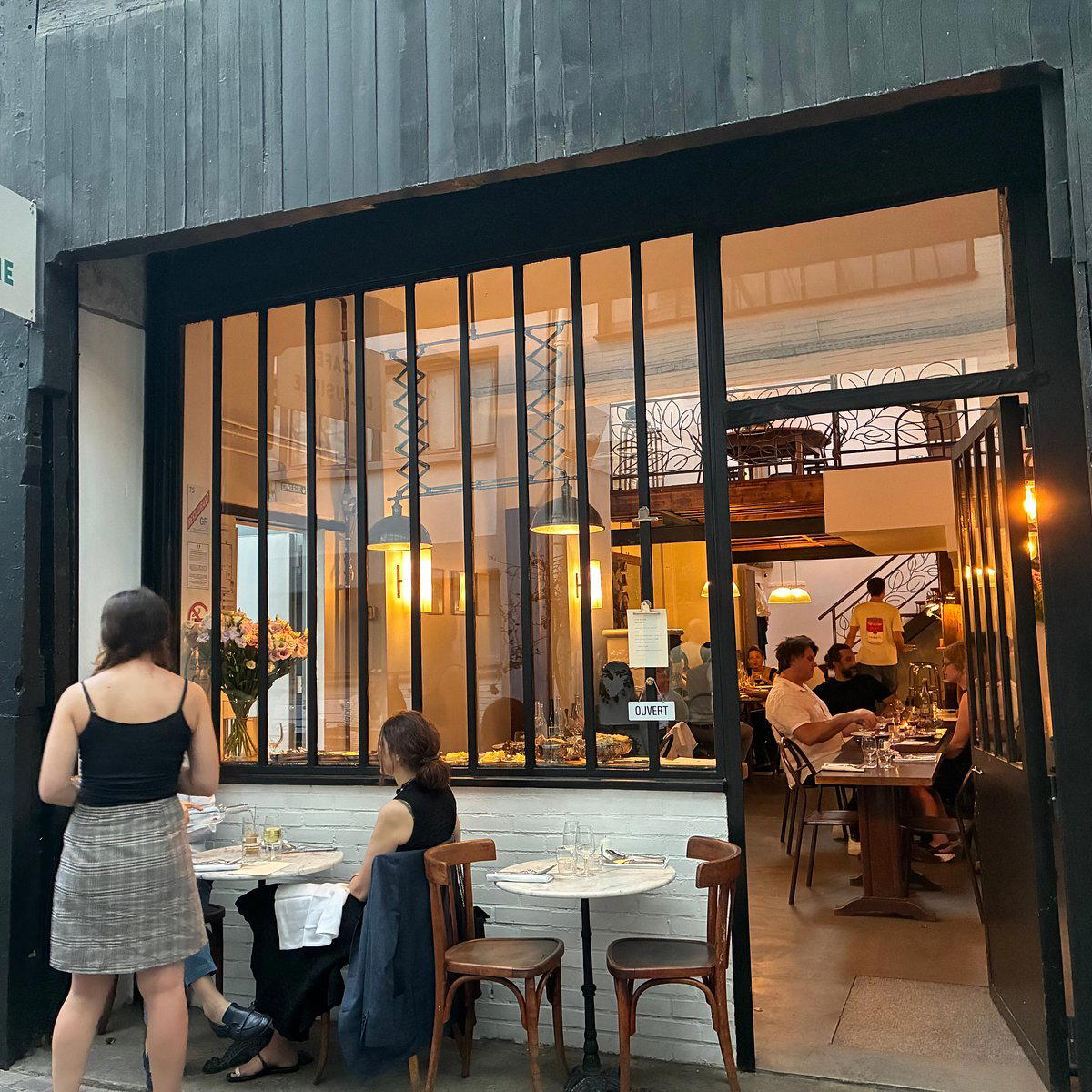
Where the €€€€ tasting-menu circuit of central Paris gives way to neighbourhood-scale ambition, Le Café de l'Usine occupies a converted shoe factory on passage Piver in the 11th. Chef Alice Arnoux runs a single set menu in the evenings and a shorter two-option format at lunch, built entirely from fresh produce. The industrial loft setting and disciplined, seasonal cooking attract a loyal local following that rarely needs a reason to return.

Pearl is the En Primeur Club membership app, where members save venues, book tables and use the concierge.
The menu
What to order
- Monkfish with green onion and garden peas
- Ricotta wrapped in kale
- Gnocchi with wild garlic
A Converted Factory, a Disciplined Kitchen
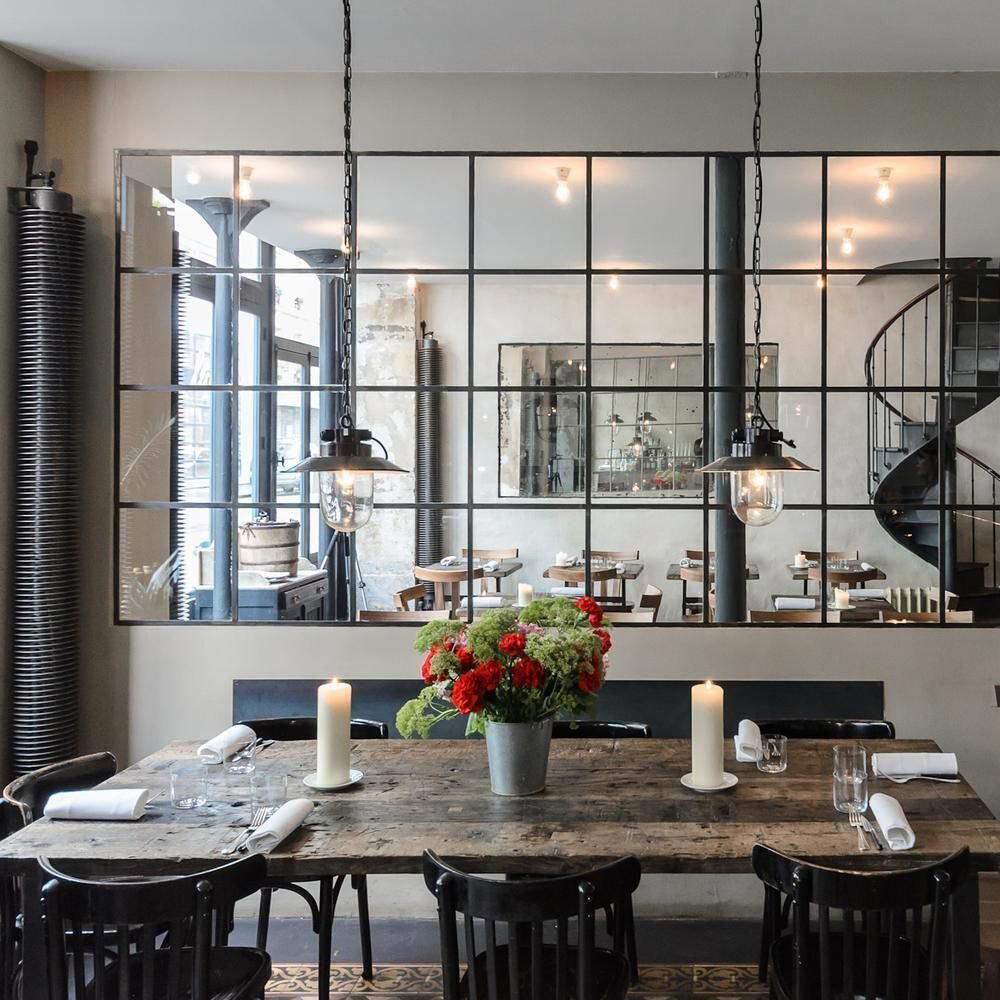
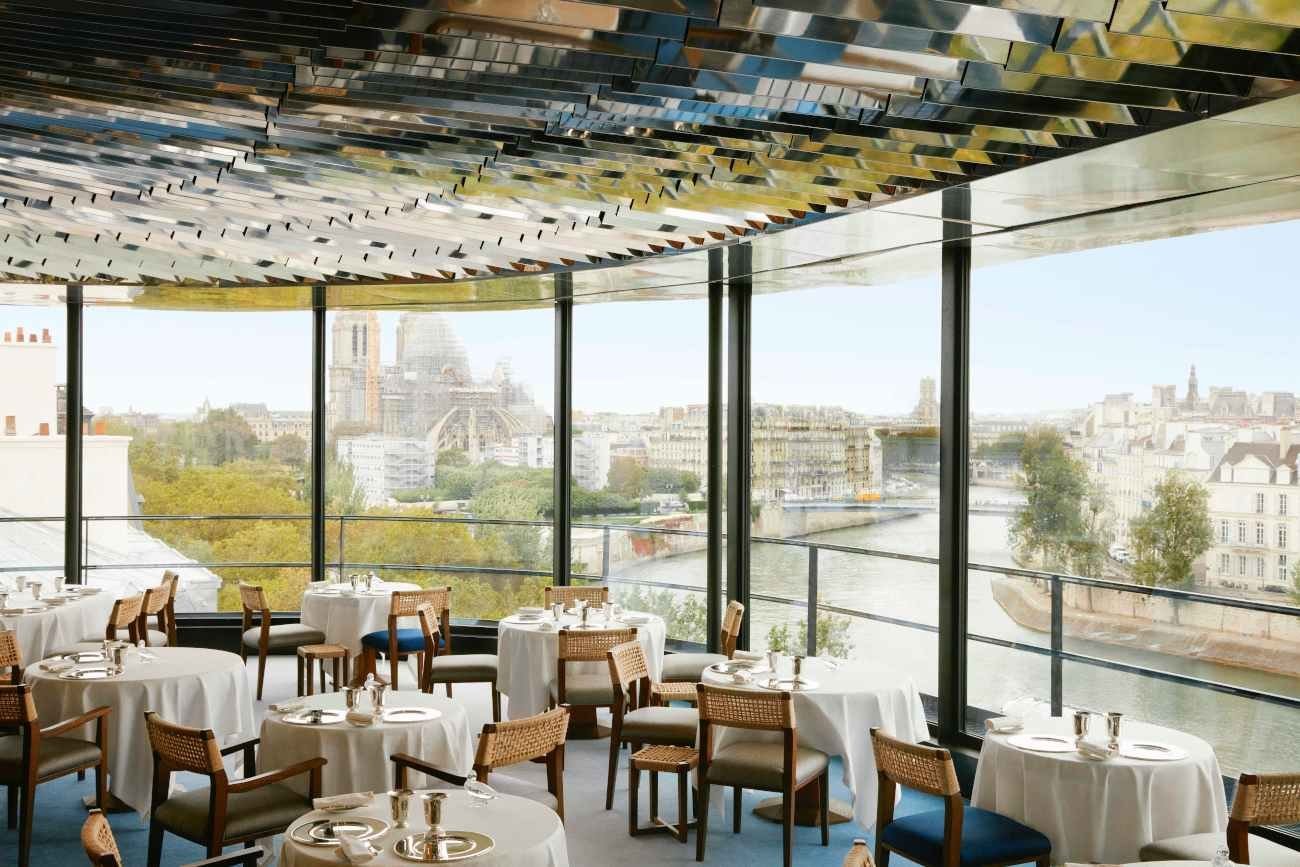
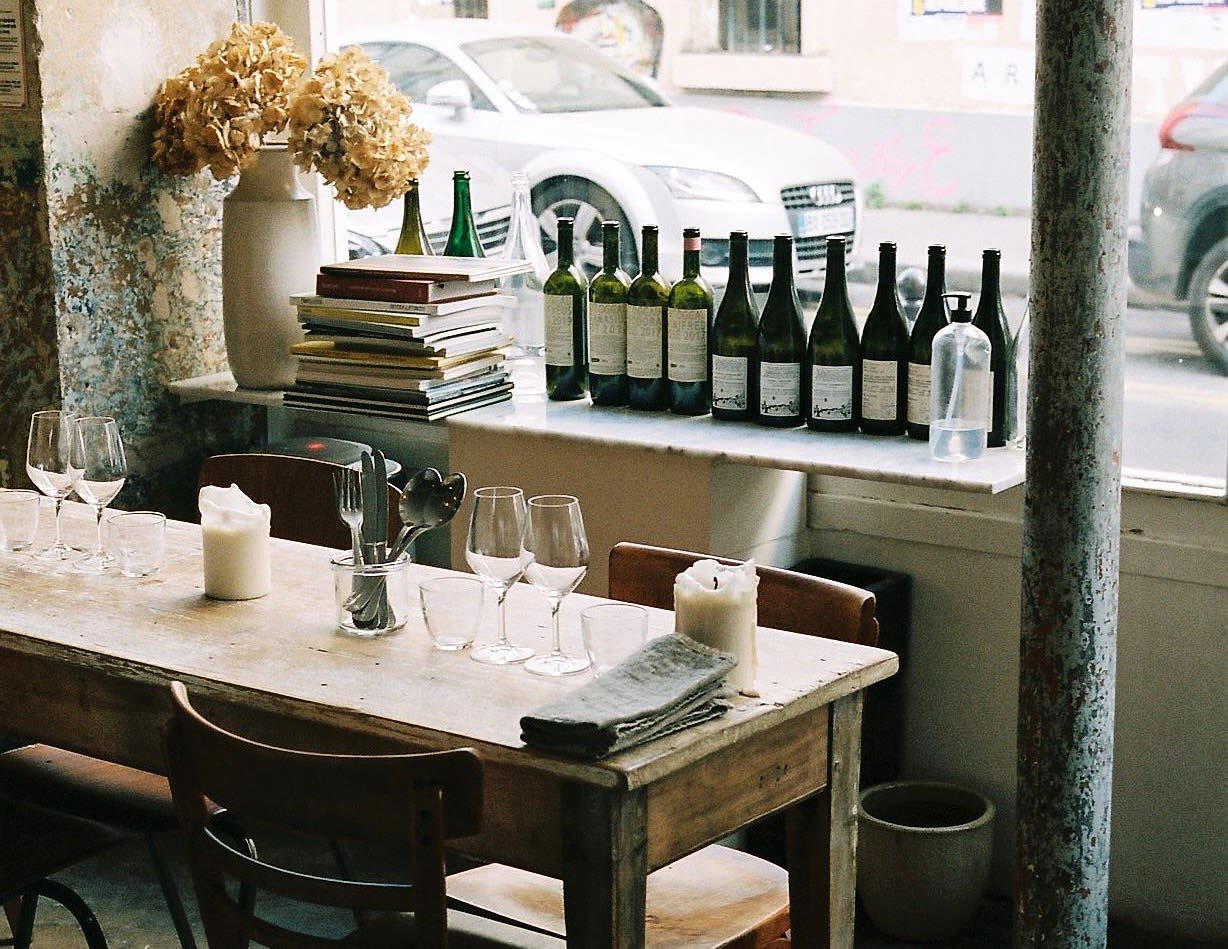
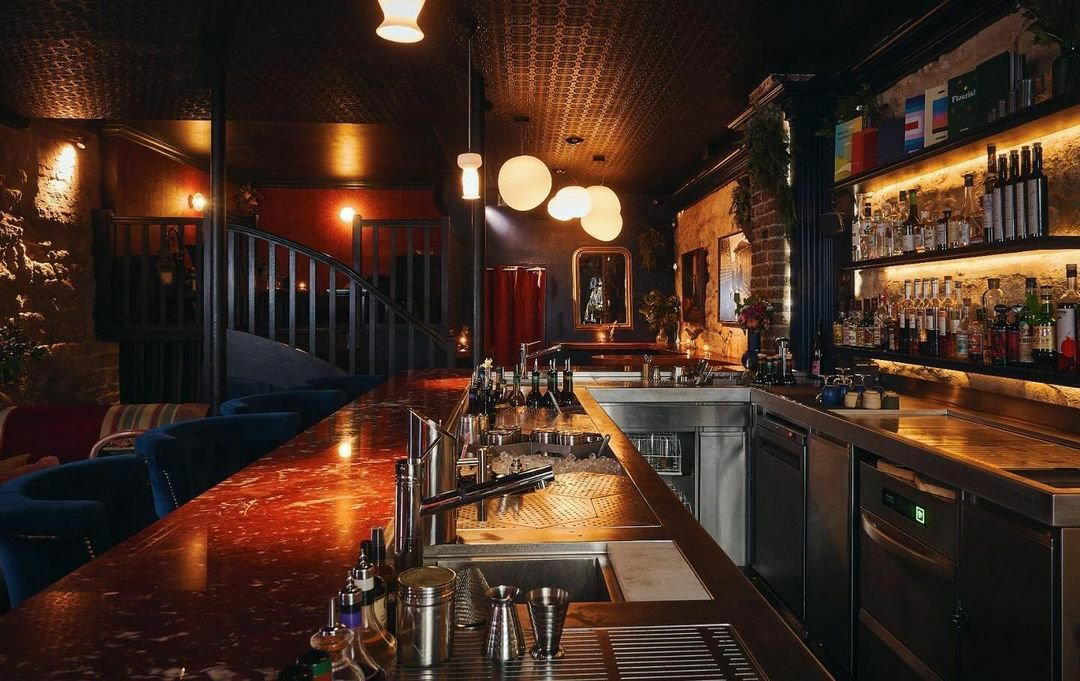
Passage Piver is the kind of address that Parisians give to people they trust. The narrow passage in the 11th arrondissement carries no particular fame, no tourist foot traffic, and no reputation to coast on. What it has, at number 5, is a former shoe factory whose bones, bare concrete, high ceilings, the structural logic of a working building, have been left largely intact. The effect is less decoration than absence of it: stripped walls, industrial proportion, natural light doing most of the work. In a city where bistro renovation often means reclaimed timber and Edison bulbs deployed to signal authenticity, the restraint here reads as the real thing.
That restraint is the throughline between the space and the cooking. Chef Alice Arnoux runs an evening programme built around a single set tasting menu, with a shorter two-option format at lunch that draws from the same seasonal produce. There is no à la carte, no negotiation with the kitchen about substitutions. The format asks the diner to commit, and in doing so it commits back: every element of the meal has been thought through, sequenced, and refined rather than assembled to order.
What Keeps the Regulars Coming Back
The bistro format in Paris covers a wide range. At one end sit the heavily awarded rooms, L'Ambroisie on the Place des Vosges, Alléno Paris au Pavillon Ledoyen, Le Cinq at the Four Seasons George V, where the price point and occasion stakes are high enough that the diner arrives with expectations already written. At the other end are the neighbourhood canteens, unreconstructed and consistent. Le Café de l'Usine sits in neither bracket. It has the neighbourhood character and the informal setting, but the cooking operates with the discipline of a kitchen that is not improvising.
That positioning is why regulars keep returning. The menu changes with the produce, not with the season as a marketing concept. Dishes like grilled cuttlefish with baby fennel and green tapenade, or farm-raised veal with glazed asparagus and fermented mustard, demonstrate how a kitchen can use a signature technical detail, in these cases, the interplay between char and acid, between sweetness and ferment, without repeating itself across every plate. The detail changes; the intelligence behind it does not.
For a certain kind of Paris diner, the set menu format is itself part of the appeal. The decision has already been made. There is no cognitive cost to the meal, no second-guessing whether the fish or the meat was the smarter choice. The kitchen has done that work. What remains is the conversation, the wine, the pacing of a room that is not trying to turn tables quickly.
Where It Sits in the Paris Dining Picture
The 11th has become one of the more active arrondissements for serious cooking at accessible price points. The area attracts chefs who want a particular kind of customer: one who comes for the food rather than the postcode, who is not expecting crystal glassware and a trolley of digestifs, and who returns regularly enough that the relationship between kitchen and regular has time to develop. That dynamic shapes the cooking. A kitchen feeding the same faces every two or three weeks can take more risks with fermented condiments and bitter vegetables than one relying on first-time visitors who need reassurance at every turn.
Against the broader Paris tasting-menu circuit, which includes Kei and Arpège at one price register, Le Café de l'Usine operates in a different register entirely, one where the format is as stripped back as the room. France has a strong tradition of this kind of cooking: see Bras in Laguiole or Flocons de Sel in Megève for how that discipline plays out at higher price points in more dramatic settings. The Usine version is urban, compact, and notably less expensive in its category, a kitchen making the same argument through different means.
It is also worth placing the lunch format separately. The two-dish selection drawn from the evening menu is not a downgraded version of the dinner. It is a different conversation: faster, lighter, more suited to the rhythms of a working week. The 11th draws a mix of studio-based creatives, local professionals, and the occasional out-of-neighbourhood visitor who has done their research. The lunch crowd tends to know what they are coming for, which changes the atmosphere in the room, purposeful rather than leisurely, but no less engaged with the food.
Planning a Visit
Le Café de l'Usine is at 5 passage Piver, 75011 Paris. The passage is accessible on foot from the Goncourt or Belleville metro stops. The set tasting menu format means booking is advisable for dinner; the lunch format, with its shorter two-option structure, may allow for more flexibility, though the room's size and regular clientele make a reservation the sensible approach regardless. No phone or website details are currently listed through EP Club's records, the most reliable route to a booking is through current Paris restaurant reservation platforms.
For readers building a broader Paris itinerary, our full Paris restaurants guide covers the city's dining picture across price points and neighbourhoods. Our Paris hotels guide, bars guide, and experiences guide complete the picture for a multi-day visit. If the tasting-menu format at this scale appeals, it is worth comparing it against how the same discipline plays out at Mirazur in Menton, Troisgros in Ouches, or Auberge de l'Ill in Illhaeusern, each representing a different mode of the same French instinct toward produce-led, set-menu cooking.
Frequently asked questions
Has Le Café de l'Usine won any awards?
Le Café de l'Usine has received recognition including: Chef Alice Arnoux runs this bistro in a converted shoe factory with a minimalist, industrial loft aesthetic. Open from morning until evening, it's a place to eat, grab a coffee, or have a drink. The dining concept is simple: a single set ta….
Where is Le Café de l'Usine located?
Le Café de l'Usine is located at 5 passage Piver, Paris.
What do people recommend at Le Café de l'Usine?
The menu changes with the market, so there is no single permanent dish to seek out. Dishes like grilled cuttlefish with baby fennel and green tapenade, and farm-raised veal with glazed asparagus and fermented mustard, reflect the kitchen's approach: clean produce handled precisely, with one signature detail per plate that makes the dish legible. At lunch, two options drawn from the evening's menu offer a lower-commitment entry point to the same cooking.
How hard is it to get a table at Le Café de l'Usine?
Passage Piver is a discreet address, and the bistro's format, a single set tasting menu, limits covers by design. The 11th arrondissement has attracted serious attention over the past several years, and rooms at this end of the market tend to fill faster than their low-profile suggests. Booking ahead, particularly for dinner, is advisable.
What's the defining dish or idea at Le Café de l'Usine?
The defining idea is editorial restraint: one set menu in the evening, a short two-option menu at lunch, all built from fresh produce. Chef Alice Arnoux's kitchen imposes a single creative filter per dish rather than layering complexity, grilled cuttlefish, farm-raised veal, with fermentation and technique used as punctuation rather than the main argument.
How does Le Café de l'Usine handle allergies?
Because the kitchen runs a single set tasting menu with no à la carte flexibility, guests with dietary restrictions or allergies should check the venue's official channels before booking to confirm what accommodation is possible. The fixed format means substitutions are at the kitchen's discretion rather than a guaranteed option.
Is Le Café de l'Usine suitable for both lunch and dinner visits?
The bistro operates from morning through evening, functioning as a café for coffee and drinks outside meal service. At lunch, Chef Alice Arnoux's team offers two dishes drawn from the evening's set menu, a shorter, less committed format that still reflects the kitchen's market-led approach. Dinner runs as a single tasting menu, which demands more time and advance planning.
A Lean Comparison
Comparable venues nearby, for context on price, style, and recognition.
| Venue | Cuisine | Price | Awards | Notes |
|---|---|---|---|---|
| Le Café de l'UsineThis venue (the venue you are viewing) | Seasonal French Bistro | $50–100 | Michelin Plate | Not listed |
| À l’Épi d’Or | Traditional French Bistro | $30–50 | Michelin Plate | Les Halles, Traditional French Bistro |
| Chez Eugène | Classic French Brasserie | $30–50 | Star Wine List | Montmartre, Classic French Brasserie |
| HuThoPi | Modern French Gastro-Bistro | $50–100 | Michelin Plate | Bastille, Modern French Gastro-Bistro |
| Le Cornichon | Neo-Bistrot French | $50–100 | Michelin Bib Gourmand | rue Daguerre, Neo-Bistrot French |
| Le Mazenay | French Bistro with Vietnamese Accents | $30–50 | Michelin Plate | Marais, French Bistro with Vietnamese Accents |
Recognition history
Dated appearances from independent guides and award organizations, with the underlying list record or original source where available.
Michelin Plate
Michelin