Le Blé Noir
Our verdict
Le Blé Noir sits at 1 Route de Lesparre in Gaillan-en-Médoc, a village deep in the northern Médoc where the wine trade dominates but the table culture is quieter and more local. The name — Breton for buckwheat — signals a kitchen grounded in rural French tradition rather than urban ambition. For those exploring the Médoc beyond the châteaux, it represents a different kind of regional eating.

Pearl is the En Primeur Club membership app — saves, bookings, and concierge access live there. Same editors, same standards.
- Address
- 1 Rte de Lesparre, 33340 Gaillan-en-Médoc, France
- Phone
- +33556416308
- Hours
- Daily 12–2:30 PM, 7–9 PM
- Website
- restaurant-gaillan.fr
- Directions
- Get directions
Eating in the Northern Médoc: Beyond the Châteaux
Most visitors to the Médoc come for the wine and leave without sitting down to a proper meal outside a château dining room. The northern reaches of the peninsula, past Saint-Estèphe and into the flatter agricultural land around Gaillan-en-Médoc, operate at a different register entirely. This is village France — unhurried, unpretentious, and defined by what the land and water immediately around it produce. Le Blé Noir, set on the Route de Lesparre in Gaillan-en-Médoc, belongs to this quieter tradition. See our full Gaillan En Medoc restaurants guide for a broader picture of eating in this corner of the Gironde.
The name itself frames the kitchen's orientation. Blé noir — buckwheat, the Breton staple, is not a prestige ingredient. It is a workhorse grain, grown on thin, acidic soils, traditionally associated with the galette-making tradition of Brittany rather than the grand-cru culture of Bordeaux. Invoking it in the Médoc signals a kitchen that looks to rural French culinary identity rather than metropolitan fine dining. That positioning puts Le Blé Noir in a category that is underrepresented in the Gironde: the mid-register, regionally rooted restaurant that serves the community rather than the wine tourist circuit.
Sourcing Logic in a Land Shaped by Agriculture
The northern Médoc's agricultural character runs deeper than its viticultural fame suggests. Between the vineyards, the peninsula produces lamb on salt marshes, estuary fish from the Gironde, and market garden produce from the hinterland. Restaurants that work within this geography have access to ingredients that rarely appear in the glossy tasting menus of Bordeaux city, agneau de Pauillac, river eels, cèpes from nearby forests in autumn. The ingredient sourcing question in this part of France is not about luxury provocation but about proximity and seasonality in a genuinely agricultural context.
This matters because the sourcing pattern of a village restaurant in the Médoc differs fundamentally from the procurement logic of, say, Mirazur in Menton, where ingredient philosophy is architecturally embedded in the tasting menu concept, or Bras in Laguiole, where the terroir of the Aubrac plateau is the explicit intellectual framework. At the village level, sourcing decisions are less often a statement and more often a practical consequence of what is available, affordable, and trusted. The result, when it works, is cooking that feels grounded in place without the self-consciousness of a destination-restaurant terroir narrative.
The Gironde estuary, within reach of Gaillan-en-Médoc, is one of western France's more significant freshwater and brackish fishing grounds. Shad, lamprey, and crayfish have been pulled from these waters for centuries, and their preparation remains a marker of genuine regional cooking. Lamprey à la Bordelaise, braised in red wine with leeks and the fish's own blood, is among the most demanding of the old Gascon preparations, a dish that appears less and less frequently in restaurants oriented toward accessible bistro cooking but which survives in kitchens willing to work with the full complexity of local tradition.
The Village Restaurant Format in Rural Bordeaux
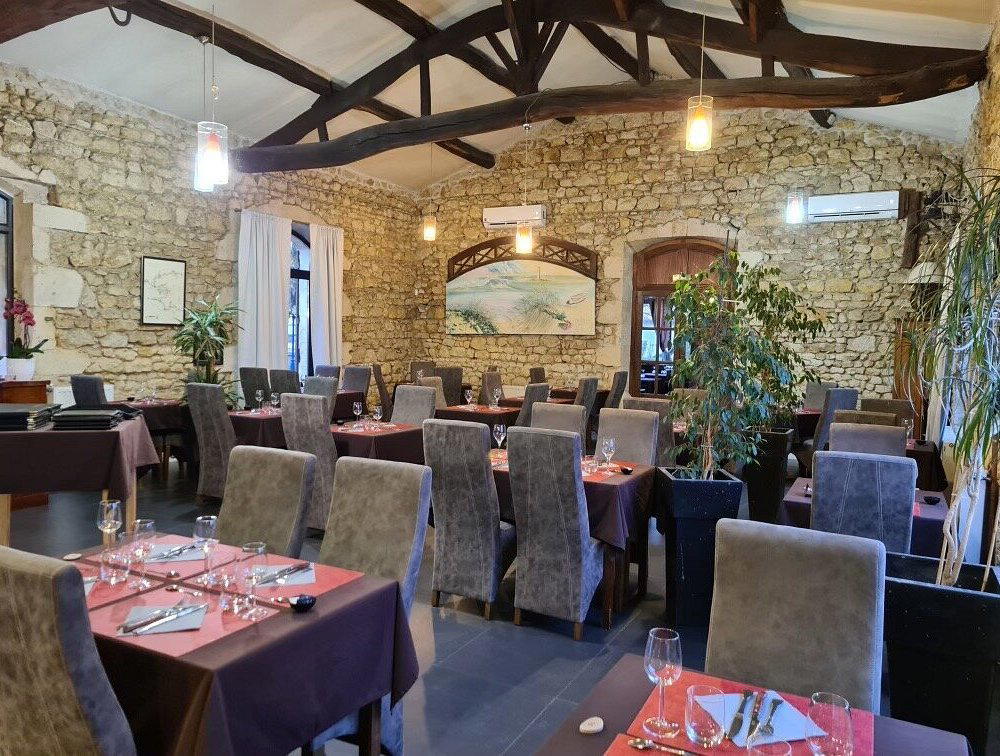
France's village restaurant format occupies a specific social function. It serves locals first, market day lunches, Sunday family gatherings, the occasional celebration, and visitors second. The dining room tends to be direct: tablecloths, perhaps, but not theatre. The wine list, in a wine-producing region, is often genuinely interesting at the local level without the curation overhead of a destination wine program. This format is under pressure across provincial France as costs rise and rural populations age, which makes the surviving examples worth noting.
Compare this to the formal register of restaurants like Auberge de l'Ill in Illhaeusern or Paul Bocuse in Collonges-au-Mont-d'Or, both of which operate as destinations with the full weight of French culinary heritage behind their reputations. Or consider how Auberge du Vieux Puits in Fontjoncouse has transformed a remote village address into a pilgrimage point through Michelin recognition. Le Blé Noir sits in none of those categories. Its context is not the destination restaurant economy but the local dining economy, and that distinction shapes everything from portion logic to wine pricing to the rhythm of service.
For context at the other end of the spectrum, France's most decorated urban tables, Alléno Paris au Pavillon Ledoyen, Assiette Champenoise in Reims, AM par Alexandre Mazzia in Marseille, operate with team sizes, investment levels, and reservation systems that are categorically different from a single-address village restaurant in the Médoc. Understanding where Le Blé Noir sits in that range helps calibrate expectations correctly.
Arriving in Gaillan-en-Médoc
Gaillan-en-Médoc is approximately 50 kilometres north of Bordeaux city, reachable by the D1215 that runs the length of the Médoc peninsula. Public transport from Bordeaux is limited, and the village is not on the main wine tourist route in the way that Pauillac or Saint-Julien are. Most visitors arrive by car, often as part of a broader Médoc itinerary. The address on the Route de Lesparre places Le Blé Noir on the main road through the village, making it direct to find.
Those making the Médoc circuit and pairing wine visits with meals might also consider the broader Atlantic coast dining scene: Christopher Coutanceau in La Rochelle represents the premium seafood register further north along the coast, while La Marine in Noirmoutier-en-l'île demonstrates what a fully committed island-sourcing philosophy looks like when applied at a serious level. Either makes a logical pairing with a Médoc wine itinerary for those travelling the Atlantic coast corridor.
Practical Notes
Le Blé Noir is located at 1 Route de Lesparre, 33340 Gaillan-en-Médoc, France. Arriving without a reservation at a small village restaurant is a risk, particularly on weekend evenings and during the summer harvest season when the Médoc sees higher visitor volumes. The village itself has limited accommodation, so most visitors are staying in Bordeaux city or in the chateaux-adjacent guesthouses of Pauillac or Saint-Estèphe.
Frequently asked questions
Is Le Blé Noir good for families?
In a village like Gaillan-en-Médoc, roughly 50 kilometres north of Bordeaux, the village restaurant format is built around family gatherings by design — Sunday lunches, local celebrations, and market day meals are the foundation of this kind of place, not special accommodations for it. The address on Route de Lesparre puts it at the quiet end of a small agricultural commune with no competing dining options nearby. Expect a relaxed pace and generational tables rather than a curated family menu.
Is Le Blé Noir better for a quiet night or a lively one?
Gaillan-en-Médoc is a small working village in the northern Médoc, not a destination calibrated for evening atmosphere. At 1 Route de Lesparre, Le Blé Noir operates within a community where weekday evenings run quiet and weekend lunches carry more social energy. Anyone arriving expecting late-night buzz from a restaurant in this commune will find the wrong venue — the draw here is the rhythm of rural Bordeaux, not a curated night out.
Does the name Le Blé Noir signal a Breton-style galette menu, or is it something else?
The name blé noir is the Breton term for buckwheat, the flour at the heart of the savoury galette tradition from Brittany — a culinary tradition distinct from Bordeaux's own regional cooking. What is clear is that the name carries a specific regional reference, and travellers curious about that distinction would do best to visit the restaurant at 1 Route de Lesparre directly.
What's the best thing to order at Le Blé Noir?
The name blé noir — Breton for buckwheat — is a culinary signal pointing toward galette-style preparations, and the northern Médoc's agricultural base means lamb from the salt marshes and seasonal produce from between the vineyards are plausible regional anchors. Visiting with an open approach to the daily menu, as one would in any French village restaurant, is the practical way to eat here.
Side-by-Side Snapshot
Comparable venues nearby, for context on price, style, and recognition.
| Venue | Cuisine | Price | Awards | Notes |
|---|---|---|---|---|
| Le Blé NoirThis venue — the venue you are viewing | Traditional French Crêperie & Pizzeria | $20–30 | Not listed | Not listed |
| Le Comptoir du Marché | French Market Bistro | $30–50 | Not listed | Les Halles de Talence |
| La Chaloupe | French Seafood | $10–20 | Not listed | Rivedoux-Plage |
| Bienheureux | Modern French Creative | Not listed | Michelin Plate | Wasquehal |
| L'Espérance | French Brasserie | $30–50 | Relais Chateaux Award | Bouliac |
| Gabarre | French Bistro | Not listed | Star Wine List | Chartrons - Grand Parc - Jardin Public |
Continue exploring
More in Gaillan En Medoc
Restaurants in Gaillan En Medoc
Browse all →
Bars in Gaillan En Medoc
Browse all →
Hotels in Gaillan En Medoc
Browse all →
Details
- Rustic
- Cozy
- Classic
- Family
- Casual Hangout
- Terrace
- A La Carte
Current opening hours
- Monday
- 12–2:30 PM, 7–9 PM
- Tuesday
- 12–2:30 PM, 7–9 PM
- Wednesday
- 12–2:30 PM, 7–9 PM
- Thursday
- 12–2:30 PM, 7–9 PM
- Friday
- 12–2:30 PM, 7–9 PM
- Saturday
- 12–2:30 PM, 7–9 PM
- Sunday
- 12–2:30 PM, 7–9 PM
Hours can change for holidays and private events. Last verified .
Calm and convivial atmosphere with authentic rustic decor.