Latini
Our verdict
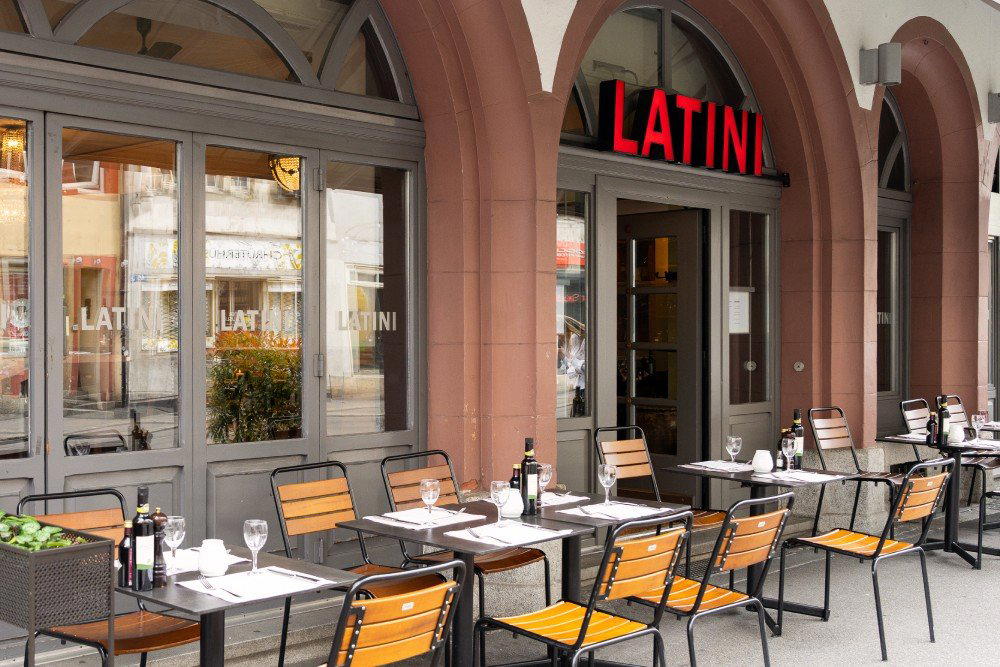
On Falknerstrasse in Basel's medieval Altstadt, Latini occupies a stretch where Italian trattorias and wine-focused rooms have long held ground against the city's more formal French-leaning fine dining. Positioned as a mid-tier Italian address in a city that defaults to Franco-Swiss formality, it draws a neighbourhood crowd that prioritises conviviality over ceremony. A useful reference point for visitors calibrating Basel's broader dining range.

Pearl is the En Primeur Club membership app — saves, bookings, and concierge access live there. Same editors, same standards.
- Address
- Falknerstrasse 31, 4001 Basel, Switzerland
- Phone
- +41612613443
- Hours
- Mon–Thu 11:30 AM–2:30 PM, 5:30–10:30 PMFri 11:30 AM–2:30 PM, 5:30–11:30 PMSat 11:30 AM–11:30 PMSun 5–10:30 PM
- Website
- latini.ch
- Directions
- Get directions
- Booking
- Book on the venue's website
The menu
What to order
- Spaghetti carbonara
- Panna cotta
- Tagliatelle with lamb
- Risotto with beetroot
- Tagliata di manzo
Falknerstrasse and the Case for the Neighbourhood Restaurant
Basel's dining reputation is built largely on its Franco-Swiss fine dining corridor: the Michelin-weighted rooms of Cheval Blanc by Peter Knogl, the creative French idiom of Stucki - Tanja Grandits, the plant-forward proposition at roots. That tier commands attention and press. But Basel also sustains a quieter category of restaurants — Italian rooms, in particular — where the measure of success is less about critical recognition and more about consistent occupancy from a local crowd that returns weekly rather than for occasions.
Latini on Falknerstrasse sits in that second category. The address is central: Falknerstrasse runs through the Altstadt, close enough to the Marktplatz and the Münster quarter that foot traffic from art fair visitors, university staff, and residents of the old town is built into the location. In Basel's grid, that kind of address confers a certain informal prestige, not the grand-hotel adjacency that marks rooms like 1777, but the durability of a space embedded in the residential and commercial fabric of the city's oldest district.
Italian Cooking in a City That Defaults to French
Switzerland's fine dining register has always skewed toward French technique. The Michelin map for the country confirms this: three-star properties like Hotel de Ville Crissier in Crissier and destination addresses such as Schloss Schauenstein in Fürstenau draw from a broadly European fine dining tradition in which French vocabulary dominates. Italian cooking, in this context, tends to occupy a different register: warmer, less ceremony-dependent, more suited to the longer table and the shared bottle than to the tasting menu format.
In Basel specifically, Italian restaurants operate in a different competitive tier than their French counterparts. The comparison set for a room like Latini is not Ackermannshof or the Michelin-recognised French rooms; it is the broader category of mid-range European cooking that Basel sustains alongside its prestige dining. Visitors arriving from cities where Italian cooking has a strong fine-dining presence, New York's Le Bernardin-tier rooms, or the tightly choreographed Korean-Italian hybrids emerging at places like Atomix, will find Basel's Italian offer more traditionalist in orientation.
That traditionalism is not a weakness in context. Basel's relationship with Italian cooking reflects the city's broader civic temperament: it prefers reliability to novelty, and a room that has maintained consistent quality over years carries more social weight than one chasing current trends. Latini's position on Falknerstrasse places it within easy reach of the Altstadt's working population and its cultural visitors, which is a more reliable commercial foundation than tourism-dependent footfall alone.
What the Altstadt Location Means for the Experience
The medieval character of Basel's Altstadt shapes the physical experience of eating in this part of the city in ways that are easy to underestimate. Streets like Falknerstrasse were not designed for large restaurant footprints; the buildings are old, the ceiling heights variable, the room proportions intimate. This architectural constraint tends to produce dining rooms that feel genuinely contained rather than theatrically cosy, a distinction that matters when you are trying to read whether a place has atmosphere by default or by design.
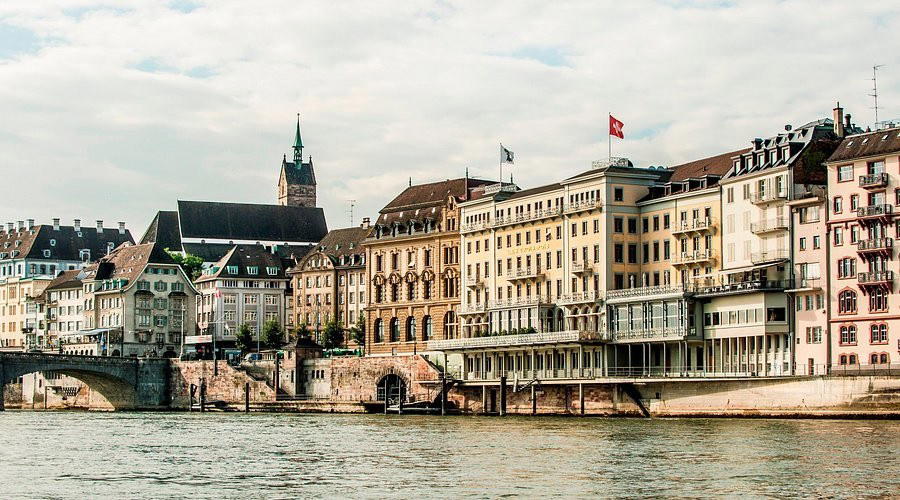
For visitors, the Altstadt location also means navigating on foot. Basel's old town is compact and largely pedestrianised in its core, which makes the journey to Falknerstrasse from the main rail station (Basel SBB) or from the Rhine embankment a walk of fifteen to twenty minutes through the kind of urban fabric, guild houses, sandstone facades, narrow lanes, that most northern European cities have lost. The walk is part of the experience, and restaurants in this zone benefit from that context in a way that venues in Basel's newer commercial districts do not.
Seasonally, the Altstadt operates differently depending on what is happening in the city. Art Basel in June pulls an international crowd that tends to book the prestige tier first, the Michelin rooms, the hotel dining rooms, but filters down into neighbourhood addresses as the week progresses and reservation availability tightens. Basel's carnival period in February and early March is a different kind of pressure: local and intensely communal, it rewards venues that have roots in the neighbourhood rather than those positioned for international visitors.
Calibrating Latini Against Basel's Range
For visitors trying to build a coherent Basel itinerary across multiple meals, Latini functions as a useful counterpoint to the city's more ambitious rooms. A trip that includes a meal at a destination-tier address, whether that is one of Basel's own Michelin-recognised rooms or a day trip to Memories in Bad Ragaz or 7132 Silver in Vals, benefits from balance. The Swiss fine dining circuit, from Colonnade in Lucerne to Da Vittorio in St. Moritz to Einstein Gourmet in Sankt Gallen and focus ATELIER in Vitznau, is tasting-menu-heavy and demands a certain kind of attention. A neighbourhood Italian room provides a different register entirely.
The practical considerations for Latini are worth stating directly: with limited published data available on current hours, booking policy, or pricing, visitors should verify specifics before planning around it. Basel's hospitality infrastructure is generally reliable about maintaining updated information through local booking platforms and the restaurant's own channels. For the broader Basel dining picture, our full Basel restaurants guide provides context across price tiers and cuisine types, including the creative output coming from IGNIV Zürich by Andreas Caminada and L'Atelier Robuchon in Geneva for visitors extending their Swiss itinerary beyond Basel.
Falknerstrasse 31 is, in the end, an Altstadt address with the advantages that implies: central, walkable, embedded in a neighbourhood that functions year-round rather than only during peak tourism periods. For a city that can feel dominated by its prestige dining tier, that kind of address carries its own value.
Frequently asked questions
What's the overall feel of Latini?
Latini operates as a neighbourhood restaurant in Basel's Altstadt, on Falknerstrasse 31, which means the medieval street context shapes the dining atmosphere before you walk through the door. The setting skews toward the informal end of Basel's dining range, functioning as a counterpoint to the city's Michelin-weighted French rooms rather than competing directly with them. It reads as a place for regulars and repeat visitors rather than a destination for a single occasion.
Where do I go for Latini?
Latini is located at Falknerstrasse 31, 4001 Basel, Switzerland, Basel.
How does Latini fit into a multi-meal Basel itinerary alongside the city's French-influenced restaurants?
Basel's Michelin-recognised rooms, led by Peter Knogl's Cheval Blanc, are anchored in Franco-Swiss technique, which means Italian-focused cooking at Latini on Falknerstrasse 31 serves a structurally different function across a multi-meal stay. Scheduling Latini as a mid-itinerary option between more ambitious tasting-menu evenings gives visitors a practical shift in register without leaving the Altstadt. The proximity to Basel's main cultural and museum corridor makes it a logistically sensible choice for a lunch or early dinner slot.
What's the must-try dish at Latini?
Given the Italian cooking focus in a city where French technique dominates the upper tiers of dining, the kitchen's value likely lies in its contrast to the surrounding register rather than any single signature. Visiting with an open order rather than a fixed target is the more reliable approach here.
Is Latini reservation-only?
For a restaurant of this neighbourhood profile in Basel's Altstadt, contacting the venue directly before arriving is advisable, particularly on weekends when the compact medieval streets draw higher foot traffic.
What has Latini built its reputation on?
Latini's standing in Basel rests on offering Italian cooking in a city whose fine dining identity defaults heavily to French technique, as confirmed by the Michelin map for Switzerland. On Falknerstrasse 31, it occupies a distinct position as a neighbourhood-scale Italian option within walking distance of Basel's Altstadt cultural corridor. That positioning, rather than awards or critical recognition, appears to drive its local relevance.
Is Latini allergy-friendly?
No specific allergy or dietary accommodation data is recorded for Latini in Basel. For guests with confirmed allergies or dietary requirements, reaching out to the restaurant at Falknerstrasse 31 ahead of a visit is the only reliable way to confirm what the kitchen can accommodate.
A Lean Comparison
Comparable venues nearby, for context on price, style, and recognition.
| Venue | Cuisine | Price | Notes |
|---|---|---|---|
| LatiniThis venue — the venue you are viewing | Traditional Italian Trattoria | $30–50 | Not listed |
| Pizzeria La Perla | Neapolitan Pizza | $20–30 | Kleinbasel, Neapolitan Pizza |
| Ramazzotti | Italian Pizza & Pasta | $20–30 | Messe, Italian Pizza & Pasta |
| Restaurant Pizzeria Margherita | Neapolitan Pizza & Southern Italian | $20–30 | Aeschen, Neapolitan Pizza & Southern Italian |
| Ghostacos | French Tacos | $10–20 | Aeschen, French Tacos |
| Tuk Tuk | Authentic Thai Kitchen | $20–30 | Aeschen, Authentic Thai Kitchen |
Continue exploring
More in Basel
Restaurants in Basel
Browse all →
Bars in Basel
Browse all →

Hotels in Basel
Browse all →

Details
- Cozy
- Classic
- Romantic
- Intimate
- Date Night
- Business Dinner
- Group Dining
- Casual Hangout
- Family
- Terrace
- Standalone
- Extensive Wine List
- A La Carte
- Tasting Menu
- Wine
- Vegetarian Friendly
- Vegan Options
- Gluten Free Options
Current opening hours
- Monday
- 11:30 AM–2:30 PM, 5:30–10:30 PM
- Tuesday
- 11:30 AM–2:30 PM, 5:30–10:30 PM
- Wednesday
- 11:30 AM–2:30 PM, 5:30–10:30 PM
- Thursday
- 11:30 AM–2:30 PM, 5:30–10:30 PM
- Friday
- 11:30 AM–2:30 PM, 5:30–11:30 PM
- Saturday
- 11:30 AM–11:30 PM
- Sunday
- 5–10:30 PM
Hours can change for holidays and private events. Last verified .
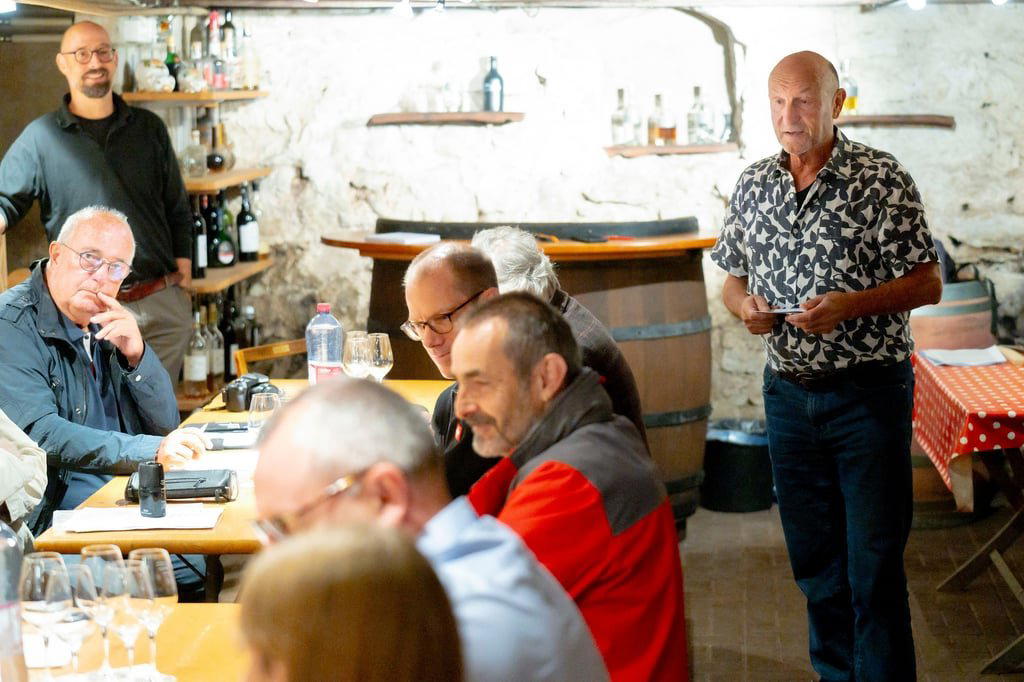
Warm and welcoming with candlelit tables, cozy dining rooms with contiguous spaces, and a relaxed European atmosphere that evokes dining in Italy.