L'Atelier de Joël Robuchon
L'Atelier de Joël Robuchon on Tenth Avenue brings the globally recognized counter-dining format to New York's West Chelsea, where an open kitchen and bar-style seating place guests directly inside the kitchen's rhythm. The Robuchon name carries a weight measured in Michelin stars accumulated across multiple cities, and the New York address sits within a comparable set that includes Per Se and Le Bernardin at the upper tier of French fine dining in Manhattan.
- Address
- 85 10th Ave, New York, NY 10011
- Phone
- +1 212 488 8885
- Directions
- Get directions
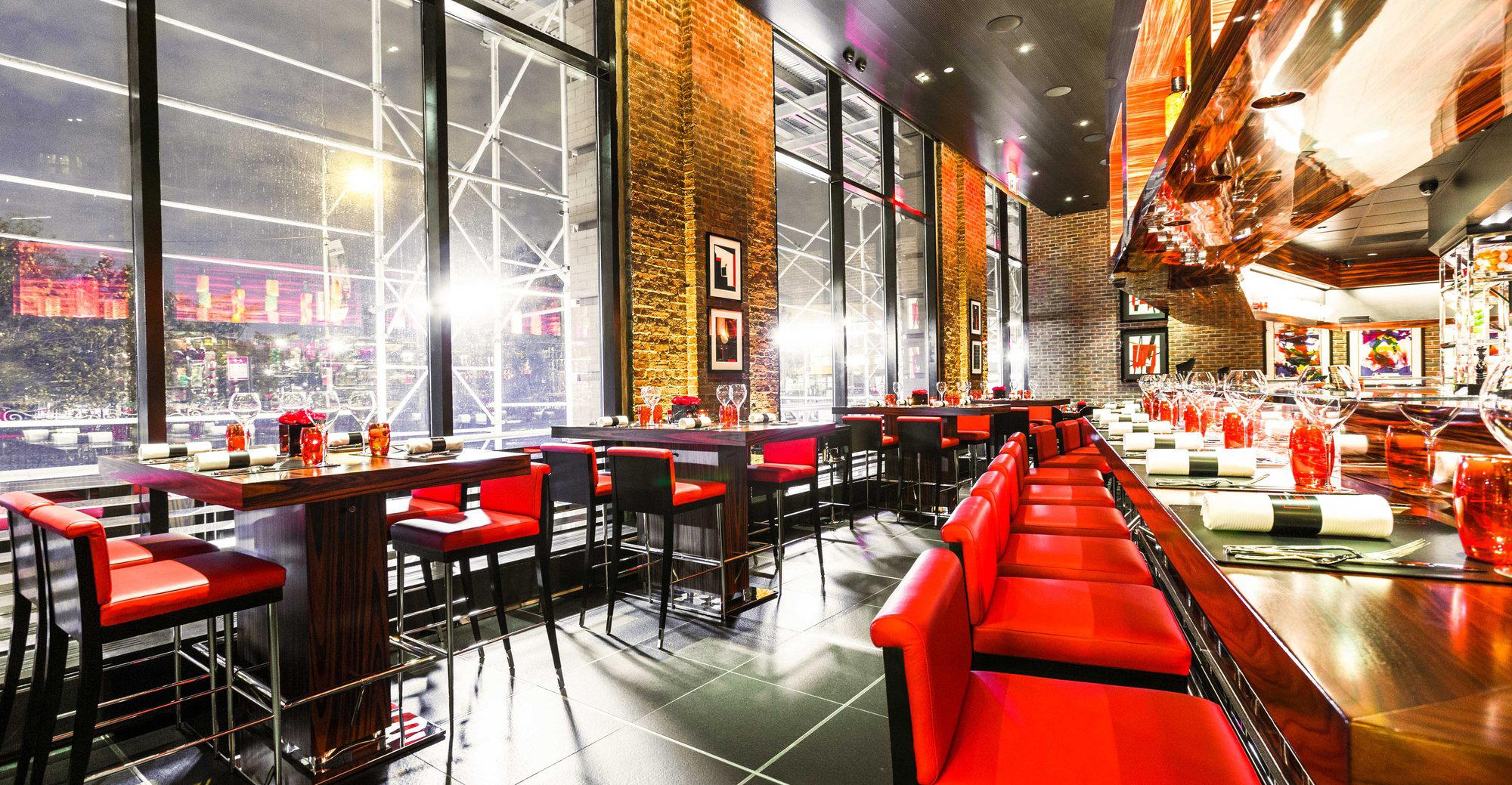
Counter Dining as Theatre: The Atelier Format in New York
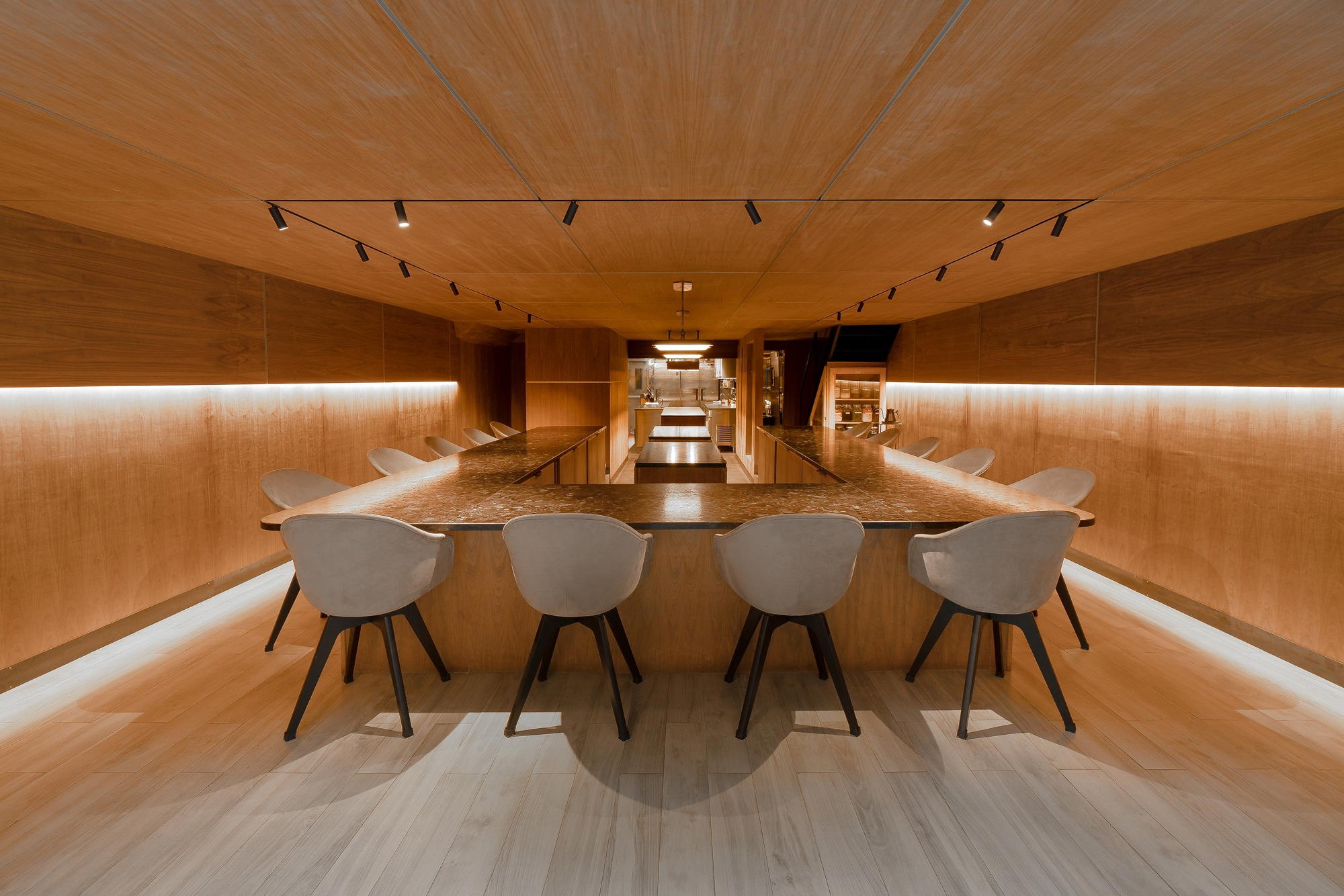
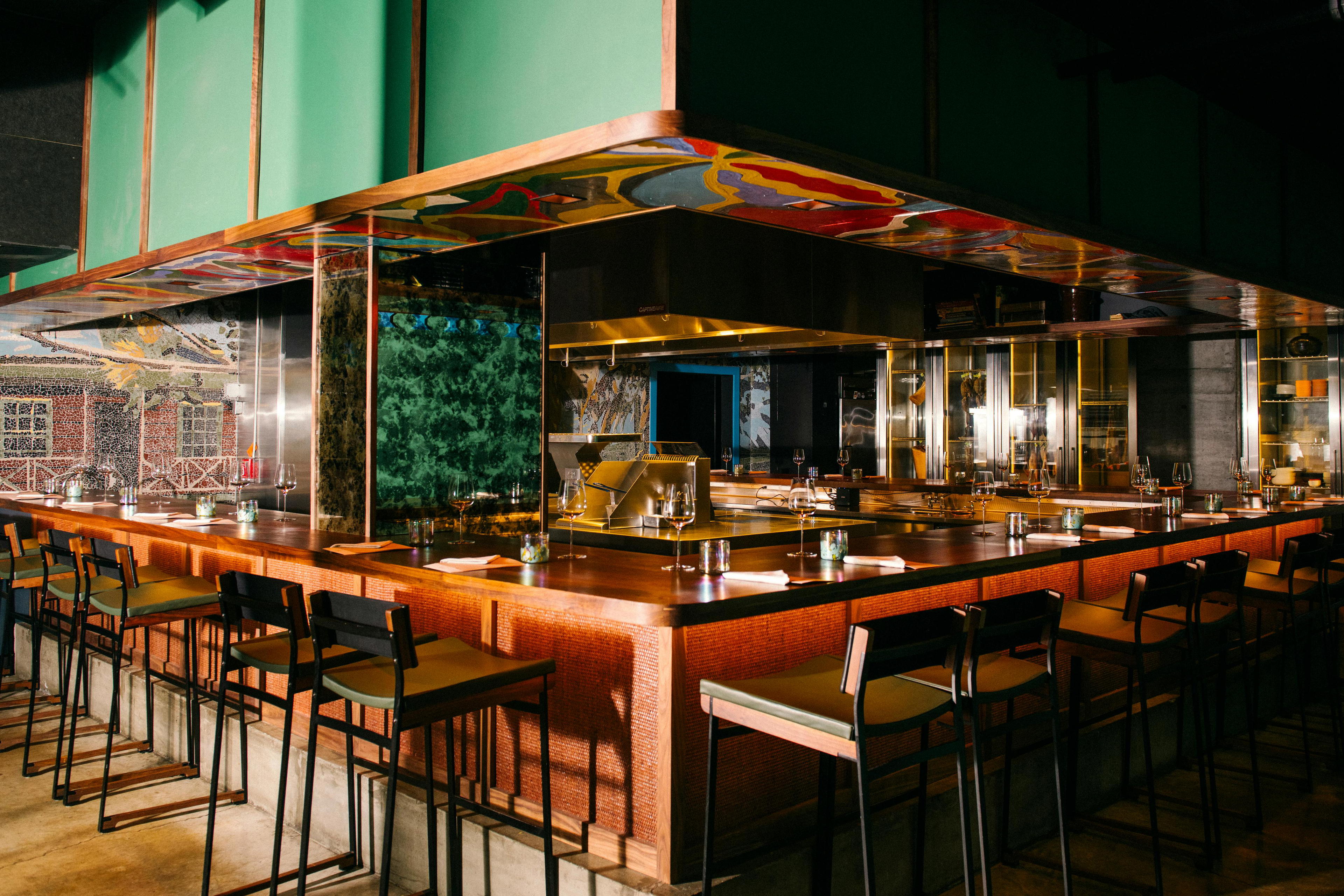
The open counter has become one of the defining formats of contemporary fine dining, pulling guests out of the conventional table arrangement and seating them at the edge of the kitchen itself. L'Atelier de Joël Robuchon at 85 10th Avenue operates within this format, and the physical experience begins before a single plate arrives: guests face the kitchen directly, watching a brigade work in close proximity, the counter itself acting as the threshold between production and consumption. This arrangement is not incidental to the dining experience, it shapes the entire register of service, pacing, and interaction between kitchen and front-of-house.
In New York, where French fine dining has long been defined by the formal dining room, Le Bernardin and Per Se both operate within that tradition, the Atelier counter model occupies a distinct position. It retains the technical ambition and classical French foundations of those rooms while replacing their columned formality with something closer to the Japanese omakase dynamic: proximity, observation, and a certain choreographic transparency that formal dining rooms deliberately conceal.
The Robuchon Network and What It Signals
The Atelier concept is a multi-city format, with iterations operating across Tokyo, Paris, London, Hong Kong, and beyond. This matters for how the New York address should be understood. It is not a singular, city-specific expression in the way that Eleven Madison Park or Atomix are, venues that exist nowhere else and whose identity is inseparable from a single room in a single city. L'Atelier belongs instead to a franchise of excellence, where the benchmark is set globally and the local team executes within a defined system. That distinction matters to how you read the experience: consistency across cities is the promise, and the New York kitchen operates in dialogue with peers in other time zones as much as with West Chelsea neighbours.
The Robuchon name itself carries documented Michelin weight, across all active restaurants bearing the name at its peak, the brand accumulated more Michelin stars than any other in history, a verifiable claim that places the New York address in a specific tier of reference. Comparing it to Masa in Columbus Circle or the counter formats emerging from the modern Korean fine dining scene places the Atelier in useful relief: all three operate at price points where the star-to-seat ratio justifies refined expectations, but each represents a fundamentally different culinary tradition and service philosophy.
Front-of-House, Sommelier, and the Mechanics of a Collaborative Room
Editorial angle that matters most for the Atelier format is not the kitchen alone, it is the working relationship between the brigade at the counter, the floor team managing pacing and guest experience, and the sommelier who must work within a compressed physical space. Counter dining compresses the usual separation between these roles. A sommelier at a traditional dining room can approach a table with some distance and formality; at the Atelier counter, that interaction is necessarily closer, more conversational, and more visible to adjacent guests. The pairing recommendation becomes a semi-public exchange rather than a private one.
This dynamic is characteristic of the format across its global network. At the Paris and Tokyo locations, the counter service model has been refined over years to balance the informality of the seating arrangement against the technical precision of the cuisine, a balance that requires tight coordination between kitchen output and floor timing. The New York room operates within that same set of constraints, with the added complexity of a Manhattan dining culture that is simultaneously more casual in its expectations and more demanding in its service standards than many European equivalents.
Restaurants like Smyth in Chicago and Single Thread Farm in Healdsburg have developed similar collaborative service models where sommelier and front-of-house operate as a unified team rather than separate departments. The Atelier format predates many of these iterations and, in several respects, helped establish the grammar for what counter-format French fine dining could look like outside Japan.
West Chelsea and the Address
The 10th Avenue location places L'Atelier in a corridor that has shifted considerably over the past fifteen years. West Chelsea's transformation from industrial district to gallery and high-end hospitality zone means the Atelier's address is now surrounded by a different kind of foot traffic than when it originally opened. The High Line runs nearby, and the broader neighbourhood draws a mix of gallery visitors, hotel guests, and destination diners who treat the area as an evening-length proposition rather than a quick meal stop.
This geographic context matters because it shapes who is in the room. Destination diners at this address are less likely to be local regulars and more likely to be visitors treating the meal as an anchor event for a New York trip. That shifts the dynamic of what the floor team manages: the room contains more first-time guests, more people arriving with particular expectations about what a Robuchon restaurant means, and more diners cross-referencing against other cities where they have eaten in the format. The team's ability to calibrate that, to meet the first-timer and the frequent visitor with equal fluency, is part of what defines the service standard here.
For readers building a multi-restaurant itinerary in New York, the Atelier sits in a different register than Blue Hill at Stone Barns, which operates around provenance and agricultural narrative, or The French Laundry in Napa, which is a destination in itself. The Atelier is the French technical tradition in a counter format, a specific thing, and one worth choosing deliberately rather than by default. See our full New York City restaurants guide for broader context on how it maps against the city's French fine dining tier.
Comparable experiences at the upper tier of French-influenced fine dining elsewhere in the United States include Addison in San Diego, Providence in Los Angeles, and The Inn at Little Washington, each of which handles the French tradition through a different regional lens. Internationally, the Atelier format finds its closest conceptual relatives not in American fine dining but in European counter formats like Atelier Moessmer Norbert Niederkofler in Brunico and the long-table tradition of Dal Pescatore in Runate, though the service philosophies differ considerably.
Planning Your Visit
Reservations: Advance booking is advisable given the counter format's limited seating capacity, walk-in availability at this tier is rare, and peak evening slots at recognised French fine dining addresses in Manhattan typically require planning weeks ahead. Dress: Smart dress is consistent with the comparable set at this price point; the counter setting is less formal than a traditional dining room but the technical level of service expects a corresponding guest register. Budget: Pricing sits at the upper tier of Manhattan fine dining, comparable to the $$$$ bracket occupied by Per Se, Le Bernardin, and Masa. Getting there: The 10th Avenue address is accessible from the 23rd Street subway station, with the High Line providing a pedestrian approach from the north or south.
A Credentials Check
Comparable venues nearby, for context on price, style, and recognition.
| Venue | Cuisine | Price | Notes |
|---|---|---|---|
| L'Atelier de Joël RobuchonThis venue — the venue you are viewing | Modern French Fine Dining | $$$$ | Not listed |
| Le Crocodile | Classic French Brasserie | $$$$ | Williamsburg |
| HOUSE Brooklyn | French-Japanese Fusion Omakase | $$$$ | Greenpoint |
| La Grande Boucherie | Classic French Brasserie | $$$$ | Midtown-Times Square |
| L'Avenue at Saks | Haute French with Southeast Asian Fusion | $$$$ | Midtown-Times Square |
| George McNally restaurant | Modern French with Marseille, Italian, and Greek influences | $$$$ | Tribeca |
Continue exploring
More in New York City
Restaurants in New York City
Browse all →
Bars in New York City
Browse all →

Hotels in New York City
Browse all →








At a Glance
- Elegant
- Sophisticated
- Modern
- Ornate
- Date Night
- Special Occasion
- Business Dinner
- Open Kitchen
Stylized elegant atmosphere with counter seating around an open kitchen, featuring dramatic plating presentations and artful lighting with pops of red.