Las Ramblas
Las Ramblas sits on J.E. Irausquin Boulevard in Oranjestad West, one of Aruba's main dining corridors, where the island's Spanish colonial heritage meets a cosmopolitan beach-town register. The address places it within walking distance of Palm Beach's resort strip, making it a reference point for visitors tracing the island's Iberian culinary thread alongside neighbours like Bodegas Papiamento and Chalet Suisse.
Pearl is the En Primeur Club membership app — saves, bookings, and concierge access live there. Same editors, same standards.
- Address
- J.E. Irausquin Blvd 250, Oranjestad, Aruba
- Phone
- +2975201100
- Website
- opentable.com
- Directions
- Get directions
 Saves & bookings on Pearl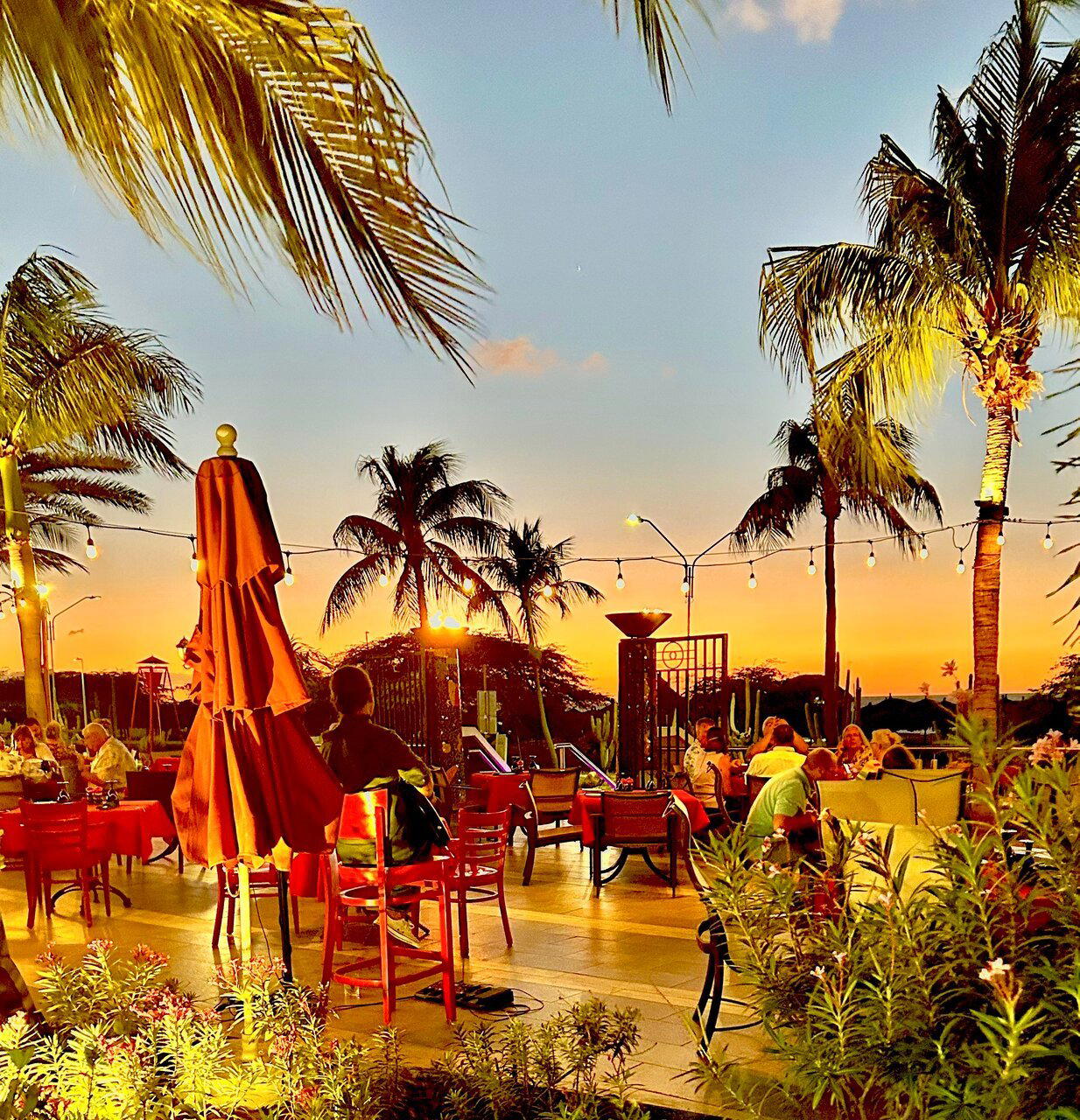
The Iberian Thread on a Dutch Caribbean Boulevard
J.E. Irausquin Boulevard is the spine of Aruba's tourist-facing dining scene, a long coastal road where resort clusters give way to standalone restaurants that have, over decades, accumulated enough critical mass to constitute a proper dining corridor. The boulevard's character is neither purely Caribbean nor distinctly European; it holds both simultaneously, a product of the island's history as a Dutch colony with deep Spanish linguistic and cultural roots. Las Ramblas is a restaurant in Oranjestad, Aruba, at J.E. Irausquin Blvd 250, with a price tier around $60 per person. Its name invokes Barcelona's most-walked street, one of southern Europe's most legible shorthand references for street-level social life, open-air commerce, and the particular rhythm of Catalan public space. That reference is not incidental on an island where Papiamento, the local creole language, draws heavily from Spanish and Portuguese.
Aruba's restaurant scene has split, broadly, into two operating registers. The first serves the high-volume resort trade: buffet formats, all-inclusive extensions, and casual beach-adjacent grills that prioritise throughput over technique. The second register, concentrated along Irausquin Boulevard and in pockets of Oranjestad proper, comprises destination restaurants where cuisine heritage, a coherent identity, and repeat local clientele matter more than daily tourist turnover. Las Ramblas occupies an address on this boulevard that places it in conversation with the second category. Nearby, Bodegas Papiamento represents the island's longer-established fine-dining tradition, while Chalet Suisse demonstrates how European culinary traditions have taken root in the Caribbean without losing their source identity.
Spanish Culinary Roots and the Caribbean Adaptation
Spanish cuisine's global spread has followed a distinct pattern: it travels not as a monolith but as a set of regional traditions, each with its own grammar. The Catalan-Valencian axis brought rice culture, preserved fish, and a comfort with acid and heat. The Castilian tradition brought slow-roasted meats and aged cheeses. Where Spanish restaurants open outside Spain, they tend to anchor themselves to one of these regional identities rather than attempting a survey course. In the Caribbean, Spanish influence predates most European contact by centuries; the islands of the Greater and Lesser Antilles absorbed Spanish culinary habits through colonisation, trade, and migration long before tourism arrived to complicate the picture.
Aruba sits at the western edge of the Lesser Antilles, close enough to the South American mainland that Venezuelan, Colombian, and broader Latin American culinary influences flow in alongside the island's formal Dutch administrative heritage. A restaurant referencing the Las Ramblas of Barcelona is therefore operating inside a genuinely multilayered cultural register, one where Iberian heritage is not imported novelty but a strand in a longer local history. This is the context that distinguishes dining along Irausquin Boulevard from, say, a Spanish-themed restaurant in a northern European city: the cultural reference has local resonance rather than being purely aspirational. Elsewhere in the EP Club network, comparable cultural-layering dynamics appear in markets as different as 8 1/2 Otto e Mezzo Bombana in Hong Kong and Emeril's in New Orleans, where European culinary traditions operate inside cities with their own strong indigenous food cultures, producing something distinct from either parent tradition.
The Boulevard as Competitive Frame
For a visitor arriving on Irausquin Boulevard with a single evening to spend, the competitive set matters. Aquarius and Catch Restaurant Aruba represent the seafood-forward end of the boulevard's offer, where proximity to the water translates directly into menu emphasis. Bucatini Market and Cucina represents the Italian-Caribbean crossover category. Las Ramblas, with its Spanish naming and boulevard address, occupies a different lane: the southern European social-dining format where shared plates, wine, and extended table time are the operating assumption rather than the exception.
That format has proven durable in tourist markets because it accommodates groups and couples with equal ease, allows for exploratory ordering without the commitment of a fixed tasting menu, and maps naturally onto the unhurried pace that beach destinations produce in their visitors. At the higher end of this category globally, operations like Alain Ducasse at the Louis XV in Monte Carlo and Alléno Paris au Pavillon Ledoyen demonstrate what French-Mediterranean tradition looks like when taken to its formal extreme. The restaurant on Aruba operates in an altogether different register, one calibrated for the boulevard rather than the palace dining room, but the underlying premise of European social dining as a vehicle for extended hospitality remains consistent across the scale.
Aruba Beyond Oranjestad West
Visitors who treat Irausquin Boulevard as their only dining reference are missing meaningful variation across the island. El Gaucho in Oranjestad represents the Argentine-influenced meat tradition that has found a firm foothold on the island, while Kamini's Kitchen in San Nicolas offers a window into local Aruban home cooking in the island's second city, a context as different from the resort boulevard as you can get within a 30-minute drive. Drunken Burger in Noord serves the casual end of the spectrum for those whose evenings call for something less structured.
For those cross-referencing the boulevard's Spanish tradition against what the format looks like in more scrutinised markets, Le Bernardin in New York City and Atomix in New York City represent how tightly focused culinary identity operates at the upper end of a hyper-competitive dining market. Lazy Bear in San Francisco and Alinea in Chicago show the American side of that equation. Amber in Hong Kong demonstrates how European fine-dining frameworks translate into Asian luxury markets. These are different categories entirely from a Caribbean boulevard restaurant, but they form the broader map within which any serious dining reader is orienting.
Planning Your Visit
The restaurant is located at J.E. Irausquin Blvd 250 in Oranjestad, Aruba, directly on the main boulevard that connects Palm Beach to the capital. The address is accessible by rental car, the public Arubus service, and the taxi network that operates reliably between the resort strip and Oranjestad. The restaurant is recommended for reservations, with smart casual dress. The months from December through April represent Aruba's high season, when the trade winds moderate temperatures and northern hemisphere travellers fill the resort belt; securing a table in advance during that window is a reasonable precaution for any destination restaurant on the boulevard.
Budget Reality Check
Comparable venues nearby, for context on price, style, and recognition.
| Venue | Cuisine | Price | Notes |
|---|---|---|---|
| Las RamblasThis venue — the venue you are viewing | Not listed | $$$ | Not listed |
| Bodegas Papiamento | Not listed | $$$ | Oranjestad West, Aruban Caribbean Fine Dining |
| Elephant In The Room | Not listed | $$$ | Oranjestad West, Italian Beach Club with Caribbean influences |
| Fresco | Oranjestad West, Traditional Italian | $$$ | Not listed |
| Catch Restaurant - Aruba | Oranjestad West, Seafood Fusion | $$$ | Not listed |
| The Chophouse at Manchebo | Not listed | $$$ | Eagle Beach, Fine Dining Steakhouse & Seafood |
Continue exploring
More in Oranjestad West
Restaurants in Oranjestad West
Browse all →
Bars in Oranjestad West
Browse all →
At a Glance
- Romantic
- Lively
- Elegant
- Scenic
- Date Night
- Special Occasion
- Celebration
- Live Music
- Waterfront
- Terrace
- Craft Cocktails
- Local Sourcing
- Waterfront
Current opening hours
- Monday
- 6–10:30 PM
- Tuesday
- 6–10:30 PM
- Wednesday
- 6–10:30 PM
- Thursday
- 6–10:30 PM
- Friday
- 6–10:30 PM
- Saturday
- 6–10:30 PM
- Sunday
- Closed
Hours can change for holidays and private events. Last verified .
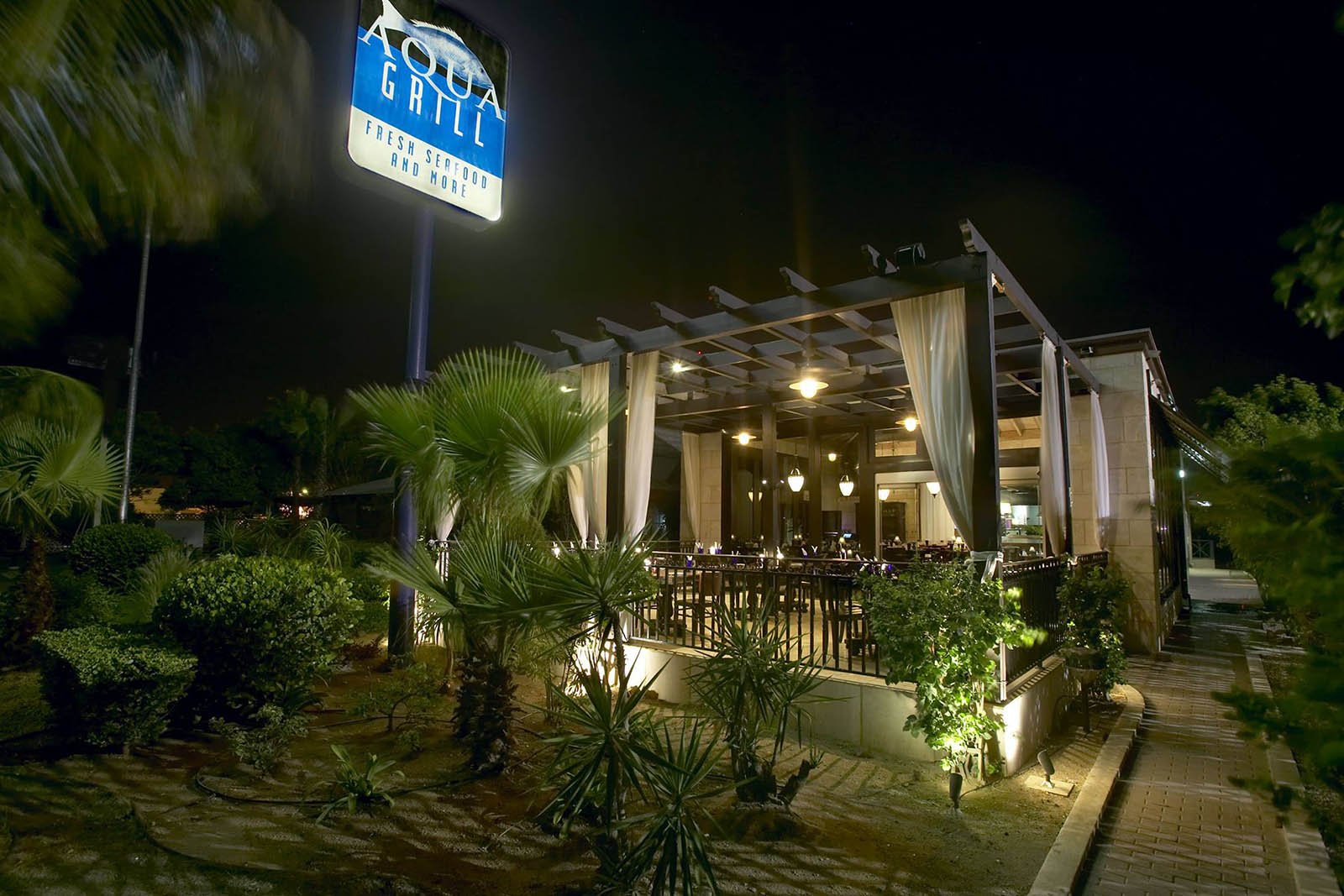
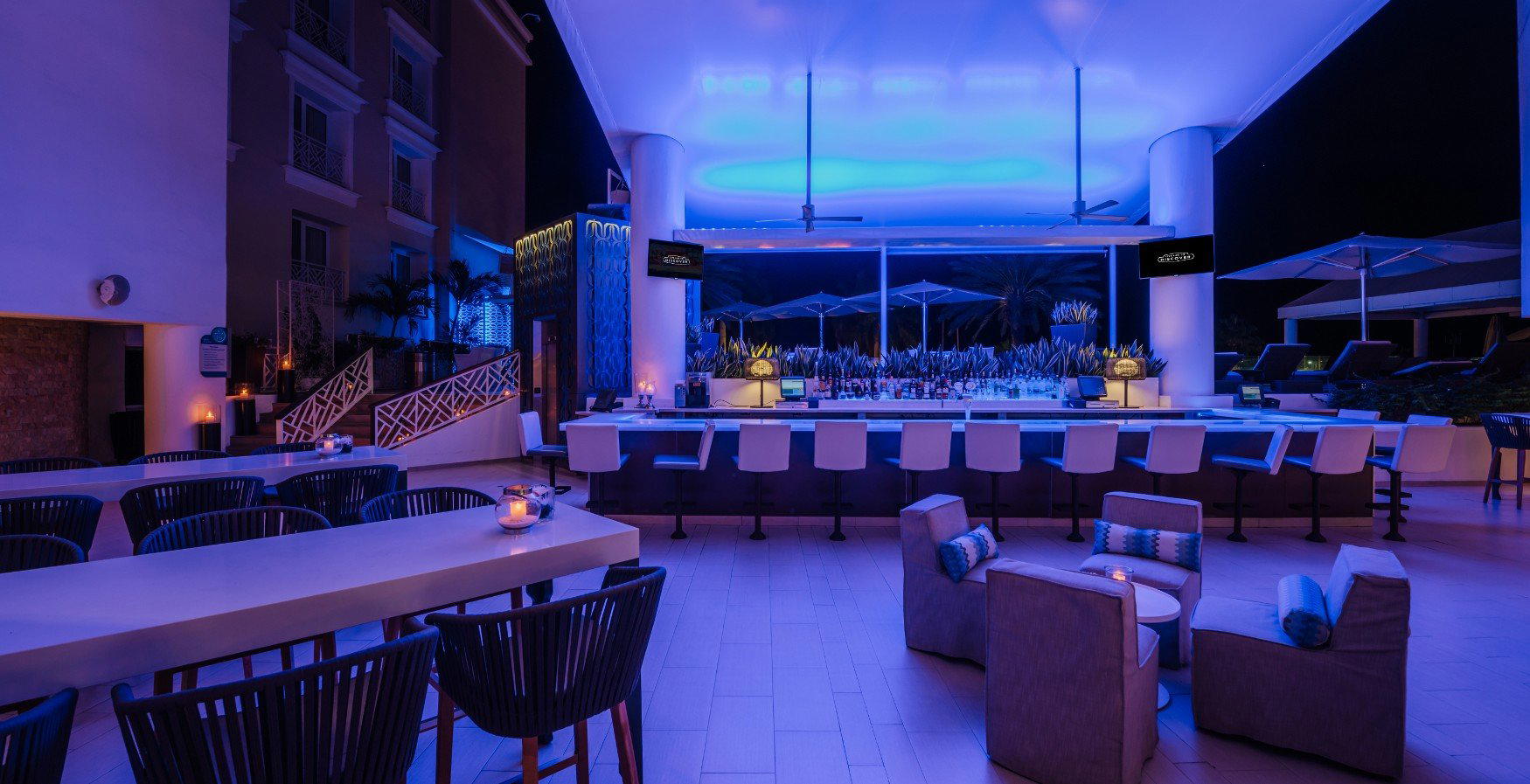
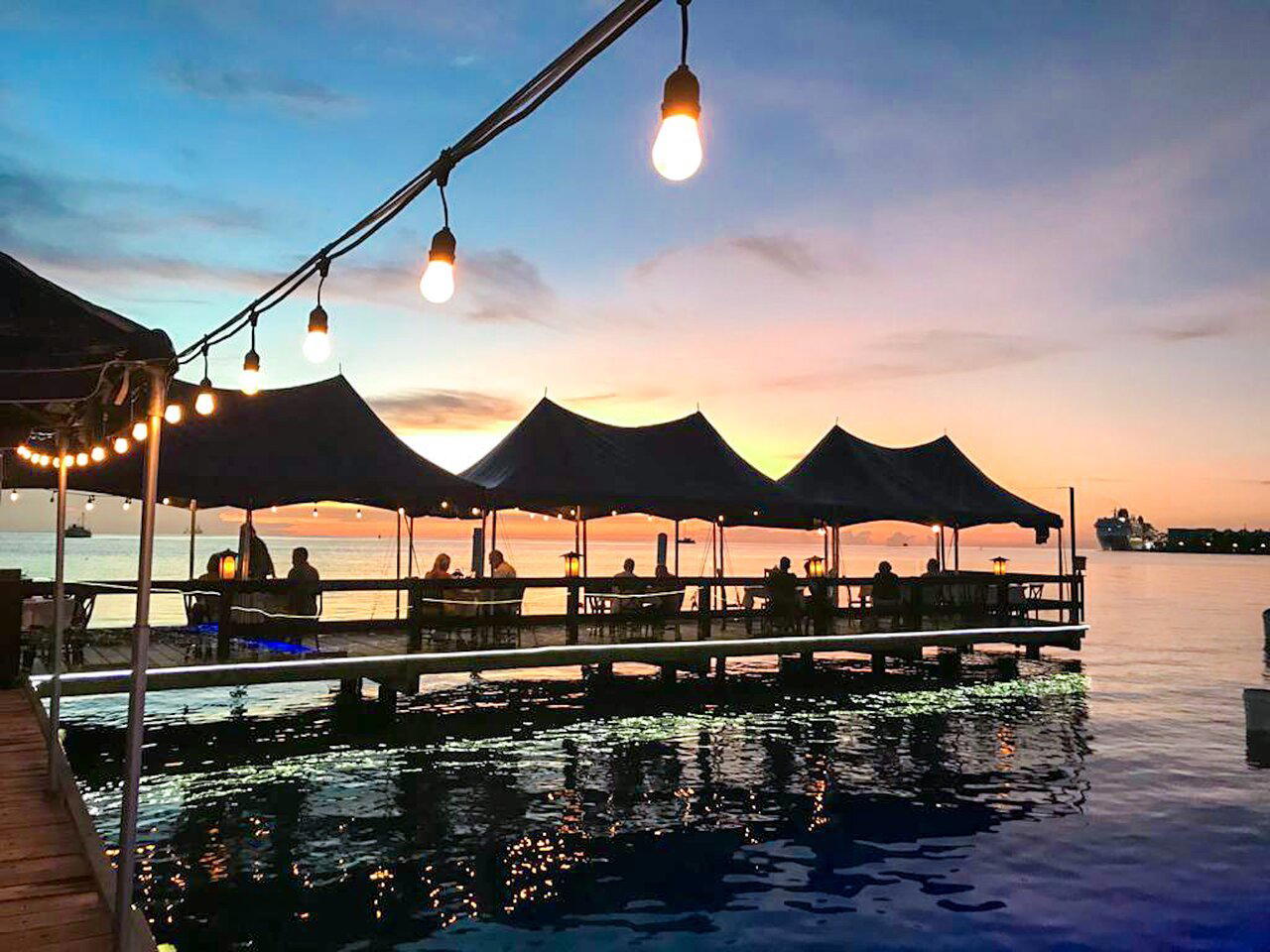
Romantic terrace illuminated by tiki torches under starry skies, enhanced by live guitar and violin music.