Our verdict
Las Espadas brings the Brazilian churrasco tradition to Chihuahua's Plaza Cumbres district, where the rodízio format — continuous tableside carving of wood-fired meats — sits in sharp contrast to the region's own cattle-ranching heritage. For a city that takes beef seriously, this is an interesting proposition: a South American format applied to northern Mexico's appetite for red meat, with all the ceremony that entails.

Pearl is the En Primeur Club membership app — saves, bookings, and concierge access live there. Same editors, same standards.
- Address
- Plaza Cumbres, Av, Perif. de la Juventud 6902-Loc. 50, Plaza Cumbres, 31215 Chihuahua, Chih., Mexico
- Phone
- +526144231427
- Hours
- Mon–Sat 12–11 PMSun 12–9 PM
- Website
- lasespadas.mx
- Directions
- Get directions
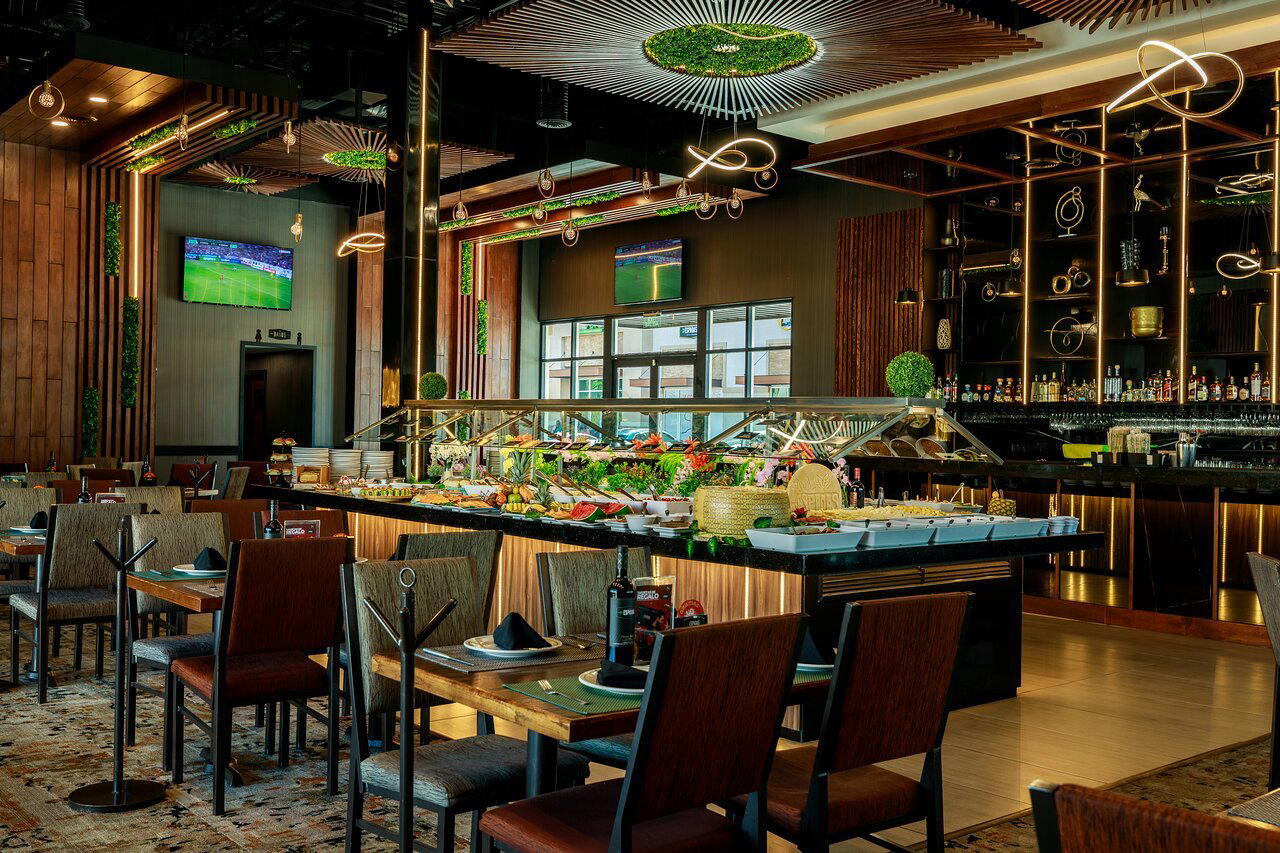
Where Brazilian Churrasco Meets Northern Mexico's Cattle Country
Chihuahua is one of the few cities in Mexico where a Brazilian steakhouse faces a genuinely demanding audience. The state of Chihuahua produces more beef than any other in the country, and the local dining culture reflects that: residents here have strong opinions about how cattle should be raised, butchered, and cooked. Into this context steps Las Espadas, positioned inside Plaza Cumbres on Periférico de la Juventud, one of the city's main commercial corridors, where the rodízio format — continuous tableside service of fire-roasted meats carved from long skewers — offers a Brazilian counterpoint to the region's own grilling traditions.
The cultural roots of churrasco trace back to the gaúcho tradition of southern Brazil, where open-fire cattle herding produced a style of cooking defined by simplicity and scale: whole cuts, wood or charcoal heat, and a rhythm of eating governed by the server's sword rather than the kitchen's clock. That format migrated into urban Brazil, then spread through the Americas as a hospitality model, one where abundance is the explicit proposition. What makes it interesting in Chihuahua specifically is the local parallel: the north Mexican asado tradition carries its own deep relationship with fire and beef, so the two cultures are not as far apart as they might appear on a map. Both center on the animal, the flame, and the communal act of eating meat in quantity.
The Rodízio Format in Practice
For readers unfamiliar with the churrasco rodízio format, the operational model is worth explaining, because it shapes everything about how you eat. Rather than ordering individual dishes, diners pay a set entry price that covers continuous tableside service: passadores, servers carrying long metal skewers of roasted meats, circulate through the dining room and carve directly onto your plate. A table indicator, typically a two-sided card (green to continue, red to pause), gives the diner control over the pace. The meats rotate through a sequence of cuts, picanha, fraldinha, costela, linguiça, chicken, and others depending on the house, and the expectation is that you sample broadly rather than committing to a single plate. A buffet of sides, salads, and hot accompaniments runs alongside.
This format places Las Espadas in a different competitive tier from Chihuahua's traditional steakhouses, which typically work from a printed menu with à la carte pricing. The rodízio model is social, slightly theatrical, and built for group dining; it rewards patience over the first few passes, when the more premium cuts tend to appear. Visitors to the Plaza Cumbres location can expect the full expression of that format, which has proven durable across Mexican cities, from Mexico City's established churrascarias to regional outposts that serve a similar function for business lunches and family celebrations. For other examples of how Mexican restaurants position fire-centric formats as destination dining, see Animalón in Valle de Guadalupe or the wood-fire approach at Arca in Tulum.
Chihuahua's Dining Scene: Where Las Espadas Sits
Chihuahua's restaurant scene has diversified over the past decade, moving beyond the traditional asadero and regional home-cooking formats that defined it for generations. The Plaza Cumbres corridor, where Las Espadas operates, reflects that shift: it's a commercial zone serving a middle-to-upper-income residential area, and the mix of restaurants there skews toward accessible formats with broad appeal. Within that context, a Brazilian steakhouse occupies a sensible niche, it's festive enough for celebrations, familiar enough in its meat-and-fire proposition to appeal to local tastes, and distinctive enough in format to differentiate itself from the surrounding competition.
For those mapping Chihuahua's dining options more broadly, our full Chihuahua restaurants guide covers the range from traditional northern Mexican cooking to contemporary options. Within the city, La Bodega represents an alternative direction entirely, a useful contrast if you're building a multi-meal itinerary across the city's different dining registers.
Across Mexico more broadly, the restaurant scene has developed considerable range. Fine-dining benchmarks like Pujol in Mexico City and KOLI Cocina de Origen in Monterrey set one end of the quality spectrum, while regional specialists such as Levadura de Olla Restaurante in Oaxaca and Huniik in Merida demonstrate the depth of Mexico's non-capital dining culture. The churrascaria model that Las Espadas employs sits in a parallel lane, less about ingredient-driven Mexican cuisine, more about a imported South American format that has found genuine traction in Mexican urban dining. Other carnivore-focused formats across the country, like California Prime - Rib Sucursal Los Angeles in Celaya and Carnitas Don Vasco in Cancún, show how meat-centric dining operates at different price points and with different cultural inflections. For coastal Mexican dining that reaches further into creative territory, HA' in Playa del Carmen and Le Chique in Puerto Morelos offer a reference point for how far the country's dining ambitions now reach. Contemporary fine dining in Guadalajara is covered by Alcalde, and Baja California's farm-driven model is well represented by Olivea Farm to Table in Ensenada and Lunario in El Porvenir. For international comparison points in a completely different register, Le Bernardin in New York City and Atomix in New York City illustrate how the world's most decorated restaurants operate; Pangea in San Pedro Garza Garcia is the most relevant northern Mexico fine-dining benchmark.
Planning Your Visit
Las Espadas is located at Plaza Cumbres, Av. Periférico de la Juventud 6902, Local 50, in the 31215 district of Chihuahua. The Plaza Cumbres location places it in a accessible commercial zone with parking available through the shopping centre. Pricing, dress code, and reservation policy are similarly unconfirmed, the rodízio format typically operates on a fixed per-person rate, but visitors should verify the current pricing structure at time of booking. Group visits, which suit the format well, benefit most from advance contact to confirm table availability, particularly on weekend evenings when family dining in this part of Chihuahua tends to peak.
Frequently asked questions
What part of town is Las Espadas - Brazilian Steakhouse in?
Las Espadas - Brazilian Steakhouse is located at Plaza Cumbres, Av, Perif. de la Juventud 6902-Loc. 50, Plaza Cumbres, 31215 Chihuahua, Chih. Mexico, Chihuahua.
How does the rodízio format at Las Espadas differ from a traditional Chihuahua asadero?
A Chihuahua asadero is built around the northern Mexican tradition of communal grilling, typically with specific regional cuts ordered by the table and cooked to specification. Las Espadas runs the Brazilian rodízio model instead: passadores bring continuously rotating skewers of pre-seasoned cuts directly to seated guests, and the pace and variety are controlled by the diner's table card rather than a kitchen order. The two formats share a reverence for beef — Chihuahua state is one of Mexico's leading cattle producers — but they arrive at the table through entirely different service logic.
What should I order at Las Espadas - Brazilian Steakhouse?
Las Espadas operates on the rodízio format, meaning there is no à la carte ordering. Passadores circulate the dining room with skewers of various cuts, and you signal for more or pause service using a table card. In a city like Chihuahua, where the state ranks among Mexico's top beef-producing regions, the quality of the cuts brought to your table is the primary event — prioritise the red-meat cuts when they come around rather than filling up on the salad bar early.
Should I book Las Espadas - Brazilian Steakhouse in advance?
Las Espadas is located at Plaza Cumbres on Avenida Periférico de la Juventud, a commercial hub that draws consistent foot traffic from across the city. Weekend evenings in particular tend to fill quickly given the format's appeal to groups and families. Checking ahead or arriving during off-peak hours on weekdays will give you the most comfortable experience.
What do critics highlight about Las Espadas - Brazilian Steakhouse?
What the venue's context does make clear is that operating a Brazilian churrascaria in Chihuahua — a state that produces more beef than almost any other in Mexico — sets a demanding local standard that the rodízio format has to meet squarely. The positioning at Plaza Cumbres also places it in direct competition with the city's established dining options.
Do they accommodate allergies at Las Espadas - Brazilian Steakhouse?
The rodízio format does give guests some practical control, since you can decline individual skewers as they come to the table. For anyone with a serious dietary restriction, contacting the restaurant directly through Plaza Cumbres at Avenida Periférico de la Juventud 6902, Local 50 in Chihuahua is the most reliable route before visiting.
Is Las Espadas - Brazilian Steakhouse good value for money?
As a general reference point, rodízio-format steakhouses in Mexican cities at this commercial tier typically price per person for an all-inclusive meat service, which tends to compare favourably against ordering individual cuts at a traditional parrilla. In Chihuahua specifically, where beef quality is tied to one of Mexico's most productive cattle states, the rodízio model offers volume and variety that a fixed-menu steakhouse does not.
Budget and Context
Comparable venues nearby, for context on price, style, and recognition.
| Venue | Cuisine | Price | Awards | Notes |
|---|---|---|---|---|
| Las Espadas - Brazilian SteakhouseThis venue — the venue you are viewing | Brazilian Rodizio Steakhouse | $20–30 | Not listed | Not listed |
| La Bodega | BBQ Ribs Steakhouse | Not listed | Not listed | Not listed |
| La Palapa Belga | Traditional French-Belgian Bistro | $30–50 | Not listed | Zona Hotelera, Traditional French-Belgian Bistro |
| Au Pied de Cochon | Classic French Brasserie | $100–150 | Star Wine List · Wine Spectator Best of Award of Excellence | Polanco, 24-hour Traditional French Brasserie |
Continue exploring
More in Chihuahua
Restaurants in Chihuahua
Browse all →
Bars in Chihuahua
Browse all →
Details
- Lively
- Elegant
- Group Dining
- Celebration
- Family
- Business Dinner
- Open Kitchen
- Buffet
Current opening hours
- Monday
- 12–11 PM
- Tuesday
- 12–11 PM
- Wednesday
- 12–11 PM
- Thursday
- 12–11 PM
- Friday
- 12–11 PM
- Saturday
- 12–11 PM
- Sunday
- 12–9 PM
Hours can change for holidays and private events. Last verified .
Nice ambiance suitable for special events with courteous professional service and a lively atmosphere from continuous meat service.