Landhaus Köpp serves classical German fine dining with French influences in a historic building in Xanten, with formal service and an extensive wine list.
Pearl is the En Primeur Club membership app — saves, bookings, and concierge access live there. Same editors, same standards.
- Address
- Husenweg 147, 46509 Xanten, Germany
- Phone
- +494928041626
- Website
- landhauskoepp.de
- Directions
- Get directions
 Saves & bookings on Pearl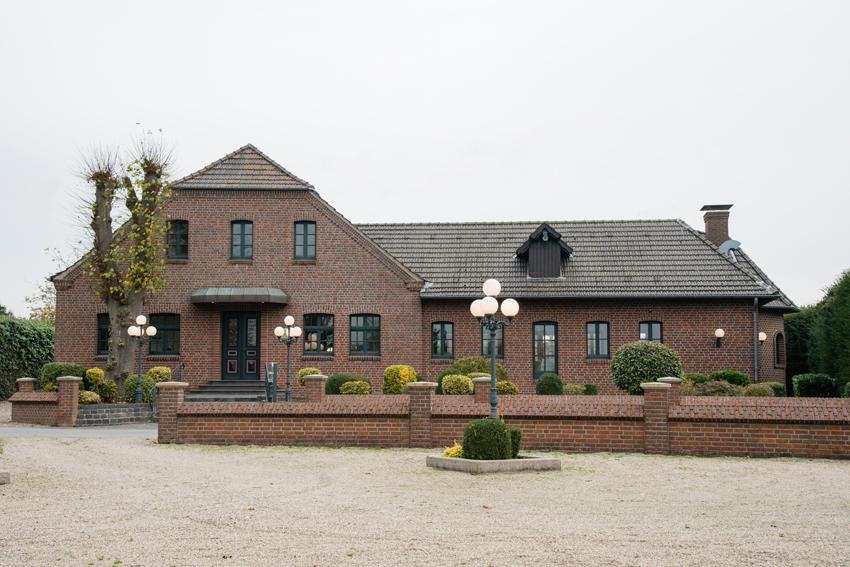
Where the Lower Rhine Countryside Shapes the Plate
The road into Xanten along the western edge of the Lower Rhine flatlands gives little warning of what awaits at Husenweg 147. The landscape here is agricultural in the old sense: wide, flat, and governed by seasons rather than quarterly trends. It is the kind of countryside that either inspires a kitchen or has nothing to say to it. At Landhaus Köpp, the surrounding region appears to have a great deal to say. The address sits outside the historic Roman colony town of Xanten, a place more often associated with its archaeological park and medieval cathedral than with serious dining. That positioning, away from the urban fine-dining circuits of Düsseldorf or Cologne, is part of what defines the restaurant's relationship to its ingredients and its guests.
Germany's western dining corridor has produced some of the country's most technically precise kitchens. Vendôme in Bergisch Gladbach and Aqua in Wolfsburg represent the end of that spectrum where creative ambition and classical rigour combine at the highest price points. Landhaus Köpp operates in the same broad German fine-dining tradition but at a remove from those urban flagship settings, placing it in a category of destination restaurants that require a deliberate journey rather than a spontaneous booking.
The Case for Ingredient-Led Cooking in a Rural Setting
Across Germany's leading kitchens, the question of sourcing has moved from marketing language to operational discipline. Restaurants at the level of Schwarzwaldstube in Baiersbronn or Waldhotel Sonnora in Dreis have long structured their menus around regional produce cycles, using proximity to farms and forests as a genuine kitchen advantage rather than a decorative claim. The Lower Rhine valley offers its own version of this logic: river fish, game from nearby woodlands, dairy from the flat pastureland, and vegetables grown in the silty alluvial soil that the Rhine has been depositing for centuries.
A restaurant in this position, anchored to a working rural address rather than a hotel lobby or city centre building, typically earns its reputation through consistency and specificity rather than spectacle. The physical setting at Landhaus Köpp reflects that orientation: a country house format that frames the meal within a sense of place rather than an abstract design statement. In the tradition of German Landhaus restaurants, the building and its surroundings function as context for the cooking, signalling that what arrives on the plate has a direct relationship to what grows or grazes within a reasonable radius.
This approach places the restaurant in a longer European tradition of auberge-style destination dining, where the distance from the city is a feature rather than a drawback. Comparable models appear in the kitchens of Schanz in Piesport along the Moselle, or ES:SENZ in Grassau in Bavaria, where rural locations have become part of the identity of kitchens that take sourcing seriously.
Xanten as a Dining Destination
Xanten itself rewards the visitor who arrives with time to spare before or after the meal. The Archäologischer Park, one of Germany's most significant Roman archaeological sites, sits at the centre of the old town. The medieval Dom and the reconstructed Roman colosseum draw a particular kind of culturally attentive traveller, not the kind who needs a restaurant to do the entertaining, but the kind who appreciates a kitchen that earns its place in the itinerary on its own terms. That visitor profile aligns with what a serious Landhaus restaurant requires: guests who are willing to make the drive, take the table at the appointed time, and engage with a menu shaped by what the season allows.
The Broader German Fine-Dining Frame
Germany's Michelin geography has always had a strong provincial dimension. Some of the country's most decorated tables operate outside major cities, where property costs are lower, sourcing relationships are closer, and the restaurant can define the occasion rather than compete with a city's existing energy. Victor's Fine Dining by Christian Bau in Perl and Bagatelle in Trier both demonstrate how the western German border region has produced kitchens that draw guests willing to travel specifically for the table.
That model depends on a particular kind of cooking: food that rewards the journey, holds a clear point of view, and does not rely on the city's ambient excitement to generate atmosphere. Kitchens like AURA by Alexander Herrmann and Tobias Bätz in Wirsberg or AUGUST in Augsburg illustrate how provincial German fine dining has developed its own confidence, no longer looking to metropolitan templates for validation. At its most focused, this tradition produces kitchens where the sourcing story is not supplementary to the menu but is the menu.
Creative format experiments, such as those at CODA Dessert Dining in Berlin or ATAMA by Martin Stopp in Sankt Ingbert, push German fine dining in conceptual directions. The restaurant, by contrast, represents the more rooted end of the spectrum, where the argument for the restaurant is made through what the surrounding land provides rather than through structural invention. For international points of comparison, the sourcing-led philosophy at addresses like Le Bernardin in New York City or the ingredient precision at Atomix in New York City shows how the same underlying discipline operates across different culinary vocabularies. The ammolite restaurant in Rust offers another regional German comparison point, where a distinctive setting shapes a kitchen's identity in ways that urban addresses cannot replicate.
Side-by-Side Snapshot
Comparable venues nearby, for context on price, style, and recognition.
| Venue | Cuisine | Price | Notes |
|---|---|---|---|
| Landhaus KöppThis venue — the venue you are viewing | Classical German Fine Dining with French Influences | $$$ | Not listed |
| NØRDS | Modern Nordic | $$$ | Flingern Nord |
| Labsal | Modern Alpine Swabian | $$$ | Dortmund (near Dortmunder U) |
| Haus Töller | Traditional Rhenish German Brewery Pub | $$ | Altstadt/Süd |
| Malz-Bierbrauerei Gerhard Fischenich | Traditional Cologne Brewpub | $$ | Altstadt/Süd |
| Twins Restaurant | Modern German | $$$ | Old Town |
Continue exploring
More in Xanten
Restaurants in Xanten
Browse all →
Bars in Xanten
Browse all →
Hotels in Xanten
Browse all →
At a Glance
- Classic
- Elegant
- Rustic
- Date Night
- Special Occasion
- Historic Building
- Extensive Wine List
Current opening hours
- Monday
- Closed
- Tuesday
- 12–2:30 PM, 6–9:30 PM
- Wednesday
- 12–2:30 PM, 6–9:30 PM
- Thursday
- 12–2:30 PM, 6–9:30 PM
- Friday
- 12–2:30 PM, 6–9:30 PM
- Saturday
- 6–9:30 PM
- Sunday
- 12–2:30 PM
Hours can change for holidays and private events. Last verified .
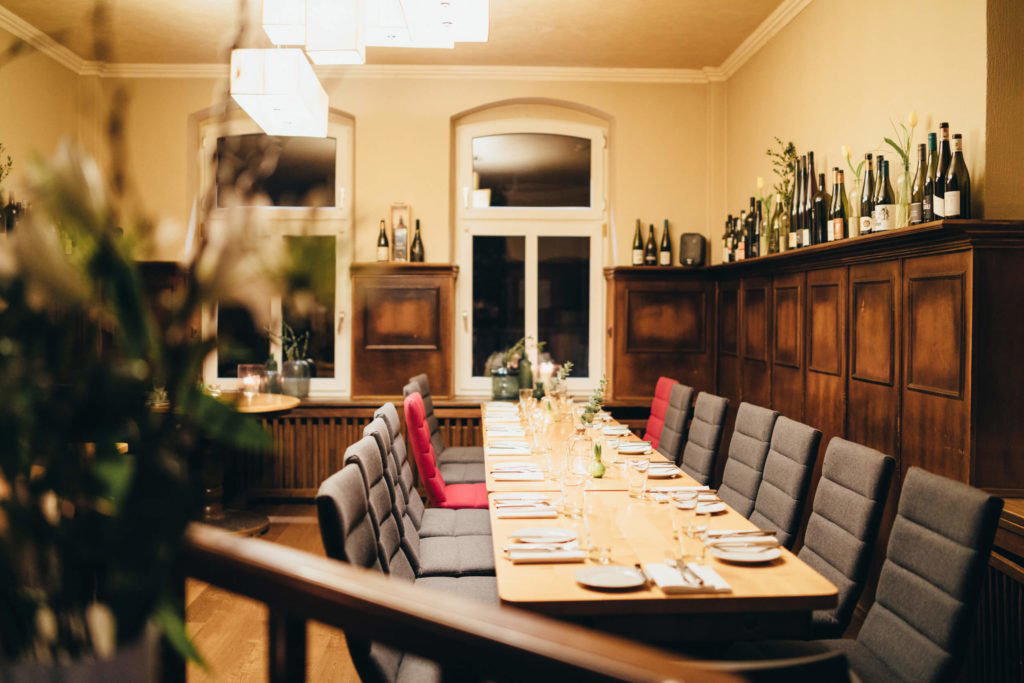
Simple, tasteful decor with an open design and welcoming atmosphere, though some note a stiff or 90s-style feel.