On St. Clair West, Lamesa Filipino Food Club brings the communal logic of kamayan and the layered flavours of Philippine regional cooking to a Toronto neighbourhood better known for its Italian bakeries. The format leans into sharing, noise, and abundance, a mode of eating that most of the city's fine-dining corridor avoids entirely. For anyone tracking how immigrant cuisines are claiming serious dining space in Canada, this address is a useful reference point.
- Address
- 634 St Clair Ave W, Toronto, ON M6C 1A9, Canada
- Directions
- Get directions
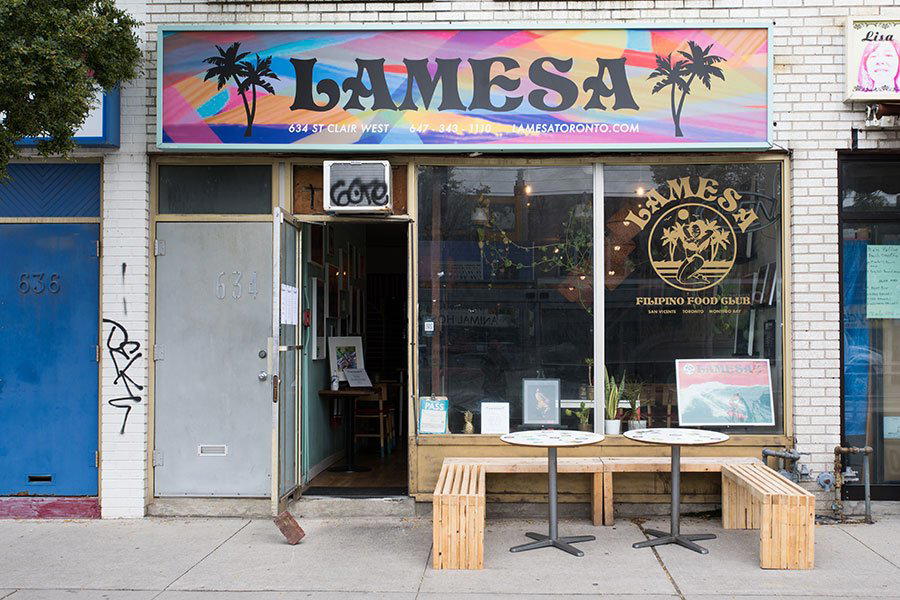
St. Clair West and the Shifting Geography of Toronto Dining
Toronto's culinary movements rarely start downtown. The city's fine-dining corridor, anchored by places like Alo and DaNico, occupies a fairly compact geography in the Entertainment District and west-central neighbourhoods. But the dining that captures how Toronto actually eats tends to push outward, toward the strip malls and semi-detached streets where immigrant communities built their food culture. St. Clair West is one of those corridors. The stretch around 634 has long been Italian territory, defined by espresso bars and pasticcerias that predate the current dining moment by several decades. Lamesa Filipino Food Club occupies that same block, and the meeting of those two cultures, the established European immigrant story and the newer Filipino one, shapes the address.
The Atmosphere of Communal Eating
Filipino dining, at its structural core, is built around the table as shared surface. The concept of kamayan, eating directly from banana leaves spread with rice, grilled meats, seafood, and fermented condiments, represents a philosophy of abundance that resists the plated, individual format that defines most Western restaurant conventions. When Toronto venues have attempted to place Philippine cooking inside fine-dining structures, the results have often felt like a category mismatch: the cuisine's logic is collective, its pleasure derived from simultaneous contrasts rather than sequential courses.
Lamesa reads as a response to that tension. The name itself, lamesa meaning "the table" in Filipino, is a declaration of format before you have even looked at the menu. The room on St. Clair West functions as an extension of that ethos: it is designed for groups, for noise, for the kind of meal where dishes accumulate at the centre and everyone reaches. This is not the composed silence of an omakase counter like Sushi Masaki Saito or the ceremonial progression of Aburi Hana. The sensory register is louder, more layered, more immediate.
What Philippine Cuisine Brings to the Table
Filipino cooking is among the more complex and least understood of Southeast Asia's major traditions in the North American context. Its flavour logic is built around sourness as a primary register rather than a corrective note, sinigang, the tamarind-soured soup, is a defining national dish precisely because acidity is the architecture, not the accent. Adobo, the vinegar-and-soy braise that most Canadians encounter first, carries within it centuries of trade history: the technique is indigenous, the soy is Chinese, the vinegar's role echoes Spanish colonial influence. The cuisine is, by its nature, a record of encounter.
That layered history has made Filipino cooking difficult to flatten into the single-note descriptions that help a cuisine become legible to mainstream restaurant audiences. It is neither as immediately accessible as Thai's sweet-sour-spice framework nor as visually dramatic as Japanese kaiseki. Its pleasures require a certain amount of context, which is part of why venues like Lamesa function as cultural translators as much as restaurants. The communal format does some of that translation work on its own: when dishes arrive together, the diner is invited to navigate contrast rather than wait for explanation.
Filipino Dining in the Canadian Context
The Philippines is one of Canada's largest source countries for immigration, and Filipino-Canadian communities have been present in cities like Toronto, Vancouver, and Winnipeg for generations. Yet Filipino cuisine has occupied a secondary position in the country's restaurant conversation for most of that period, visible in community kitchens and family celebrations long before it appeared on curated dining lists. The shift happening now, where Filipino-led restaurants are beginning to receive the kind of editorial attention previously reserved for Japanese and Italian traditions, is part of a broader recalibration across Canadian dining cities.
Toronto's version of that recalibration places Lamesa alongside a growing number of venues testing whether immigrant cuisines can hold their structural integrity when moved into dedicated restaurant formats. Elsewhere in Canada's dining conversation, the same question is being asked in different registers: Tanière³ in Quebec City asks it through a hyper-local French-Canadian lens, while AnnaLena in Vancouver negotiates a West Coast vernacular. The answer at Lamesa is to hold the communal format as non-negotiable and let the menu expand around it, rather than adapting the food to fit a format designed elsewhere.
Where Lamesa Sits in Toronto's Range
Toronto's premium dining tier, which includes the tasting-menu rooms and multi-award destinations covered in our full Toronto restaurants guide, operates at price points and formality levels that make weekly visits impractical for most diners. Lamesa occupies a different position: it is a neighbourhood restaurant in the functional sense, accessible without the advance booking runway required at places like Don Alfonso 1890. That positioning is not a concession, it reflects the food's social logic. Philippine cooking has never been primarily a special-occasion cuisine; its festive mode is abundance and company, not ceremony and scarcity.
For anyone building a Toronto dining itinerary across the full range of the city's food culture, Lamesa functions as a counterpoint to the tasting-menu circuit. The same week that includes a counter seat in Yorkville or a prix-fixe dinner downtown benefits from an evening at a table on St. Clair West where the food arrives all at once and the correct response is to start eating.
Know Before You Go
Address: 634 St Clair Ave W, Toronto, ON M6C 1A9
Neighbourhood: St. Clair West, Toronto
Cuisine: Filipino
Format: Communal, sharing-style dining
Reservations: Reservations are recommended.
Phone / Website: Check the venue's current channels for contact details.
Nearby: St. Clair West subway station (Yonge-University line)
Cuisine Context
Comparable venues nearby, for context on price, style, and recognition.
| Venue | Cuisine | Price | Notes |
|---|---|---|---|
| LAMESA FILIPINO FOOD CLUBThis venue — the venue you are viewing | Modern Filipino | $$ | Not listed |
| White Noise | Cocktail Bar | $$ | Church and Wellesley |
| The Daughter | Natural Wine Bar Snacks | $$ | Leaside |
| Poutini’s House of Poutine | Poutine House | $$ | West Queen West |
| Spirits of York Distillery | Distillery Bar with Farm-to-Table Bites | $$ | Waterfront Communities-The Island |
| Communist's Daughter | Dive Bar Snacks | $ | Little Italy |
Continue exploring
More in Toronto
Restaurants in Toronto
Browse all →
Bars in Toronto
Browse all →

Hotels in Toronto
Browse all →

At a Glance
- Lively
- Modern
- Trendy
- Date Night
- Group Dining
- Casual Hangout
- Open Kitchen
- Local Sourcing
Fun, lively atmosphere with hip-hop music, attracting friends catching up and couples on date nights.