



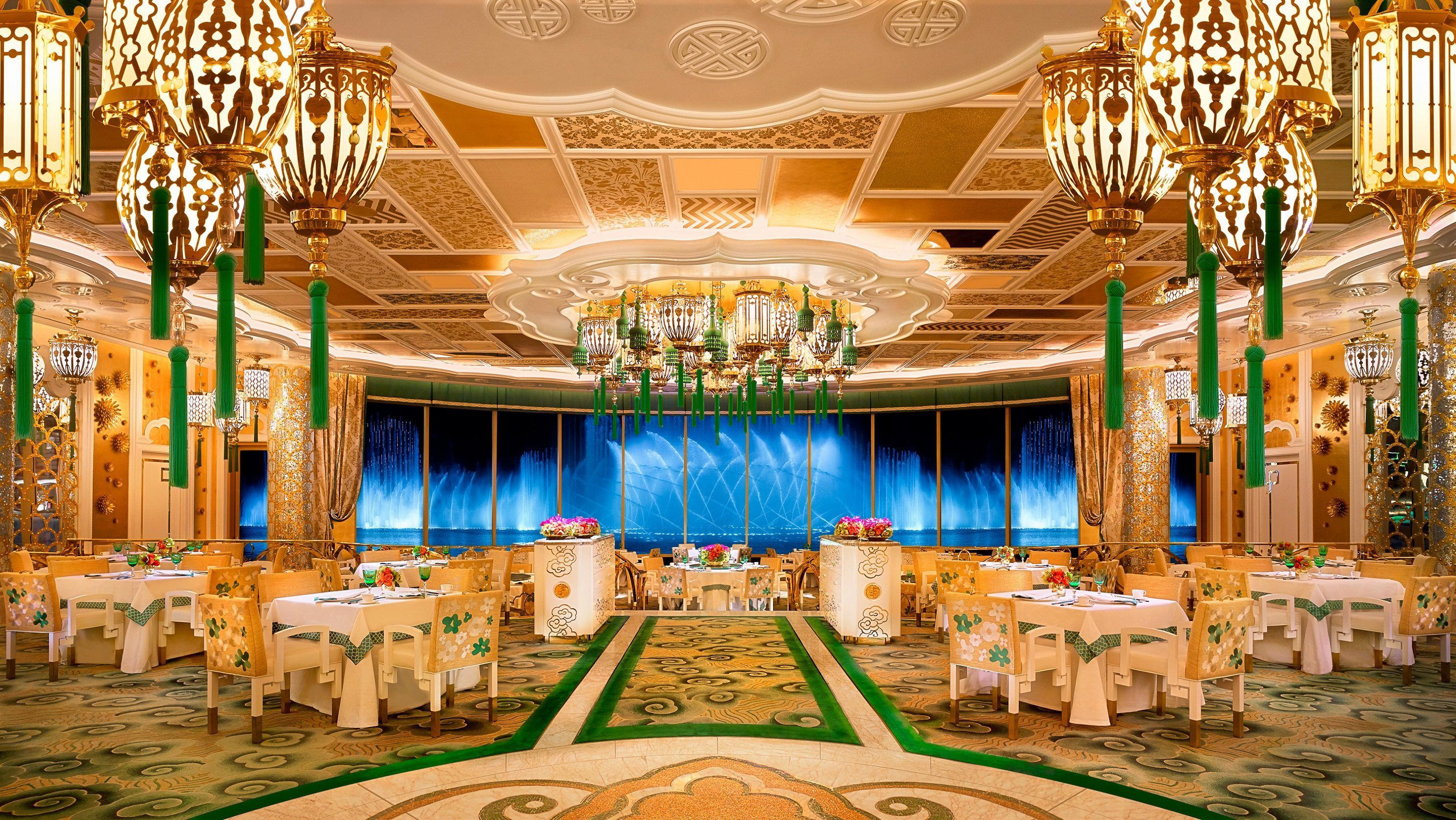
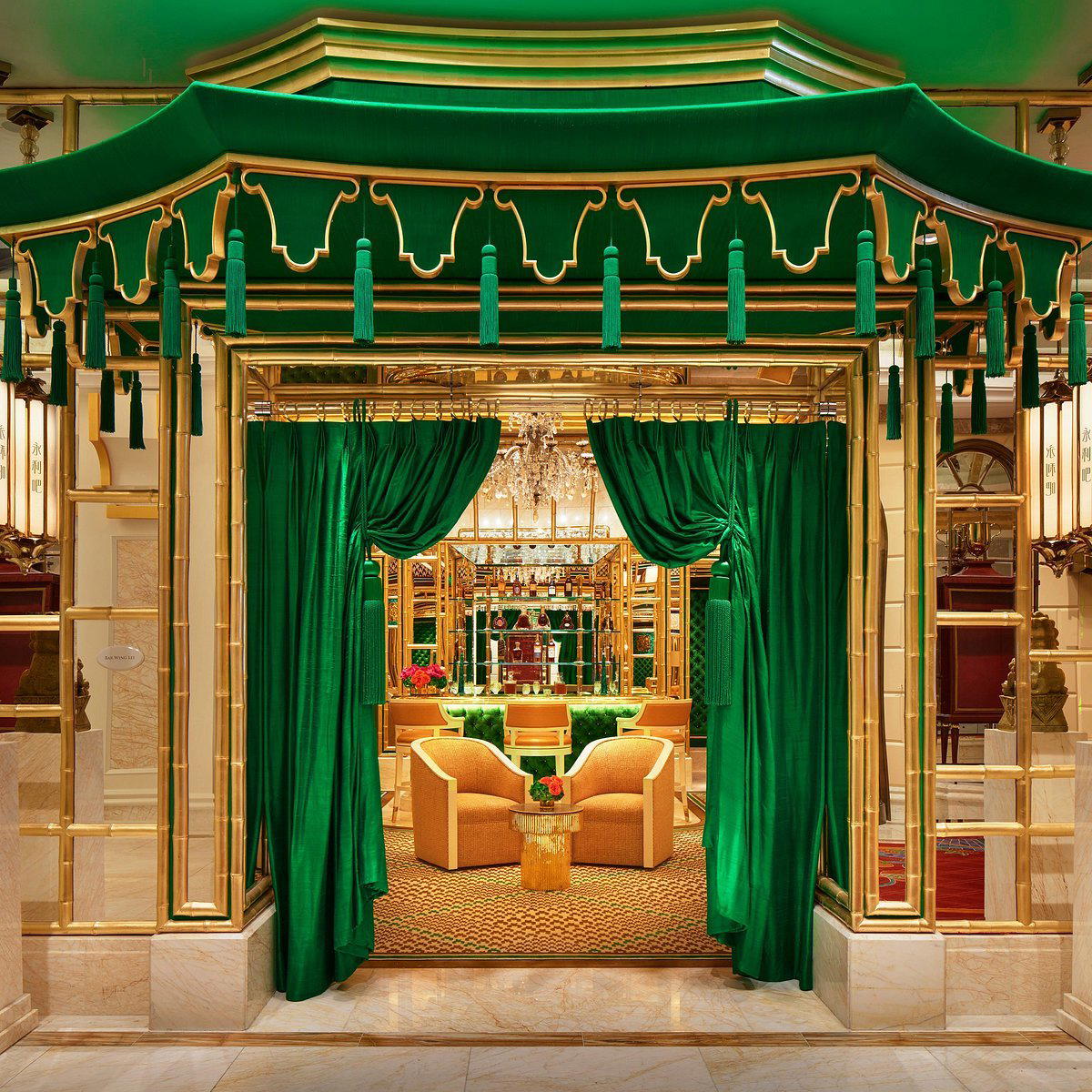
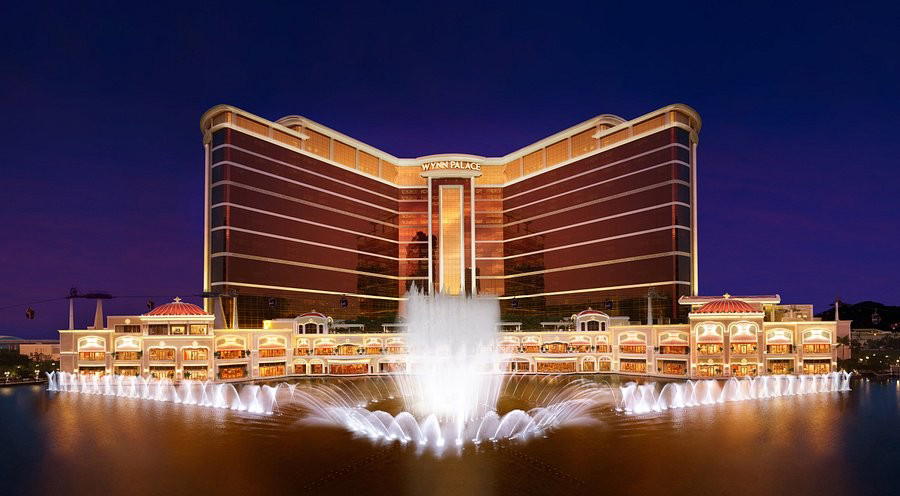
Set inside Wynn Palace on Cotai, Lakeview Palace arrives with a entrance defined by golden chandeliers, emerald-green tassels, and oversized floral arrangements that signal the register before a single dish appears. The restaurant occupies a tier of Macau dining where theatrical presentation and formal Cantonese tradition intersect, placing it alongside the city's most formally dressed Chinese dining rooms.
Pearl is the En Primeur Club membership app — saves, bookings, and concierge access live there. Same editors, same standards.
- Address
- Wynn Palace, Avenida Da Nave Desportiva, Cotai
- Phone
- 853-8889-3663
- Website
- wynnresortsmacau.com
- Directions
- Get directions
 Saves & bookings on Pearl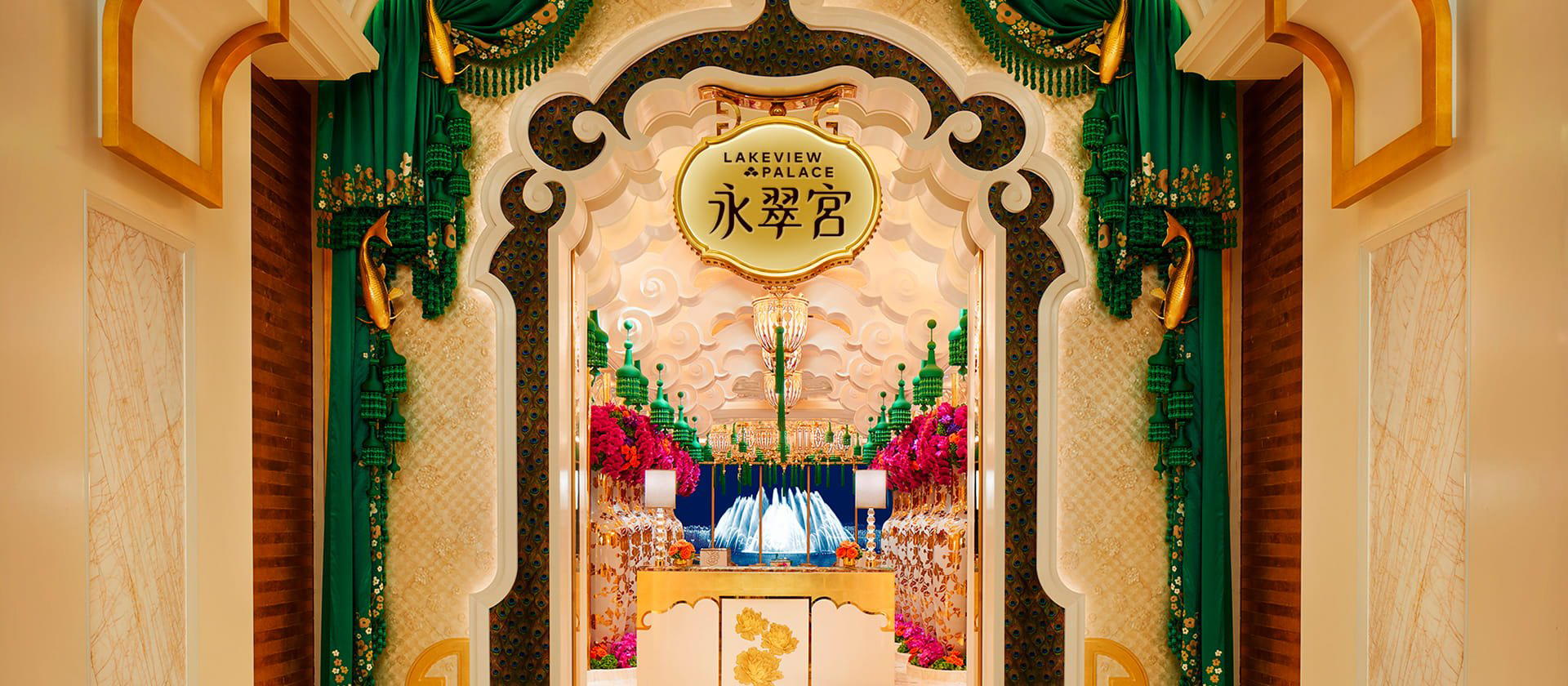
Entering the Room
Cotai's casino-hotel corridor has developed its own visual grammar for high-end Chinese dining: grand entrance sequences, ceremonial décor, and rooms designed to communicate occasion before any food arrives. Lakeview Palace, inside Wynn Palace on Avenida Da Nave Desportiva, follows that grammar with particular commitment. Golden chandeliers catch the light from the moment you approach. Emerald-green tassels frame the threshold. Oversized vases hold arrangements of cut flowers at a scale that reads more like installation than decoration. The effect is deliberate: this is a room that establishes its intentions at the door.
That kind of entrance is not incidental in Macau's hotel-dining culture. Across the Cotai strip, the physical environment of a restaurant functions as part of its reputation signal, a way of locating itself within a competitive set where the difference between a formal Cantonese room and a casual one is communicated through material choices as much as through menus or price points. Lakeview Palace's design vocabulary places it firmly in the formal register.
Macau's Formal Cantonese Tier
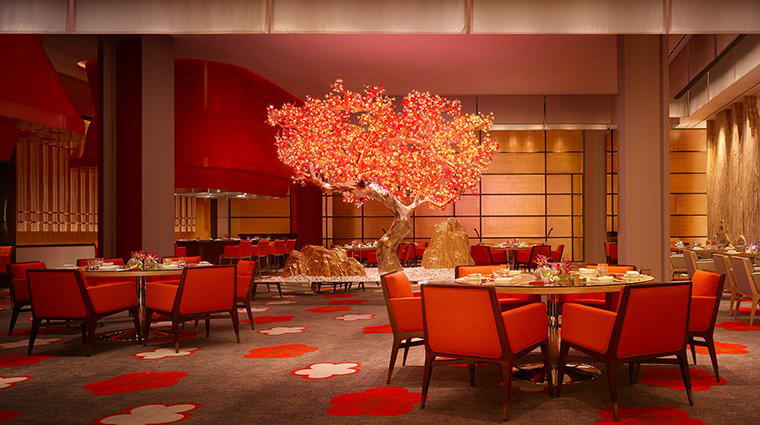
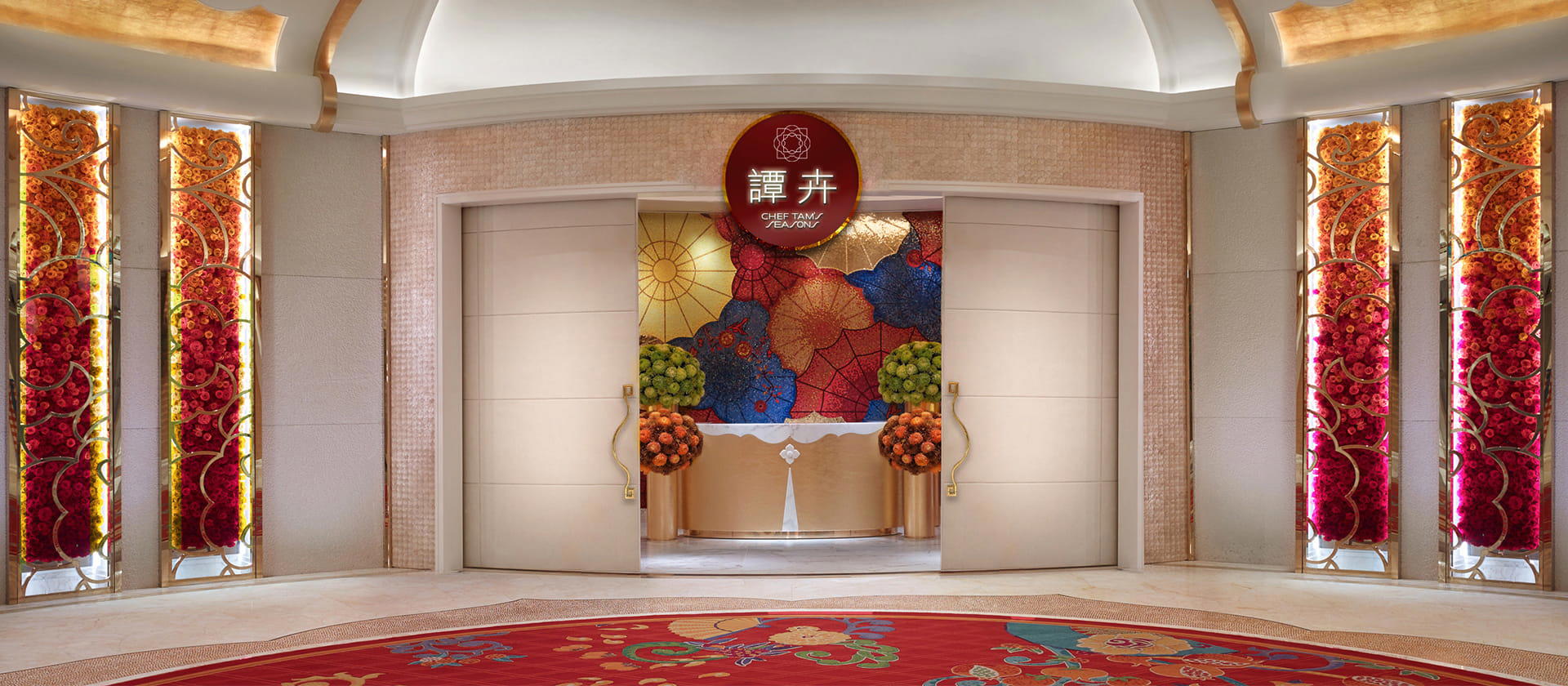
Macau operates among the more concentrated fine Chinese dining markets outside of Hong Kong. The combination of gaming revenue, high-spending visitor profiles, and a legacy of Cantonese culinary tradition has produced a cluster of formal Chinese restaurants that compete on a regional, not just local, level. At the higher end of that cluster sit venues with Michelin recognition: Jade Dragon, which holds three Michelin stars and has long served as a reference point for Cantonese haute cuisine in the territory, and Chef Tam's Seasons, which brings a different lineage to the same formal tier. Lakeview Palace occupies Wynn Palace, one of the properties that has historically invested heavily in its dining portfolio, which situates it within a hotel-anchored fine dining structure common to Cotai.
Understanding where the restaurant sits requires understanding the wider frame. Macau's formal Chinese dining rooms are not simply hotel restaurants with refined design budgets. They are the product of a specific hospitality model in which gaming properties use their food and beverage operations to attract, retain, and signal status to high-value visitors. In that context, a room's entrance sequence and decorative register are not superficial: they are operational. The chandeliers and floral arrangements at the restaurant are doing the same work that a Michelin star does at a competing address.
The Regional Context: Chinese Fine Dining Beyond Macau
Macau's position within the Greater China fine dining circuit matters for understanding how restaurants like Lakeview Palace are evaluated by the guests most likely to visit them. The high-spending Mainland Chinese visitor demographic familiar with formal dining rooms in other major cities arrives with reference points: Xin Rong Ji on Xinyuan South Road in Beijing, the elaborate tableside service formats now common in cities like Chengdu and Hangzhou, or the high-presentation Cantonese rooms represented by Imperial Treasure Fine Chinese Cuisine in Guangzhou. Against those comparisons, Macau's formal Chinese dining rooms compete on a combination of setting, heritage, and the gravitational pull of the casino-hotel environment.
Venues outside the Chinese-cuisine tradition also populate Wynn Palace's competitive neighbourhood. Robuchon au Dôme and Alain Ducasse at Morpheus represent the French Contemporary tier that has historically anchored Macau's highest Michelin counts, while Feng Wei Ju demonstrates the appetite for regional Chinese styles, particularly Hunan-Sichuan, that sits alongside Cantonese tradition in the city's mid-to-upper dining range. Within that cross-category competition, a formally designed Cantonese room like Lakeview Palace differentiates through its specific visual and service register rather than through cuisine category alone.
Awards, Recognition, and What the Design Signals
In Macau's casino-hotel dining culture, the design investment in a restaurant's entrance and dining room is itself a form of institutional statement, a claim about positioning that precedes any critical assessment. Formal Chinese dining rooms that attract serious recognition in this market tend to combine three elements: cuisine tradition with demonstrable technical depth, service formats aligned with the expectations of high-spending regional visitors, and physical environments that communicate occasion without ambiguity. The restaurant's entrance sequence, the chandeliers, the tassels, the scaled floral arrangements, is consistent with the visual language of rooms that compete in that recognizable tier.
For comparison, Dai Yuet Heen in Nanjing and 102 House in Shanghai illustrate how formal Chinese dining rooms in other Mainland cities handle the same challenge of communicating institutional seriousness through physical environment and service design, each within the constraints and expectations of their respective markets.
Internationally, the instinct to use environment as reputation signal is not limited to Chinese fine dining. Le Bernardin in New York City has long used its room's quiet formality as a deliberate positioning statement, and Emeril's in New Orleans demonstrated how a branded dining room environment can function as a destination marker independent of any single dish or menu cycle.
Planning a Visit
The restaurant is located within Wynn Palace on Cotai, accessible by the hotel's gondola ferry service from the Taipa Ferry Terminal or by taxi from central Macau. Wynn Palace sits on the Cotai strip alongside Parisian Macao and the Venetian, making it direct to combine with other Cotai dining and entertainment. Given the formal register of the room and its position within a major casino-hotel property, advance reservations are advisable, particularly on weekends and during peak visitation periods including Golden Week and the Formula E Grand Prix race calendar. Booking through the Wynn Palace concierge or the hotel's dining reservations channel is one reliable approach.
Comparison Snapshot
Comparable venues nearby, for context on price, style, and recognition.
| Venue | Cuisine | Price | Notes |
|---|---|---|---|
| Lakeview PalaceThis venue — the venue you are viewing | Innovative Jiangnan Cuisine | $$$$ | Not listed |
| Wynn Palace Hotel - Chef Tam Season’s | Modern Seasonal Cantonese | $$$$ | Cotai |
| Ying at Altira Macau | Michelin-Starred Cantonese | $$$$ | Taipa |
| Broth by André Chiang at Mizumi - Wynn Macau | Polished Pan-Asian Hotpot | $$$$ | NAPE |
| Sushi Mizumi | Premium Omakase Sushi | $$$$ | Cotai |
| Golden Flower | Imperial Tan Cuisine | $$$$ | NAPE |
Recognition history
Dated appearances from independent guides and award organizations, with the underlying list record or original source where available.
Forbes 4-Star
Forbes
Michelin Plate
Michelin
Opinionated About Dining Top Restaurants in Asia Recommended
Opinionated About Dining
Wine Spectator Best of Award of Excellence
Wine Spectator
At a Glance
- Elegant
- Sophisticated
- Ornate
- Special Occasion
- Business Dinner
- Celebration
- Waterfront
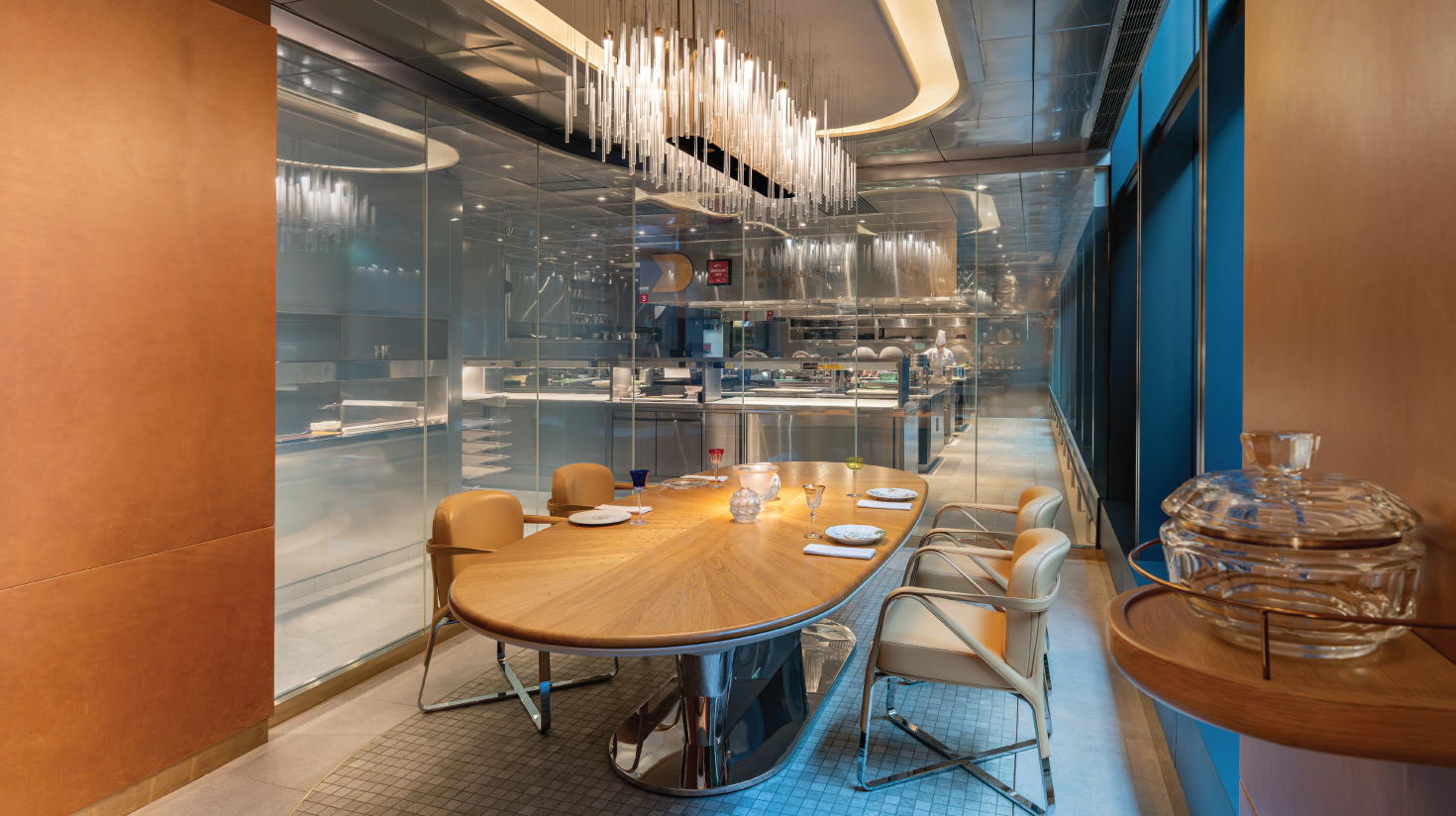
- Private Dining
- Hotel Restaurant
- Extensive Wine List
- Waterfront
Current opening hours
- Monday
- 12–3 PM, 5:30–11 PM
- Tuesday
- 12–3 PM, 5:30–11 PM
- Wednesday
- 12–3 PM, 5:30–11 PM
- Thursday
- 12–3 PM, 5:30–11 PM
- Friday
- 12–3 PM, 5:30–11 PM
- Saturday
- 12–3 PM, 5:30–11 PM
- Sunday
- 12–3 PM, 5:30–11 PM
Hours can change for holidays and private events. Last verified .
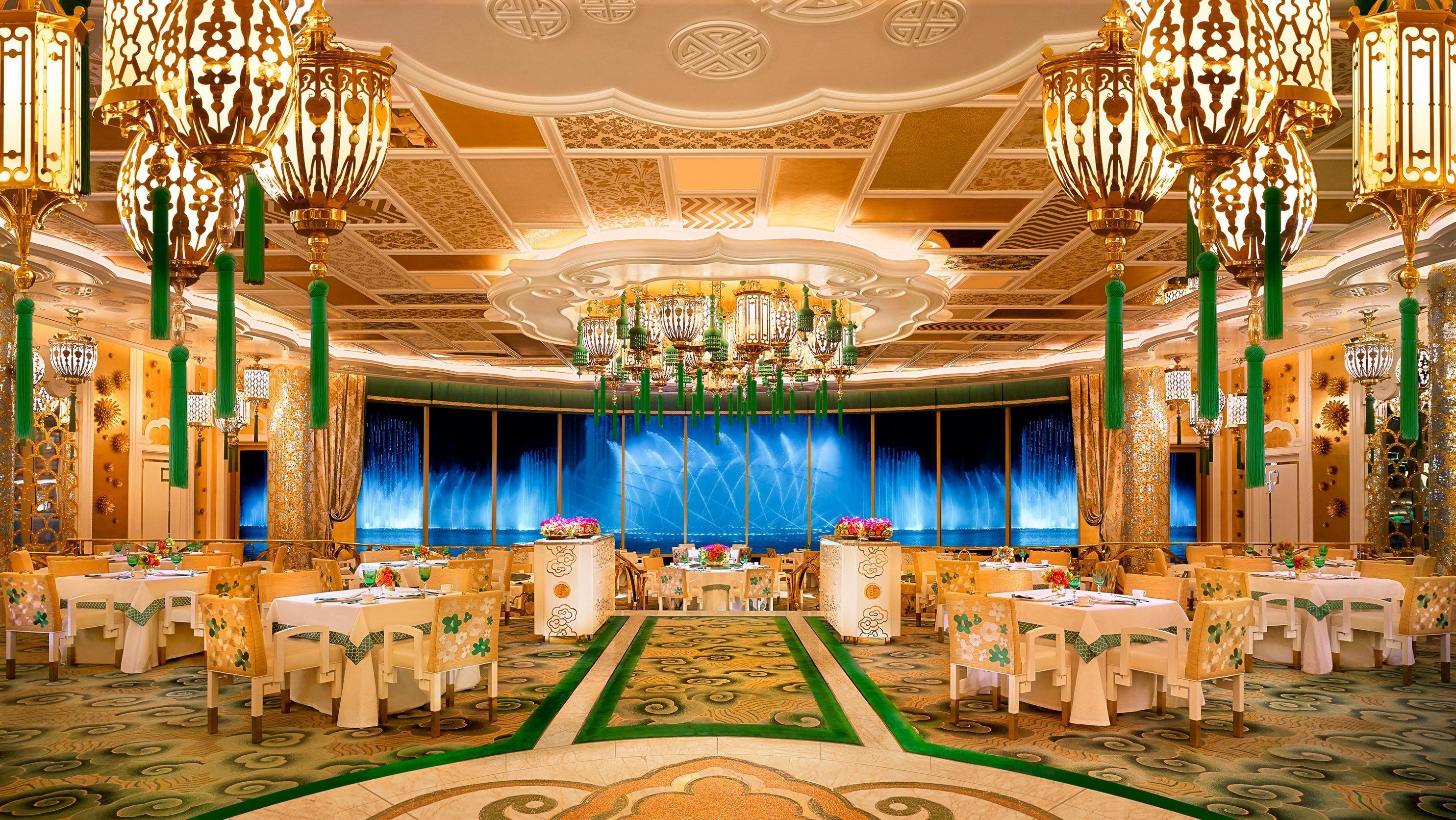
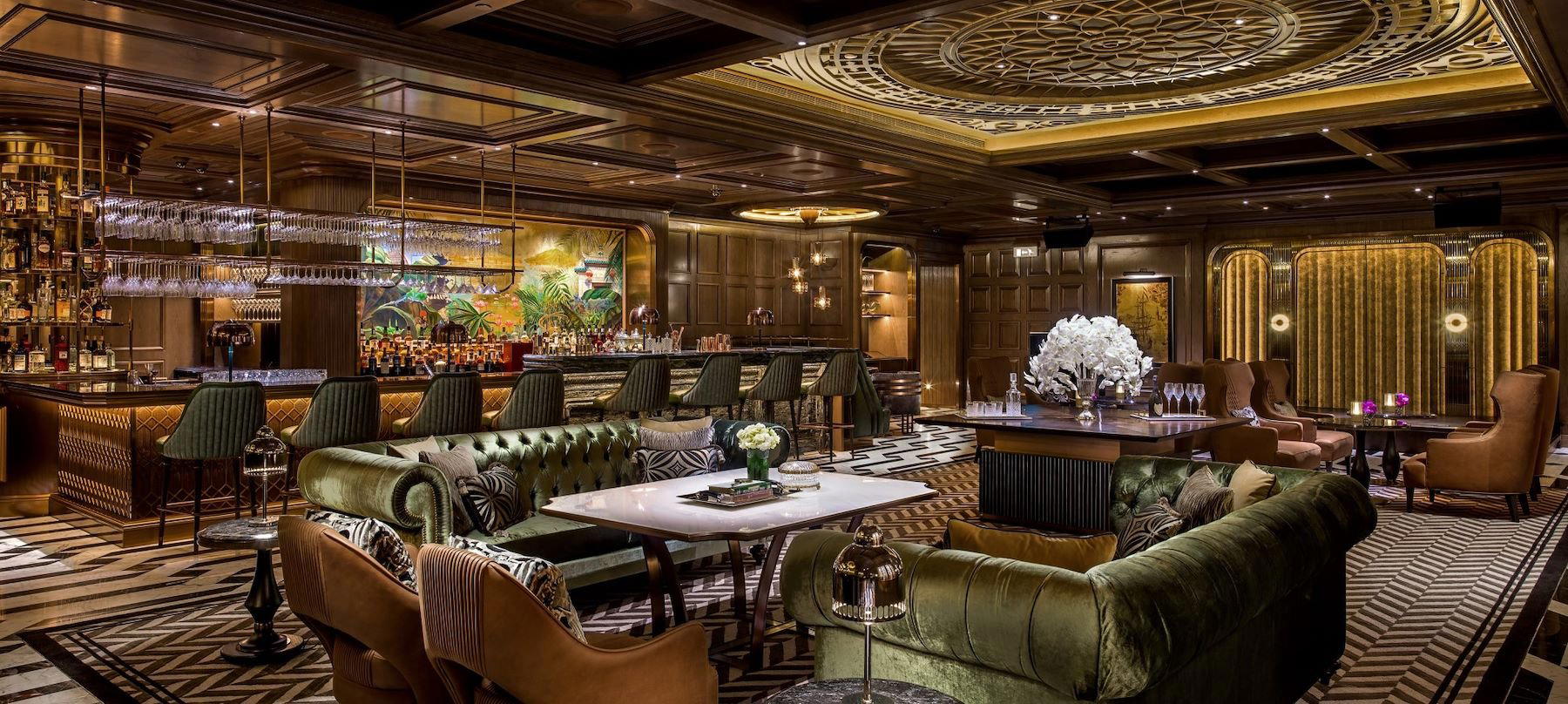
Emerald-green and gold interiors with natural sunlight, auspicious motifs, and floor-to-ceiling windows overlooking the Performance Lake's water show, creating a serene and elegant lakeside feast atmosphere.