Our verdict
A working dairy at the foot of the Col Bayard pass in the Hautes-Alpes, Laiterie du Col Bayard produces and sells local cheese, milk, and mountain products directly from its farm. Set against high-altitude pasture, it offers a direct encounter with the agricultural traditions of this corner of the French Alps, where the source of what you eat is visible from the table.

Pearl is the En Primeur Club membership app, where members save venues, book tables and use the concierge.
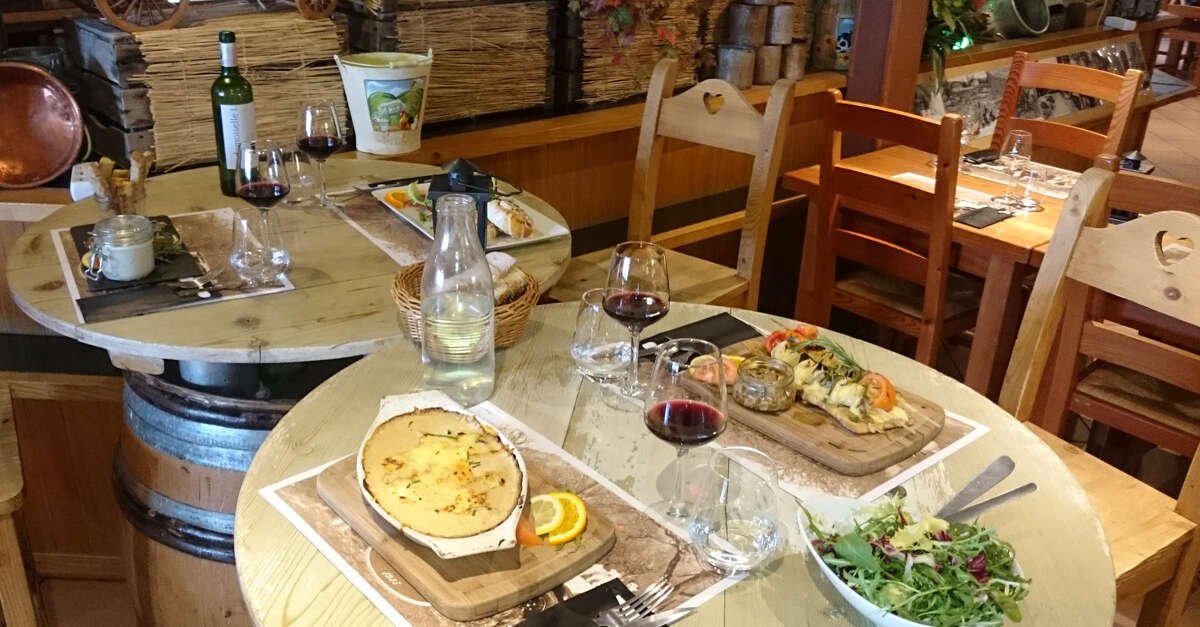
The menu
What to order
- Raclette
- Menu Saveur de Fromages
At the Pass, Before the Descent
The Col Bayard sits at roughly 1,248 metres above sea level, on the road between Gap and Corps in the Hautes-Alpes. Travellers crossing it have done so for centuries, pausing where the gradient eases and the plateau opens out before the drop toward the Drac valley. The laiterie, a farm dairy in the most literal sense, occupies that pause point in the landscape. Approaching from Gap, the meadows arrive first: broad, open, and at high altitude, slow to warm in spring. The buildings that follow are agricultural in character, functional rather than decorative, with the unadorned honesty that defines this category of French rural production.
This is not a restaurant in the conventional sense, nor does it position itself as one. What it offers instead is a direct relationship between visitor and product, of the kind that has largely disappeared from French food culture as distribution chains lengthened and farm gates closed to the public. In a country where the concept of terroir is applied liberally to wine, cheese, and charcuterie alike, the Col Bayard laiterie is one of the places where the word retains its literal meaning: this ground, these animals, this altitude, this climate. But the productive logic is the same: pasture at elevation produces milk with a different fatty acid and aromatic profile than lowland grazing. The Col Bayard plateau, exposed to sun and wind and with a short growing season, delivers a compressed flush of mountain grasses and alpine flora that feeds into the milk and, downstream, into whatever cheese or dairy products the farm produces.
This kind of direct-from-farm dairy operation occupies a specific niche in French food tourism. It sits below the level of destinations like Bras in Laguiole, where Michel Bras transformed Aubrac's agricultural identity into three-Michelin-star cuisine, and well outside the competitive set of urban fine dining addresses such as Alléno Paris au Pavillon Ledoyen or Mirazur in Menton. Visiting the source rather than the destination is a different kind of food travel, and arguably a more instructive one.
The Sourcing Logic That Runs Through French Alpine Cuisine
French alpine cooking, at every price point, is organised around a sourcing calendar that city restaurants can only approximate. The short growing season concentrates ingredients: late-spring greens, summer pasture milk, autumn mushrooms and game, winter root vegetables and cured meats. A farm dairy at this altitude operates inside that calendar without mediation. The milk that arrives at a laiterie in July is not the same as November milk, because the pasture is not the same, because the animals are not the same stage of lactation, because the temperature of the cellar where cheese matures shifts across the year.
This is the kind of granular sourcing intelligence that chefs at addresses like Flocons de Sel in Megève or Auberge de l'Ill in Illhaeusern spend considerable effort building into their supply chains. Visiting a working laiterie is the most direct way to understand what that sourcing effort is actually pursuing.enprimeurclub.com/restaurants/la-marine-noirmoutier-en-lle-restaurant">La Marine in Noirmoutier-en-l'île, Christopher Coutanceau in La Rochelle, and Auberge du Vieux Puits in Fontjoncouse each represent the same philosophy of extreme local sourcing applied at the level of starred French cuisine.
Reaching Laye and Planning a Visit
Laye is a small commune in the Champsaur valley, administratively part of the Hautes-Alpes department. Gap, the departmental capital, lies roughly 17 kilometres to the south and functions as the nearest hub for transport, accommodation, and services. The Col Bayard road (the D1075) connects Gap to Corps and on to Grenoble, making the laiterie accessible to travellers moving between the Hautes-Alpes and the Isère.
Arriving earlier in the day, outside school holiday peaks when regional tourism pressures the Hautes-Alpes, generally improves the chances of finding fresh stock and an opportunity to speak with the producers directly. For the wider context of eating and drinking in the area, see our full Laye restaurants guide.
Where This Fits in French Food Travel
The French dining canon is heavily weighted toward the restaurant table. The addresses that anchor its international reputation, from Paul Bocuse's Auberge du Pont de Collonges to Troisgros in Ouches, to newer urban statements like AM par Alexandre Mazzia in Marseille, operate at a remove from primary production even when they celebrate it loudly. The sourcing story is told at the table through a dish or a tasting note; the farm itself remains offstage.
Laiterie du Col Bayard inverts that structure. The production is the point, and the visitor encounters it without the translation layer of a chef's vision. For travellers whose interest in French food runs deeper than the dining room, that directness has real value. It also offers a natural counterpoint to the more formally constructed experiences available at comparable alpine altitude, such as Assiette Champenoise in Reims or Georges Blanc in Vonnas, where the ingredient story is filtered through substantial culinary apparatus. Neither approach is superior; they answer different questions about where French food comes from and what it tastes like when it travels the shortest possible distance from source to consumer.
For readers whose French alpine itinerary extends beyond the Hautes-Alpes, the contrast with Parisian fine dining at addresses like Au Crocodile in Strasbourg or with internationally oriented kitchens such as Le Bernardin in New York City and Atomix in New York City sharpens the argument for farm visits as a distinct category of food travel. And for those whose interest is specifically in how alpine producers contribute to regional identity, L'Oustau de Baumanière in Les Baux offers a parallel case study in how southern French terroir is codified into fine dining, at a very different latitude.
Frequently asked questions
Is Laiterie du Col Bayard okay with children?
A roadside dairy on a mountain pass at 1,248 metres tends to be an informal stop rather than a structured sit-down venue, which suits families travelling the Gap–Corps route. The setting at 6 Grands Prés et Miellouses in Laye is rural and open, without the constraints of a formal dining room.
What kind of setting is Laiterie du Col Bayard?
The laiterie sits on the Col Bayard pass in the Champsaur valley, at roughly 1,248 metres above sea level, on the road connecting Gap to Corps in the Hautes-Alpes. This is working agricultural land, not a resort or restaurant destination. The address, 6 Grands Prés et Miellouses, Laye, places it on pasture ground typical of high-altitude Hautes-Alpes farming, where the setting is defined by the surrounding meadows and mountain road rather than interior design.
Is Laiterie du Col Bayard worth a detour from Gap for alpine dairy produce?
Gap, the Hautes-Alpes departmental capital, lies roughly 17 kilometres from Laye, making the Col Bayard pass a plausible stop on any drive north toward Corps or the Dévoluy. The laiterie occupies a stretch of alpine dairy country that does not have the appellation infrastructure of neighbouring Savoie or Jura, which means the produce here reflects local farming practice rather than a protected designation. For travellers interested in French mountain dairy outside the established AOC circuits, the Col Bayard address at 1,248 metres is a geographically specific reason to stop.
What do regulars order at Laiterie du Col Bayard?
Travellers stopping at the Col Bayard pass are generally there for the produce itself rather than a composed menu. Calling ahead or checking on arrival is the most reliable way to know what is available on a given day.
What part of town is Laiterie du Col Bayard in?
Laiterie du Col Bayard is located at 6 Grands Prés et Miellouses, 05500 Laye, France, Laye.
Can I walk in to Laiterie du Col Bayard?
For a dairy stop on a mountain pass, access is often tied to operating hours that shift with the season, particularly given the Hautes-Alpes' short summer grazing window. Visiting during daylight hours on a summer or early autumn day, when the Col Bayard road is fully open, gives the best chance of finding the laiterie operational.
What's the signature at Laiterie du Col Bayard?
The laiterie's identity is the Col Bayard pass itself: dairy production at altitude in a department, the Hautes-Alpes, that sits outside France's mainstream cheese geography dominated by Savoie, Jura, and Auvergne. That positioning makes the produce notable on provenance grounds rather than appellation status.
How It Stacks Up
Comparable venues nearby, for context on price, style, and recognition.
| Venue | Cuisine | Price | Notes |
|---|---|---|---|
| Laiterie du Col BayardThis venue (the venue you are viewing) | Traditional French Cheese Specialty | $20–30 | Not listed |
| Restaurant La Veyrie | Traditional French Bistronomic | $30–50 | Bernin |
| L’aventure | French Mountain Grill | $30–50 | Oz en Oisans |
| L'Intramuros | Southern French Bistro with Rum Focus | $20–30 | Apt |
| Le Provençal | Traditional Provençal French | $20–30 | old quarter |
| L'Outa | Traditional Savoyard Bistro | $30–50 | Upper La Clusaz |
Continue exploring
More in Laye
Restaurants in Laye
All restaurants in Laye →
Details
- Rustic
- Cozy
- Scenic
- Family
- Group Dining
- Casual Hangout
- Terrace
- Historic Building
- Extensive Wine List
- Local Sourcing
- Mountain
- A La Carte
- Vegetarian Friendly
Current opening hours
- Monday
- Closed
- Tuesday
- 8:30 AM–7 PM
- Wednesday
- 8:30 AM–7 PM
- Thursday
- 8:30 AM–7 PM
- Friday
- 8:30 AM–11 PM
- Saturday
- 8:30 AM–11 PM
- Sunday
- 8:30 AM–11 PM
Hours can change for holidays and private events. Hours as of .
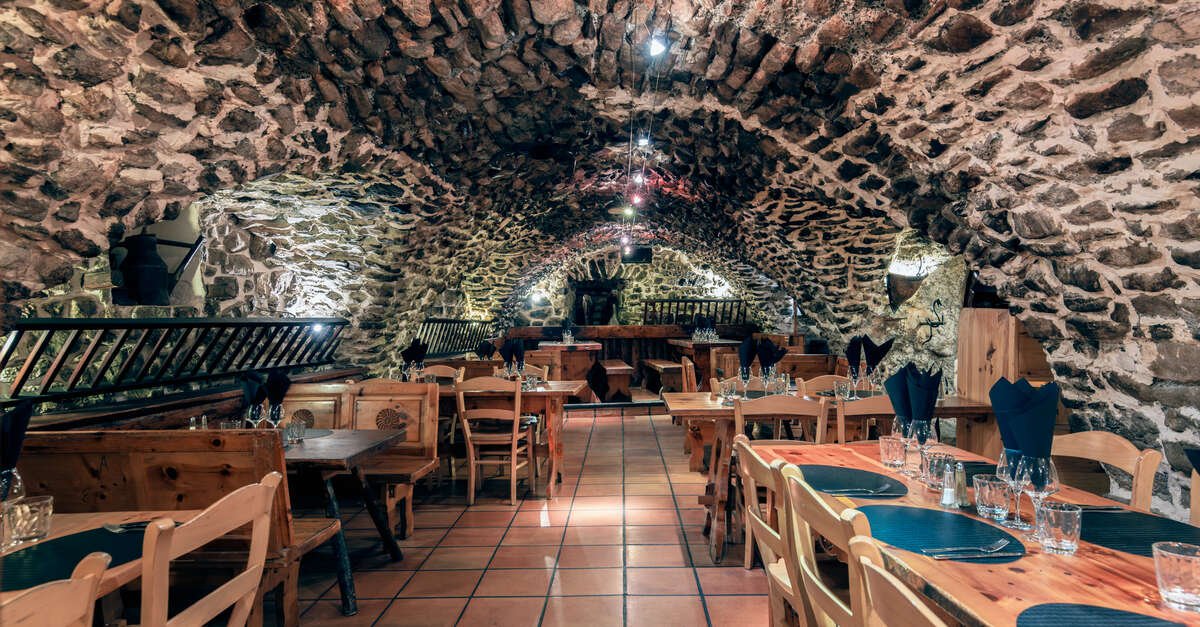
Convivial family atmosphere in a rustic mountain setting with panoramic valley views from the terrace.