
La Table de Maïna sits in Montrouge, just south of the Paris périphérique, where a Michelin Plate-recognised fusion menu (2024 and 2025) draws a loyal local following. At a €€ price point, it occupies an accessible tier that the capital's starred houses don't touch, making it a practical reference for fusion cooking beyond the centre.
Pearl is the En Primeur Club membership app — saves, bookings, and concierge access live there. Same editors, same standards.
- Address
- 18 Rue Périer, 92120 Montrouge, France
- Phone
- +33 1 57 21 25 82
- Website
- latabledemaina.com
- Directions
- Get directions
 Saves & bookings on Pearl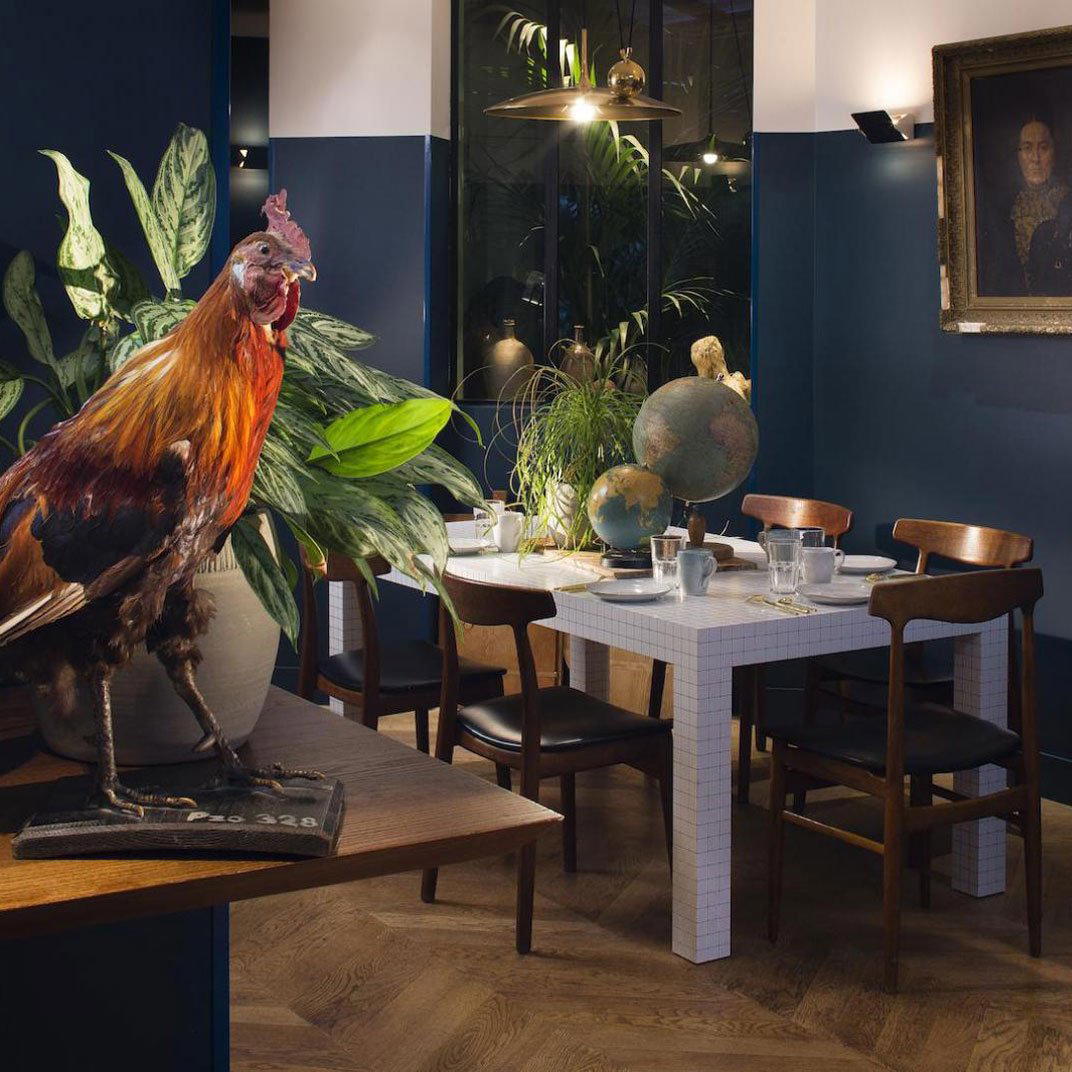
Fusion at the Edge of Paris: Where Montrouge Meets the Middle Market
The story of Parisian dining has long been written inside the périphérique, with the city's critical attention concentrated on the 6th, 7th, and 8th arrondissements, where addresses like Alléno Paris au Pavillon Ledoyen, Arpège, and Kei compete in the €€€€ tier with Michelin stars as the primary currency. But since at least the early 2010s, a quieter recalibration has been happening in the communes immediately south and east of Paris proper. Montrouge, a dense residential commune in the Hauts-de-Seine department, became part of that shift, a place where genuine kitchen ambition found cheaper rents and a neighbourhood clientele willing to return regularly rather than treat each visit as an occasion.
La Table de Maïna arrived into that context. It sits at 18 Rue Périer, Montrouge, a few minutes from the Mairie de Montrouge metro stop, and it has accumulated two consecutive Michelin Plate recognitions (2024 and 2025) alongside. For anyone mapping Paris's fusion scene across price tiers, La Table de Maïna sits in the accessible mid-market bracket.
The Physical Frame: Reading a Room at €€
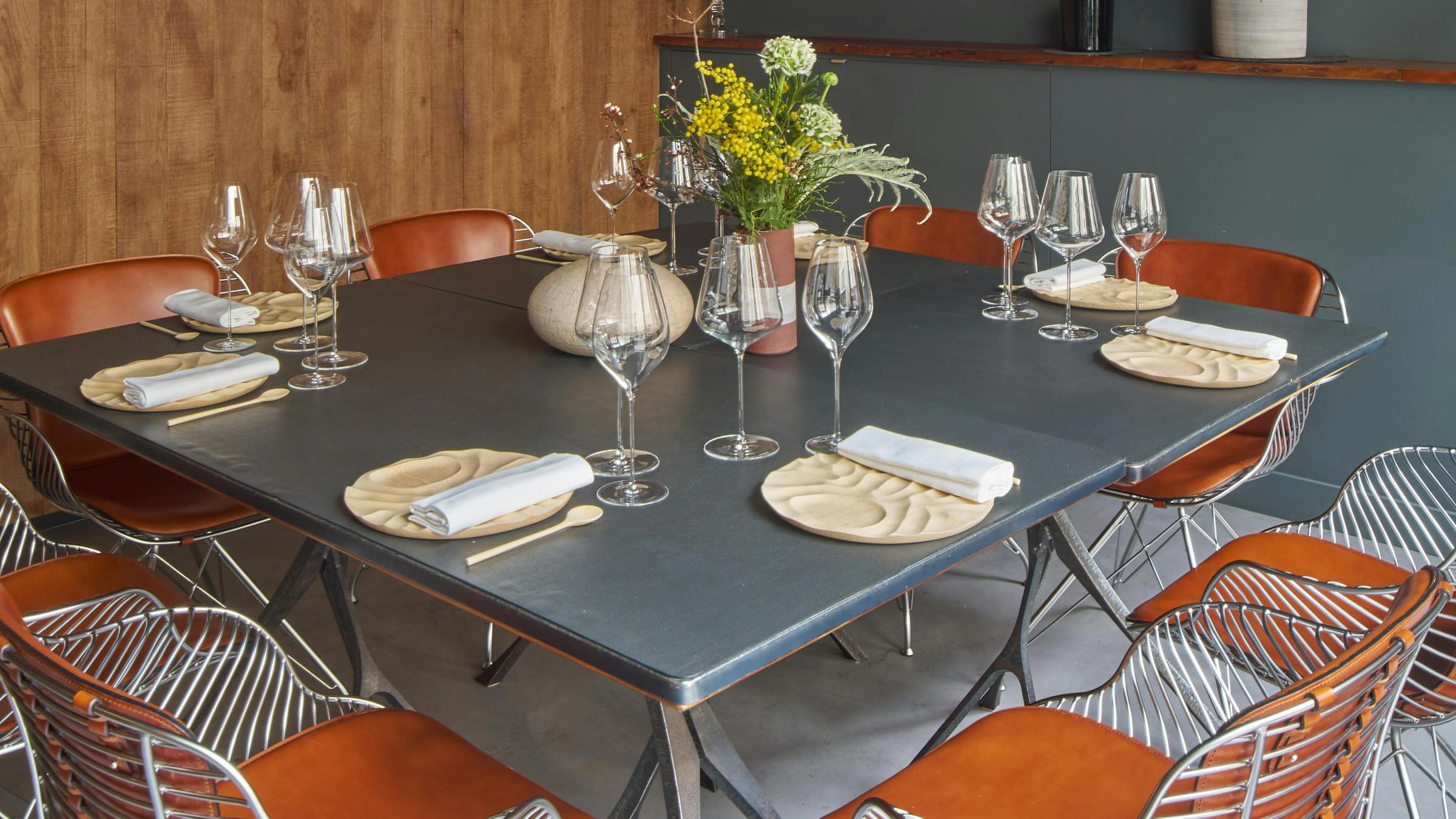
La Table de Maïna's room works within the demands of the €€ fusion format. In Paris, the mid-market restaurant faces a structural challenge: it cannot spend at the level of a three-star house, where bespoke joinery, custom ceramics, and lighting design become part of the product. What mid-market spaces tend to do instead is compress the room, lean into warmth over grandeur, and build identity through deliberate detail rather than scale.
Rue Périer is a residential street, which shapes the experience before anyone sits down. Montrouge's streetscape lacks the institutional weight of the 8th or the gallery-district cool of the 11th, and restaurants here tend to read as local institutions, compact, considered, their physical presence calibrated to the neighbourhood rather than to the incoming visitor. This setting shapes how the fusion menu lands. A Michelin Plate in this setting is a different signal than the same recognition in a purpose-designed dining room off the Champs-Élysées. It suggests the food carries the room, rather than the room amplifying the food.
Among Paris's fusion addresses, Signature Montmartre and Akabeko represent different points on the spatial spectrum, the former anchored in the tourist-adjacent energy of the 18th, the latter operating in a more contained Japanese-influenced register. The restaurant's Montrouge position places it in a working neighbourhood restaurant category.
Fusion in Paris: A Category Under Constant Pressure
The fusion label has had a complicated twenty years in Paris. In the early 2000s, it was a marketing term applied broadly to anything combining two culinary traditions. By the 2010s, serious critics had largely abandoned it in favour of more precise descriptors: Franco-Japanese, modern Asian, contemporary French with global inflection. What remained under the fusion heading was either the high end, where chefs with documented training across multiple traditions built coherent cross-cultural frameworks, or the mid-market, where the term continued to describe a genuine plurality of influence without always having the vocabulary to articulate it more narrowly.
The restaurant occupies the mid-market end of this spectrum. At €€, it cannot be benchmarked against the highest expressions of Paris fusion, where kitchens like Kei's three-star Franco-Japanese operation represent a decade-plus of technique and institutional backing. Its Michelin Plate recognitions in 2024 and 2025 confirm a level of cooking Michelin chose to mark. The Plate is not a star, but in a city where thousands of restaurants operate without any Michelin recognition, two consecutive years of Plate status at an accessible price point is a meaningful credential.
For a comparative frame, Ajonegro in Logroño and Arkestra in Istanbul show how fusion operates across different European cities, each working with local ingredient cultures and distinct reference traditions. The Paris version, as the restaurant represents it, is inflected by the city's institutional French cooking inheritance, which shapes even particularly divergent kitchens here at the level of technique and service rhythm.
The Broader Paris Dining Map
The restaurant does not sit in isolation. Paris's dining geography extends well beyond the central arrondissements, and some of France's most consequential cooking happens outside the capital entirely. Flocons de Sel in Megève, Mirazur in Menton, Troisgros in Ouches, Auberge de l'Ill in Illhaeusern, Bras in Laguiole, and Paul Bocuse in Collonges-au-Mont-d'Or represent the deep regional spine of French fine dining. Within Paris itself, the concentration of Michelin-starred houses in the central arrondissements creates a density that can obscure what is happening at the edges, in communes like Montrouge where the economics of hospitality are different and the audience is primarily residential.
The €€ price positioning suits a neighbourhood dinner.
At a Glance
Comparable venues nearby, for context on price, style, and recognition.
| Venue | Cuisine | Price | Notes |
|---|---|---|---|
| La Table de MaïnaThis venue — the venue you are viewing | Fusion | $$$$ | Not listed |
| Boutique yam'Tcha | Not listed | $$$$ | Les Halles, Franco-Chinese Fusion Fine Dining |
| Akabeko | Not listed | $$$$ | 7th arrondissement, French-Japanese Fusion Omakase |
| Guefen | Not listed | $$$$ | 3rd arrondissement, Modern Levantine Seafood |
| Penati al Baretto | Not listed | $$$$ | Gros Caillou, Sophisticated Italian Fine Dining |
| Imperial Treasure | Not listed | $$$$ | 8th Arr. - Élysée, Fine Chinese Imperial Cuisine |
Recognition history
Dated appearances from independent guides and award organizations, with the underlying list record or original source where available.
Michelin Plate
Michelin
Michelin Plate
Michelin
Michelin Plate
Michelin
Continue exploring
More in Paris
Restaurants in Paris
Browse all →
Bars in Paris
Browse all →
Hotels in Paris
Browse all →
At a Glance
- Elegant
- Intimate
- Cozy
- Sophisticated
- Date Night
- Special Occasion
- Garden
- Terrace
- Open Kitchen
- Natural Wine
- Garden
Current opening hours
- Monday
- Closed
- Tuesday
- 12–2 PM
- Wednesday
- 12–2 PM
- Thursday
- 12–2 PM, 7–9 PM
- Friday
- 12–2 PM, 7–9 PM
- Saturday
- 7–9 PM
- Sunday
- Closed
Hours can change for holidays and private events. Last verified .
Warm and welcoming with a cozy chalet-like wooden interior and a popular garden terrace in fine weather.